
Barber Tips & Tricks
Follow us for the latest barber techniques and tips
Barber Tips & Tricks
Follow us for the latest barber techniques and tips
Top 7 Reasons Why Your Clients
Aren't Returning
Stay Ahead in the Barbering Game: Nurturing
Lifelong Clientele
You might have come across the saying “give a client a good cut at a reasonable price, and they'll be yours for life.” Unfortunately in reality this is not always the case. That’s where we come in! Check out some of the reasons why your clients may not be returning, whether they were long-term customers or a first-time appointment, below.

Top 7 Reasons Why Your Clients
Aren't Returning
Stay Ahead in the Barbering Game: Nurturing
Lifelong Clientele
You might have come across the saying “give a client a good cut at a reasonable price, and they'll be yours for life.” Unfortunately in reality this is not always the case. That’s where we come in! Check out some of the reasons why your clients may not be returning, whether they were long-term customers or a first-time appointment, below.
Career in Mobile Barbering: Key
Things You Need to Know about
While most barbers work in physical barbershops or hair salons, there are a growing number of barbers who work on-call. What does it mean to be a mobile barber? What are their primary responsibilities? Where to find them? In this blog, we will explain some key terms you should know about mobile barbering and how you can start a new career in it.

Career in Mobile Barbering: Key
Things You Need to Know about
While most barbers work in physical barbershops or hair salons, there are a growing number of barbers who work on-call. What does it mean to be a mobile barber? What are their primary responsibilities? Where to find them? In this blog, we will explain some key terms you should know about mobile barbering and how you can start a new career in it.
Top 4 Ways for Barbers to
Promote Themselves
Marketing is key. Knowing how to market yourself as a barber can be the difference between having 5 to 20 clients a day. If you are interested in boosting the number of your customers and furthering your advertising skills, read the list below with four ways to promote yourself as a barber.

Top 4 Ways for Barbers to
Promote Themselves
Marketing is key. Knowing how to market yourself as a barber can be the difference between having 5 to 20 clients a day. If you are interested in boosting the number of your customers and furthering your advertising skills, read the list below with four ways to promote yourself as a barber.
5 Tips for Social Media Content
Creating as a Barber
It is next to impossible to find someone who is not on social media today. More than just a tool for connection, social media is key helping barbers market themselves and promote their names and skills. If you want to up your barber game quickly, here are five tips on how to promote content online that you don't want to miss out on.

5 Tips for Social Media Content
Creating as a Barber
It is next to impossible to find someone who is not on social media today. More than just a tool for connection, social media is key helping barbers market themselves and promote their names and skills. If you want to up your barber game quickly, here are five tips on how to promote content online that you don't want to miss out on.
5 Best Haircuts for Men with
Early Hair Thinning
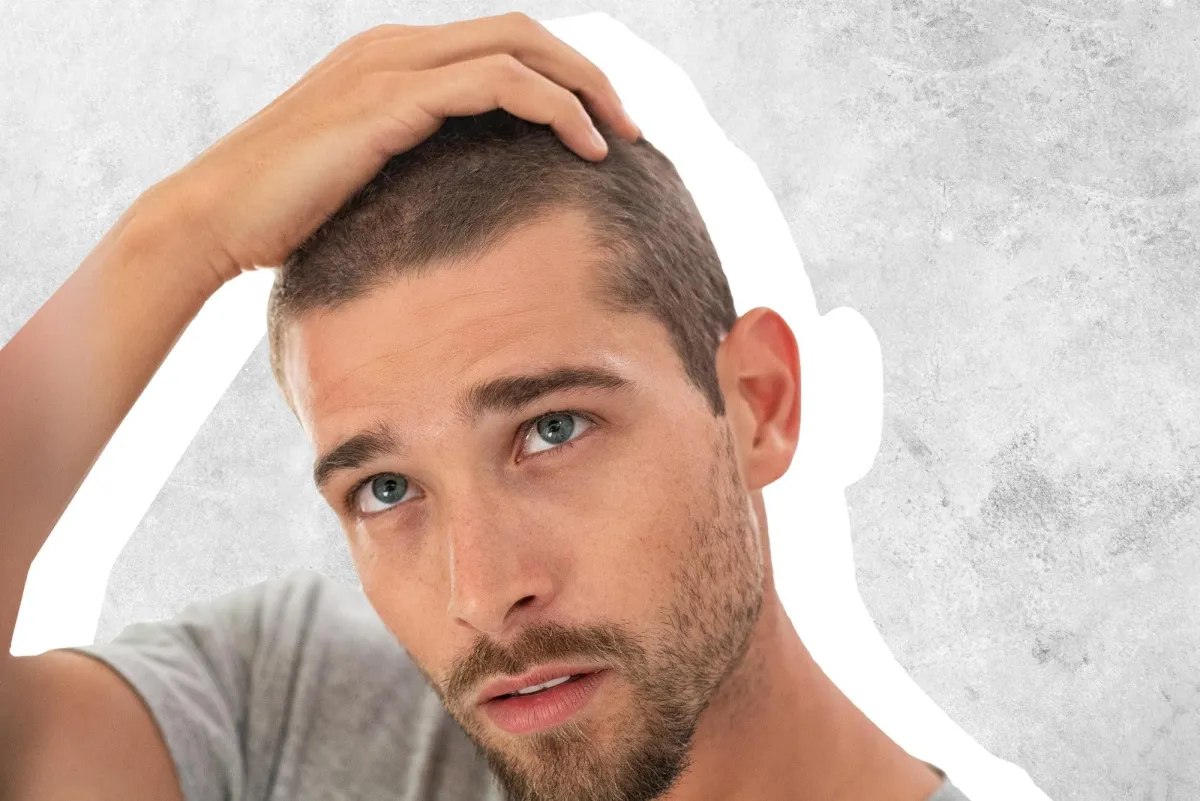
Losing your hair is never a good feeling, most men tend to feel self-conscious about it. Some men decide to completely shave off their heads or constantly wear a hat. One of the most common insecurities men face is hair thinning; for some men, it starts as early as in their 20s. The loss of confidence really starts to affect the way men do their hair and the types of hair cuts they get. Men start to worry about how they will be perceived by friends, family, and colleagues. Hair thinning should not be the cause of self distraughtness, and it should not limit men to have to continuously cover their heads. CADMEN Barbershop has compiled a list of the top 5 best haircuts for men experiencing early hair loss.

The Line-Up: What It Is and Why It Changes Everything
The Line-Up: What It Is and Why It Changes Everything
A line-up defines the edges of a haircut. The forehead hairline, the temples, and the sideburns are sharpened to a clean, precise line. On a well-faded haircut, a line-up is the difference between the cut looking finished and the cut looking incomplete. Here is what it involves.
What the Line-Up Does
Natural hairlines are irregular. Hairs at the border of the hairline grow in different directions, at different densities, and at different angles. Without a line-up, the hairline edge of a fade or close-cut haircut shows this irregularity: fine hairs, stray growth, and uneven edges that make the overall cut look less precise than the fade itself. A line-up removes these irregular edge hairs to create a clean, defined border that frames the haircut at the forehead and sides. The result is a haircut that reads as sharper and more finished from the front and from any angle that shows the hairline.
The Technique
Barbers use a straight razor or T-outliner for line-up work. The T-outliner (a trimmer with a thin, precise blade) follows the natural hairline arc and removes hairs outside the intended clean border. The straight razor is used for the very edge to remove any fine hairs that the trimmer blade misses and to create the sharpest possible definition. The barber establishes the edge position first, then removes the stray hairs outside that line. The straight line at the temples and the curved arc at the forehead are the two elements that frame the face and create the finished look.
Shape-Up, Edge-Up, Line-Up
These terms are used interchangeably by most barbers and clients. All refer to the same process of defining the hairline edges. Some regional variations exist: in some markets "shape-up" specifically refers to straightening a curved or receding hairline by creating a flat horizontal line at the forehead regardless of the natural hairline position, while "line-up" refers to following and cleaning the natural hairline. In practice, asking for any of these terms and discussing what you want produces the same conversation.
When to Ask for a Line-Up
A line-up is relevant for any haircut where the hairline is visible. For fades, tapers, close cuts, and any short style where the forehead and temple hairline is near or at the edge of the cut, a line-up makes the haircut look complete. For longer styles where the hair drapes over and covers the hairline, a line-up has less visual impact. Most barbershops include a basic line-up as part of any fade or close-cut service. If it is not included, it is a simple addition to request.
Frequently Asked Questions
Does a line-up damage the hairline over time?
An overly aggressive line-up that creates a straight horizontal line higher than the natural hairline eventually conditions the hairline to grow at the new position as the hair above the line is consistently removed over years. A line-up that follows the natural hairline and only removes the irregular edge hairs does not damage or alter the hairline in any lasting way. The concern about line-up damage applies to the practice of "squaring off" a curved or receding hairline by drawing a straight line above the natural position and shaving the hairs below it. Following the natural curve rather than creating an artificial square is the approach that preserves long-term hairline health.
How long does a line-up last?
The line-up is the first part of a haircut to show growth. Fine hairs at the edge of the hairline grow back within 5 to 10 days. Most barbers offer a line-up touch-up between full haircut visits for this reason. Men who want a consistently sharp hairline schedule a line-up touch-up 2 to 3 weeks after the full cut, between full haircut visits. This is a short service (10 to 15 minutes) at a lower cost than a full cut.
Can I do a line-up at home?
Yes, with a T-outliner or precision trimmer. The challenge is viewing the hairline clearly in a mirror, which requires either a second mirror behind the head or a front-facing orientation that makes it difficult to reach the back corners of the temples symmetrically. Most men who try home line-ups get the front hairline acceptable but have more difficulty with the temple and sideburn definition. A professional line-up is more precise than most self-done versions; the time investment for home maintenance is justified if the barbershop visit frequency is too low to maintain the hairline consistently.
What happens if the barber draws the line-up too high?
If the hairline is shaved above its natural position, the hairs below the new line are removed, and the skin is exposed in an area that formerly had hair. Over time (weeks to months), those hairs grow back and the hairline returns to its natural position. A one-time line-up placed too high does not cause permanent change. Repeated shaving of the same area above the natural hairline over years may eventually cause the hairs to stop growing in that strip, which is the mechanism behind the concern about permanent hairline damage from aggressive, repeated line-ups. A single over-aggressive line-up: temporary. Repeated over-aggressive line-ups for years: potentially permanent.
Related Reading From CADMEN Barber Academy
- How to Line Up a Beard: Technique and Tool Guide
- The Hard Part Haircut: What It Is and How Barbers Cut It
- How to Do a Line Up: Barber Edge Up Guide
- Beard Line Shaping at the Barbershop: What to Ask For
- The Hairline Lineup: What It Is and Why It Changes the Cut
- How to Shape Your Beard Line: What the Barbershop Does and How to Maintain It

5 Best Haircuts for Men with
Early Hair Thinning
Losing your hair is never a good feeling, most men tend to feel self-conscious about it. Some men decide to completely shave off their heads or constantly wear a hat. One of the most common insecurities men face is hair thinning; for some men, it starts as early as in their 20s. The loss of confidence really starts to affect the way men do their hair and the types of hair cuts they get. Men start to worry about how they will be perceived by friends, family, and colleagues. Hair thinning should not be the cause of self distraughtness, and it should not limit men to have to continuously cover their heads. CADMEN Barbershop has compiled a list of the top 5 best haircuts for men experiencing early hair loss.


For any request, please contact us at info@cadmen.ca