
Barber Tips & Tricks
Follow us for the latest barber techniques and tips
Barber Tips & Tricks
Follow us for the latest barber techniques and tips
Top 7 Reasons Why Your Clients
Aren't Returning
Stay Ahead in the Barbering Game: Nurturing
Lifelong Clientele
You might have come across the saying “give a client a good cut at a reasonable price, and they'll be yours for life.” Unfortunately in reality this is not always the case. That’s where we come in! Check out some of the reasons why your clients may not be returning, whether they were long-term customers or a first-time appointment, below.

Top 7 Reasons Why Your Clients
Aren't Returning
Stay Ahead in the Barbering Game: Nurturing
Lifelong Clientele
You might have come across the saying “give a client a good cut at a reasonable price, and they'll be yours for life.” Unfortunately in reality this is not always the case. That’s where we come in! Check out some of the reasons why your clients may not be returning, whether they were long-term customers or a first-time appointment, below.
Career in Mobile Barbering: Key
Things You Need to Know about
While most barbers work in physical barbershops or hair salons, there are a growing number of barbers who work on-call. What does it mean to be a mobile barber? What are their primary responsibilities? Where to find them? In this blog, we will explain some key terms you should know about mobile barbering and how you can start a new career in it.

Career in Mobile Barbering: Key
Things You Need to Know about
While most barbers work in physical barbershops or hair salons, there are a growing number of barbers who work on-call. What does it mean to be a mobile barber? What are their primary responsibilities? Where to find them? In this blog, we will explain some key terms you should know about mobile barbering and how you can start a new career in it.
Top 4 Ways for Barbers to
Promote Themselves
Marketing is key. Knowing how to market yourself as a barber can be the difference between having 5 to 20 clients a day. If you are interested in boosting the number of your customers and furthering your advertising skills, read the list below with four ways to promote yourself as a barber.

Top 4 Ways for Barbers to
Promote Themselves
Marketing is key. Knowing how to market yourself as a barber can be the difference between having 5 to 20 clients a day. If you are interested in boosting the number of your customers and furthering your advertising skills, read the list below with four ways to promote yourself as a barber.
5 Tips for Social Media Content
Creating as a Barber
It is next to impossible to find someone who is not on social media today. More than just a tool for connection, social media is key helping barbers market themselves and promote their names and skills. If you want to up your barber game quickly, here are five tips on how to promote content online that you don't want to miss out on.

5 Tips for Social Media Content
Creating as a Barber
It is next to impossible to find someone who is not on social media today. More than just a tool for connection, social media is key helping barbers market themselves and promote their names and skills. If you want to up your barber game quickly, here are five tips on how to promote content online that you don't want to miss out on.
5 Best Haircuts for Men with
Early Hair Thinning
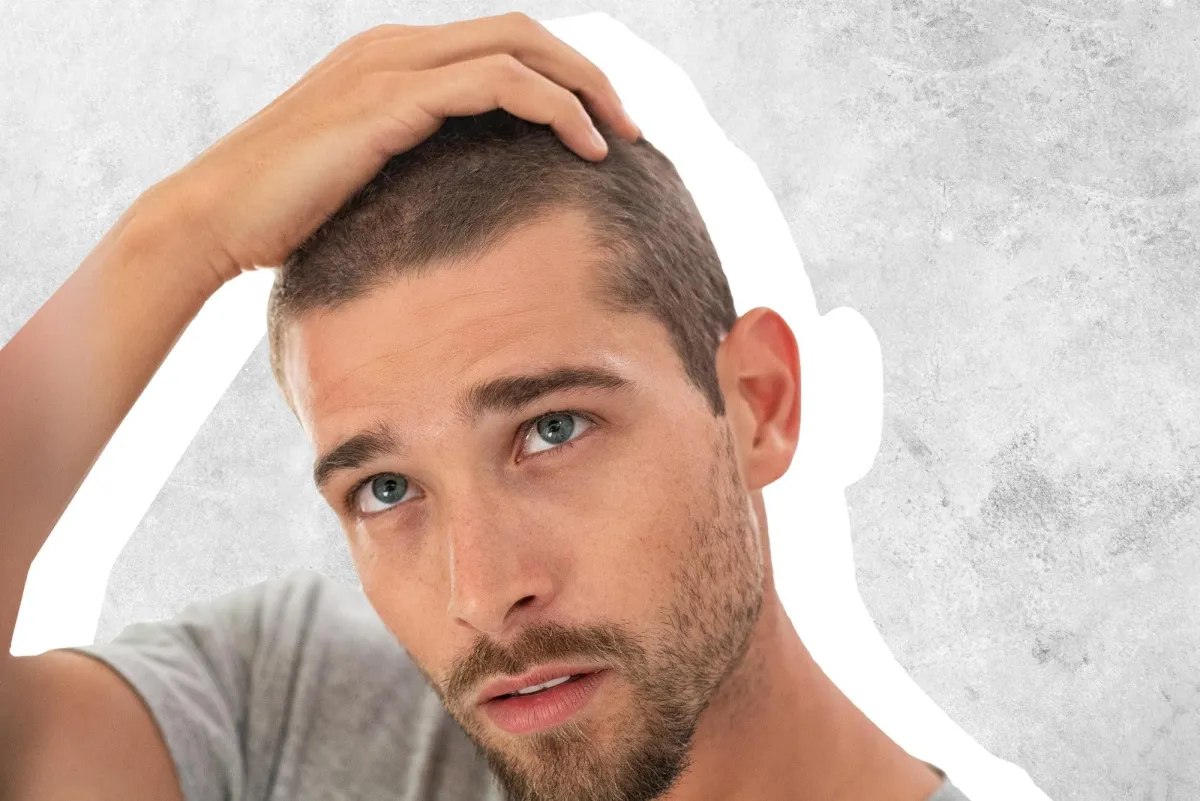
Losing your hair is never a good feeling, most men tend to feel self-conscious about it. Some men decide to completely shave off their heads or constantly wear a hat. One of the most common insecurities men face is hair thinning; for some men, it starts as early as in their 20s. The loss of confidence really starts to affect the way men do their hair and the types of hair cuts they get. Men start to worry about how they will be perceived by friends, family, and colleagues. Hair thinning should not be the cause of self distraughtness, and it should not limit men to have to continuously cover their heads. CADMEN Barbershop has compiled a list of the top 5 best haircuts for men experiencing early hair loss.
How to Do a Line Up: Barber Edge Up Guide
How to Do a Line Up: Barber Edge Up Guide
A line up, also called an edge up, shapes and sharpens the front hairline, the temples, and the sideburns into clean, defined edges. It is one of the most visible indicators of a barber's skill level because the symmetry (or lack of it) is immediately apparent when you see the client from the front.
The Three Edges of a Line Up
The Front Hairline
The front hairline is the most prominent edge and the most sensitive. It defines the top of the forehead and frames the face. A front hairline that sits too low removes the client's forehead. One that sits too high makes the forehead appear larger. The right position follows the client's natural hairline or a slight clean-up of it.
The natural hairline is the most important reference point. For most clients, the goal is to define what is there: sharpen the edge of the existing hairline, remove any small hairs growing below it, and create a clean, defined boundary. Moving the hairline significantly from its natural position should only happen if the client explicitly requests it and you confirm the expectation.
The Temple Corner
The temple corner is the point where the front hairline meets the side hairline. It is typically a slight curve or right-angle corner. The angle and height of this corner significantly affects the overall shape of the head and face from the front.
On most clients, the temple corner sits just above and forward of the top of the ear. A common line up error is taking the temple corner too low or too far back, which shortens the apparent length of the face or creates an asymmetric temple on the two sides.
Check temple symmetry from directly in front of the client before finalizing. The two temple corners should be at equal heights. One corner higher than the other is the most common line up asymmetry complaint.
The Sideburn
The sideburn edge runs vertically in front of the ear. The sideburn's bottom edge defines how low the sideburn sits relative to the ear. Standard sideburn length is level with the middle of the ear or just below. Confirm the client's preference before trimming.
Sideburns need to match on both sides and need to be consistent with the cut. A client with a low fade does not typically want long sideburns. The sideburn length should make visual sense with the rest of the cut.
Tools for a Line Up
T-liner / T-blade trimmer: The standard tool for all three edges. The flat, wide T-blade creates a sharp, straight edge and gives clear visibility of where the line is being cut. Most barbers do all line up work with a T-liner.
Straight razor (optional): Used to define the hairline sharper than a trimmer can achieve, particularly for clients who want a very precise, razor-sharp edge. The straight razor removes the stubble below the defined line and creates the high-contrast edge that reads as very clean in photos and in person.
Trimmer guard 0.5 or 1 (optional): Some barbers use a light guard pass on the hairline area to clean up the transition before doing the hard edge. This is a stylistic choice and not required for most clients.
The Line Up Sequence
Step 1: Assess before cutting
Look at the client's natural hairline with the hair dry and unstyled. Identify where the front hairline sits, where the temple corners are, and what the sideburn level should be. Take 30 seconds here. The assessment prevents cutting a line before you know where it should go.
Step 2: Front hairline first
Start the line up at the front hairline. With the T-liner, run the edge along the natural hairline. Move in short, controlled strokes from the center outward toward the temples on both sides. Work slowly. The front hairline does not correct easily once cut.
Hold the trimmer so the blade is perpendicular to the scalp at the hairline. This produces a defined edge rather than a faded blur. The blade runs along the skin just at the hairline boundary.
Step 3: Temple corners
After the front hairline is defined, connect it to the temple corners. The corner is a transition from the front hairline edge running horizontally to the sideburn edge running vertically. It is typically a slight curve or a gentle right angle. Match both sides before finalizing.
Step 4: Sideburns
Define the vertical sideburn edge and the sideburn bottom line. Check that both sideburns are at equal height from the front.
Step 5: Clean up with razor (if using)
Apply a small amount of shave gel to the area just below the defined edges. A straight razor pass removes the stubble and produces a high-contrast defined line. Work in short strokes following the line, not across it.
Common Line Up Mistakes
Asymmetric temple corners: One temple corner higher or more angled than the other. Caused by not checking symmetry from the front before finalizing. Fix: check from the front before doing the razor cleanup, when there is still room to adjust.
Moving the hairline too far back: Especially on clients with a rounded natural hairline. Removing the small hairs that form the front boundary of the natural hairline pushes it back. Use conservative cuts on the front boundary.
Inconsistent sideburn height: Left and right sideburns at different levels. Check from the front with a horizontal visual reference.
Blurry edges instead of sharp ones: Caused by the blade not being perpendicular to the scalp at the hairline, or by moving too fast. Slow, deliberate strokes with the blade at 90 degrees to the scalp produce the sharpest edges.
CADMEN Training
CADMEN offers a two-day fade course in Mississauga with demonstrations, supervised practice on live models and educator feedback. Small-group classes have up to three students, and one-on-one training is also available. Confirm the skill you want to practise with our team before booking. View current details.
Fade class: $1,750 + HST (small group) or $1,950 + HST (1-on-1).
Frequently Asked Questions
What is a line up in barbering?
A line up (also called an edge up) is the sharpening and defining of the front hairline, temple corners, and sideburns into clean, precise edges. It is typically done with a T-liner trimmer and optionally finished with a straight razor for a sharper definition. It can be done as a standalone service or as part of a full haircut.
What tool do you use for a line up?
A T-liner (T-blade trimmer) is the standard tool for line up work. The flat, wide T-blade creates sharp edges and gives good visibility of where the line is being cut. A straight razor is optionally used after the T-liner to produce an even sharper, high-contrast edge by removing stubble below the defined line.
How do you keep a line up symmetrical?
Check from directly in front of the client at each stage, especially after setting the temple corners. The two temple corners should be at the same height from the front view. Check both sideburns from the front before finishing. Never finalize the line up from the side angle only, as side-angle viewing masks asymmetry between the two sides.
How often should you get a line up?
Every 1 to 3 weeks. The front hairline shows regrowth visibly within 7 to 10 days. Clients who want a sharp, maintained edge will book more frequently. A line up as a standalone service (no full haircut) is a common booking for clients who maintain clean lines between full cuts.
What is the difference between a line up and a haircut?
A haircut changes the length and shape of the hair across the top and sides. A line up defines the edges: the front hairline, temple corners, and sideburns. A full haircut typically includes a line up at the end. A standalone line up is done without changing the cut length, just sharpening the edge definition that has grown in since the last haircut.
Related Reading From CADMEN Barber Academy
- How to Line Up a Beard: Technique and Tool Guide
- The Hard Part Haircut: What It Is and How Barbers Cut It
- Beard Line Shaping at the Barbershop: What to Ask For
- The Hairline Lineup: What It Is and Why It Changes the Cut
- How to Shape Your Beard Line: What the Barbershop Does and How to Maintain It
- The Line-Up: What It Is and Why It Changes Everything

5 Best Haircuts for Men with
Early Hair Thinning
Losing your hair is never a good feeling, most men tend to feel self-conscious about it. Some men decide to completely shave off their heads or constantly wear a hat. One of the most common insecurities men face is hair thinning; for some men, it starts as early as in their 20s. The loss of confidence really starts to affect the way men do their hair and the types of hair cuts they get. Men start to worry about how they will be perceived by friends, family, and colleagues. Hair thinning should not be the cause of self distraughtness, and it should not limit men to have to continuously cover their heads. CADMEN Barbershop has compiled a list of the top 5 best haircuts for men experiencing early hair loss.


For any request, please contact us at info@cadmen.ca