
Barber Tips & Tricks
Follow us for the latest barber techniques and tips
Barber Tips & Tricks
Follow us for the latest barber techniques and tips
Top 7 Reasons Why Your Clients
Aren't Returning
Stay Ahead in the Barbering Game: Nurturing
Lifelong Clientele
You might have come across the saying “give a client a good cut at a reasonable price, and they'll be yours for life.” Unfortunately in reality this is not always the case. That’s where we come in! Check out some of the reasons why your clients may not be returning, whether they were long-term customers or a first-time appointment, below.

Top 7 Reasons Why Your Clients
Aren't Returning
Stay Ahead in the Barbering Game: Nurturing
Lifelong Clientele
You might have come across the saying “give a client a good cut at a reasonable price, and they'll be yours for life.” Unfortunately in reality this is not always the case. That’s where we come in! Check out some of the reasons why your clients may not be returning, whether they were long-term customers or a first-time appointment, below.
Career in Mobile Barbering: Key
Things You Need to Know about
While most barbers work in physical barbershops or hair salons, there are a growing number of barbers who work on-call. What does it mean to be a mobile barber? What are their primary responsibilities? Where to find them? In this blog, we will explain some key terms you should know about mobile barbering and how you can start a new career in it.

Career in Mobile Barbering: Key
Things You Need to Know about
While most barbers work in physical barbershops or hair salons, there are a growing number of barbers who work on-call. What does it mean to be a mobile barber? What are their primary responsibilities? Where to find them? In this blog, we will explain some key terms you should know about mobile barbering and how you can start a new career in it.
Top 4 Ways for Barbers to
Promote Themselves
Marketing is key. Knowing how to market yourself as a barber can be the difference between having 5 to 20 clients a day. If you are interested in boosting the number of your customers and furthering your advertising skills, read the list below with four ways to promote yourself as a barber.

Top 4 Ways for Barbers to
Promote Themselves
Marketing is key. Knowing how to market yourself as a barber can be the difference between having 5 to 20 clients a day. If you are interested in boosting the number of your customers and furthering your advertising skills, read the list below with four ways to promote yourself as a barber.
5 Tips for Social Media Content
Creating as a Barber
It is next to impossible to find someone who is not on social media today. More than just a tool for connection, social media is key helping barbers market themselves and promote their names and skills. If you want to up your barber game quickly, here are five tips on how to promote content online that you don't want to miss out on.

5 Tips for Social Media Content
Creating as a Barber
It is next to impossible to find someone who is not on social media today. More than just a tool for connection, social media is key helping barbers market themselves and promote their names and skills. If you want to up your barber game quickly, here are five tips on how to promote content online that you don't want to miss out on.
5 Best Haircuts for Men with
Early Hair Thinning
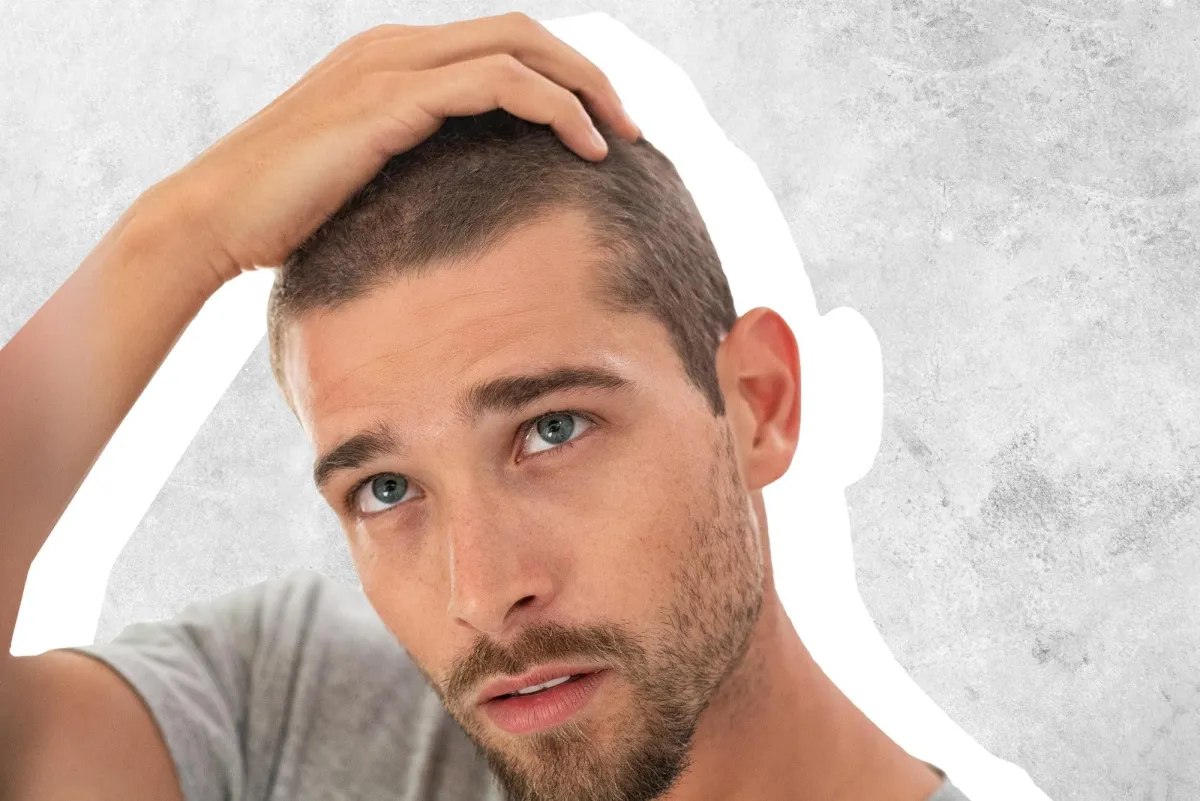
Losing your hair is never a good feeling, most men tend to feel self-conscious about it. Some men decide to completely shave off their heads or constantly wear a hat. One of the most common insecurities men face is hair thinning; for some men, it starts as early as in their 20s. The loss of confidence really starts to affect the way men do their hair and the types of hair cuts they get. Men start to worry about how they will be perceived by friends, family, and colleagues. Hair thinning should not be the cause of self distraughtness, and it should not limit men to have to continuously cover their heads. CADMEN Barbershop has compiled a list of the top 5 best haircuts for men experiencing early hair loss.
How to Shape Your Beard Line: What the Barbershop Does and How to Maintain It
How to Shape Your Beard Line: What the Barbershop Does and How to Maintain It
The beard line determines whether a beard looks intentional or overgrown. Two men can have the same length beard and one looks professional while the other looks unkempt. The difference is almost always the line. Here is what barbers do to set it, where the lines should go, and how to maintain them at home.
The Three Lines That Define a Beard
Every beard shape is controlled by three lines: the neckline, the cheek line, and the lip line.
The neckline is the most important and the most commonly set too high. A neckline that is too high makes the beard look like a chin strap and shortens the visual length of the face. The correct neckline sits about one to two finger widths above the Adam's apple. Place two fingers horizontally above your Adam's apple. That is your neckline. Everything below it should be clean-shaved. The neckline should follow a slight curve from one ear, down to this point, and back up to the other ear.
The cheek line runs from the sideburn area along the cheek toward the corner of the mouth. Natural growth patterns vary widely. Some men have high, clean cheek lines naturally. Others have significant growth high on the cheekbone that needs trimming to create definition. In most cases, barbers remove stray hairs above the natural cheek line rather than creating an artificial one lower. A clean, defined cheek line makes the beard look intentional even at longer lengths.
The lip line, or mustache line, is the lower boundary of the mustache where it meets the upper lip. Keeping this clean prevents the mustache from growing over the lip, which affects comfort and appearance. A straight trim just at the edge of the upper lip is the standard. Barbers use a small straight razor or detail trimmer for this.
What the Barbershop Does
A barber approaches beard shaping by establishing the three reference lines first, then blending toward them. The neckline is cleaned with a straight razor for a crisp edge against the skin. The cheek line is defined with a detail trimmer or straight razor depending on how clean the edge needs to be. The mustache line is trimmed with a small clipper or straight razor.
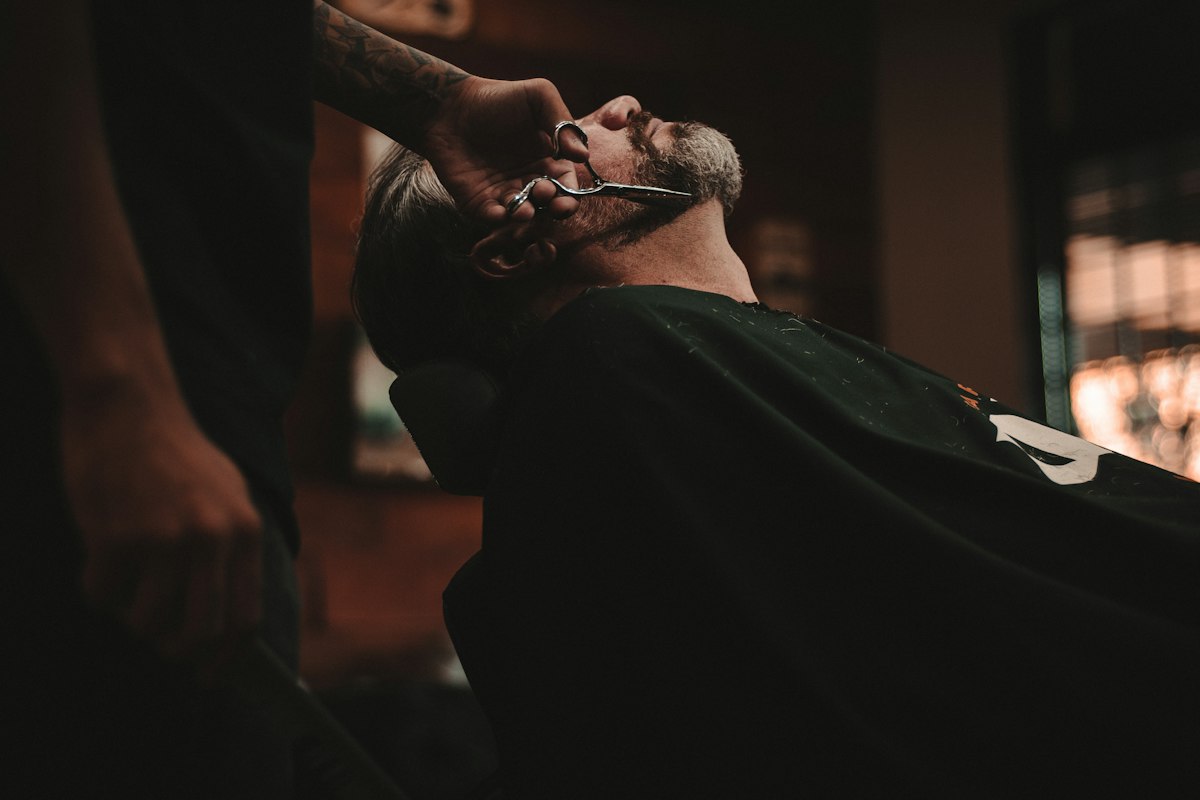
If the beard itself needs shaping for length or fullness, the barber uses clippers with a guard or barber scissors to remove bulk and create a shape that complements the face. A round face benefits from a beard that is longer at the chin and shorter on the sides. An oval face works well with most beard shapes. A rectangular face benefits from more volume on the sides than on the chin to add width.
Maintaining Lines at Home
The neckline needs attention every week for most men. Growth below the neckline becomes visible within five to seven days. Use a detail trimmer or a T-blade clipper along the neckline, then clean the bare skin below it with a razor. A cartridge razor or safety razor with shaving cream gives the cleanest edge. Use short strokes and work from below the line upward.
The cheek line is less demanding. Stray hairs above the cheek line appear gradually. Check and trim every five to seven days. Plucking individual hairs with tweezers works for sparse strays that are not worth a full trimmer pass.
The mustache line is the easiest to maintain. Trim the outer edge of the upper lip every few days with small grooming scissors or a detail trimmer. Keep the blade parallel to the lip and remove only what hangs below the natural edge.
Tools for Home Maintenance
A cordless detail trimmer or T-blade trimmer is the most important tool. Used at zero guard or with a bare blade, it defines lines without risking as much skin contact as a razor. Most men who maintain their beard at home use this for 90 percent of the work.
A single-blade razor or safety razor for the neckline below the beard. The closeness of a straight razor is difficult to replicate at home safely. A safety razor gives a very close shave with much less risk of cutting.
Small grooming scissors for the mustache and any longer beard hairs that need individual attention. Never use hair scissors on a beard. Beard scissors are smaller and easier to control for precise work.
Frequently Asked Questions
Where exactly should my neckline be?
Two finger widths above the Adam's apple, following a natural curve from ear to ear. Resist the urge to set it higher. Most men set their neckline too high, which creates the chin strap effect.
How do I know if my cheek line is too high or too low?
Your natural cheek line is your guide. Trim stray hairs above it. A barber who cuts it lower is creating an artificial line that requires more maintenance and looks less natural. If your natural line is very high, you can lower it slightly for a cleaner appearance, but avoid going below mid-cheek.
How often should I get a professional beard shape-up?
Every two to four weeks depending on how fast your beard grows and how precisely you want the lines maintained. If you maintain the lines at home weekly, you can go four weeks between professional shape-ups.
Can I use a regular razor to shave my beard neckline?
Yes. A multi-blade cartridge razor or safety razor works well for the neckline. Apply shaving cream, use short strokes upward from below the line, and rinse with cool water. A single-blade safety razor gives more control and reduces razor bumps for men with coarse or curly facial hair.
What happens if I set my neckline too high?
You have to grow it out. There is no way to move a neckline lower without waiting for growth below the current line to fill back in. This takes four to eight weeks depending on your growth rate. Set the neckline lower than feels right the first time. You can always remove more. You cannot add it back.
Related Reading From CADMEN Barber Academy
- Beard Line Shaping at the Barbershop: What to Ask For
- How to Line Up a Beard: Technique and Tool Guide
- Beard Shaping at the Barbershop: What to Expect
- Beard Shaping at the Barbershop: What the Service Involves
- Beard Balm vs. Beard Oil: What Each Product Does
- Beard Balm vs. Beard Oil: The Difference, When to Use Each, and How to Explain It to Your Clients

5 Best Haircuts for Men with
Early Hair Thinning
Losing your hair is never a good feeling, most men tend to feel self-conscious about it. Some men decide to completely shave off their heads or constantly wear a hat. One of the most common insecurities men face is hair thinning; for some men, it starts as early as in their 20s. The loss of confidence really starts to affect the way men do their hair and the types of hair cuts they get. Men start to worry about how they will be perceived by friends, family, and colleagues. Hair thinning should not be the cause of self distraughtness, and it should not limit men to have to continuously cover their heads. CADMEN Barbershop has compiled a list of the top 5 best haircuts for men experiencing early hair loss.


For any request, please contact us at info@cadmen.ca