
Barber Tips & Tricks
Follow us for the latest barber techniques and tips
Barber Tips & Tricks
Follow us for the latest barber techniques and tips
Top 7 Reasons Why Your Clients
Aren't Returning
Stay Ahead in the Barbering Game: Nurturing
Lifelong Clientele
You might have come across the saying “give a client a good cut at a reasonable price, and they'll be yours for life.” Unfortunately in reality this is not always the case. That’s where we come in! Check out some of the reasons why your clients may not be returning, whether they were long-term customers or a first-time appointment, below.

Top 7 Reasons Why Your Clients
Aren't Returning
Stay Ahead in the Barbering Game: Nurturing
Lifelong Clientele
You might have come across the saying “give a client a good cut at a reasonable price, and they'll be yours for life.” Unfortunately in reality this is not always the case. That’s where we come in! Check out some of the reasons why your clients may not be returning, whether they were long-term customers or a first-time appointment, below.
Career in Mobile Barbering: Key
Things You Need to Know about
While most barbers work in physical barbershops or hair salons, there are a growing number of barbers who work on-call. What does it mean to be a mobile barber? What are their primary responsibilities? Where to find them? In this blog, we will explain some key terms you should know about mobile barbering and how you can start a new career in it.

Career in Mobile Barbering: Key
Things You Need to Know about
While most barbers work in physical barbershops or hair salons, there are a growing number of barbers who work on-call. What does it mean to be a mobile barber? What are their primary responsibilities? Where to find them? In this blog, we will explain some key terms you should know about mobile barbering and how you can start a new career in it.
Top 4 Ways for Barbers to
Promote Themselves
Marketing is key. Knowing how to market yourself as a barber can be the difference between having 5 to 20 clients a day. If you are interested in boosting the number of your customers and furthering your advertising skills, read the list below with four ways to promote yourself as a barber.

Top 4 Ways for Barbers to
Promote Themselves
Marketing is key. Knowing how to market yourself as a barber can be the difference between having 5 to 20 clients a day. If you are interested in boosting the number of your customers and furthering your advertising skills, read the list below with four ways to promote yourself as a barber.
5 Tips for Social Media Content
Creating as a Barber
It is next to impossible to find someone who is not on social media today. More than just a tool for connection, social media is key helping barbers market themselves and promote their names and skills. If you want to up your barber game quickly, here are five tips on how to promote content online that you don't want to miss out on.

5 Tips for Social Media Content
Creating as a Barber
It is next to impossible to find someone who is not on social media today. More than just a tool for connection, social media is key helping barbers market themselves and promote their names and skills. If you want to up your barber game quickly, here are five tips on how to promote content online that you don't want to miss out on.
5 Best Haircuts for Men with
Early Hair Thinning
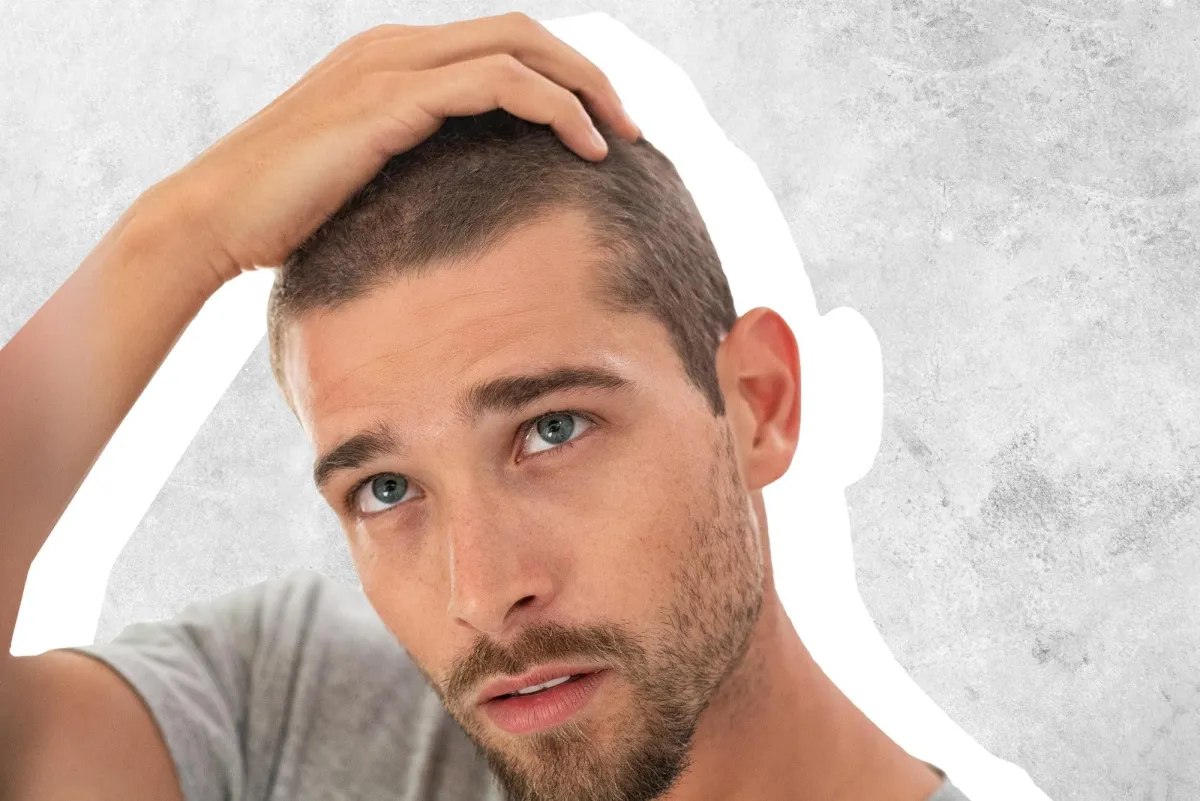
Losing your hair is never a good feeling, most men tend to feel self-conscious about it. Some men decide to completely shave off their heads or constantly wear a hat. One of the most common insecurities men face is hair thinning; for some men, it starts as early as in their 20s. The loss of confidence really starts to affect the way men do their hair and the types of hair cuts they get. Men start to worry about how they will be perceived by friends, family, and colleagues. Hair thinning should not be the cause of self distraughtness, and it should not limit men to have to continuously cover their heads. CADMEN Barbershop has compiled a list of the top 5 best haircuts for men experiencing early hair loss.
The Hard Part Haircut: What It Is and How Barbers Cut It
The Hard Part Haircut: What It Is and How Barbers Cut It
A hard part is a razor-etched or clipper-cut line made directly into the scalp, separating two sections of the hair with a precise, visible division. Unlike a natural part, where the hair is combed to one side and the parting can shift through the day, a hard part remains sharp and defined regardless of weather, wind, or product wear. It gives a comb-over, side-swept, or classic side-part style a finished, barbershop-specific look that no amount of home styling can replicate.
How the Hard Part Is Cut
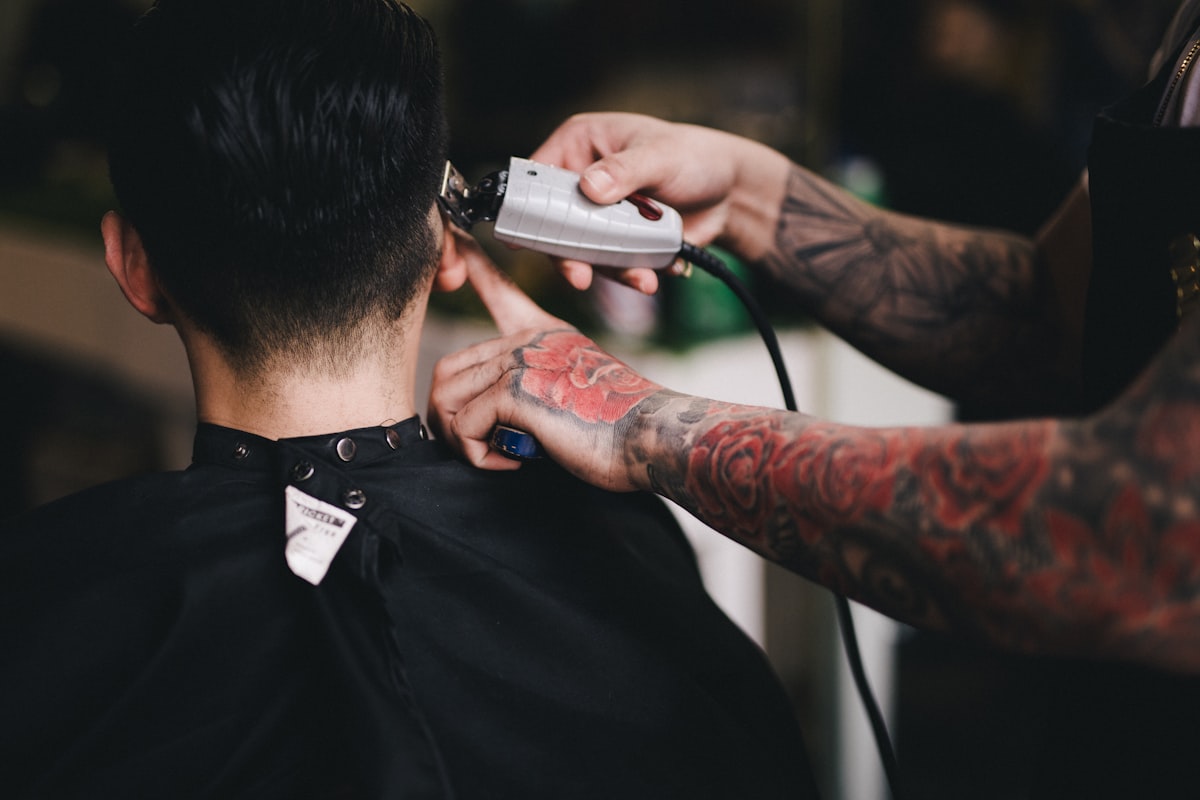
The barber marks the line position first, typically with a comb placed along the natural part of the hair, or in a position the client and barber agree on. The line is then cut using a razor (most commonly a straight razor or trimmer with a fine-detail blade) at the scalp, removing the hair along the narrow line down to the skin. The result is a clean gap between the two sections of hair on either side of the part.
The width of the line is narrow, approximately 2 to 3mm, just wide enough to be clearly visible when the hair is styled. A line that is too wide looks carved-out rather than crisp; a line that is too narrow fades within a few days as the surrounding hair grows in.
Haircuts That Pair With a Hard Part
The hard part works with any style that involves a side part: a comb-over with a skin or low fade, a classic side part with a taper, a slicked-back style with a part line added, or a quiff with a defined section line. It does not work with styles that do not have a defined part, a textured crop, a buzz cut, or a style where the hair is styled forward or upward without a side section makes the hard part irrelevant.
Maintenance
A hard part is visible for approximately 2 to 4 weeks before new hair growth softens it. Most clients request a touch-up at every barbershop visit.
CADMEN Training
Razor line technique and detail work are covered in CADMEN's hands-on program. academy.cadmen.ca/in-person-training.
Frequently Asked Questions
What is a hard part haircut?
A hard part is a precise, razor-etched or clipper-cut line shaved directly into the scalp along the parting of the hair. Unlike a natural part, which is created by combing the hair in a specific direction and can shift through the day, a hard part is a physical gap cut into the hair that holds its sharp, defined appearance regardless of how the hair is styled. The technique involves a barber using a straight razor or trimmer to cut a narrow (2 to 3mm) line at the scalp along the desired part position, creating a visible separation between the two sections of hair on either side of the line. The hard part is a barbershop-specific technique associated with high-contrast, precisely styled haircuts. It is most commonly used in combination with skin fades, low fades, or traditional tapers on the sides with a longer styled top section. The hard part adds a graphic, precise element to any side-parted style that a natural part cannot replicate, it reads as intentional and well-groomed at a level that most self-styled hair cannot achieve.
Does a hard part suit all haircuts?
A hard part is appropriate only for haircuts with a defined side part. Haircuts where the top section is styled forward (fringe, Caesar, textured crop), upward (quiff, pompadour where the entire top section goes back), or without a side section direction (messy texture, natural styles) do not have a parting where the hard part belongs and the technique would look out of place. It works best with: side-swept comb-over styles (the most common application), classic side-part haircuts, disconnected or blended undercuts with a side part in the top section, and any fade haircut where the client styles the top to one side consistently. Face shape is not a major constraint, the hard part's suitability depends primarily on the haircut and styling direction rather than facial structure.
How long does a hard part last?
A sharp hard part lasts 2 to 4 weeks before the hair growing in from the edges of the line softens it. The line remains visible throughout this period but loses its crispness progressively as the surrounding hair grows. Most clients who wear a hard part request a refresh at every barbershop visit, which keeps the line sharp and well-defined. Between visits, the hard part is not maintenance-free, the hair on either side of the line must be styled in the correct directions to keep the line visible. If the hair is not styled (unstyled bed-head, post-workout, damp and uncombed) the line may not be visible until the hair is combed into place. For men who do not style their hair daily, a hard part provides no visible benefit on the days they do not style it.
Can you do a hard part at home?
Technically possible, but difficult to execute cleanly. The challenge is accuracy: shaving a perfectly straight line at the scalp on your own head requires seeing the line from above while keeping the razor steady along the intended path. Most men who attempt a home hard part produce a slightly curved, inconsistent-width, or misplaced line. The professional version is cut with the barber positioning behind and above the head, with full visibility of the line path and the ability to steady the razor along a comb as a guide. If maintaining a hard part between appointments is important, the most practical approach is carrying a fine detail trimmer and using a comb held along the existing line to guide a clean re-shave. This is feasible for maintenance of an existing line but less reliable for cutting a new line from scratch. For the initial cut, or for anyone wanting a sharp result, having the barber do it at the regular appointment takes approximately 2 minutes and produces a significantly cleaner result than most home attempts.
Related Reading From CADMEN Barber Academy
- The Hard Part: How to Razor a Perfect Part Line and When to Use It
- The Hard Part: What It Is and How Barbers Create It
- Men's Hard Part Haircut: What It Is and How to Maintain It
- The Hard Part Haircut: How to Get a Razor-Sharp Side Part
- How to Line Up a Beard: Technique and Tool Guide
- How to Do a Line Up: Barber Edge Up Guide

5 Best Haircuts for Men with
Early Hair Thinning
Losing your hair is never a good feeling, most men tend to feel self-conscious about it. Some men decide to completely shave off their heads or constantly wear a hat. One of the most common insecurities men face is hair thinning; for some men, it starts as early as in their 20s. The loss of confidence really starts to affect the way men do their hair and the types of hair cuts they get. Men start to worry about how they will be perceived by friends, family, and colleagues. Hair thinning should not be the cause of self distraughtness, and it should not limit men to have to continuously cover their heads. CADMEN Barbershop has compiled a list of the top 5 best haircuts for men experiencing early hair loss.


For any request, please contact us at info@cadmen.ca