
Barber Tips & Tricks
Follow us for the latest barber techniques and tips
Barber Tips & Tricks
Follow us for the latest barber techniques and tips
Top 7 Reasons Why Your Clients
Aren't Returning
Stay Ahead in the Barbering Game: Nurturing
Lifelong Clientele
You might have come across the saying “give a client a good cut at a reasonable price, and they'll be yours for life.” Unfortunately in reality this is not always the case. That’s where we come in! Check out some of the reasons why your clients may not be returning, whether they were long-term customers or a first-time appointment, below.

Top 7 Reasons Why Your Clients
Aren't Returning
Stay Ahead in the Barbering Game: Nurturing
Lifelong Clientele
You might have come across the saying “give a client a good cut at a reasonable price, and they'll be yours for life.” Unfortunately in reality this is not always the case. That’s where we come in! Check out some of the reasons why your clients may not be returning, whether they were long-term customers or a first-time appointment, below.
Career in Mobile Barbering: Key
Things You Need to Know about
While most barbers work in physical barbershops or hair salons, there are a growing number of barbers who work on-call. What does it mean to be a mobile barber? What are their primary responsibilities? Where to find them? In this blog, we will explain some key terms you should know about mobile barbering and how you can start a new career in it.

Career in Mobile Barbering: Key
Things You Need to Know about
While most barbers work in physical barbershops or hair salons, there are a growing number of barbers who work on-call. What does it mean to be a mobile barber? What are their primary responsibilities? Where to find them? In this blog, we will explain some key terms you should know about mobile barbering and how you can start a new career in it.
Top 4 Ways for Barbers to
Promote Themselves
Marketing is key. Knowing how to market yourself as a barber can be the difference between having 5 to 20 clients a day. If you are interested in boosting the number of your customers and furthering your advertising skills, read the list below with four ways to promote yourself as a barber.

Top 4 Ways for Barbers to
Promote Themselves
Marketing is key. Knowing how to market yourself as a barber can be the difference between having 5 to 20 clients a day. If you are interested in boosting the number of your customers and furthering your advertising skills, read the list below with four ways to promote yourself as a barber.
5 Tips for Social Media Content
Creating as a Barber
It is next to impossible to find someone who is not on social media today. More than just a tool for connection, social media is key helping barbers market themselves and promote their names and skills. If you want to up your barber game quickly, here are five tips on how to promote content online that you don't want to miss out on.

5 Tips for Social Media Content
Creating as a Barber
It is next to impossible to find someone who is not on social media today. More than just a tool for connection, social media is key helping barbers market themselves and promote their names and skills. If you want to up your barber game quickly, here are five tips on how to promote content online that you don't want to miss out on.
5 Best Haircuts for Men with
Early Hair Thinning
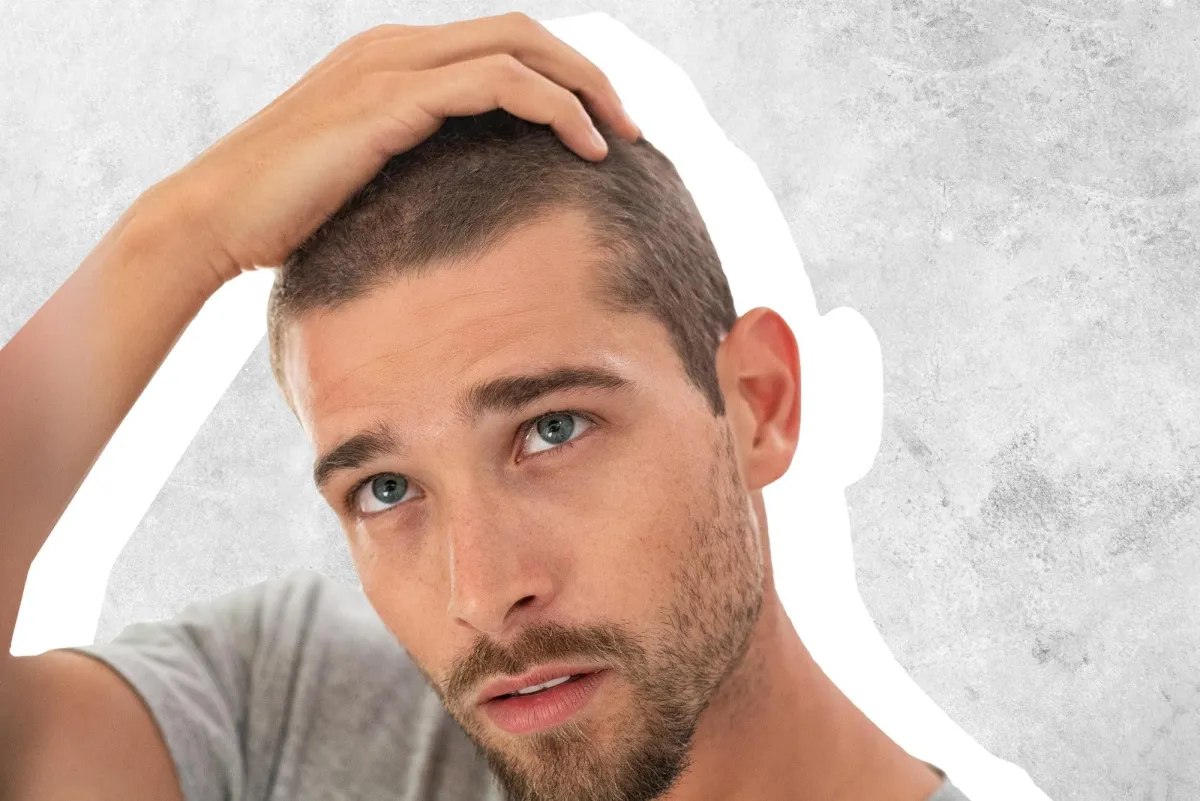
Losing your hair is never a good feeling, most men tend to feel self-conscious about it. Some men decide to completely shave off their heads or constantly wear a hat. One of the most common insecurities men face is hair thinning; for some men, it starts as early as in their 20s. The loss of confidence really starts to affect the way men do their hair and the types of hair cuts they get. Men start to worry about how they will be perceived by friends, family, and colleagues. Hair thinning should not be the cause of self distraughtness, and it should not limit men to have to continuously cover their heads. CADMEN Barbershop has compiled a list of the top 5 best haircuts for men experiencing early hair loss.
Split Ends in Men's Hair: Causes, Prevention, and When to Get a Trim
Split Ends in Men's Hair: Causes, Prevention, and When to Get a Trim
Split ends are a maintenance issue for any man who keeps his hair at longer lengths. They are not caused by a single event but by cumulative mechanical and environmental damage to the hair shaft over time. Understanding the specific causes helps address them at the source rather than endlessly trimming damage as it appears.
What Split Ends Are
A split end is exactly what the name describes: the end of the hair strand has split into two or more smaller strands. The cuticle at the tip of the hair has been compromised, exposing the cortex underneath and allowing the hair shaft to fray and separate. Once the split has started, it can progress up the shaft if not trimmed away, producing longer splits that degrade more of the strand.
Split ends are not reversible. No product "repairs" a split end because the structural damage is physical, not chemical. Products that claim to seal or repair split ends temporarily bond the split sections together with coating agents, which improves the appearance briefly but does not restore the structure. The only real solution is cutting the split section away.
What Causes Split Ends
Heat without protection is the most common cause for men who use a blow-dryer regularly. High-heat drying directly applied to the ends of the hair degrades the cuticle and creates the conditions for splitting. The ends of the hair are the oldest, most accumulated-damage section of the strand and therefore most vulnerable to heat.
Mechanical damage from aggressive brushing or combing, particularly on wet hair, causes splits at the point of breakage where the hair snaps under the force of the brush. The broken end is an open split. The same mechanical damage from friction against rough fabrics, tight elastics, and repeatedly rubbing against collars or backpacks creates splits through consistent abrasion.
Chemical processing opens and restructures the cuticle, which makes the processed sections more susceptible to splitting under the same environmental exposure that unprocessed hair handles without damage.
Dehydrated hair is more brittle and creates splits more readily under the same forces that well-moisturized hair withstands. Men in dry climates or who use harsh shampoos without a conditioner frequently have chronically dry hair that splits faster than it would with adequate moisture.
When to Get a Trim
Trim when you can feel or see split ends, or as a preventive measure every eight to twelve weeks for men with longer hair. Visible split ends at the tips mean the damage is present. Feeling rough, frayed texture at the ends when you run your fingers down the hair also indicates splits.
Waiting until splits are extensive means more length must be removed to get behind the damage. Regular trims of half an inch to one inch every two to three months remove the oldest, most damaged sections before the splits progress further up the shaft.
Prevention
Use a heat protectant spray before any direct heat styling. Apply it from mid-shaft to the ends, which are the most heat-vulnerable sections. Reduce blow-dryer temperature to medium rather than high for most drying work; the lower temperature achieves the same result with significantly less damage.
Condition the hair after every wash to maintain cuticle hydration. A weekly deep conditioning treatment on longer hair provides additional moisture that standard conditioner does not sustain. Apply a small amount of a light oil or hair serum to the ends specifically after washing to seal the cuticle and reduce environmental damage between washes.
Use wide-tooth combs on wet hair rather than tight-tooth combs or brushes. Start detangling at the ends and work toward the roots to reduce the mechanical force placed on the strands. A gentle detangling on wet hair is significantly less damaging than a forced comb-through from root to tip.
Frequently Asked Questions
Do split ends affect hair growth?
No. Hair grows from the follicle at the scalp. Split ends at the tip of the hair have no effect on the growth rate or the new hair being produced. However, split ends that progress up the shaft increase breakage, which makes long hair harder to maintain because the length is breaking off faster than it is growing.
Can I see split ends with the naked eye?
Yes, in good light. Take a section of hair, hold it against a light source, and look at the tips. Healthy tips are uniform and smooth. Split ends appear as Y-shapes or frayed sections at the end of the strand. You can also feel them by running two fingers slowly down the shaft; rough, textured sections where the hair feels different from the surrounding strands indicate damage.
Is getting a trim at the barbershop different from trimming at home?
A barber uses sharp scissors designed for hair cutting that produce a clean cut at the exact point intended. Home trimming with dull scissors or clippers may produce a cut that crushes the hair shaft at the cut point rather than cutting cleanly, which creates a new split end at the trimmed location. If you are trimming to address split ends, use sharp, hair-specific scissors and cut a quarter to half inch above the visible split to get behind the damage.
Does hair type affect split end frequency?
Yes. Fine hair splits more readily than thick hair under the same conditions because the thinner shaft has less structural mass to absorb damage before the cuticle fails. Curly hair is prone to splits at the points where the curl creates tension and wear on the outer cuticle. Straight, thick hair held at the same length as fine or curly hair typically requires less frequent trimming to maintain end quality.
How do I know if the barber cut enough to remove the damage?
Check the ends after the trim. Healthy trimmed ends feel smooth and look uniform. If you can still see or feel splits after a trim, the cut did not get behind all the damage. Tell the barber you can still see some splits and they will take a bit more length. A barber who knows you want to remove the damage will err on the side of cutting enough rather than guessing short.
Related Reading From CADMEN Barber Academy
- Split Ends in Men's Hair: What Causes Them and What to Do
- Cutting Coily Hair: The Techniques That Work and the Mistakes That Damage the Pattern
- Cutting Curly Hair: What Barbers Do Differently
- How to Cut Curly Hair: Barber Techniques and Approach
- Curly Hair at the Barbershop: What Barbers Do Differently
- Curly Hair at the Barbershop: Cuts and Products That Actually Work

5 Best Haircuts for Men with
Early Hair Thinning
Losing your hair is never a good feeling, most men tend to feel self-conscious about it. Some men decide to completely shave off their heads or constantly wear a hat. One of the most common insecurities men face is hair thinning; for some men, it starts as early as in their 20s. The loss of confidence really starts to affect the way men do their hair and the types of hair cuts they get. Men start to worry about how they will be perceived by friends, family, and colleagues. Hair thinning should not be the cause of self distraughtness, and it should not limit men to have to continuously cover their heads. CADMEN Barbershop has compiled a list of the top 5 best haircuts for men experiencing early hair loss.


For any request, please contact us at info@cadmen.ca