
Barber Tips & Tricks
Follow us for the latest barber techniques and tips
Barber Tips & Tricks
Follow us for the latest barber techniques and tips
Top 7 Reasons Why Your Clients
Aren't Returning
Stay Ahead in the Barbering Game: Nurturing
Lifelong Clientele
You might have come across the saying “give a client a good cut at a reasonable price, and they'll be yours for life.” Unfortunately in reality this is not always the case. That’s where we come in! Check out some of the reasons why your clients may not be returning, whether they were long-term customers or a first-time appointment, below.

Top 7 Reasons Why Your Clients
Aren't Returning
Stay Ahead in the Barbering Game: Nurturing
Lifelong Clientele
You might have come across the saying “give a client a good cut at a reasonable price, and they'll be yours for life.” Unfortunately in reality this is not always the case. That’s where we come in! Check out some of the reasons why your clients may not be returning, whether they were long-term customers or a first-time appointment, below.
Career in Mobile Barbering: Key
Things You Need to Know about
While most barbers work in physical barbershops or hair salons, there are a growing number of barbers who work on-call. What does it mean to be a mobile barber? What are their primary responsibilities? Where to find them? In this blog, we will explain some key terms you should know about mobile barbering and how you can start a new career in it.

Career in Mobile Barbering: Key
Things You Need to Know about
While most barbers work in physical barbershops or hair salons, there are a growing number of barbers who work on-call. What does it mean to be a mobile barber? What are their primary responsibilities? Where to find them? In this blog, we will explain some key terms you should know about mobile barbering and how you can start a new career in it.
Top 4 Ways for Barbers to
Promote Themselves
Marketing is key. Knowing how to market yourself as a barber can be the difference between having 5 to 20 clients a day. If you are interested in boosting the number of your customers and furthering your advertising skills, read the list below with four ways to promote yourself as a barber.

Top 4 Ways for Barbers to
Promote Themselves
Marketing is key. Knowing how to market yourself as a barber can be the difference between having 5 to 20 clients a day. If you are interested in boosting the number of your customers and furthering your advertising skills, read the list below with four ways to promote yourself as a barber.
5 Tips for Social Media Content
Creating as a Barber
It is next to impossible to find someone who is not on social media today. More than just a tool for connection, social media is key helping barbers market themselves and promote their names and skills. If you want to up your barber game quickly, here are five tips on how to promote content online that you don't want to miss out on.

5 Tips for Social Media Content
Creating as a Barber
It is next to impossible to find someone who is not on social media today. More than just a tool for connection, social media is key helping barbers market themselves and promote their names and skills. If you want to up your barber game quickly, here are five tips on how to promote content online that you don't want to miss out on.
5 Best Haircuts for Men with
Early Hair Thinning
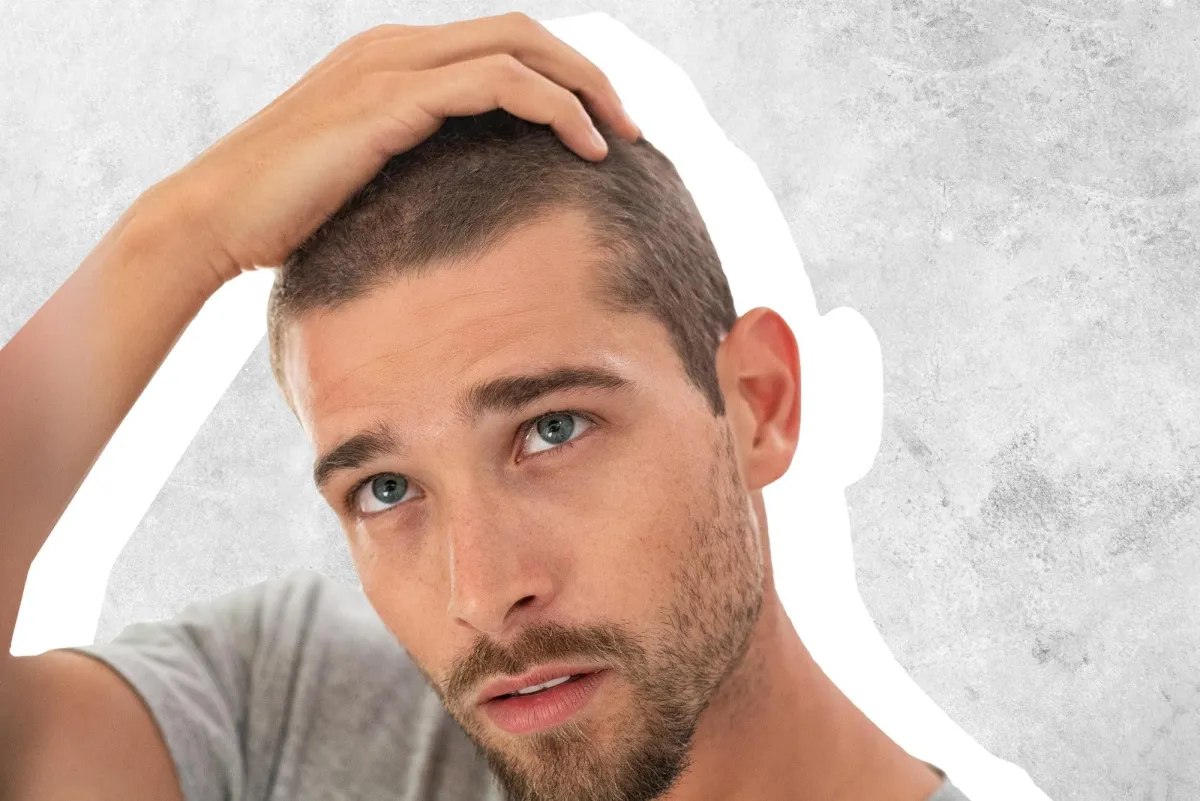
Losing your hair is never a good feeling, most men tend to feel self-conscious about it. Some men decide to completely shave off their heads or constantly wear a hat. One of the most common insecurities men face is hair thinning; for some men, it starts as early as in their 20s. The loss of confidence really starts to affect the way men do their hair and the types of hair cuts they get. Men start to worry about how they will be perceived by friends, family, and colleagues. Hair thinning should not be the cause of self distraughtness, and it should not limit men to have to continuously cover their heads. CADMEN Barbershop has compiled a list of the top 5 best haircuts for men experiencing early hair loss.

Cutting Curly Hair: What Barbers Do Differently
Cutting Curly Hair: What Barbers Do Differently
Curly hair is not simply wavy or straight hair that coils. It has a structurally different fiber cross-section, distributes moisture differently, behaves differently under clipper tension, and shrinks significantly when dry. Barbers who cut curly hair well adjust their technique at multiple points in the service rather than applying a one-method-fits-all approach.
Shrinkage: The Most Important Variable
Curl shrinkage is the percentage by which curly hair appears shorter when dry compared to its actual extended length. For type 3 curls (loose to tight spirals), shrinkage is typically 20% to 40%. For type 4 curls (coils and tight kinks), shrinkage can reach 50% to 75%. This means a type 4 client with 6 inches of actual hair length may have hair that appears to be only 3 inches long when fully dry and set in its natural curl.
For the barber, this is critical: if you cut curly hair when it is stretched out (by combing or brushing under clipper tension), you are cutting it longer than it will appear when it dries. The client leaves the chair with the cut looking longer than they wanted. Cutting at its natural unstretched state produces the result that the client will actually see when they are not in the barber chair.
Cutting Technique Differences
Clipper-over-comb on curly hair: The comb acts against the hair's natural shape when used the same way it would be on straight hair. On curly hair, the comb must follow the curl direction and not force the curl to lie flat. Cutting against the natural curl pattern rather than with it produces an uneven, choppy result because the curl springs back differently in different directions.
Twisting method for even lengths: For very coily hair (type 4), some barbers use the twist-and-cut method, twisting small sections of hair and cutting the extended length to produce consistent ends across the curl pattern, rather than cutting while combed out.
Scissor technique: Point-cutting (cutting into the end of the section at an angle) produces softer, more natural-looking ends on curly hair. Blunt cutting (straight across) can create a hard, blocky perimeter that reads as unnatural once the curl settles. Sliding shear cuts produce feathering that can soften the curl ends further.
The Fade on Curly Hair
Fading coily or tightly curly hair requires more passes than fading straight hair. The reason: tight coils do not lay flat under the clipper, creating variation in how much hair the blade contacts on any given pass. Additional cross-grain passes (going against the natural growth pattern) are necessary to achieve the same even coverage that straight hair produces with fewer passes. The blending between guard levels also requires more attention because the shrinkage causes the zones to look different once the hair relaxes from the clipper tension.
Consultation for Curly Hair
Asking a curly-haired client how they normally wear their hair (stretched, natural, product-set) is essential before cutting. A client who normally wears their hair in a stretched state (blow-dried) needs a different cut length than a client who wears it in its natural curl state. The target finished appearance should be based on how the client will actually wear the hair, not on how it looks under clipper tension in the chair.
CADMEN Training
CADMEN's hands-on program works on a diverse range of hair types. academy.cadmen.ca/in-person-training.
Frequently Asked Questions
How do you cut curly hair without it looking uneven?
The key adjustments for even curly hair cuts: cut the hair in its natural curl state (not stretched or combed flat), because the curl must be in its natural form to accurately represent how it will look when worn; use point-cutting or texturizing shear technique rather than blunt cuts to produce ends that blend into the curl pattern rather than creating a hard perimeter line; follow the curl direction with any comb work rather than against it; and make final assessments with the hair dry and in its natural settled curl, not while damp or under tension. On tight coil patterns, what looks even under comb tension often looks uneven once the curl shrinks back. Making final adjustments on dry, natural curl produces a more accurate result.
Should curly hair be cut wet or dry?
For most curl types (type 2 waves through type 4 coils), cutting dry and in the natural curl state produces more accurate length assessment and final result prediction. When the hair is wet, it elongates and the curl pattern is suppressed, making it difficult to assess where the length will actually sit when the hair dries. Cutting dry lets the barber see exactly how the curl is behaving, identify uneven areas accurately, and make informed decisions about where to cut. Some techniques (initial rough cutting, scissor work on longer curly styles) are done slightly damp to ease comb-through, but the final length assessment and precision work is generally done with the hair in its natural dry state. Barbers who always cut wet on curly clients often produce cuts that look shorter than expected when the hair fully dries.
What haircut suits curly hair?
Several styles work well with curly hair: the curly fade (skin or low fade on the sides, natural curl top kept at a length that allows the curl pattern to show); the tapered natural (soft taper on the sides, full natural curl top, particularly for longer styles); the textured crop (short on sides, crop-length top with point-cut texture to enhance curl definition); and longer styles that work with the curl pattern rather than suppressing it. The styling that does not suit most curly hair: any style that requires daily heat straightening or mechanical stretching to look as intended, because the maintenance burden is high and heat use over time damages curl integrity. The best curly haircuts embrace the curl and use it as a design element rather than treating it as a problem to be managed.
How do you blend curly hair with clippers?
Blending curly hair with clippers requires more passes than blending straight hair. The technique: use the same guard progression as a standard fade (stepping down through guard levels), but run additional cross-grain passes in each zone (moving the clipper against the natural curl direction as well as with it) to achieve even coverage. Tight coils tend to pick up clipper blades inconsistently on a single-direction pass because the coils point in multiple directions. Multiple directional passes even out the coverage. Inspect each zone with the hair in its natural relaxed state (not under comb tension) to assess whether the blend is smooth before moving on. Lines that seem blended under tension can reappear once the curl relaxes. Final blending adjustments should always be made on the relaxed natural curl, not while the hair is combed or stretched.
What products work on men's curly hair?
Curl-enhancing creams and leave-in conditioners are the most versatile products for men's curly hair. They define the curl pattern, reduce frizz, and provide moisture without weight. For tighter coil patterns (type 4), a heavier cream or butter product provides more moisture retention. For looser waves and spirals (type 2 to 3), a lighter curl cream or a gel (applied on wet hair, allowed to set and then the gel cast broken by scrunching once dry) produces definition without heaviness. Avoid products with heavy petroleum or mineral oil bases on curly hair, they coat the hair shaft without absorbing, create buildup quickly, and require clarifying washes to remove. Water-based products work best for most curl types. Barbers who can recommend specific products for the client's hair type during the service add value beyond the cut itself.
Related Reading From CADMEN Barber Academy
- How to Cut Curly Hair: Barber Techniques and Approach
- Curly Hair at the Barbershop: What Barbers Do Differently
- Curly Hair at the Barbershop: Cuts and Products That Actually Work
- Cutting Curly Hair as a Barber: How to Work With the Curl Pattern, Not Against It
- Cutting Curly Hair at the Barbershop: Hair Types and Techniques
- Cutting Type 3 Curly Hair: What Barbers Need to Know

5 Best Haircuts for Men with
Early Hair Thinning
Losing your hair is never a good feeling, most men tend to feel self-conscious about it. Some men decide to completely shave off their heads or constantly wear a hat. One of the most common insecurities men face is hair thinning; for some men, it starts as early as in their 20s. The loss of confidence really starts to affect the way men do their hair and the types of hair cuts they get. Men start to worry about how they will be perceived by friends, family, and colleagues. Hair thinning should not be the cause of self distraughtness, and it should not limit men to have to continuously cover their heads. CADMEN Barbershop has compiled a list of the top 5 best haircuts for men experiencing early hair loss.


For any request, please contact us at info@cadmen.ca