
Barber Tips & Tricks
Follow us for the latest barber techniques and tips
Barber Tips & Tricks
Follow us for the latest barber techniques and tips
Top 7 Reasons Why Your Clients
Aren't Returning
Stay Ahead in the Barbering Game: Nurturing
Lifelong Clientele
You might have come across the saying “give a client a good cut at a reasonable price, and they'll be yours for life.” Unfortunately in reality this is not always the case. That’s where we come in! Check out some of the reasons why your clients may not be returning, whether they were long-term customers or a first-time appointment, below.

Top 7 Reasons Why Your Clients
Aren't Returning
Stay Ahead in the Barbering Game: Nurturing
Lifelong Clientele
You might have come across the saying “give a client a good cut at a reasonable price, and they'll be yours for life.” Unfortunately in reality this is not always the case. That’s where we come in! Check out some of the reasons why your clients may not be returning, whether they were long-term customers or a first-time appointment, below.
Career in Mobile Barbering: Key
Things You Need to Know about
While most barbers work in physical barbershops or hair salons, there are a growing number of barbers who work on-call. What does it mean to be a mobile barber? What are their primary responsibilities? Where to find them? In this blog, we will explain some key terms you should know about mobile barbering and how you can start a new career in it.

Career in Mobile Barbering: Key
Things You Need to Know about
While most barbers work in physical barbershops or hair salons, there are a growing number of barbers who work on-call. What does it mean to be a mobile barber? What are their primary responsibilities? Where to find them? In this blog, we will explain some key terms you should know about mobile barbering and how you can start a new career in it.
Top 4 Ways for Barbers to
Promote Themselves
Marketing is key. Knowing how to market yourself as a barber can be the difference between having 5 to 20 clients a day. If you are interested in boosting the number of your customers and furthering your advertising skills, read the list below with four ways to promote yourself as a barber.

Top 4 Ways for Barbers to
Promote Themselves
Marketing is key. Knowing how to market yourself as a barber can be the difference between having 5 to 20 clients a day. If you are interested in boosting the number of your customers and furthering your advertising skills, read the list below with four ways to promote yourself as a barber.
5 Tips for Social Media Content
Creating as a Barber
It is next to impossible to find someone who is not on social media today. More than just a tool for connection, social media is key helping barbers market themselves and promote their names and skills. If you want to up your barber game quickly, here are five tips on how to promote content online that you don't want to miss out on.

5 Tips for Social Media Content
Creating as a Barber
It is next to impossible to find someone who is not on social media today. More than just a tool for connection, social media is key helping barbers market themselves and promote their names and skills. If you want to up your barber game quickly, here are five tips on how to promote content online that you don't want to miss out on.
5 Best Haircuts for Men with
Early Hair Thinning
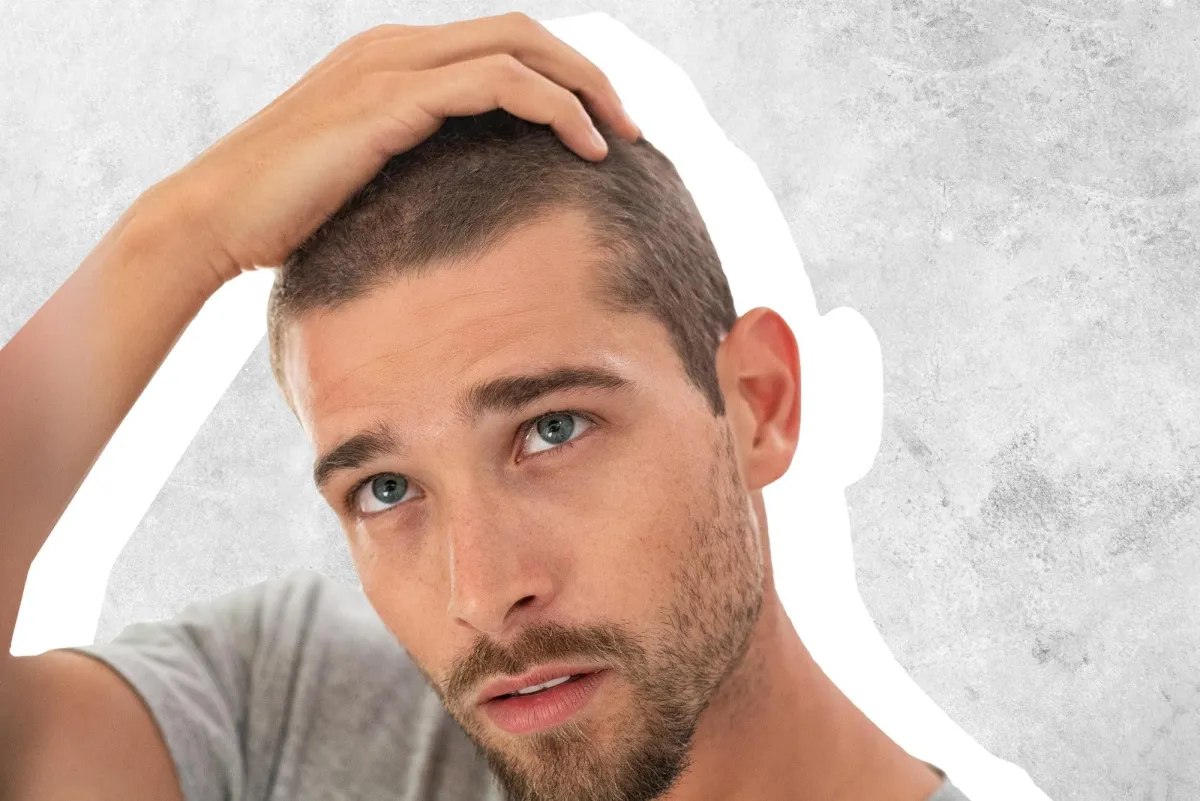
Losing your hair is never a good feeling, most men tend to feel self-conscious about it. Some men decide to completely shave off their heads or constantly wear a hat. One of the most common insecurities men face is hair thinning; for some men, it starts as early as in their 20s. The loss of confidence really starts to affect the way men do their hair and the types of hair cuts they get. Men start to worry about how they will be perceived by friends, family, and colleagues. Hair thinning should not be the cause of self distraughtness, and it should not limit men to have to continuously cover their heads. CADMEN Barbershop has compiled a list of the top 5 best haircuts for men experiencing early hair loss.
Curly Hair at the Barbershop: What Barbers Do Differently
Curly Hair at the Barbershop: What Barbers Do Differently
Curly hair does not behave the same as straight hair under scissors or clippers, and barbers who are trained in curly hair technique approach it differently from the start. Men with curly hair who have had disappointing barbershop experiences often had barbers who used straight-hair technique on curly hair without adjusting. Here is what actually changes when a trained barber works with curly texture.
Cutting Dry vs. Wet
Most barbershops cut hair wet or damp. For curly hair, wet cutting is more complicated: when curls are wet, they stretch and elongate. Hair that appears to be 3 inches long may spring back to 1.5 inches when dry. A barber cutting wet curly hair to a specific length is cutting to the wet length, which translates to a significantly shorter result once dry. Experienced barbers cutting curly hair either cut dry (so the length being removed is what the client will live with) or cut wet with a calibrated allowance for shrinkage based on the specific curl pattern's behavior.
Working With the Curl Pattern
Straight hair can be combed flat and cut in a line, it stays where it is put. Curly hair coils back to its natural shape after any straightening. Barbers working with curls cut in the direction of the natural growth pattern rather than against it. Shaping curly hair means working with the way the curl naturally falls and creating a shape that is defined in the curl's natural state, not in a forced straightened state.
Tool Adjustments
Clippers on curly hair require different technique: the clipper is often brought out from the head at an angle to avoid creating harsh lines, and the approach to blending is more gradual to account for how the curl can exaggerate visible lines. Scissor work over a comb (rather than clipper-only work) gives more precise control on curly texture, especially in the upper sections.
CADMEN Training
CADMEN Barber Academy trains barbers in curly and coily hair technique as part of the standard curriculum. academy.cadmen.ca/in-person-training.
Frequently Asked Questions
Why do curly haircuts sometimes come out shorter than expected?
This is the most consistent complaint among men with curly hair who have had their hair cut at a shop without curly hair expertise. The cause is the wet-cutting shrinkage problem described above. The mechanism: curly hair, when wet, can stretch to 1.5 to 2 times its dry coiled length depending on the curl tightness. A barber who is accustomed to cutting straight hair and cuts damp or wet curly hair to a specific visible length is working with the stretched, wet version of the hair. When the hair dries and contracts back to its natural curl, the cut is significantly shorter than what was visible in the chair. For a man with 3c or 4a curl pattern (tight spirals), this shrinkage factor can mean the difference between "2 inches on top" (the intended result) and effectively less than 1 inch after drying. What to tell a barber to prevent this: "I want to cut it dry" or "my hair has significant shrinkage, please cut conservatively and account for how much it springs back when dry." This gives the barber the information they need to adjust. For a new barber who has not seen your curl pattern before, going back from longer to shorter is easy. Going back from shorter to longer requires weeks of growth. The precautionary approach: ask the barber to cut less than you think you need, check the result as it dries, and return for a second pass if more length needs to come off. Many good barbers working with curly hair expect this process and prefer it to cutting too short on the first pass.
What is the best haircut for men with type 4 coily hair?
Type 4 hair (tightly coiled, minimal curl definition, very high shrinkage factor) has specific properties that shape what cuts work best. The options: the skin fade with close-cropped top. This is the most popular and versatile option for type 4 hair. The tight coil pattern looks clean and precise when cut very short, and a sharp skin fade provides strong visual definition. The result requires very little daily maintenance and looks fresh for 2 to 4 weeks before it needs refreshing. The shape-up or box fade. A structured perimeter line (edge-up) with a cropped or fade top creates a clean, defined shape. The edge-up alone transforms a grown-out, undefined shape into a sharp, intentional style. It is often the single highest-impact service for type 4 hair relative to time invested. The natural with a defined shape. Keeping the length and having a barber shape the perimeter, flatten the sides, and create a consistent shape works well for men who want to maintain length. This requires a barber experienced in shaping natural hair with a pick and scissors rather than relying entirely on clippers. The taper. A taper that reduces length from the top to the nape, without a hard fade, gives a clean, versatile look appropriate for professional environments while keeping the natural texture intact. What does not typically work well for type 4 hair: cuts that require the hair to lie flat or stay in a specific direction without product. The tight coil will always return to its natural vertical direction. Any style that works with this natural direction rather than against it is more practical and lower-maintenance.
Should men with curly hair use conditioner differently than men with straight hair?
Yes. Curly hair has structural differences from straight hair that affect how it retains and distributes moisture. The technical difference: each curve in a curl shaft creates a point where the outer cuticle layer of the hair is slightly more open than on straight hair. This means curly hair loses moisture more rapidly and absorbs external products (both good products and environmental moisture) more readily. The practical implication: curly hair typically requires more consistent conditioning than straight hair to maintain the elasticity and definition of the curl. What works: conditioner should be used every time curly hair is washed, applied primarily to the mid-lengths and ends (where the curl is most defined and where the hair is oldest and most susceptible to dryness). Leave-in conditioners add an ongoing moisture reserve that regular wash-out conditioners do not. For type 3 and type 4 curl patterns, leave-in conditioner is often a daily or near-daily product rather than a once-per-wash product. Protein-based conditioners (which contain ingredients like keratin, silk protein, or wheat protein) help maintain the curl's structural integrity by temporarily filling gaps in the cuticle. These are particularly useful for men with curly hair that has been chemically treated, heat-styled, or exposed to chlorine. What to avoid: heavy silicone-based conditioners used daily without regular clarifying can build up on the curl shaft, weighing the curl down and preventing moisture absorption. A clarifying shampoo used once or twice a month removes buildup and lets the curl function properly. The simplest summary: curly hair needs more consistent conditioning than straight hair, and the condition of the hair directly affects how well the curl defines and how the cut looks once it dries.
Related Reading From CADMEN Barber Academy
- Curly Hair Cuts for Men: How Barbers Approach Curly Hair Differently
- Cutting Curly Hair: What Barbers Do Differently
- How to Cut Curly Hair: Barber Techniques and Approach
- Curly Hair at the Barbershop: Cuts and Products That Actually Work
- Cutting Curly Hair as a Barber: How to Work With the Curl Pattern, Not Against It
- Cutting Curly Hair at the Barbershop: Hair Types and Techniques

5 Best Haircuts for Men with
Early Hair Thinning
Losing your hair is never a good feeling, most men tend to feel self-conscious about it. Some men decide to completely shave off their heads or constantly wear a hat. One of the most common insecurities men face is hair thinning; for some men, it starts as early as in their 20s. The loss of confidence really starts to affect the way men do their hair and the types of hair cuts they get. Men start to worry about how they will be perceived by friends, family, and colleagues. Hair thinning should not be the cause of self distraughtness, and it should not limit men to have to continuously cover their heads. CADMEN Barbershop has compiled a list of the top 5 best haircuts for men experiencing early hair loss.


For any request, please contact us at info@cadmen.ca