
Barber Tips & Tricks
Follow us for the latest barber techniques and tips
Barber Tips & Tricks
Follow us for the latest barber techniques and tips
Top 7 Reasons Why Your Clients
Aren't Returning
Stay Ahead in the Barbering Game: Nurturing
Lifelong Clientele
You might have come across the saying “give a client a good cut at a reasonable price, and they'll be yours for life.” Unfortunately in reality this is not always the case. That’s where we come in! Check out some of the reasons why your clients may not be returning, whether they were long-term customers or a first-time appointment, below.

Top 7 Reasons Why Your Clients
Aren't Returning
Stay Ahead in the Barbering Game: Nurturing
Lifelong Clientele
You might have come across the saying “give a client a good cut at a reasonable price, and they'll be yours for life.” Unfortunately in reality this is not always the case. That’s where we come in! Check out some of the reasons why your clients may not be returning, whether they were long-term customers or a first-time appointment, below.
Career in Mobile Barbering: Key
Things You Need to Know about
While most barbers work in physical barbershops or hair salons, there are a growing number of barbers who work on-call. What does it mean to be a mobile barber? What are their primary responsibilities? Where to find them? In this blog, we will explain some key terms you should know about mobile barbering and how you can start a new career in it.

Career in Mobile Barbering: Key
Things You Need to Know about
While most barbers work in physical barbershops or hair salons, there are a growing number of barbers who work on-call. What does it mean to be a mobile barber? What are their primary responsibilities? Where to find them? In this blog, we will explain some key terms you should know about mobile barbering and how you can start a new career in it.
Top 4 Ways for Barbers to
Promote Themselves
Marketing is key. Knowing how to market yourself as a barber can be the difference between having 5 to 20 clients a day. If you are interested in boosting the number of your customers and furthering your advertising skills, read the list below with four ways to promote yourself as a barber.

Top 4 Ways for Barbers to
Promote Themselves
Marketing is key. Knowing how to market yourself as a barber can be the difference between having 5 to 20 clients a day. If you are interested in boosting the number of your customers and furthering your advertising skills, read the list below with four ways to promote yourself as a barber.
5 Tips for Social Media Content
Creating as a Barber
It is next to impossible to find someone who is not on social media today. More than just a tool for connection, social media is key helping barbers market themselves and promote their names and skills. If you want to up your barber game quickly, here are five tips on how to promote content online that you don't want to miss out on.

5 Tips for Social Media Content
Creating as a Barber
It is next to impossible to find someone who is not on social media today. More than just a tool for connection, social media is key helping barbers market themselves and promote their names and skills. If you want to up your barber game quickly, here are five tips on how to promote content online that you don't want to miss out on.
5 Best Haircuts for Men with
Early Hair Thinning
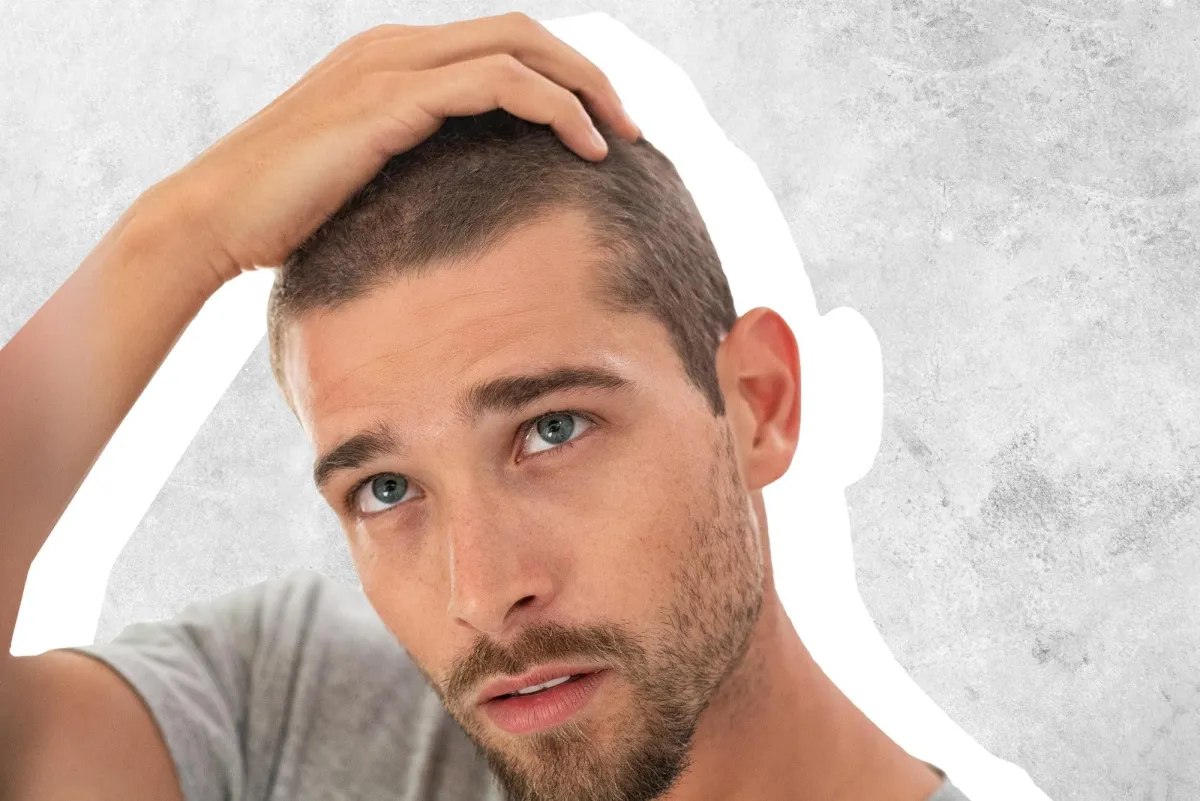
Losing your hair is never a good feeling, most men tend to feel self-conscious about it. Some men decide to completely shave off their heads or constantly wear a hat. One of the most common insecurities men face is hair thinning; for some men, it starts as early as in their 20s. The loss of confidence really starts to affect the way men do their hair and the types of hair cuts they get. Men start to worry about how they will be perceived by friends, family, and colleagues. Hair thinning should not be the cause of self distraughtness, and it should not limit men to have to continuously cover their heads. CADMEN Barbershop has compiled a list of the top 5 best haircuts for men experiencing early hair loss.
Split Ends in Men's Hair: What Causes Them and What to Do
Split Ends in Men's Hair: What Causes Them and What to Do
Split ends occur when the protective outer layer of the hair shaft (the cuticle) becomes damaged and frays, causing the hair strand to split at the tip or along the length. They are most visible at the ends of longer hair, but the underlying damage occurs along the entire length and becomes most apparent where the hair is oldest, the tips.
What Causes Them
The primary causes of split ends in men's hair: excessive heat from blow dryers used at maximum heat without movement; friction from aggressive towel drying; over-washing that strips the natural protective oils from the hair; chemical damage from coloring or bleaching; and simply age, the oldest portions of the hair (the ends) have been exposed to the most cumulative damage. For men who keep their hair short, split ends are less of a concern because the oldest, most damaged sections are regularly trimmed away. For men with medium to long hair, split ends are an ongoing maintenance issue.
The Only Real Fix
No product repairs a split end. Products marketed as "split end repair" temporarily coat the damaged area, making it look smoother and reducing further splitting in the short term, but the structural damage to the hair fiber is permanent. The only way to remove split ends is to cut them. Regular trims at the barbershop (every 6 to 8 weeks for longer hair) remove the split ends before they travel further up the shaft. When a split end travels upward, the damage extends into healthy hair and requires a larger cut to remove.
Prevention
Reducing heat exposure, patting rather than rubbing hair dry, using conditioner regularly, and trimming on schedule prevents the accumulation of split ends faster than they would naturally develop.
CADMEN Training
Hair health and cutting technique are core to CADMEN's barbering curriculum. academy.cadmen.ca/in-person-training.
Frequently Asked Questions
How do I know if I have split ends?
Identifying split ends is straightforward if you know what to look for. The most reliable method: take a small section of hair between your fingers and look at the ends in good lighting. Hold the section against a contrasting background (dark hair against a light wall, or light hair against a dark background) to make the fine strand details more visible. What split ends look like: the most classic split end is a Y-shape at the tip of the hair strand where the shaft has divided into two. This is called a classic split. More advanced damage produces a multi-split end where the tip divides into three or more strands, or produces multiple fracture points along the length of the strand rather than just at the tip. A feather-like fraying pattern where the hair looks rough and tufted at the ends indicates significant split end accumulation. The "sock test" (less scientific but useful): run your fingers down a section of dry hair from root to tip. Healthy hair feels smooth. Damaged hair with developing split ends feels rough and catches slightly under the fingertips where the cuticle is disrupted. For very short hair: split ends on hair shorter than 2 inches are uncommon because the oldest (most damaged) section of the hair is trimmed away regularly. Very short hair that feels rough and brittle is more likely experiencing dryness, breakage, or product build-up than classic split ends. Check at a trim appointment: barbers can identify split ends during any trim. Asking "how are my ends?" during the consultation gives you an informed assessment and can guide the decision of how much to cut.
Can I fix split ends without cutting my hair?
No. Split ends cannot be permanently repaired without cutting. This is a firm physical reality, not a product or industry opinion. Here is why: a split end is a physical fracture in the hair fiber. The cortex (the inner structural layer) and the cuticle (the outer protective layer) at the tip of the hair have separated. There is no biological repair mechanism in the hair fiber itself, unlike skin, hair is not living tissue once it exits the follicle, so it cannot regenerate or heal. What products do: some products contain film-forming polymers that coat the damaged area and temporarily fuse the split tip, making it look smoother and reducing the roughness of the frayed end. These products (often marketed as "bond repair," "split end treatment," or "gloss serum") work cosmetically but not structurally. The product wears off with washing, and the split remains and continues to travel up the shaft. Silicone-based smoothing serums provide a similar temporary cosmetic effect by coating the hair and filling in surface irregularities. Again, the underlying damage is not addressed. The split continues to travel: this is the most important practical point. Once a split end forms at the tip, the fracture point is structurally weaker than the surrounding hair. Friction, heat, and normal wear continue to cause the split to travel further up the shaft. What was a 2mm split at the tip can become a 1cm split through the hair over weeks if not addressed by trimming. This is why the advice to "trim regularly to prevent split ends" is accurate, regular trimming removes the developing splits before they travel far enough to require removing significantly more hair length.
How often should men with longer hair get a trim?
Men growing their hair longer face a specific challenge: the goal of adding length conflicts with the need to trim split ends that would, if left unaddressed, require cutting off more length later. The standard trimming frequency recommendations by hair length: short hair (under 2 inches): split ends are not typically a concern at this length because regular cuts at the barbershop (every 3 to 5 weeks for maintained short styles) remove the oldest hair regularly. Medium length hair (2 to 4 inches): a trim every 6 to 8 weeks removes developing split ends without taking off significant length. At this length, the hair is long enough to develop visible split ends but short enough that the trim needed to address them is minimal. Long hair (over 4 inches, shoulder length and beyond): a trim every 8 to 12 weeks is the standard recommendation. Hair this long has more old, potentially damaged ends. The trade-off for men growing their hair: a trim every 8 weeks might remove 1/4 to 1/2 inch. Over the course of a year, that is approximately 1.5 to 3 inches removed while the hair grows approximately 6 inches. The net growth is still 3 to 4.5 inches per year even with regular trimming. Not trimming at all and trying to maximize length typically backfires because the split ends travel up the shaft, eventually requiring a larger cut to remove the damage, more length lost in one cut than would have been lost through consistent small trims. The practical approach for length-growing: communicate "I am growing my hair, just trim the ends, no more than 1/4 inch" to your barber at every trim appointment. This prevents barbers from defaulting to a standard trim amount when your goal is to preserve length.
Related Reading From CADMEN Barber Academy
- Split Ends in Men's Hair: Causes, Prevention, and When to Get a Trim
- What Barbers Need to Know About Twist Outs and Coil Styles
- What Shampoo Should Men Actually Use? What Barbers Recommend
- Men's Hair Loss Patterns: What Each Stage Looks Like and What It Means
- Men's Beard Grooming at Home: The Essential Routine
- Men's Pomade Guide: Water-Based vs Oil-Based
- Barbering Topics Index: Every Guide by Subject

5 Best Haircuts for Men with
Early Hair Thinning
Losing your hair is never a good feeling, most men tend to feel self-conscious about it. Some men decide to completely shave off their heads or constantly wear a hat. One of the most common insecurities men face is hair thinning; for some men, it starts as early as in their 20s. The loss of confidence really starts to affect the way men do their hair and the types of hair cuts they get. Men start to worry about how they will be perceived by friends, family, and colleagues. Hair thinning should not be the cause of self distraughtness, and it should not limit men to have to continuously cover their heads. CADMEN Barbershop has compiled a list of the top 5 best haircuts for men experiencing early hair loss.


For any request, please contact us at info@cadmen.ca