
Barber Tips & Tricks
Follow us for the latest barber techniques and tips
Barber Tips & Tricks
Follow us for the latest barber techniques and tips
Top 7 Reasons Why Your Clients
Aren't Returning
Stay Ahead in the Barbering Game: Nurturing
Lifelong Clientele
You might have come across the saying “give a client a good cut at a reasonable price, and they'll be yours for life.” Unfortunately in reality this is not always the case. That’s where we come in! Check out some of the reasons why your clients may not be returning, whether they were long-term customers or a first-time appointment, below.

Top 7 Reasons Why Your Clients
Aren't Returning
Stay Ahead in the Barbering Game: Nurturing
Lifelong Clientele
You might have come across the saying “give a client a good cut at a reasonable price, and they'll be yours for life.” Unfortunately in reality this is not always the case. That’s where we come in! Check out some of the reasons why your clients may not be returning, whether they were long-term customers or a first-time appointment, below.
Career in Mobile Barbering: Key
Things You Need to Know about
While most barbers work in physical barbershops or hair salons, there are a growing number of barbers who work on-call. What does it mean to be a mobile barber? What are their primary responsibilities? Where to find them? In this blog, we will explain some key terms you should know about mobile barbering and how you can start a new career in it.

Career in Mobile Barbering: Key
Things You Need to Know about
While most barbers work in physical barbershops or hair salons, there are a growing number of barbers who work on-call. What does it mean to be a mobile barber? What are their primary responsibilities? Where to find them? In this blog, we will explain some key terms you should know about mobile barbering and how you can start a new career in it.
Top 4 Ways for Barbers to
Promote Themselves
Marketing is key. Knowing how to market yourself as a barber can be the difference between having 5 to 20 clients a day. If you are interested in boosting the number of your customers and furthering your advertising skills, read the list below with four ways to promote yourself as a barber.

Top 4 Ways for Barbers to
Promote Themselves
Marketing is key. Knowing how to market yourself as a barber can be the difference between having 5 to 20 clients a day. If you are interested in boosting the number of your customers and furthering your advertising skills, read the list below with four ways to promote yourself as a barber.
5 Tips for Social Media Content
Creating as a Barber
It is next to impossible to find someone who is not on social media today. More than just a tool for connection, social media is key helping barbers market themselves and promote their names and skills. If you want to up your barber game quickly, here are five tips on how to promote content online that you don't want to miss out on.

5 Tips for Social Media Content
Creating as a Barber
It is next to impossible to find someone who is not on social media today. More than just a tool for connection, social media is key helping barbers market themselves and promote their names and skills. If you want to up your barber game quickly, here are five tips on how to promote content online that you don't want to miss out on.
5 Best Haircuts for Men with
Early Hair Thinning
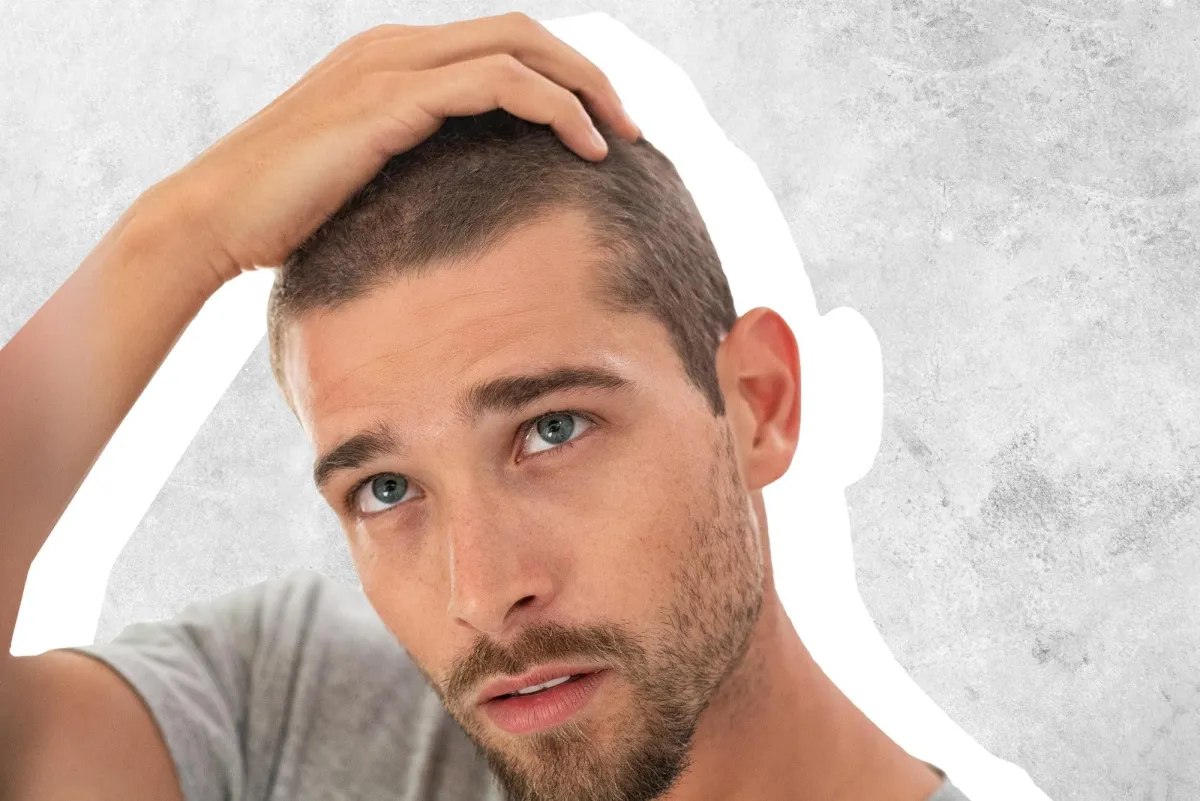
Losing your hair is never a good feeling, most men tend to feel self-conscious about it. Some men decide to completely shave off their heads or constantly wear a hat. One of the most common insecurities men face is hair thinning; for some men, it starts as early as in their 20s. The loss of confidence really starts to affect the way men do their hair and the types of hair cuts they get. Men start to worry about how they will be perceived by friends, family, and colleagues. Hair thinning should not be the cause of self distraughtness, and it should not limit men to have to continuously cover their heads. CADMEN Barbershop has compiled a list of the top 5 best haircuts for men experiencing early hair loss.
Cutting Type 3 Curly Hair: What Barbers Need to Know
Cutting Type 3 Curly Hair: What Barbers Need to Know
Type 3 hair covers the spiral curl and ringlet curl range, hair that forms a consistent S-shaped or spiral pattern when dry. It is more elastic than straight or wavy hair, and this elasticity is the central technical consideration for cutting it: curly hair is significantly shorter when dry than when stretched wet. Not accounting for this produces the most common mistake in cutting curly hair, cutting too short because the wet-stretched length looks longer than the dried, contracted curl length will be.
Wet vs. Dry Cutting
The central question when cutting curly hair: cut it wet or dry?
Wet cutting: easier to section, easier to see the line, easier to use the traditional tension-and-cut technique. The problem: wet curly hair is stretched significantly longer than its dry curl length. A 3-inch cut on wet hair can become a 1.5-inch final length once the curl contracts on drying. This stretch factor must be accounted for in every cut, experienced barbers working wet add significant extra length compared to what they would leave on straight hair. Beginners working wet often cut too short because they are calibrating to the stretched length rather than the contracted length.
Dry cutting: cuts to the actual finished length because the hair is already in its natural state. What you cut is what you see. The disadvantage: dry curly hair is harder to section cleanly, blending is more difficult to control, and the technique is different from the wet-cut training most barbers receive. Dry cutting curly hair is a specific skill that takes practice to master.
The most common approach in barbershops: rough-shape dry to establish the actual contracted length, then dampen to finalize blending and detail work, understanding that the wet sections will be longer than they will appear dry.
Tool Selection
Scissors: the primary tool for type 3 and above. Clippers applied directly to dry curly hair can grab and pull unevenly, and the guard lengths do not account for curl contraction, a guard 4 on curly hair produces a very different contracted result than a guard 4 on straight hair. Scissors with tension allow the barber to control each section independently and cut to the actual desired curl length.
Wide-tooth comb: for sectioning type 3 without disturbing the curl pattern. Fine-tooth combs and standard bristle brushes can disrupt the curl pattern and cause frizz that makes the final length harder to assess.
Clippers: used on the sides and for fade work, not for the top on most type 3 clients. The sides of the head where type 3 hair transitions to a shorter length for a fade or taper are handled with clippers in the standard way, the fade technique on the sides does not change for curly hair, though the blending zone at the top may need more attention because the curl creates more visual density at the transition line.
Shrinkage: The Primary Variable
Type 3a (loose spiral) has 30% to 40% shrinkage from wet to dry. Type 3b (tighter spiral) has 40% to 55% shrinkage. Type 3c (tight corkscrew curl) has 50% to 65% shrinkage. These are general ranges, individual clients within each category vary.
The practical implication: always confirm the desired finished dry length with the client before cutting, and calibrate the cut to produce that contracted length, not the stretched-wet length that is visible during the service.
Product for Curl Definition
Curly hair clients often care significantly about how their curls are defined after the cut. A curl cream or leave-in conditioner applied to damp hair after the service allows the curl pattern to form properly and shows the client the true finished look. Scrunch the product into the hair downward (not upward, which creates frizz) and allow it to air dry or diffuse dry. Sending a client out with their curly hair half-dry and undefined does not show the actual quality of the cut.
CADMEN Training
Curly hair cutting technique and the full textured hair service range are covered in the CADMEN hands-on program. academy.cadmen.ca/in-person-training.
Frequently Asked Questions
How do you cut curly hair without it looking wrong when it dries?
Account for shrinkage. The fundamental error in cutting curly hair wrong is cutting to the stretched-wet length without adjusting for the contracted-dry length. If the client wants 2 inches of curly length when dry, cut 3 to 4 inches of stretched-wet length depending on the curl tightness and individual shrinkage rate. The reliable approach: cut slightly longer than you think you need on the first pass, diffuse or air-dry the section to check the contracted length, adjust from there. Once the client's personal shrinkage factor is established over multiple visits, the calibration becomes reliable. First-visit curly hair clients always warrant a more conservative first pass, cutting shorter is easy; cutting longer after the fact is impossible.
Should curly hair be cut wet or dry?
Both methods work with proper technique. Dry cutting is considered the gold standard by many curl specialists because the finished length is directly visible during the cut. Wet cutting requires accounting for shrinkage at every section but is more familiar technique for most trained barbers. For clients new to the barber, confirming the desired contracted dry length before the cut (asking to see a photo or measuring against an existing reference point) is more important than which method is used. A barber who cuts wet but accurately accounts for shrinkage produces the same result as one who cuts dry.
What is the best haircut for type 3 curly hair?
Haircuts that work with the curl pattern rather than fighting it consistently produce the best results. For type 3 men's hair: a round or oval shape that allows the curls to form their natural spiral without forcing a directional shape that the curl pattern will fight; a curly crop (similar to a textured crop but cut to release the curl rather than press it flat); or longer natural curls with defined edges and a cleaned-up perimeter. The worst haircuts for type 3 hair are those designed for straight hair applied without adjustment, the cut may look good wet but produces an entirely different shape once the curl contracts. Always assess the cut in its dry, styled state before the client leaves.
Do clippers damage curly hair?
Clippers used correctly do not damage curly hair. The concern is that clipper guards do not produce the same length results on curly hair as on straight hair due to contraction, and that clipper passes on dry type 3+ hair can catch and pull if the blade is not sharp or if the pass speed is wrong. Using sharp, oiled blades and working through the curly hair in the direction of the curl pattern (rather than against it) avoids pulling and produces consistent results. For the top and any area above the fade or taper on a curly-haired client, scissors remain the preferred tool for length control and shape work.
How often should curly hair be cut?
Every 6 to 10 weeks for most type 3 clients, depending on the desired style and growth rate. Curly hair shows growth differently than straight hair, because the new length is also curly, growth does not produce the same visible perimeter softening that straight fades show. The trigger for a new cut is usually shape: when the overall shape of the curly style starts to look rounder, bigger, or less defined rather than sharp and intentional. Clients with shorter curly cuts and faded or tapered sides need to maintain the sides more frequently (every 3 to 4 weeks) while leaving the top section longer between cuts.
Related Reading From CADMEN Barber Academy
- Cutting Curly Hair: What Barbers Do Differently
- How to Cut Curly Hair: Barber Techniques and Approach
- Curly Hair at the Barbershop: What Barbers Do Differently
- Curly Hair at the Barbershop: Cuts and Products That Actually Work
- Cutting Curly Hair as a Barber: How to Work With the Curl Pattern, Not Against It
- Cutting Curly Hair at the Barbershop: Hair Types and Techniques

5 Best Haircuts for Men with
Early Hair Thinning
Losing your hair is never a good feeling, most men tend to feel self-conscious about it. Some men decide to completely shave off their heads or constantly wear a hat. One of the most common insecurities men face is hair thinning; for some men, it starts as early as in their 20s. The loss of confidence really starts to affect the way men do their hair and the types of hair cuts they get. Men start to worry about how they will be perceived by friends, family, and colleagues. Hair thinning should not be the cause of self distraughtness, and it should not limit men to have to continuously cover their heads. CADMEN Barbershop has compiled a list of the top 5 best haircuts for men experiencing early hair loss.


For any request, please contact us at info@cadmen.ca