
Barber Tips & Tricks
Follow us for the latest barber techniques and tips
Barber Tips & Tricks
Follow us for the latest barber techniques and tips
Top 7 Reasons Why Your Clients
Aren't Returning
Stay Ahead in the Barbering Game: Nurturing
Lifelong Clientele
You might have come across the saying “give a client a good cut at a reasonable price, and they'll be yours for life.” Unfortunately in reality this is not always the case. That’s where we come in! Check out some of the reasons why your clients may not be returning, whether they were long-term customers or a first-time appointment, below.

Top 7 Reasons Why Your Clients
Aren't Returning
Stay Ahead in the Barbering Game: Nurturing
Lifelong Clientele
You might have come across the saying “give a client a good cut at a reasonable price, and they'll be yours for life.” Unfortunately in reality this is not always the case. That’s where we come in! Check out some of the reasons why your clients may not be returning, whether they were long-term customers or a first-time appointment, below.
Career in Mobile Barbering: Key
Things You Need to Know about
While most barbers work in physical barbershops or hair salons, there are a growing number of barbers who work on-call. What does it mean to be a mobile barber? What are their primary responsibilities? Where to find them? In this blog, we will explain some key terms you should know about mobile barbering and how you can start a new career in it.

Career in Mobile Barbering: Key
Things You Need to Know about
While most barbers work in physical barbershops or hair salons, there are a growing number of barbers who work on-call. What does it mean to be a mobile barber? What are their primary responsibilities? Where to find them? In this blog, we will explain some key terms you should know about mobile barbering and how you can start a new career in it.
Top 4 Ways for Barbers to
Promote Themselves
Marketing is key. Knowing how to market yourself as a barber can be the difference between having 5 to 20 clients a day. If you are interested in boosting the number of your customers and furthering your advertising skills, read the list below with four ways to promote yourself as a barber.

Top 4 Ways for Barbers to
Promote Themselves
Marketing is key. Knowing how to market yourself as a barber can be the difference between having 5 to 20 clients a day. If you are interested in boosting the number of your customers and furthering your advertising skills, read the list below with four ways to promote yourself as a barber.
5 Tips for Social Media Content
Creating as a Barber
It is next to impossible to find someone who is not on social media today. More than just a tool for connection, social media is key helping barbers market themselves and promote their names and skills. If you want to up your barber game quickly, here are five tips on how to promote content online that you don't want to miss out on.

5 Tips for Social Media Content
Creating as a Barber
It is next to impossible to find someone who is not on social media today. More than just a tool for connection, social media is key helping barbers market themselves and promote their names and skills. If you want to up your barber game quickly, here are five tips on how to promote content online that you don't want to miss out on.
5 Best Haircuts for Men with
Early Hair Thinning
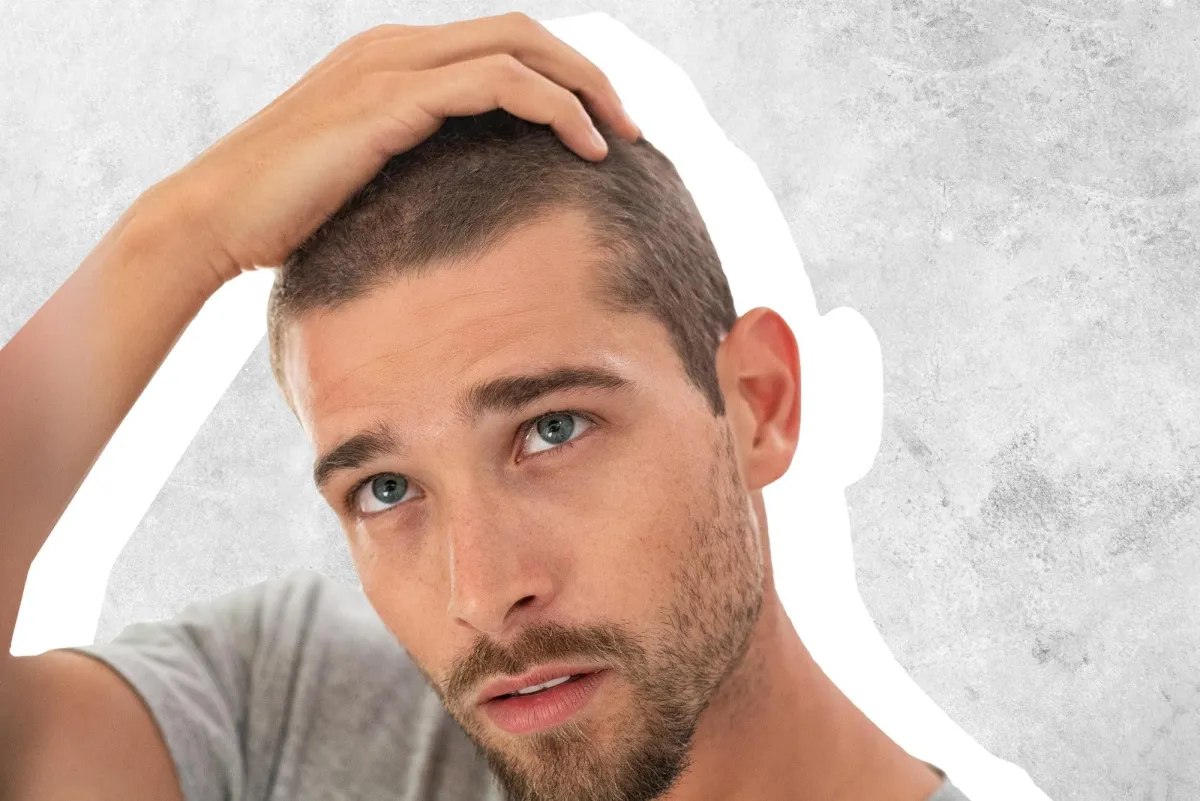
Losing your hair is never a good feeling, most men tend to feel self-conscious about it. Some men decide to completely shave off their heads or constantly wear a hat. One of the most common insecurities men face is hair thinning; for some men, it starts as early as in their 20s. The loss of confidence really starts to affect the way men do their hair and the types of hair cuts they get. Men start to worry about how they will be perceived by friends, family, and colleagues. Hair thinning should not be the cause of self distraughtness, and it should not limit men to have to continuously cover their heads. CADMEN Barbershop has compiled a list of the top 5 best haircuts for men experiencing early hair loss.

Cutting Curly Hair at the Barbershop: Hair Types and Techniques
Cutting Curly Hair at the Barbershop: Hair Types and Techniques
Curly hair is not just a different texture, it behaves fundamentally differently during and after a cut. Wet curly hair appears much longer than dry curly hair. Cut lines that look correct when wet can look significantly shorter when the hair dries and springs up. Understanding how curly hair works helps set accurate expectations when requesting a cut.
The Shrinkage Factor
The most important variable in cutting curly hair is shrinkage, the difference between the hair's wet, stretched length and its dry, natural curl length. Shrinkage ranges from 20% in loose wave patterns to over 50% in tight coil patterns. A cut made at 4 inches when wet may leave the hair at 2 inches when dry on a tight curl. Barbers experienced with curly hair account for this automatically. Clients unfamiliar with their own shrinkage pattern should ask their barber to cut conservatively on the first visit and adjust based on the dried result.
Curl Classification Overview
The widely used classification system for curly hair runs from Type 2 (wavy) through Type 3 (curly) to Type 4 (coily), with A/B/C subdivisions within each type. The main practical distinctions for cutting:
Type 2 (wavy): S-wave pattern, relatively low shrinkage. Responds well to wet or dry cutting. Blowout smooths it for a straighter look; worn natural, the wave re-emerges. Low maintenance relative to tighter curl types.
Type 3 (curly): Defined curl loops ranging from large (3A) to corkscrew-tight (3C). Moderate to significant shrinkage. Dry cutting is often preferable because the barber cuts what is actually visible when worn. Wet cutting risks over-removal due to shrinkage.
Type 4 (coily): Tight z-pattern or dense coil. The most shrinkage of any curl type, sometimes over 50%. Cutting dry or on stretched (not soaking wet) hair is standard practice. The difference between a 2-inch coily haircut and a 4-inch coily haircut is significant but difficult to judge when the hair is wet.
Wet vs Dry Cutting for Curly Hair
Most straight or slightly wavy haircuts are performed on damp hair. For curly hair, dry cutting is often the more accurate method, the barber cuts the hair in its natural state and can see the actual curl pattern and fall. This reduces the risk of the shrinkage-related over-cutting issue. Some barbers dampen the hair only in specific sections and cut the rest dry.
CADMEN Training
Textured hair technique is covered in CADMEN's hands-on program. academy.cadmen.ca/in-person-training.
Frequently Asked Questions
How do barbers cut curly hair?
Techniques vary by curl type and desired result. For shorter curly haircuts with fades (the most common curly haircut in barbershops): the barber clips or cuts the sides to the desired fade or guard length first, then addresses the top section. The top is typically cut dry or on damp (not soaking wet) hair to account for shrinkage. Scissors-over-comb and clipper-over-comb techniques allow the barber to work with the natural curl direction. For longer curly haircuts: barbers work section by section, typically stretching each curl slightly with a pick comb before cutting to ensure uniform length distribution, then releasing to the natural curl. The result is evaluated when the hair is dry, not immediately after cutting. A good barber working with curly hair explains the wet-to-dry shrinkage to the client at the consultation so the client has accurate expectations about the final length.
Should curly hair be cut wet or dry?
For most curly hair types, dry cutting produces more accurate results. Dry cutting allows the barber to see the natural curl pattern, fall direction, and actual wearable length. Wet cutting on tight curl types (Type 3C, Type 4) risks over-cutting because the hair appears 30 to 50% longer than it will be when dry. A barber who cuts curly hair wet without accounting for shrinkage will deliver a result that is significantly shorter when the client's hair dries than what was discussed. The exception: some Type 2 (wavy) and Type 3A clients prefer wet cutting because their wave pattern is consistent and shrinkage is minimal, and they prefer the sharper, defined cut lines that wet cutting produces. The barber's familiarity with curly hair technique is the most important factor. An experienced curly hair barber will know when to cut wet, when to cut dry, and how to manage the transition between the two within a single haircut.
What haircut suits curly hair men?
Several haircut styles work well with curly hair. The curly fade: a skin or low fade on the sides with a natural curly top section, often shaped with shears for a rounded or defined crown shape. This is the most popular curly haircut in modern barbershops and suits most curl types from 2B through 4A. The curly undercut: a short disconnected or blended undercut with curly length on top, works well for Type 2 and 3A/B clients who want more volume on top with cleaner sides. The afro or natural shape: for Type 4 hair, the barber evens the shape and perimeter with shears or clipper-over-comb without reducing the length significantly. The burst fade with curls: the fade extends around the ear in a burst/arc pattern rather than horizontally, which suits oval and round face shapes and works particularly well with tighter curl types. The ideal cut for any curly hair client depends on the specific curl type, face shape, and lifestyle. A barber experienced with textured hair will assess these during the consultation.
What products should men with curly hair use after a barbershop cut?
The right products for curly hair post-cut depend on the curl type and desired finish. For Type 2 and 3A wavy/curly hair: a curl-enhancing cream applied to damp hair and scrunched (not rubbed) defines the wave without weighing it down. Lighter mousses work for clients who want volume without product feel. For Type 3B and 3C tighter curls: a leave-in conditioner applied to damp hair first, followed by a defining cream or gel, then air dry or diffuse. The "praying hands" technique (smoothing product through the curl without disturbing the curl clump) produces more definition than scrunching for tighter curl types. For Type 4 coily hair: a leave-in conditioner plus a butter or heavy cream for moisture retention. Coily hair loses moisture faster than other types and benefits from thicker products that seal the strand. Avoid using a towel to rub the hair dry on any curl type, this disrupts the curl clump and creates frizz. A microfiber towel or cotton t-shirt for blotting preserves the curl pattern significantly better than a standard terry cloth towel.
Related Reading From CADMEN Barber Academy
- Cutting Curly Hair: What Barbers Do Differently
- How to Cut Curly Hair: Barber Techniques and Approach
- Curly Hair at the Barbershop: What Barbers Do Differently
- Curly Hair at the Barbershop: Cuts and Products That Actually Work
- Cutting Curly Hair as a Barber: How to Work With the Curl Pattern, Not Against It
- Men's Hair Texture: What It Is and Why It Matters for Styling

5 Best Haircuts for Men with
Early Hair Thinning
Losing your hair is never a good feeling, most men tend to feel self-conscious about it. Some men decide to completely shave off their heads or constantly wear a hat. One of the most common insecurities men face is hair thinning; for some men, it starts as early as in their 20s. The loss of confidence really starts to affect the way men do their hair and the types of hair cuts they get. Men start to worry about how they will be perceived by friends, family, and colleagues. Hair thinning should not be the cause of self distraughtness, and it should not limit men to have to continuously cover their heads. CADMEN Barbershop has compiled a list of the top 5 best haircuts for men experiencing early hair loss.


For any request, please contact us at info@cadmen.ca