
Barber Tips & Tricks
Follow us for the latest barber techniques and tips
Barber Tips & Tricks
Follow us for the latest barber techniques and tips
Top 7 Reasons Why Your Clients
Aren't Returning
Stay Ahead in the Barbering Game: Nurturing
Lifelong Clientele
You might have come across the saying “give a client a good cut at a reasonable price, and they'll be yours for life.” Unfortunately in reality this is not always the case. That’s where we come in! Check out some of the reasons why your clients may not be returning, whether they were long-term customers or a first-time appointment, below.

Top 7 Reasons Why Your Clients
Aren't Returning
Stay Ahead in the Barbering Game: Nurturing
Lifelong Clientele
You might have come across the saying “give a client a good cut at a reasonable price, and they'll be yours for life.” Unfortunately in reality this is not always the case. That’s where we come in! Check out some of the reasons why your clients may not be returning, whether they were long-term customers or a first-time appointment, below.
Career in Mobile Barbering: Key
Things You Need to Know about
While most barbers work in physical barbershops or hair salons, there are a growing number of barbers who work on-call. What does it mean to be a mobile barber? What are their primary responsibilities? Where to find them? In this blog, we will explain some key terms you should know about mobile barbering and how you can start a new career in it.

Career in Mobile Barbering: Key
Things You Need to Know about
While most barbers work in physical barbershops or hair salons, there are a growing number of barbers who work on-call. What does it mean to be a mobile barber? What are their primary responsibilities? Where to find them? In this blog, we will explain some key terms you should know about mobile barbering and how you can start a new career in it.
Top 4 Ways for Barbers to
Promote Themselves
Marketing is key. Knowing how to market yourself as a barber can be the difference between having 5 to 20 clients a day. If you are interested in boosting the number of your customers and furthering your advertising skills, read the list below with four ways to promote yourself as a barber.

Top 4 Ways for Barbers to
Promote Themselves
Marketing is key. Knowing how to market yourself as a barber can be the difference between having 5 to 20 clients a day. If you are interested in boosting the number of your customers and furthering your advertising skills, read the list below with four ways to promote yourself as a barber.
5 Tips for Social Media Content
Creating as a Barber
It is next to impossible to find someone who is not on social media today. More than just a tool for connection, social media is key helping barbers market themselves and promote their names and skills. If you want to up your barber game quickly, here are five tips on how to promote content online that you don't want to miss out on.

5 Tips for Social Media Content
Creating as a Barber
It is next to impossible to find someone who is not on social media today. More than just a tool for connection, social media is key helping barbers market themselves and promote their names and skills. If you want to up your barber game quickly, here are five tips on how to promote content online that you don't want to miss out on.
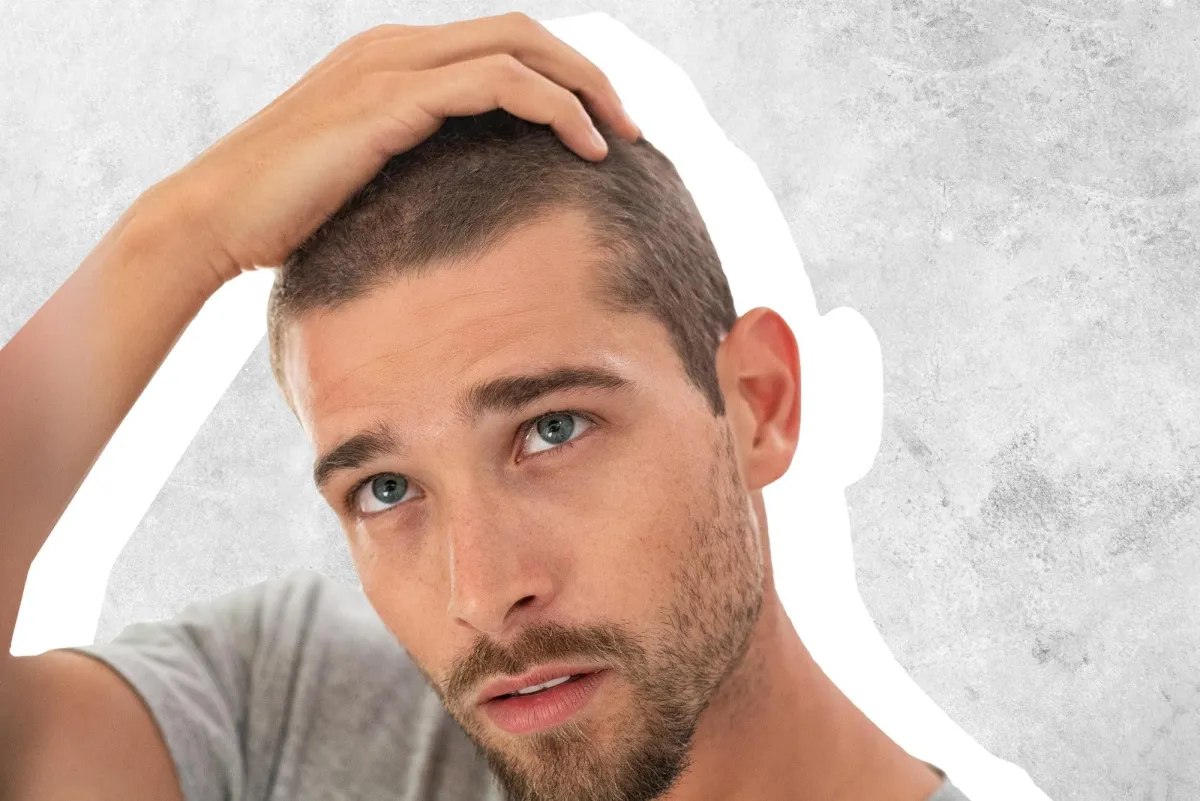
5 Best Haircuts for Men with
Early Hair Thinning
Losing your hair is never a good feeling, most men tend to feel self-conscious about it. Some men decide to completely shave off their heads or constantly wear a hat. One of the most common insecurities men face is hair thinning; for some men, it starts as early as in their 20s. The loss of confidence really starts to affect the way men do their hair and the types of hair cuts they get. Men start to worry about how they will be perceived by friends, family, and colleagues. Hair thinning should not be the cause of self distraughtness, and it should not limit men to have to continuously cover their heads. CADMEN Barbershop has compiled a list of the top 5 best haircuts for men experiencing early hair loss.

Barber School Online vs. In-Person: What Each Actually Teaches and Where the Gaps Are
Barber School Online vs. In-Person: What Each Actually Teaches and Where the Gaps Are
Online and in-person barber training serve genuinely different learning functions. They are not competing formats for the same outcome; they produce different types of learning that are both necessary at different stages of a barber's development. Understanding what each format can and cannot deliver is more useful than the "online vs. in-person" framing, which treats them as substitutes when they are more accurately supplements.
What Online Barber Training Delivers
Online barber training is effective for: conceptual knowledge (how fades are structured, why guard progression works the way it does, what the anatomy of a hairline requires), business skills (pricing, client management, marketing, shop operations), product knowledge, and seeing technique demonstrated visually. A barber who watches 50 high-quality fade tutorial videos will understand fades better than one who has not. That understanding is real and valuable.
Online training is also accessible at any time, infinitely repeatable, and can be consumed around a work schedule in a way that in-person training cannot. For business content, operations knowledge, and foundational concept learning, online formats are at least as effective as in-person and significantly more convenient.
What Online Training Cannot Deliver
Online training cannot develop tactile skill. Holding a clipper, applying the correct blade pressure, managing blade angle across the contours of a real head, developing the hand memory for consistent guard transitions, these are physical skills that only develop through repetition with actual hair and actual clippers. A barber who has completed extensive online training but has limited live client reps will have a large conceptual gap between what they know intellectually and what their hands can produce. This is the most common outcome from heavy online training without equivalent hands-on practice.
What In-Person Training Delivers
In-person training delivers the corrected repetitions that build tactile skill. A qualified instructor watching your cuts in real time can identify whether your blade angle is off, whether you are applying too much pressure, whether your guard transition is clean or choppy, and correct each mistake immediately. The feedback loop is compressed to seconds rather than the extended trial-and-error process of self-directed practice.
In-person training on live clients also exposes the barber to the variation of real heads: different hair densities, different head shapes, different growth patterns, movement and resistance that mannequin heads do not replicate. Live client reps are not a phase that follows training; they are a required part of training itself.
How Barbers Use Both Formats Effectively
The most effective development path for barbers combines both: online learning for concepts, business knowledge, and technique research, supplemented by intensive in-person training for live client reps with corrected feedback. CADMEN's model is explicitly this: the online academy delivers the knowledge layer (business systems, technique concepts, service frameworks) and the in-person 2-day intensive delivers the live-client, corrected-rep layer that builds actual skill.
Frequently Asked Questions
Can you become a barber entirely through online training?
Hairstylist is a compulsory trade in Ontario. The usual authorization is a valid Registered Training Agreement, Provisional Certificate of Qualification or Certificate of Qualification, unless an applicable exemption permits otherwise. A private course certificate does not replace that authorization. Check Skilled Trades Ontario’s requirements and exemptions before professional work.
Is CADMEN's online program a substitute for in-person training?
No, and CADMEN does not position it that way. The CADMEN Online Barber Academy delivers the knowledge and business systems layer. The in-person classes (fade, beard, scissors) deliver the live client reps with direct feedback from Francis Paua. Both serve distinct learning functions. The online program is included with every in-person class enrollment; the design is deliberate because the online knowledge layer makes the in-person reps more productive.
How many in-person practice hours does a beginning barber need?
There is no universal standard; skill development rate varies by individual. Most barbers who put in 200 to 400 corrected live client hours (not uncorrected self-directed practice hours) reach a professional quality level adequate for client work. The key variable is correction quality per rep: 20 corrected reps with an experienced instructor will build skill faster than 200 uncorrected self-directed reps, because without correction the barber may be reinforcing incorrect technique habits rather than developing correct ones.
Related Reading From CADMEN Barber Academy
- After Barber School and Still Can't Cut a Clean Fade? Here Is the Real Reason
- Barber Academy Online: What Most Programs Miss for Owners
- Barber Apprenticeship vs. Barber School: Which Path Is Better?
- How to Set Up Online Booking for Your Barbershop
- The Prep School Haircut for Men: Classic Style That Still Works
- What Students Learn in Barber School
Next step: see barber courses at CADMEN Barber Academy in Mississauga. You can also view in-person classes and send an enquiry.

5 Best Haircuts for Men with
Early Hair Thinning
Losing your hair is never a good feeling, most men tend to feel self-conscious about it. Some men decide to completely shave off their heads or constantly wear a hat. One of the most common insecurities men face is hair thinning; for some men, it starts as early as in their 20s. The loss of confidence really starts to affect the way men do their hair and the types of hair cuts they get. Men start to worry about how they will be perceived by friends, family, and colleagues. Hair thinning should not be the cause of self distraughtness, and it should not limit men to have to continuously cover their heads. CADMEN Barbershop has compiled a list of the top 5 best haircuts for men experiencing early hair loss.


For any request, please contact us at info@cadmen.ca