
Barber Tips & Tricks
Follow us for the latest barber techniques and tips
Barber Tips & Tricks
Follow us for the latest barber techniques and tips
You might have come across the saying “give a client a good cut at a reasonable price, and they'll be yours for life.” Unfortunately in reality this is not always the case. That’s where we come in! Check out some of the reasons why your clients may not be returning, whether they were long-term customers or a first-time appointment, below.

You might have come across the saying “give a client a good cut at a reasonable price, and they'll be yours for life.” Unfortunately in reality this is not always the case. That’s where we come in! Check out some of the reasons why your clients may not be returning, whether they were long-term customers or a first-time appointment, below.

While most barbers work in physical barbershops or hair salons, there are a growing number of barbers who work on-call. What does it mean to be a mobile barber? What are their primary responsibilities? Where to find them? In this blog, we will explain some key terms you should know about mobile barbering and how you can start a new career in it.

While most barbers work in physical barbershops or hair salons, there are a growing number of barbers who work on-call. What does it mean to be a mobile barber? What are their primary responsibilities? Where to find them? In this blog, we will explain some key terms you should know about mobile barbering and how you can start a new career in it.

Marketing is key. Knowing how to market yourself as a barber can be the difference between having 5 to 20 clients a day. If you are interested in boosting the number of your customers and furthering your advertising skills, read the list below with four ways to promote yourself as a barber.

Marketing is key. Knowing how to market yourself as a barber can be the difference between having 5 to 20 clients a day. If you are interested in boosting the number of your customers and furthering your advertising skills, read the list below with four ways to promote yourself as a barber.

It is next to impossible to find someone who is not on social media today. More than just a tool for connection, social media is key helping barbers market themselves and promote their names and skills. If you want to up your barber game quickly, here are five tips on how to promote content online that you don't want to miss out on.

It is next to impossible to find someone who is not on social media today. More than just a tool for connection, social media is key helping barbers market themselves and promote their names and skills. If you want to up your barber game quickly, here are five tips on how to promote content online that you don't want to miss out on.

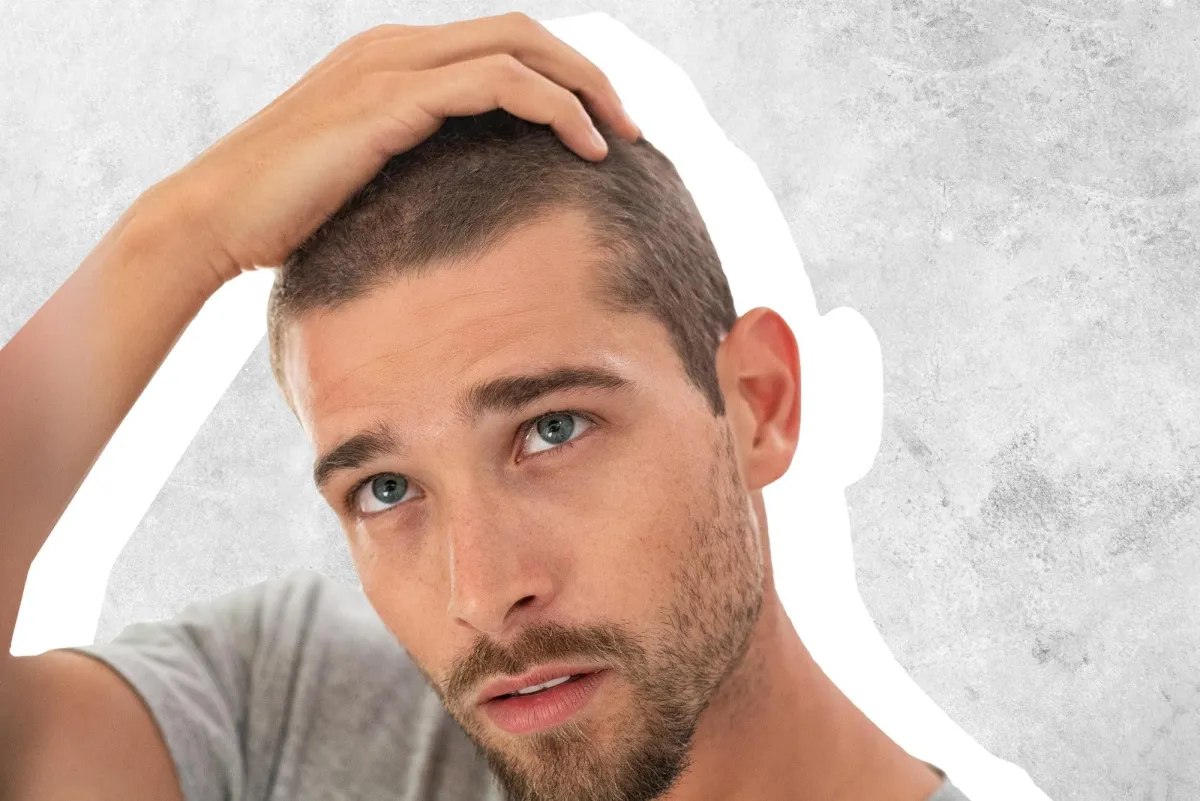
Losing your hair is never a good feeling, most men tend to feel self-conscious about it. Some men decide to completely shave off their heads or constantly wear a hat. One of the most common insecurities men face is hair thinning; for some men, it starts as early as in their 20s. The loss of confidence really starts to affect the way men do their hair and the types of hair cuts they get. Men start to worry about how they will be perceived by friends, family, and colleagues. Hair thinning should not be the cause of self distraughtness, and it should not limit men to have to continuously cover their heads. CADMEN Barbershop has compiled a list of the top 5 best haircuts for men experiencing early hair loss.
The average barbershop in North America runs on an 8 to 20 percent margin and pulls $258K in annual revenue. The top performers do $477K. Same chairs. Same clippers. Same square footage. The gap is not cutting skill. The gap is the operating system behind the chair. Most owners searching for a barber academy online are looking for technique videos. The owners who need help most are looking for the wrong thing.
Almost every online barber academy on the market is built for one buyer: the apprentice or pre-licensed barber who needs hours, theory refreshers, or a fade tutorial. VicBlends, Amos Academy, Pivot Point, Milady. These platforms do what they were built to do. They teach cutting, styling, and theory. Some of them do it well.
The problem is what happens after licensure. A barber gets licensed. Works for someone for two years. Builds a book. Then opens a shop or joins a suite. That is where the entire industry breaks. In 2025, the empty-chair loss across North American barbershops hit $412M. More than 50 percent of working barbers are leaving traditional shops for suite rentals because owners cannot retain them. The average shop owner is not losing money because his cuts are bad. He is losing money because nobody taught him how to run a business.
Search for "barber academy online" and you get nine results that teach the craft. Zero of them teach pricing strategy, retention systems, hiring SOPs, P&L management, or compensation models that keep a $1,200-a-week barber from walking down the street to a $400-a-month suite. That is the gap. The craft schools are full. The operator schools barely exist.
So owners learn the hard way. They copy what the shop down the street is doing. They follow Instagram coaches who have never owned a shop past year three. They run 50/50 splits because that is what everyone else runs, then wonder why they cannot make payroll. They hire on vibes and fire on emotion. They reinvest in chairs and signage when the real bleed is on the schedule and the comp plan. By year five, most shops are still profitable on paper but unsustainable in practice. The owner is cutting 40 hours a week to keep the doors open. That is not a business. That is a job with overhead.
A barber academy online for shop owners is a digital training platform that teaches the business and operations side of running a barbershop, not the cutting craft. It covers pricing, hiring, retention, compensation models, P&L management, SOPs, and franchise-ready systems. It is built for licensed owners and operators, not pre-licensure students.
This is a different product than what most people picture when they hear "barber academy." Craft schools teach how to fade. Operator academies teach how to keep the barber doing the fade from leaving in 14 months. Both matter. They are not the same school.
The shop owner who already knows how to cut does not need another tutorial library. He needs an operating manual.
Online barber business courses range from $49 one-time tutorials to $5,000+ annual coaching memberships. Most legitimate operator-focused programs sit between $97 and $497 per month, or $1,500 to $5,000 for annual access. Pricing reflects whether you get SOPs, templates, and live support, or just video content.
Watch what you are buying. A $2,000 course that gives you 40 hours of motivational video is worse than a $300 course that hands you a hiring SOP, a comp-plan calculator, and a retention checklist you can install on Monday. The cheap signal in this industry is video volume. The expensive signal is templates and frameworks you can deploy.
Ask three questions before paying for any online barber academy aimed at owners: Who built it. What do they own or have they sold. What do you walk away with that you can use in your shop tomorrow.
No. You cannot become a licensed barber fully online in any U.S. state or Canadian province. Licensure requires supervised practical hours, usually 1,000 to 1,500, performed in an accredited school or apprenticeship setting. Online programs can supplement theory and exam prep, but the practical component is non-negotiable.
This is why most search results for "barber academy online" are misleading for pre-licensure students. The online portion is a fraction of what licensure actually requires. For shop owners already past that gate, this is irrelevant. The online format works perfectly for business education, where the curriculum is frameworks, spreadsheets, and SOPs, not scissor angles.
The dominant voices in barber business education on Instagram and YouTube share three problems. First, most have never operated a shop past the survival phase. They sell what they wish they had known, not what they have proven at scale. Second, the advice is generic. 50/50 split. Charge more. Build your brand. None of that is wrong. None of it is enough.
Third, the model is motivation, not mechanism. Programs like 6FB and most coaching offers in this space are built around mindset, hustle, and personal branding. That is useful for a barber building a book. It is not useful for an owner trying to figure out why his second location is bleeding $4,000 a month while his first one cash-flows fine. That problem is not a mindset problem. It is a comp-plan problem, a scheduling problem, or a manager-accountability problem. No amount of "raise your standards" energy fixes a broken P&L.
The shops doing $477K versus $258K are not running on more motivation. They are running on better systems. Pricing tiers that reflect actual barber level. Comp plans that scale with tenure and book size. Hiring funnels that filter for retention markers before the interview. Retention check-ins on a calendar, not a vibe. These are mechanisms. They get installed once and run on their own.
CADMEN Academy is built around five operating pillars. Each pillar is a system, not a topic. Each system comes with SOPs, templates, and a checklist for installation. The order matters. Skipping ahead does not work.
Before any other system gets installed, the owner sees the actual numbers. Most shop owners cannot tell you their service revenue per chair, their retention rate by barber, or their true labor percentage. The first 30 days of the academy is a financial audit. We give you the P&L template, the chair-revenue tracker, and the labor-cost calculator. You fill them in. The system tells you which barber is profitable, which one is a loss leader, and which station should be priced differently.
The 50/50 commission default is the single biggest reason shops lose barbers to suite rentals. Suites win the math at $1,200 a week. They lose the math at $1,800 a week if the comp plan inside a shop is tiered properly. CADMEN's compensation framework has four tiers based on tenure, book size, and service mix. We hand you the calculator. You plug in your numbers. You walk away with a comp plan that retains your top three barbers and a clear conversation script for the ones who are below threshold.
Most owners hire reactively. A chair opens. They post on Instagram. They interview whoever shows up. They hire on personality. They lose the hire in eight months. The CADMEN hiring SOP is a five-stage funnel: application screen, trade test, working interview, 30-day probation, and tenure milestone. Each stage has a checklist. Each checklist filters for the markers that predict 24-month retention. You stop hiring on vibes.
Barbers leave because nobody asked them what they needed until they were already gone. CADMEN installs a quarterly retention rhythm: a 30-minute one-on-one on a fixed cadence, scripted around six questions that surface comp concerns, growth concerns, and culture concerns before they become resignations. The SOP includes the calendar template, the question script, and the documentation format so the conversation produces action, not just feeling.
Once the first four pillars are installed, the shop is ready to scale. This is where the franchise-ready frameworks come in. Brand standards. Location playbook. Manager training. Multi-location P&L roll-up. The system we built to design our own franchise, taught at the operating level. Most owners do not need this in year one. The ones who get here are usually two to three years into the academy.
The whole platform is online. SOPs are downloadable. Templates are spreadsheets you can use today. Live support runs through office hours and the operator community. No motivation videos. No mindset modules. Mechanisms only.
A two-chair owner in Ontario joined CADMEN at $312K annual revenue, 11 percent margin, and three barbers who had been with him under 18 months. Standard problem. The financial audit in week two showed his top barber was generating $94K in service revenue on a 50/50 split, taking home $47K, and shopping suites at $650 a month that would clear him $68K on the same book.
We installed the tiered comp plan in month two. His top barber moved to a 60/40 split with a tenure bonus that kicked in at 24 months. Take-home jumped to $58K projected. The suite math no longer worked. The barber stayed. Two months later, the same comp structure was extended to barber two and three with adjusted tiers. By month nine, the owner was at $389K projected annual, 16 percent margin, and zero turnover in the year. He has not opened a second location yet. He is one full year of clean P&Ls away from being ready. That is the point. The system tells you when you are ready, not the other way around.
Yes, if the academy is built for owners and not for pre-licensure students. The owner who is already past licensure does not need more cutting tutorials. He needs financial systems, comp models, hiring SOPs, and retention frameworks. An online format works for this curriculum because it is templates and frameworks, not hands-on practical work. Verify the academy was built by someone who has actually operated a shop at scale.
6FB is built primarily around mindset, branding, and personal development for barbers and owners. CADMEN is built around operating systems: SOPs, comp plans, hiring funnels, retention rhythms, and P&L management. CADMEN was built by operators who designed and franchised a barbershop. The product is mechanisms you install, not motivation you consume. Different buyers. Different outcomes.
If the course is SOP-based, you should see operational changes within 30 to 60 days. Financial results follow at 90 to 180 days, depending on how fast you install pricing changes, comp adjustments, and hiring upgrades. Anything promising results in two weeks is selling motivation. Anything that says give it a year before you see anything is hiding behind vague deliverables.
For CADMEN specifically, you do not need to be a licensed barber. You need to own or be opening a barbershop. Some students are operators who came from other industries. The curriculum is about running the business, managing the team, and scaling the operation. Cutting skill is helpful context but not a prerequisite for the operating system itself.
For most shop owners, yes. A coach costs $1,500 to $5,000 a month and delivers conversations. An operator-built academy costs a fraction of that and delivers SOPs, templates, and frameworks you keep forever. A coach is useful at the top end, usually for owners running three or more locations with specific strategic questions. For everyone below that, systems beat conversations.
Four things. Who built it and what have they actually owned or sold. What you walk away with in deliverables, not video hours. Whether the curriculum addresses your stage, owner versus apprentice. And whether the program tracks operating metrics like retention, margin, and revenue per chair, or whether it just tracks completion of modules. Outcomes over content.
Yes. The entire platform is online. SOPs, templates, frameworks, video walkthroughs, and the operator community are accessible from anywhere. Office hours run live on a scheduled cadence. Owners in Canada, the United States, and a handful of international markets are running the system without ever being in the same room as the CADMEN team.
Most online barber academies teach the craft. A few teach the business. Almost none are built by operators who have actually built, scaled, sold, and franchised a barbershop. CADMEN Academy is the operating system for the shop owner who already knows how to cut and now needs to figure out why the business is harder than the haircut. If you want to see the SOPs and frameworks inside, the academy is open.
Yes, if the academy is built for owners and not for pre-licensure students. The owner who is already past licensure does not need more cutting tutorials. He needs financial systems, comp models, hiring SOPs, and retention frameworks. An online format works for this curriculum because it is templates and frameworks, not hands-on practical work. Verify the academy was built by someone who has actually operated a shop at scale.
6FB is built primarily around mindset, branding, and personal development for barbers and owners. CADMEN is built around operating systems: SOPs, comp plans, hiring funnels, retention rhythms, and P&L management. CADMEN was built by operators who designed and franchised a barbershop. The product is mechanisms you install, not motivation you consume.
If the course is SOP-based, you should see operational changes within 30 to 60 days. Financial results follow at 90 to 180 days, depending on how fast you install pricing changes, comp adjustments, and hiring upgrades. Anything promising results in two weeks is selling motivation.
For CADMEN specifically, you do not need to be a licensed barber. You need to own or be opening a barbershop. Some students are operators who came from other industries. The curriculum is about running the business, managing the team, and scaling the operation.
For most shop owners, yes. A coach costs $1,500 to $5,000 a month and delivers conversations. An operator-built academy costs a fraction of that and delivers SOPs, templates, and frameworks you keep forever. A coach is useful at the top end for owners running three or more locations.
Four things. Who built it and what have they actually owned or sold. What you walk away with in deliverables, not video hours. Whether the curriculum addresses your stage, owner versus apprentice. And whether the program tracks operating metrics or just module completion.
Yes. The entire platform is online. SOPs, templates, frameworks, video walkthroughs, and the operator community are accessible from anywhere. Office hours run live on a scheduled cadence. Owners in Canada, the United States, and several international markets run the system without being in the same room as the CADMEN team.
Losing your hair is never a good feeling, most men tend to feel self-conscious about it. Some men decide to completely shave off their heads or constantly wear a hat. One of the most common insecurities men face is hair thinning; for some men, it starts as early as in their 20s. The loss of confidence really starts to affect the way men do their hair and the types of hair cuts they get. Men start to worry about how they will be perceived by friends, family, and colleagues. Hair thinning should not be the cause of self distraughtness, and it should not limit men to have to continuously cover their heads. CADMEN Barbershop has compiled a list of the top 5 best haircuts for men experiencing early hair loss.


For any request, please contact us at info@cadmen.ca