
Barber Tips & Tricks
Follow us for the latest barber techniques and tips
Barber Tips & Tricks
Follow us for the latest barber techniques and tips
Top 7 Reasons Why Your Clients
Aren't Returning
Stay Ahead in the Barbering Game: Nurturing
Lifelong Clientele
You might have come across the saying “give a client a good cut at a reasonable price, and they'll be yours for life.” Unfortunately in reality this is not always the case. That’s where we come in! Check out some of the reasons why your clients may not be returning, whether they were long-term customers or a first-time appointment, below.

Top 7 Reasons Why Your Clients
Aren't Returning
Stay Ahead in the Barbering Game: Nurturing
Lifelong Clientele
You might have come across the saying “give a client a good cut at a reasonable price, and they'll be yours for life.” Unfortunately in reality this is not always the case. That’s where we come in! Check out some of the reasons why your clients may not be returning, whether they were long-term customers or a first-time appointment, below.
Career in Mobile Barbering: Key
Things You Need to Know about
While most barbers work in physical barbershops or hair salons, there are a growing number of barbers who work on-call. What does it mean to be a mobile barber? What are their primary responsibilities? Where to find them? In this blog, we will explain some key terms you should know about mobile barbering and how you can start a new career in it.

Career in Mobile Barbering: Key
Things You Need to Know about
While most barbers work in physical barbershops or hair salons, there are a growing number of barbers who work on-call. What does it mean to be a mobile barber? What are their primary responsibilities? Where to find them? In this blog, we will explain some key terms you should know about mobile barbering and how you can start a new career in it.
Top 4 Ways for Barbers to
Promote Themselves
Marketing is key. Knowing how to market yourself as a barber can be the difference between having 5 to 20 clients a day. If you are interested in boosting the number of your customers and furthering your advertising skills, read the list below with four ways to promote yourself as a barber.

Top 4 Ways for Barbers to
Promote Themselves
Marketing is key. Knowing how to market yourself as a barber can be the difference between having 5 to 20 clients a day. If you are interested in boosting the number of your customers and furthering your advertising skills, read the list below with four ways to promote yourself as a barber.
5 Tips for Social Media Content
Creating as a Barber
It is next to impossible to find someone who is not on social media today. More than just a tool for connection, social media is key helping barbers market themselves and promote their names and skills. If you want to up your barber game quickly, here are five tips on how to promote content online that you don't want to miss out on.

5 Tips for Social Media Content
Creating as a Barber
It is next to impossible to find someone who is not on social media today. More than just a tool for connection, social media is key helping barbers market themselves and promote their names and skills. If you want to up your barber game quickly, here are five tips on how to promote content online that you don't want to miss out on.
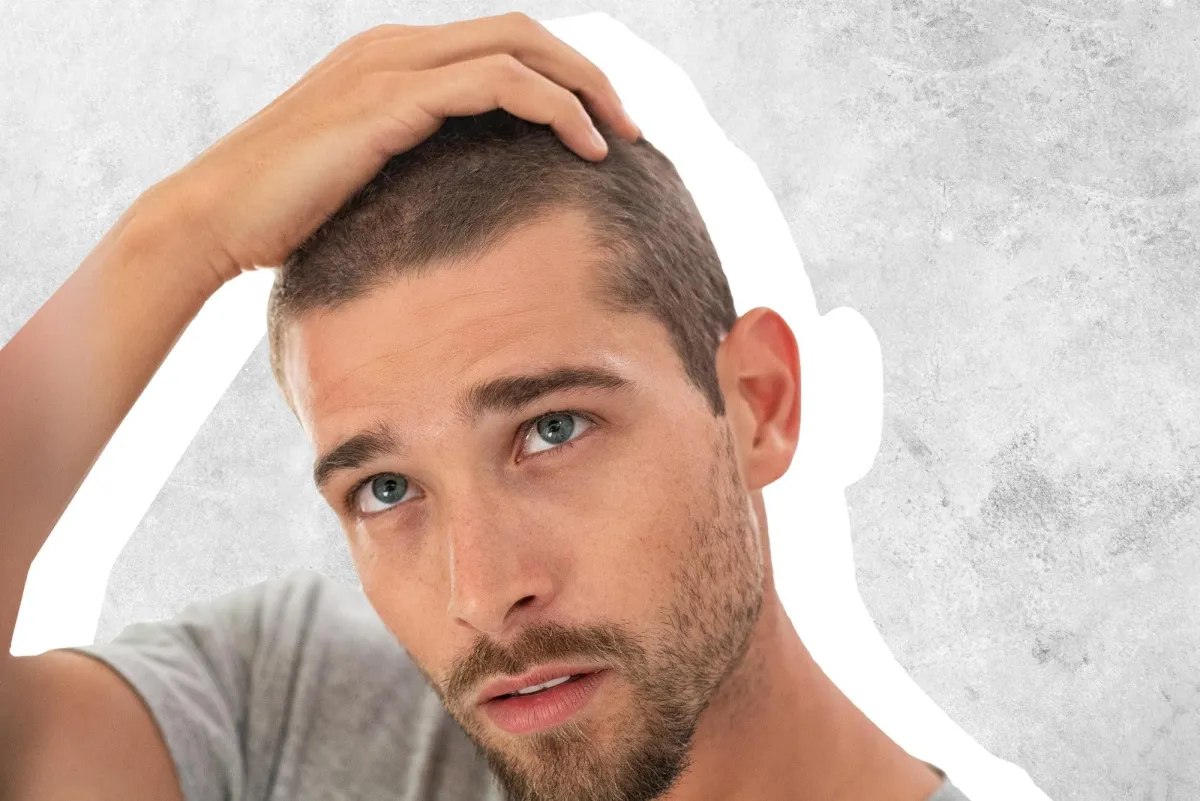
5 Best Haircuts for Men with
Early Hair Thinning
Losing your hair is never a good feeling, most men tend to feel self-conscious about it. Some men decide to completely shave off their heads or constantly wear a hat. One of the most common insecurities men face is hair thinning; for some men, it starts as early as in their 20s. The loss of confidence really starts to affect the way men do their hair and the types of hair cuts they get. Men start to worry about how they will be perceived by friends, family, and colleagues. Hair thinning should not be the cause of self distraughtness, and it should not limit men to have to continuously cover their heads. CADMEN Barbershop has compiled a list of the top 5 best haircuts for men experiencing early hair loss.

What Students Learn in Barber School
What Students Learn in Barber School
Barbering programs vary in length and format, but they share a common core: technical cutting skills, sanitation and safety, client consultation, and often some foundation in business or shop management. Here is what a comprehensive barbering curriculum covers.
Technical Cutting Skills
The majority of barbering training time is spent on the fundamental cutting techniques that make up most of the work: clipper technique and fade execution, scissor-over-comb and freehand scissor cutting, taper blending, razor work for edges and shaping, and beard cutting and styling. These skills require hands-on repetition on live clients or mannequin heads to develop the muscle memory and precision required. Reading about a fade and executing a fade are different activities, technical skill development is time-dependent and cannot be compressed beyond the practice hours required.
Sanitation, Safety, and Health Regulations
Licensing requirements in most jurisdictions include a substantial sanitation and safety component. Students learn the regulations that govern barbershop operation, disinfection protocols, blood-borne pathogen standards, proper handling of sharp implements, and the health code requirements that apply to licensed barbershops. These are not optional components, they are the regulatory foundation of licensed practice.
Client Communication and Consultation
Knowing how to read a client's hair and execute a cut technically is not sufficient without the ability to understand what the client wants and communicate during and after the service. Consultation training teaches students how to ask the right questions, interpret reference photos, and deliver a result that matches the client's expectations.
CADMEN Training
Fade, beard and scissors courses are booked separately. CADMEN provides private skills training in Mississauga, with a certificate of completion for the course completed.
Frequently Asked Questions
What do you learn in barber school?
A comprehensive barbering program typically covers the following: technical cutting and styling skills (the core of the training): clipper techniques, guard usage, fade blending, different clipper angles and movements for different results. Scissor techniques, freehand cutting, scissor-over-comb, point cutting, texturizing, and thinning. Razor work, straight razor and shavette handling, edge work, full shaves, and skin preparation. Fade techniques, low, mid, and high fades, skin fades, taper fades, drop fades, and blending between them. Beard and facial hair, trimming, shaping, hot towel preparation, straight razor shaving, and grooming products. Hair analysis, reading hair type, texture, density, and growth patterns and adapting techniques accordingly. Sanitation and regulatory knowledge: barbershop-specific sanitation standards, state or provincial health code requirements for licensed shops, blood-borne pathogen training, proper disinfection of tools, and safe handling of chemicals used in coloring or chemical services. Client consultation and communication: how to conduct a pre-service consultation, interpret client requests and reference photos, manage client expectations, and handle service concerns. Anatomy and physiology (as required by licensing): basic scalp and hair anatomy relevant to barbering services. Business and shop operations (varies by program): client management, scheduling, pricing, and in some programs, an introduction to shop ownership fundamentals. The time allocation across these areas varies by program. Most licensing-track programs spend 60 to 70 percent of curriculum hours on hands-on technical skill development.
How long does barber school take?
Ontario's Hairstylist apprenticeship includes workplace and classroom training, with requirements set by the provincial authority. Confirm the pathway for your circumstances with Skilled Trades Ontario. CADMEN's two-day fade course is separate private skills training; beard and scissors course schedules should be confirmed with our team. A short course does not guarantee employment within a particular period.
Is barber school worth it?
Whether barber school is worth the investment depends on individual goals, the specific school's quality, and what "worth it" means in the context of the person asking. Arguments that barber school is worth it: licensure is legally required to work as a barber in most jurisdictions in North America, making barber school (or an apprenticeship) not optional for those who want to work legally as a barber. The structured environment exposes students to high repetition volume on multiple clients and multiple hair types, the kind of practice that builds reliable technique faster than casual self-teaching. A good program includes mentorship and feedback from experienced barbers that accelerates skill development. Arguments that specific schools may not justify the cost: the quality of barber school programs varies significantly. Some programs are primarily about meeting licensing hours with minimal actual skill development. Others are high-quality, hands-on programs that produce job-ready barbers. The cost of a program (ranging from a few thousand dollars to $20,000 and above) needs to be evaluated against the specific quality of training provided, not against the concept of barber school generally. Questions to ask when evaluating a specific program: what percentage of graduates pass the licensing exam on the first attempt? What placement outcomes do graduates have? How many practical hours on live clients are included? What is the student-to-instructor ratio? For someone serious about barbering as a career, the investment in high-quality training, whether a formal school or a rigorous apprenticeship, typically pays back within the first 1 to 2 years of working.
Related Reading From CADMEN Barber Academy
- After Barber School and Still Can't Cut a Clean Fade? Here Is the Real Reason
- Barber Apprenticeship vs. Barber School: Which Path Is Better?
- The Prep School Haircut for Men: Classic Style That Still Works
- Barber School Online vs. In-Person: What Each Actually Teaches and Where the Gaps Are
- How to Choose a Barber School: 7 Questions to Ask Before You Pay
Next step: see barber courses at CADMEN Barber Academy in Mississauga. You can also view in-person classes and send an enquiry.

5 Best Haircuts for Men with
Early Hair Thinning
Losing your hair is never a good feeling, most men tend to feel self-conscious about it. Some men decide to completely shave off their heads or constantly wear a hat. One of the most common insecurities men face is hair thinning; for some men, it starts as early as in their 20s. The loss of confidence really starts to affect the way men do their hair and the types of hair cuts they get. Men start to worry about how they will be perceived by friends, family, and colleagues. Hair thinning should not be the cause of self distraughtness, and it should not limit men to have to continuously cover their heads. CADMEN Barbershop has compiled a list of the top 5 best haircuts for men experiencing early hair loss.


For any request, please contact us at info@cadmen.ca