
Barber Tips & Tricks
Follow us for the latest barber techniques and tips
Barber Tips & Tricks
Follow us for the latest barber techniques and tips
Top 7 Reasons Why Your Clients
Aren't Returning
Stay Ahead in the Barbering Game: Nurturing
Lifelong Clientele
You might have come across the saying “give a client a good cut at a reasonable price, and they'll be yours for life.” Unfortunately in reality this is not always the case. That’s where we come in! Check out some of the reasons why your clients may not be returning, whether they were long-term customers or a first-time appointment, below.

Top 7 Reasons Why Your Clients
Aren't Returning
Stay Ahead in the Barbering Game: Nurturing
Lifelong Clientele
You might have come across the saying “give a client a good cut at a reasonable price, and they'll be yours for life.” Unfortunately in reality this is not always the case. That’s where we come in! Check out some of the reasons why your clients may not be returning, whether they were long-term customers or a first-time appointment, below.
Career in Mobile Barbering: Key
Things You Need to Know about
While most barbers work in physical barbershops or hair salons, there are a growing number of barbers who work on-call. What does it mean to be a mobile barber? What are their primary responsibilities? Where to find them? In this blog, we will explain some key terms you should know about mobile barbering and how you can start a new career in it.

Career in Mobile Barbering: Key
Things You Need to Know about
While most barbers work in physical barbershops or hair salons, there are a growing number of barbers who work on-call. What does it mean to be a mobile barber? What are their primary responsibilities? Where to find them? In this blog, we will explain some key terms you should know about mobile barbering and how you can start a new career in it.
Top 4 Ways for Barbers to
Promote Themselves
Marketing is key. Knowing how to market yourself as a barber can be the difference between having 5 to 20 clients a day. If you are interested in boosting the number of your customers and furthering your advertising skills, read the list below with four ways to promote yourself as a barber.

Top 4 Ways for Barbers to
Promote Themselves
Marketing is key. Knowing how to market yourself as a barber can be the difference between having 5 to 20 clients a day. If you are interested in boosting the number of your customers and furthering your advertising skills, read the list below with four ways to promote yourself as a barber.
5 Tips for Social Media Content
Creating as a Barber
It is next to impossible to find someone who is not on social media today. More than just a tool for connection, social media is key helping barbers market themselves and promote their names and skills. If you want to up your barber game quickly, here are five tips on how to promote content online that you don't want to miss out on.

5 Tips for Social Media Content
Creating as a Barber
It is next to impossible to find someone who is not on social media today. More than just a tool for connection, social media is key helping barbers market themselves and promote their names and skills. If you want to up your barber game quickly, here are five tips on how to promote content online that you don't want to miss out on.
5 Best Haircuts for Men with
Early Hair Thinning
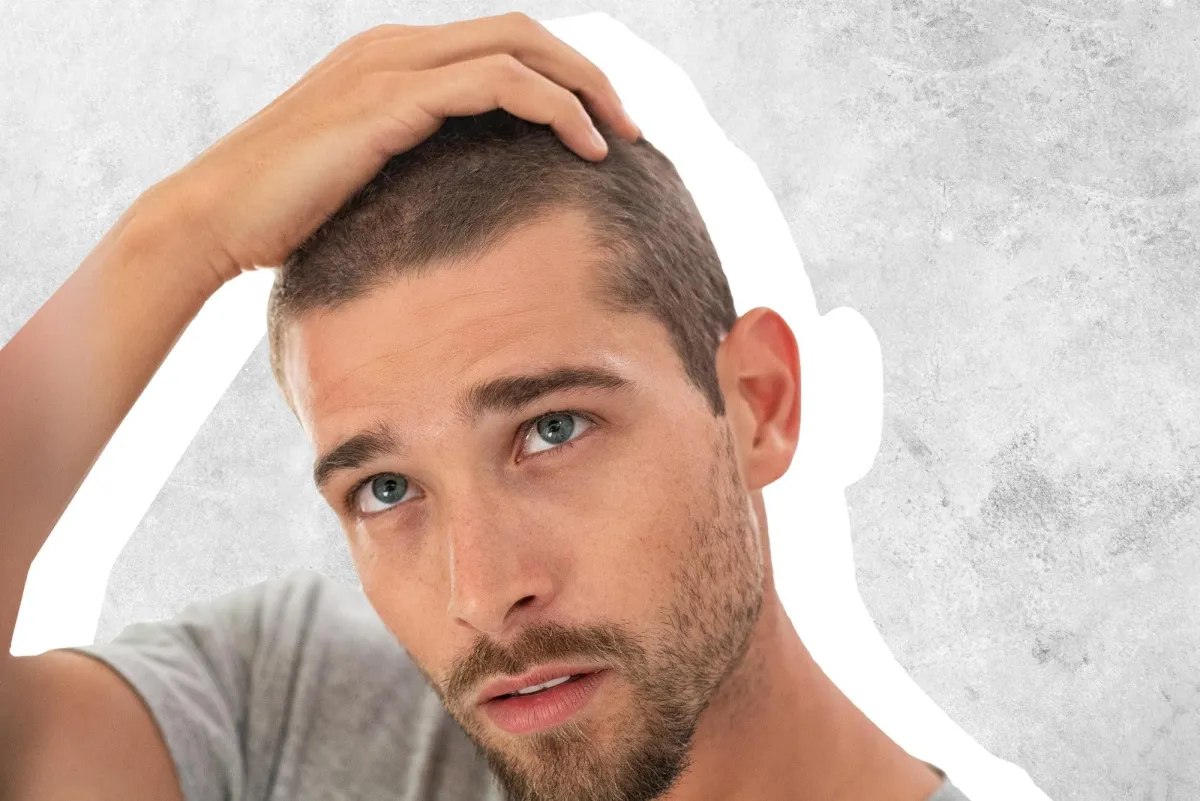
Losing your hair is never a good feeling, most men tend to feel self-conscious about it. Some men decide to completely shave off their heads or constantly wear a hat. One of the most common insecurities men face is hair thinning; for some men, it starts as early as in their 20s. The loss of confidence really starts to affect the way men do their hair and the types of hair cuts they get. Men start to worry about how they will be perceived by friends, family, and colleagues. Hair thinning should not be the cause of self distraughtness, and it should not limit men to have to continuously cover their heads. CADMEN Barbershop has compiled a list of the top 5 best haircuts for men experiencing early hair loss.
Men's Hair Types: How to Identify Yours and Work With It
Men's Hair Types: How to Identify Yours and Work With It
Hair type determines how a cut behaves, how it responds to products, and how it looks between appointments. Most hair care advice is generic, the useful advice is type-specific. Here is how the type system works and what it means in practice.
The Two Main Variables: Texture and Density
Hair type is described along two axes: curl pattern (straight, wavy, curly, coily) and density (fine, medium, thick). These two variables affect the cut and styling in different ways.
Curl pattern affects how the hair falls, how products hold, and which cutting technique produces the intended shape. Straight hair is the most predictable, it goes where it is directed. Wavy hair has movement that works with or against a style depending on how the cut manages the wave's direction. Curly hair requires dry-cutting assessment to account for shrinkage and behaves differently from its wet state. Coily hair has significant volume and density that affects the cut at every length.
Density is how many individual hairs per square inch are present. Fine hair has narrow individual strands and creates less volume per inch. Thick hair has wide individual strands and creates more volume, more weight, and more resistance to blending. Density affects how a fade blends, how much texturizing the top section needs, and how much product is required.
Why Type Matters for Your Cut
A barber who knows your hair type gives you the cut designed for how your hair actually behaves. Telling your barber your hair type, or asking them to assess it at the start of the appointment, produces more accurate results than describing only the style you want.
CADMEN Training
Hair type assessment and type-appropriate cutting technique are covered in CADMEN's barbering curriculum. academy.cadmen.ca/in-person-training.
Frequently Asked Questions
What are the different types of men's hair?
Men's hair is commonly categorized using two overlapping systems: curl pattern and density. Curl pattern types: Type 1 (straight), no natural curl. Hair lies flat from root to end. Subdivided into 1A (very fine and flat), 1B (medium texture with some body), 1C (coarser straight hair with some wave). Type 2 (wavy), S-shaped waves rather than defined curls. 2A: loose, easily straightened waves. 2B: more defined waves with some frizz. 2C: thick, defined waves bordering on loose curls. Type 3 (curly), defined, springy curls. 3A: loose, large curls. 3B: tighter, medium curls. 3C: tight, corkscrew curls with significant volume. Type 4 (coily), tightly coiled or zigzag pattern. 4A: defined coils with visible S-pattern. 4B: Z-shaped coils with less defined pattern. 4C: very tightly coiled with significant shrinkage and density. Density categories: fine (thin individual strands, less volume, more see-through at the scalp, styling products can weigh it down), medium (average strand width, most products and cuts work), thick/coarse (wide individual strands, more volume, more resistance to blending, heavier products needed to hold styles). Most men's hair falls into straight-to-wavy with medium density, but the range across all hair types is significant. The curl pattern and density together determine how a haircut behaves and what products work.
How do I know if I have fine or thick hair?
The most direct way to assess hair density and thickness: take a single strand of hair and hold it up to the light or against a white background. A fine hair strand will be barely visible or nearly transparent when held individually. A medium hair strand will be visible but thin. A thick or coarse hair strand will be clearly visible and feels distinctly present between the fingers. You can also compare a single strand against a standard piece of thread: fine hair is noticeably thinner than thread; medium hair is close to thread thickness; thick hair may be the same thickness or slightly thicker than thread. For density (how many strands per square inch), look at your scalp in good lighting. If the scalp is easily visible through the hair without parting, you have low to medium density. If the scalp is not visible even when looking at the surface, you have high density. Note the distinction between fine hair and low density: fine hair describes the width of individual strands; low density describes fewer strands per square inch. It is possible to have fine hair with high density (many thin strands) or thick hair with low density (fewer but wide strands). Both affect how the cut behaves, but in different ways. Fine hair with high density can look full but is easily weighed down. Thick hair with low density has heavy-feeling individual strands but may look thin overall because there are fewer of them. Your barber can assess both characteristics at the start of a consultation.
What haircut suits my hair type?
General guidance by hair type: straight fine hair (Type 1A/1B): avoid very long length where gravity and thinness cause it to hang flat. Short to medium cuts work well. Adds weight to styles better with blunt cuts than heavily texturized cuts. Products: lightweight styling creams or mousses; avoid heavy oils or waxes that flatten fine hair further. Straight thick hair (Type 1C): benefits significantly from internal texturizing to remove bulk. Without texturizing, thick straight hair sits as a dense, heavy block. Almost any cut style works but the barber must manage weight. Products: medium hold clay or pomade. Wavy hair (Type 2A/2B/2C): the best cuts work with the wave direction rather than fighting it. A textured crop or a medium-length cut that allows the wave to express works better than cuts that require the hair to sit flat. Products: wave-enhancing creams and light gels applied to damp hair. Curly hair (Type 3A/3B/3C): fades and textured crops look excellent with curly hair. The key: dry cutting and accounting for shrinkage. Products: curl-defining creams and gels applied to wet hair. Coily hair (Type 4A/4B/4C): medium-length cuts that accommodate the coil volume work well. Fades create strong contrast with the coil volume on top. Products: moisturizing creams, butters, and leave-in conditioners to maintain hydration in the coil structure. These are starting points, the best cut for any individual is informed by the combination of type, density, face shape, and the specific style goal.
Related Reading From CADMEN Barber Academy
- Cutting Curly Hair at the Barbershop: Hair Types and Techniques
- Men's Hair Texture: What It Is and Why It Matters for Styling
- Cutting Different Hair Types: What Changes at the Barber Chair
- Hair Types for Barbers: How to Identify What You're Working With and Adjust Your Technique
- Hair Types and Textures: What Every Barber Should Know
- Men's Hair Texture Types and How They Affect Haircuts

5 Best Haircuts for Men with
Early Hair Thinning
Losing your hair is never a good feeling, most men tend to feel self-conscious about it. Some men decide to completely shave off their heads or constantly wear a hat. One of the most common insecurities men face is hair thinning; for some men, it starts as early as in their 20s. The loss of confidence really starts to affect the way men do their hair and the types of hair cuts they get. Men start to worry about how they will be perceived by friends, family, and colleagues. Hair thinning should not be the cause of self distraughtness, and it should not limit men to have to continuously cover their heads. CADMEN Barbershop has compiled a list of the top 5 best haircuts for men experiencing early hair loss.


For any request, please contact us at info@cadmen.ca