
Barber Tips & Tricks
Follow us for the latest barber techniques and tips
Barber Tips & Tricks
Follow us for the latest barber techniques and tips
Top 7 Reasons Why Your Clients
Aren't Returning
Stay Ahead in the Barbering Game: Nurturing
Lifelong Clientele
You might have come across the saying “give a client a good cut at a reasonable price, and they'll be yours for life.” Unfortunately in reality this is not always the case. That’s where we come in! Check out some of the reasons why your clients may not be returning, whether they were long-term customers or a first-time appointment, below.

Top 7 Reasons Why Your Clients
Aren't Returning
Stay Ahead in the Barbering Game: Nurturing
Lifelong Clientele
You might have come across the saying “give a client a good cut at a reasonable price, and they'll be yours for life.” Unfortunately in reality this is not always the case. That’s where we come in! Check out some of the reasons why your clients may not be returning, whether they were long-term customers or a first-time appointment, below.
Career in Mobile Barbering: Key
Things You Need to Know about
While most barbers work in physical barbershops or hair salons, there are a growing number of barbers who work on-call. What does it mean to be a mobile barber? What are their primary responsibilities? Where to find them? In this blog, we will explain some key terms you should know about mobile barbering and how you can start a new career in it.

Career in Mobile Barbering: Key
Things You Need to Know about
While most barbers work in physical barbershops or hair salons, there are a growing number of barbers who work on-call. What does it mean to be a mobile barber? What are their primary responsibilities? Where to find them? In this blog, we will explain some key terms you should know about mobile barbering and how you can start a new career in it.
Top 4 Ways for Barbers to
Promote Themselves
Marketing is key. Knowing how to market yourself as a barber can be the difference between having 5 to 20 clients a day. If you are interested in boosting the number of your customers and furthering your advertising skills, read the list below with four ways to promote yourself as a barber.

Top 4 Ways for Barbers to
Promote Themselves
Marketing is key. Knowing how to market yourself as a barber can be the difference between having 5 to 20 clients a day. If you are interested in boosting the number of your customers and furthering your advertising skills, read the list below with four ways to promote yourself as a barber.
5 Tips for Social Media Content
Creating as a Barber
It is next to impossible to find someone who is not on social media today. More than just a tool for connection, social media is key helping barbers market themselves and promote their names and skills. If you want to up your barber game quickly, here are five tips on how to promote content online that you don't want to miss out on.

5 Tips for Social Media Content
Creating as a Barber
It is next to impossible to find someone who is not on social media today. More than just a tool for connection, social media is key helping barbers market themselves and promote their names and skills. If you want to up your barber game quickly, here are five tips on how to promote content online that you don't want to miss out on.
5 Best Haircuts for Men with
Early Hair Thinning
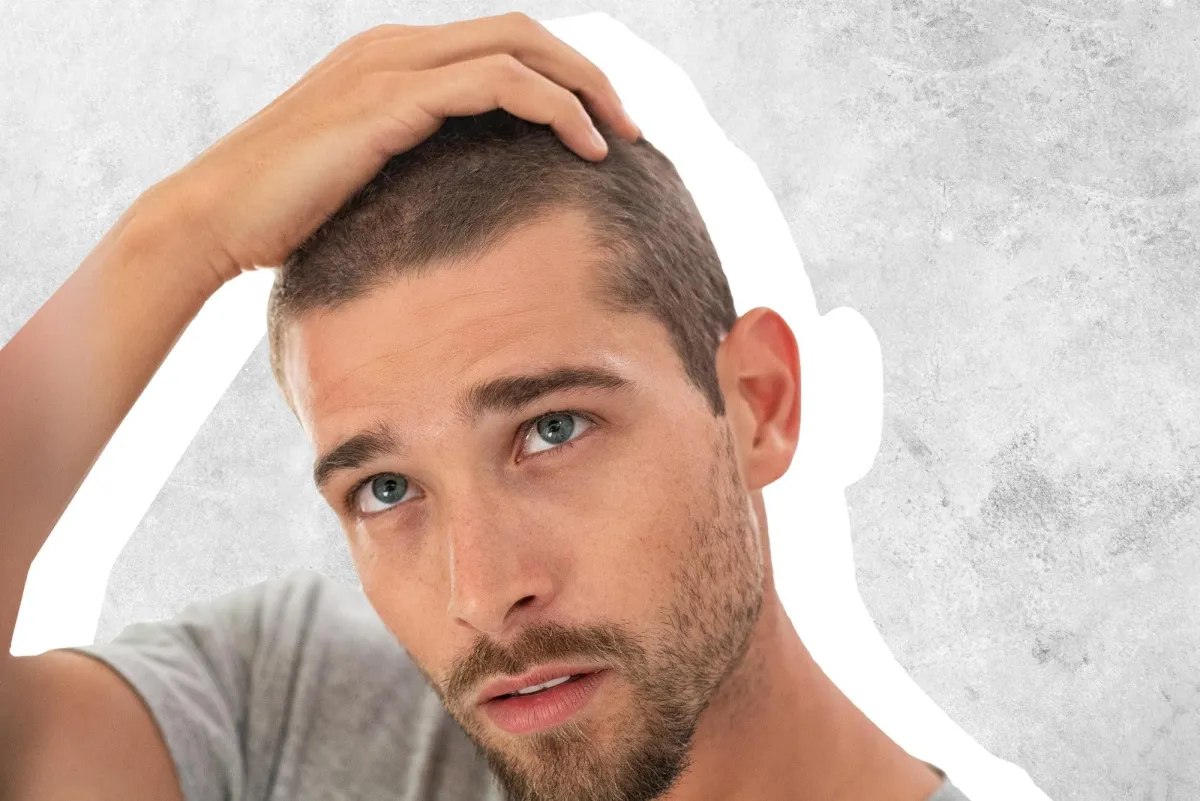
Losing your hair is never a good feeling, most men tend to feel self-conscious about it. Some men decide to completely shave off their heads or constantly wear a hat. One of the most common insecurities men face is hair thinning; for some men, it starts as early as in their 20s. The loss of confidence really starts to affect the way men do their hair and the types of hair cuts they get. Men start to worry about how they will be perceived by friends, family, and colleagues. Hair thinning should not be the cause of self distraughtness, and it should not limit men to have to continuously cover their heads. CADMEN Barbershop has compiled a list of the top 5 best haircuts for men experiencing early hair loss.
Hair Types and Textures: What Every Barber Should Know
Hair Types and Textures: What Every Barber Should Know
Hair type classification gives barbers a framework for predicting how hair will behave during and after a cut. The most widely used system (adapted from Andre Walker's system and widely used in professional and consumer contexts) categorizes hair by curl pattern on a scale from Type 1 (straight) to Type 4 (tightly coiled). Each type has subtypes (a, b, c) based on the degree within the category.
Knowing the type is useful, but what matters practically in the chair is understanding what each type does with clippers, with scissors, and with styling, and adjusting accordingly.
Type 1: Straight Hair
Straight hair lies flat from root to end with no curl pattern. It is often the oiliest hair type because sebum (the scalp's natural oil) travels down the straight shaft easily without being held in a curl.
In the chair: Straight hair shows clipper lines, guard transitions, and any unevenness in scissor work more clearly than curly or wavy hair because it lies flat. What you see while cutting is very close to what the client sees after styling. Blending precision matters more because there is no curl to obscure a line.
Cutting: Standard techniques work well. The visible quality of the blend or scissor line is the primary concern. Thinning shears can be effective for removing weight without changing the outer silhouette, especially on thick straight hair.
Styles: Pompadours, comb overs, and side parts work naturally on straight hair. Textured styles require product and sometimes blow-drying technique to add movement that straight hair lacks naturally.
Type 2: Wavy Hair
Wavy hair has an S-shaped wave pattern that forms from the mid-length to the ends. Type 2a is a loose wave; 2b is more defined; 2c has stronger wave definition approaching curl. Wavy hair has more texture and less oil than straight hair.
In the chair: The wave pattern means the hair will look slightly longer when dry than when wet (the wave contract as it dries). Account for this when assessing length during a wet cut. What looks correct wet may sit slightly shorter or differently when dry.
Cutting: Dry cutting or cutting with the hair in its natural wave state produces more predictable results than cutting wet, because you are working with the hair in the state the client will wear it. On wet cuts, leave slightly more length and check when dry before finishing.
Styles: Natural texture styles (textured crops, textured tops) work well. The wave adds movement that straight hair lacks. Pomade or light cream helps define the wave for clients who want more shape.
Type 3: Curly Hair
Type 3 curls range from loose ringlets (3a) to tighter, more defined springs (3c). The curl pattern is consistent from root to end. Curly hair is prone to frizz because the textured surface of the curl catches moisture from the air.
In the chair: Curly hair shrinks significantly when dry. A curl can appear 30% to 50% shorter than the actual hair length when fully formed. A client with type 3 curly hair who asks for "half an inch off" may end up with significantly more visual length change than expected if the cut is done on stretched or wet hair.
Cutting: For consistent results on curly hair, cut dry or cut curl by curl ("the Curly Girl/Deva method" applied to barbershop cuts). Cutting by curl means releasing individual curls and cutting them individually in their natural state, rather than combing the hair straight and cutting length. This prevents the "it looks fine wet, but surprised them when it dried" problem.
Fades on curly hair: Curly fades can be done with clippers, but the finish is softer than on straight hair because the curl texture is less precise at the guard transition. A razor finish on the hairline can add sharpness. For high-texture 3c hair, the fade reads more as a textured gradient than a precise skin-to-length blend, this is natural and looks good when done well.
Type 4: Coily/Kinky Hair
Type 4 hair has a very tight coil or zigzag pattern. 4a is a defined coil; 4b is a more angled, less defined zigzag pattern; 4c has the tightest coil, with minimal visible curl definition without product. Type 4 hair is the most fragile hair type and is prone to dryness because the tight coil makes it difficult for sebum to travel the length of the strand.
In the chair: Type 4 hair has the greatest shrinkage of any hair type, 50% to 70% is common. A client whose hair looks 2 inches long stretched out may have 4 inches of actual hair length. This matters significantly for afro shapes, curly top fades, and any service where the client is asking for a specific length.
Cutting: Clippers work well for guard-length cutting on type 4 hair. For shape-cutting afros and textured tops, cutting dry and picking the hair out before assessing the shape produces the most accurate result. Cutting wet or stretched gives a false read on the actual finished shape.
Fades on type 4 hair: Type 4 hair is where fade quality is most visible and most valued. The texture makes a clean, well-blended fade a more notable skill, and clients with type 4 hair who find a barber who can fade their hair cleanly become among the most loyal clients.
Density as a Separate Variable
Hair type (the curl pattern) is separate from hair density (how many hairs per square centimeter). A client can have type 1 straight hair at very high density, or type 4 coily hair at low density. Density changes the technique more than the hair type in many cases, particularly in weight removal, guard selection, and blending. Assess both type and density at the consultation to make the correct technique adjustments.
CADMEN Training
Working with all four hair types, including coil and curl cutting, is part of CADMEN's hands-on fade and scissors programs. Book at academy.cadmen.ca/in-person-training.
Frequently Asked Questions
What are the 4 hair types barbers need to know?
Type 1 (straight), Type 2 (wavy), Type 3 (curly), and Type 4 (coily). Each type has a, b, and c subtypes based on the degree of texture within the category. In a barbershop context, the most important distinctions are: straight and wavy hair (types 1 and 2) can be cut with most standard techniques and shows precision clearly; curly hair (type 3) requires adjustment for shrinkage and often benefits from dry cutting; coily hair (type 4) has extreme shrinkage and requires cutting in its natural state to assess accurate length and shape.
How do you cut type 4 hair without making it look uneven?
Cut it dry, pick it out fully before assessing the shape, and work in sections. Type 4 hair shrinks and coils differently in different parts of the head, so assessing shape while the hair is flat or wet gives a false read. Pick the hair out fully, let it sit in its natural shape, then cut to shape. Revisit the pick-out and assessment after each section to check symmetry and shape from a step back before continuing.
How do you do a fade on curly hair?
Standard fade technique with clippers applies. The key adjustment is that the blend transition will appear softer on curly hair than on straight hair at the same guard settings, the curl texture does not produce a hard line the way straight hair does at a guard transition. This is not a problem; it is characteristic of the hair type. For a sharper finish at the hairline, use a T-liner or detail trimmer to define the edge cleanly. A razor pass on the neckline and sideburns adds sharpness that the clipper alone cannot fully replicate on curly texture.
What is the difference between hair type and hair texture?
In common usage, hair type refers to the curl pattern (straight to coily, Type 1 to 4). Hair texture refers to the thickness of the individual hair strand: fine (thin strand), medium, or coarse (thick strand). A client can have any combination of type and texture, type 4 fine hair (tight coil, thin individual strands) behaves differently than type 4 coarse hair (tight coil, thick strands). Coarser individual strands are stiffer and hold shape better; finer strands are more pliable. Adjust guard selection and blending technique based on coarseness in addition to the curl pattern.
How do you cut wavy hair without it looking uneven when dry?
The most reliable approach is to cut with the hair in or near its dry, natural state. If you cut wavy hair wet, leave more length than you think you need and then recheck and finish when dry. The wave contracts as the hair dries, and what looked even when wet can show unevenness when the wave forms. For clients with stronger 2b or 2c wave patterns, developing the habit of checking the cut when the hair has dried (or at least towel-dried to a damp state) before the client leaves prevents the "looked great in the chair, uneven at home" outcome.
Related Reading From CADMEN Barber Academy
- Men's Hair Texture: What It Is and Why It Matters for Styling
- Men's Hair Texture Types and How They Affect Haircuts
- Cutting Curly Hair at the Barbershop: Hair Types and Techniques
- Cutting Different Hair Types: What Changes at the Barber Chair
- Hair Types for Barbers: How to Identify What You're Working With and Adjust Your Technique
- Men's Hair Types: How to Identify Yours and Work With It

5 Best Haircuts for Men with
Early Hair Thinning
Losing your hair is never a good feeling, most men tend to feel self-conscious about it. Some men decide to completely shave off their heads or constantly wear a hat. One of the most common insecurities men face is hair thinning; for some men, it starts as early as in their 20s. The loss of confidence really starts to affect the way men do their hair and the types of hair cuts they get. Men start to worry about how they will be perceived by friends, family, and colleagues. Hair thinning should not be the cause of self distraughtness, and it should not limit men to have to continuously cover their heads. CADMEN Barbershop has compiled a list of the top 5 best haircuts for men experiencing early hair loss.


For any request, please contact us at info@cadmen.ca