
Barber Tips & Tricks
Follow us for the latest barber techniques and tips
Barber Tips & Tricks
Follow us for the latest barber techniques and tips
Top 7 Reasons Why Your Clients
Aren't Returning
Stay Ahead in the Barbering Game: Nurturing
Lifelong Clientele
You might have come across the saying “give a client a good cut at a reasonable price, and they'll be yours for life.” Unfortunately in reality this is not always the case. That’s where we come in! Check out some of the reasons why your clients may not be returning, whether they were long-term customers or a first-time appointment, below.

Top 7 Reasons Why Your Clients
Aren't Returning
Stay Ahead in the Barbering Game: Nurturing
Lifelong Clientele
You might have come across the saying “give a client a good cut at a reasonable price, and they'll be yours for life.” Unfortunately in reality this is not always the case. That’s where we come in! Check out some of the reasons why your clients may not be returning, whether they were long-term customers or a first-time appointment, below.
Career in Mobile Barbering: Key
Things You Need to Know about
While most barbers work in physical barbershops or hair salons, there are a growing number of barbers who work on-call. What does it mean to be a mobile barber? What are their primary responsibilities? Where to find them? In this blog, we will explain some key terms you should know about mobile barbering and how you can start a new career in it.

Career in Mobile Barbering: Key
Things You Need to Know about
While most barbers work in physical barbershops or hair salons, there are a growing number of barbers who work on-call. What does it mean to be a mobile barber? What are their primary responsibilities? Where to find them? In this blog, we will explain some key terms you should know about mobile barbering and how you can start a new career in it.
Top 4 Ways for Barbers to
Promote Themselves
Marketing is key. Knowing how to market yourself as a barber can be the difference between having 5 to 20 clients a day. If you are interested in boosting the number of your customers and furthering your advertising skills, read the list below with four ways to promote yourself as a barber.

Top 4 Ways for Barbers to
Promote Themselves
Marketing is key. Knowing how to market yourself as a barber can be the difference between having 5 to 20 clients a day. If you are interested in boosting the number of your customers and furthering your advertising skills, read the list below with four ways to promote yourself as a barber.
5 Tips for Social Media Content
Creating as a Barber
It is next to impossible to find someone who is not on social media today. More than just a tool for connection, social media is key helping barbers market themselves and promote their names and skills. If you want to up your barber game quickly, here are five tips on how to promote content online that you don't want to miss out on.

5 Tips for Social Media Content
Creating as a Barber
It is next to impossible to find someone who is not on social media today. More than just a tool for connection, social media is key helping barbers market themselves and promote their names and skills. If you want to up your barber game quickly, here are five tips on how to promote content online that you don't want to miss out on.
5 Best Haircuts for Men with
Early Hair Thinning
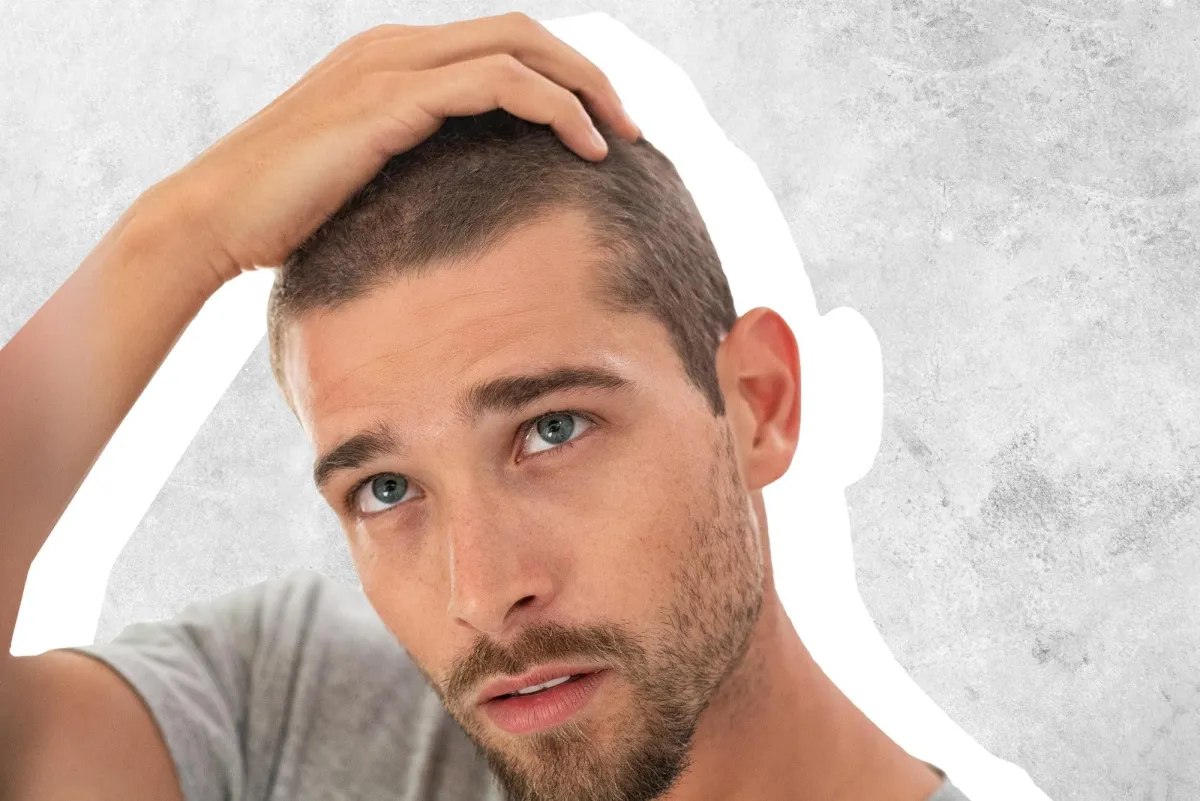
Losing your hair is never a good feeling, most men tend to feel self-conscious about it. Some men decide to completely shave off their heads or constantly wear a hat. One of the most common insecurities men face is hair thinning; for some men, it starts as early as in their 20s. The loss of confidence really starts to affect the way men do their hair and the types of hair cuts they get. Men start to worry about how they will be perceived by friends, family, and colleagues. Hair thinning should not be the cause of self distraughtness, and it should not limit men to have to continuously cover their heads. CADMEN Barbershop has compiled a list of the top 5 best haircuts for men experiencing early hair loss.
Men's Hair Texture: What It Is and Why It Matters for Styling
Men's Hair Texture: What It Is and Why It Matters for Styling
Hair texture refers to two distinct characteristics that are often conflated: the diameter of individual strands (fine, medium, or coarse) and the pattern of the hair (straight, wavy, curly, or coily). Both matter for cut and styling decisions, and understanding both gives you more productive conversations with your barber and better product choices at home.
Strand Diameter: Fine, Medium, Coarse
Fine hair has a small strand diameter. It is often silky and smooth but can be limp, can go flat easily, and reacts poorly to heavy products. Medium hair is the most common and works with a wide range of cuts and products. Coarse hair has the largest strand diameter, it is strong and dense but can be harder to manage, more resistant to styling, and prone to frizz without the right products. The distinction matters for products: fine hair needs lightweight hold products. Heavy wax or clay weighs fine hair down. Coarse hair can handle heavier products that add moisture and control.
Hair Pattern: Straight, Wavy, Curly, Coily
The pattern classification (Types 1 through 4, with sub-types) describes how tightly the hair curves from root to tip. Type 1 is straight. Type 2 is wavy (A through C, from a loose wave to a more defined S pattern). Type 3 is curly (tighter curl pattern that forms loops or spirals). Type 4 is coily (tightly coiled or kinky pattern). The pattern affects which cuts work well and which techniques a barber needs for shaping. Curly and coily hair shrinks significantly when dry, the cut length and the dry length look different, which skilled barbers account for during the cut.
CADMEN Training
Hair type consultation and type-specific technique are central to CADMEN's barbering curriculum. academy.cadmen.ca/in-person-training.
Frequently Asked Questions
What is hair texture and how do I know what type I have?
Hair texture describes the physical characteristics of your hair that determine how it looks, behaves, and responds to cutting and styling. There are two independent dimensions to understand: strand thickness (fine, medium, or coarse) and curl pattern (straight through coily). How to determine your strand thickness: pull a single strand from your head and hold it between your fingers. Fine hair is barely noticeable between your fingers, thin, almost translucent when held up to light. Medium hair has a definite presence but is not thick or stiff. Coarse hair is clearly thick, strong, and often slightly stiff. A simpler test: hold a single strand next to a piece of sewing thread. Finer than the thread means fine hair. Similar diameter means medium. Thicker than the thread means coarse. How to determine your curl pattern: look at your hair when it is completely clean and air-dried with no product. The pattern you see without any product or styling is your natural pattern. Straight (Type 1): lies flat from root to tip with no natural curve. Wavy (Type 2): S-shaped wave pattern. 2A is a loose, barely-there wave; 2B is a more defined S wave; 2C is a strong wave pattern close to curly. Curly (Type 3): hair forms defined curls or spirals. 3A is large loose spirals; 3B is tighter ringlets; 3C is very tight corkscrew curls. Coily (Type 4): tightly coiled hair that may form very tight Z or S patterns very close to the scalp. 4A forms visible coils; 4B forms a Z pattern; 4C forms a very tight coil with minimal definition. Why both dimensions matter: a barber may ask about your texture type to understand what to expect from the hair's behavior. Fine curly hair and coarse curly hair both have curls but behave completely differently and need different product approaches. Understanding your own texture lets you communicate more accurately and recognize why certain products or cuts do or do not work.
What haircut works best for coarse thick hair men?
Coarse, thick hair has a large strand diameter and high density, it is strong, sometimes resistant to styling, and can become very bulky if too much length is left without thinning or texturizing. The cuts that work best account for managing bulk while taking advantage of the natural weight and density. What works well: textured cuts with point cutting or razor work. Internal texturizing (using scissors with a point-cutting technique or a razor) removes bulk from inside the hair section without changing the overall length significantly. This allows the cut to sit with more movement and less bulk. Fades and tapers. A high-skin fade on the sides of coarse, thick hair creates a clean, lightweight perimeter that contrasts with the length on top. Without a fade, very thick coarse hair can sit very wide and heavy on the sides, which can look shapeless. Shorter cuts all over. Very short cuts (guards 1-3 on the sides, guard 3-5 on top) let the thickness work for the cut rather than against it. Thick coarse hair at short lengths has great structure. Medium-length cuts with some interior layering. Layers create visual movement and reduce the blunt heaviness that thick hair can project at medium lengths without internal cutting. What to avoid: long blunt cuts with no thinning. Thick coarse hair at long blunt lengths becomes extremely heavy and flat at the base, with width that can look overwhelming. Cuts that rely on precision flatness (certain slick-back or side-part styles): coarse hair has natural resistance that makes achieving a perfectly flat, smooth result harder. These styles require high-hold product and significant effort to maintain. Product approach for coarse hair: it can handle heavier products (clay, pomade, thick cream) that would weigh down fine hair. Moisture is important, coarse hair can be prone to dryness. A hydrating leave-in conditioner used regularly reduces frizz and makes the hair more manageable for styling.
Does hair texture affect how often you need a haircut?
Hair texture influences how quickly a haircut visually grows out, which affects maintenance frequency. The primary factor driving maintenance frequency is hair growth rate (which averages 0.5 inches per month regardless of texture). But texture affects how noticeable the growth is. How fine hair grows out: fine hair tends to lie flat and close to the scalp. Growth is visible as increased length but the shape of the cut can remain relatively intact for longer because the hair does not expand outward significantly. Clients with fine hair often find that cuts maintain their appearance for 4 to 6 weeks before needing a refresh. How coarse thick hair grows out: coarse hair at medium to longer lengths expands outward as it grows, which can make the silhouette look shapeless more quickly than the same growth on fine hair. Side sections especially tend to push out on coarse hair. Clients with coarse hair maintaining a specific silhouette often find 3 to 4 weeks before the shape starts to look imprecise. How curly and coily hair grows out: the curl pattern means growth is initially less visible because the curl keeps the hair contained. However, the density and pattern of the curl section changes as it grows, and the fade or taper on the sides grows out at the same rate as any other hair type. Clients with faded curly or coily styles often maintain a 2 to 3 week cycle for the fade specifically. The general principle: tighter, more technical cuts (skin fades, hard parts, precise shapes) require more frequent maintenance regardless of texture. Simpler cuts with a bit more length tolerance can go longer between visits. The texture affects how the growth presents, but the maintenance need is primarily driven by the style itself.
Related Reading From CADMEN Barber Academy
- Hair Types and Textures: What Every Barber Should Know
- Men's Hair Texture Types and How They Affect Haircuts
- Cutting Curly Hair at the Barbershop: Hair Types and Techniques
- Cutting Different Hair Types: What Changes at the Barber Chair
- Hair Types for Barbers: How to Identify What You're Working With and Adjust Your Technique
- Men's Hair Types: How to Identify Yours and Work With It

5 Best Haircuts for Men with
Early Hair Thinning
Losing your hair is never a good feeling, most men tend to feel self-conscious about it. Some men decide to completely shave off their heads or constantly wear a hat. One of the most common insecurities men face is hair thinning; for some men, it starts as early as in their 20s. The loss of confidence really starts to affect the way men do their hair and the types of hair cuts they get. Men start to worry about how they will be perceived by friends, family, and colleagues. Hair thinning should not be the cause of self distraughtness, and it should not limit men to have to continuously cover their heads. CADMEN Barbershop has compiled a list of the top 5 best haircuts for men experiencing early hair loss.


For any request, please contact us at info@cadmen.ca