
Barber Tips & Tricks
Follow us for the latest barber techniques and tips
Barber Tips & Tricks
Follow us for the latest barber techniques and tips
Top 7 Reasons Why Your Clients
Aren't Returning
Stay Ahead in the Barbering Game: Nurturing
Lifelong Clientele
You might have come across the saying “give a client a good cut at a reasonable price, and they'll be yours for life.” Unfortunately in reality this is not always the case. That’s where we come in! Check out some of the reasons why your clients may not be returning, whether they were long-term customers or a first-time appointment, below.

Top 7 Reasons Why Your Clients
Aren't Returning
Stay Ahead in the Barbering Game: Nurturing
Lifelong Clientele
You might have come across the saying “give a client a good cut at a reasonable price, and they'll be yours for life.” Unfortunately in reality this is not always the case. That’s where we come in! Check out some of the reasons why your clients may not be returning, whether they were long-term customers or a first-time appointment, below.
Career in Mobile Barbering: Key
Things You Need to Know about
While most barbers work in physical barbershops or hair salons, there are a growing number of barbers who work on-call. What does it mean to be a mobile barber? What are their primary responsibilities? Where to find them? In this blog, we will explain some key terms you should know about mobile barbering and how you can start a new career in it.

Career in Mobile Barbering: Key
Things You Need to Know about
While most barbers work in physical barbershops or hair salons, there are a growing number of barbers who work on-call. What does it mean to be a mobile barber? What are their primary responsibilities? Where to find them? In this blog, we will explain some key terms you should know about mobile barbering and how you can start a new career in it.
Top 4 Ways for Barbers to
Promote Themselves
Marketing is key. Knowing how to market yourself as a barber can be the difference between having 5 to 20 clients a day. If you are interested in boosting the number of your customers and furthering your advertising skills, read the list below with four ways to promote yourself as a barber.

Top 4 Ways for Barbers to
Promote Themselves
Marketing is key. Knowing how to market yourself as a barber can be the difference between having 5 to 20 clients a day. If you are interested in boosting the number of your customers and furthering your advertising skills, read the list below with four ways to promote yourself as a barber.
5 Tips for Social Media Content
Creating as a Barber
It is next to impossible to find someone who is not on social media today. More than just a tool for connection, social media is key helping barbers market themselves and promote their names and skills. If you want to up your barber game quickly, here are five tips on how to promote content online that you don't want to miss out on.

5 Tips for Social Media Content
Creating as a Barber
It is next to impossible to find someone who is not on social media today. More than just a tool for connection, social media is key helping barbers market themselves and promote their names and skills. If you want to up your barber game quickly, here are five tips on how to promote content online that you don't want to miss out on.
5 Best Haircuts for Men with
Early Hair Thinning
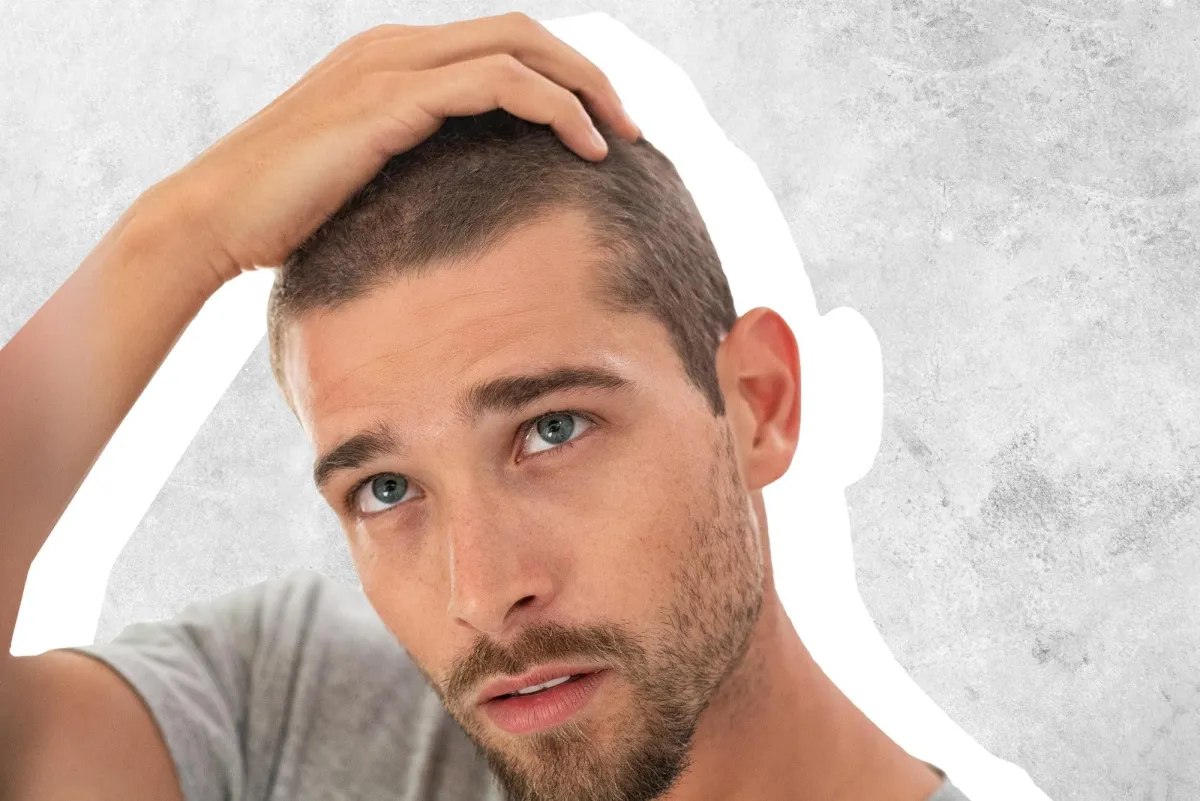
Losing your hair is never a good feeling, most men tend to feel self-conscious about it. Some men decide to completely shave off their heads or constantly wear a hat. One of the most common insecurities men face is hair thinning; for some men, it starts as early as in their 20s. The loss of confidence really starts to affect the way men do their hair and the types of hair cuts they get. Men start to worry about how they will be perceived by friends, family, and colleagues. Hair thinning should not be the cause of self distraughtness, and it should not limit men to have to continuously cover their heads. CADMEN Barbershop has compiled a list of the top 5 best haircuts for men experiencing early hair loss.
The Low Fade: What It Is, How It Works, and When to Ask for It
The Low Fade: What It Is, How It Works, and When to Ask for It
The low fade is one of the most frequently requested cuts in contemporary barbershops. Most men who ask for it know roughly what they want but cannot always describe exactly why the low fade works better for them than other fade variations.
Understanding what makes a low fade distinct from a mid or high fade helps you make a more informed choice and communicate more precisely when you sit in the chair.
What Defines a Low Fade
A fade is defined by where on the head the skin-to-hair transition begins. A low fade starts just above the ear and at the lower portion of the back of the head. The skin is visible only at the very bottom, and the hair length increases gradually as it moves upward.
The distinguishing characteristic is the starting point. The fade line on a low fade sits close to the natural hairline, typically within half an inch to one inch above the ear. This keeps the bulk of the hair at length and concentrates the high-contrast skin-to-hair transition in a narrow band near the base.
How It Compares to Mid and High Fades
A mid fade starts at the midpoint of the sides, roughly at the level of the top of the ear. The skin-to-hair transition occupies a larger area of the head. More of the side is shaved close or to the skin.
A high fade starts near the temples, close to where the side hair meets the top. The contrast is dramatic because a large portion of the side is cut very close or to the skin.
The differences in practice:
- Low fade: more conservative, retains volume on the sides, transitions naturally
- Mid fade: balanced contrast, versatile for most hairstyles
- High fade: bold, high-contrast, works well with specific styled tops
A low fade works in professional environments where a high fade might read as too sharp or unconventional. It also suits men who want the clean feel of a fade without dramatically reducing the side volume.
The Low Skin Fade
A low fade can be either a skin fade or a non-skin fade. A low skin fade (sometimes called a low bald fade) goes down to bare skin at the baseline but starts this transition low on the head. The result is a crisp, clean line near the ear and neckline with more length preserved above it.
A low fade without the skin option leaves a small amount of hair visible even at the shortest point. The transition is still very clean but slightly softer than a skin fade.
Most men who say "low fade" without specifying typically get a low skin fade, as this is the default interpretation in most barbershops. If you want to keep a bit of stubble at the bottom rather than going to bare skin, say so explicitly.
Why the Low Fade Works for Most Face Shapes
The low fade is the most universally flattering fade variation because it does not dramatically change the apparent width or height of the head.
A high fade removes volume from the sides near the temple, which can make a round face look longer. It can also make a narrow face look even narrower. The low fade avoids these extremes by preserving hair volume higher up on the sides.
Men with round or wide faces often find the low fade more flattering than a high fade. Men with very long or narrow faces may also prefer the low fade because it adds width without the high contrast of a high or mid fade.
Hairstyles That Pair Well with a Low Fade
The low fade is versatile and works with a wide range of top styles:
- Textured crop: the low fade keeps the sides clean while the crop provides volume and texture on top
- Slick back: the low fade on the sides contrasts cleanly against slicked-back longer hair
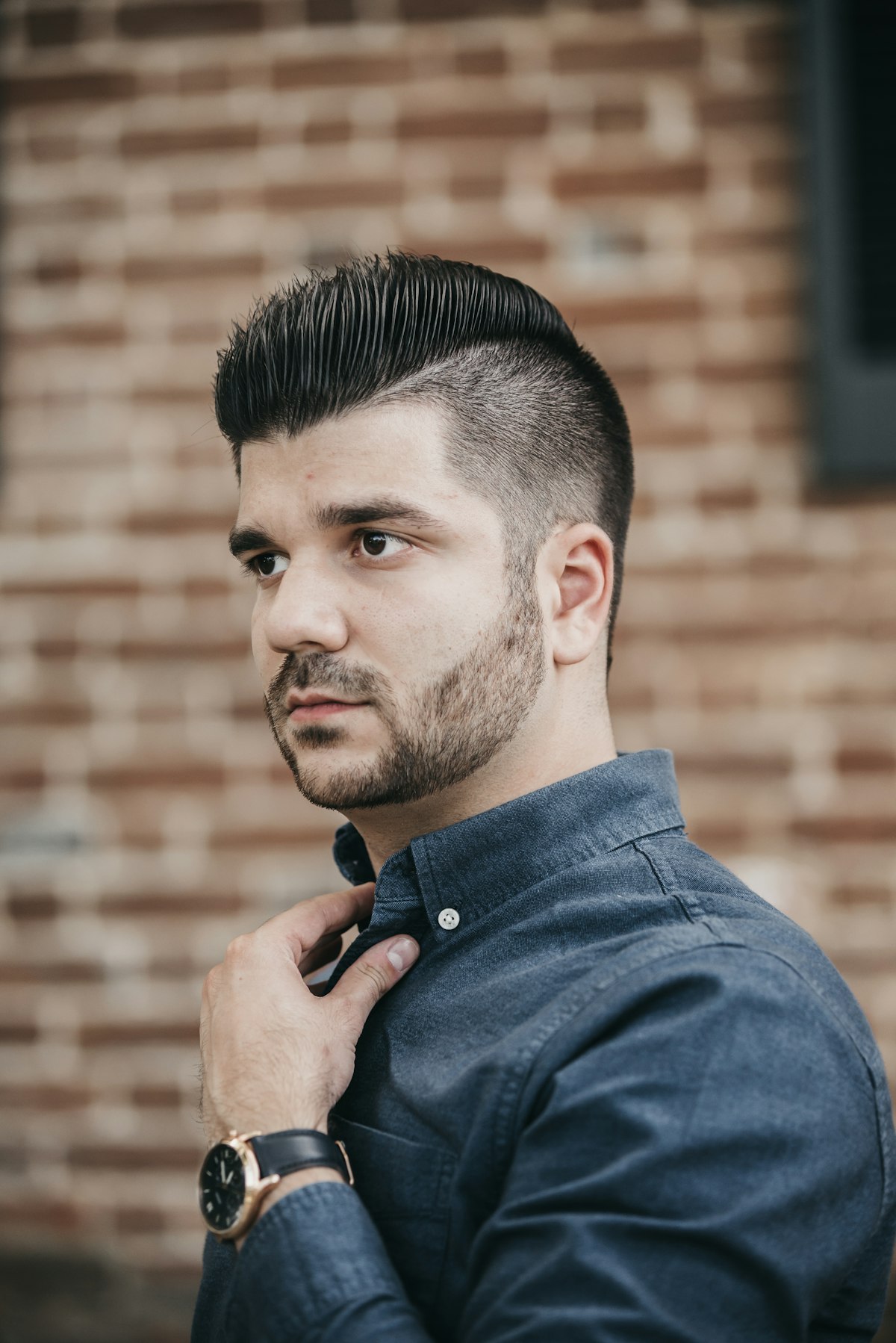
- Pompadour: the preserved volume on the sides from a low fade balances the height of the pomp
- Natural curls on top: the low fade provides structure without competing with the curl pattern
- Buzz cut: a low fade added to a buzz cut gives it definition at the baseline without the drama of a high fade
How Long a Low Fade Stays Sharp
A low fade typically stays clean for two to three weeks before it begins to look grown out. The tight section near the baseline grows noticeably in that timeframe. The upper portions of the cut grow more slowly.
Men who maintain a skin fade at the baseline may want to come back in every two weeks for a cleanup. Men with a non-skin low fade can often stretch to three to four weeks before the cut looks like it needs attention.
How to Ask for a Low Fade at the Barbershop
The clearest way to ask is to specify three things: the fade height (low), whether you want it to go to the skin, and what you want on top.
Example: "A low skin fade on the sides and back, leaving about two inches on top for a textured look."
If you are unsure how low is low, point to where you want the fade line to start. Pointing to just above the ear or at the base of the sideburn communicates the position more reliably than any terminology.
A barber who asks clarifying questions before cutting is a good sign. It means they are building an accurate picture before making a decision that is difficult to reverse.
The Drop Fade Variation
A drop low fade, sometimes just called a drop fade, curves down behind the ear rather than cutting a straight horizontal line. The fade line follows a curved path that arcs lower toward the neckline before curving back up. This gives a rounded, arc-shaped transition instead of a flat one.
The drop fade is particularly popular with curly and textured hair. It follows the natural curvature of the head in a way that can look more intentional than a straight fade line on some hair types.
Frequently Asked Questions
What is the difference between a low fade and a taper?
A taper reduces hair length gradually without necessarily going to skin. A low fade goes to bare skin at the baseline, creating a visible skin-to-hair transition. A taper is softer and more gradual. A low fade is sharper and more defined.
Can a low fade work with longer hair on top?
Yes. The low fade works especially well with longer tops because it creates contrast without the sides competing with the top for attention. The clean baseline on the sides frames the length on top rather than overpowering it.
Is a low fade appropriate for formal or professional settings?
Yes. The low fade is generally the most workplace-appropriate fade variation. The contrast is present but subtle compared to a mid or high fade. Many professional environments that might raise an eyebrow at a very sharp high fade have no issue with a well-executed low fade.
How short do the sides go with a low fade?
At the very bottom of a skin low fade, the sides go to bare skin. This area is narrow, typically covering only the half inch to inch above the natural hairline. Moving up from there, the hair gradually increases in length. The exact guard numbers used depend on the barber and the desired transition speed.
What should I tell my barber if I want a low fade but I am not sure of the exact look?
Tell them you want the fade to start low, just above the ear. If you have a reference photo, use it. Ask them to show you in a hand mirror before they take it too high. Most barbers start conservative and will adjust based on your feedback during the cut.
Related Reading From CADMEN Barber Academy
- How to Cut a Low Fade: Guard Progression, Blending, and the Common Mistakes
- How to Do a Low Fade: Technique for a Clean Gradual Blend Starting at the Ear
- Mid Fade vs. Low Fade: How to Choose
- Bald Fade vs Skin Fade: Are They the Same Thing?
- How to Fade Natural Afro Hair: Technique Adjustments for High-Density Texture
- The Afro Fade: How It's Done and What Makes It Work
Want to learn to cut a low fade yourself? CADMEN Barber Academy teaches cutting hands-on, with an educator beside you. See the barber academy in Mississauga or view in-person classes and send an enquiry.
Learn this fade step by step in our free Fade Tutorials playlist on YouTube.

5 Best Haircuts for Men with
Early Hair Thinning
Losing your hair is never a good feeling, most men tend to feel self-conscious about it. Some men decide to completely shave off their heads or constantly wear a hat. One of the most common insecurities men face is hair thinning; for some men, it starts as early as in their 20s. The loss of confidence really starts to affect the way men do their hair and the types of hair cuts they get. Men start to worry about how they will be perceived by friends, family, and colleagues. Hair thinning should not be the cause of self distraughtness, and it should not limit men to have to continuously cover their heads. CADMEN Barbershop has compiled a list of the top 5 best haircuts for men experiencing early hair loss.


For any request, please contact us at info@cadmen.ca