
Barber Tips & Tricks
Follow us for the latest barber techniques and tips
Barber Tips & Tricks
Follow us for the latest barber techniques and tips
Top 7 Reasons Why Your Clients
Aren't Returning
Stay Ahead in the Barbering Game: Nurturing
Lifelong Clientele
You might have come across the saying “give a client a good cut at a reasonable price, and they'll be yours for life.” Unfortunately in reality this is not always the case. That’s where we come in! Check out some of the reasons why your clients may not be returning, whether they were long-term customers or a first-time appointment, below.

Top 7 Reasons Why Your Clients
Aren't Returning
Stay Ahead in the Barbering Game: Nurturing
Lifelong Clientele
You might have come across the saying “give a client a good cut at a reasonable price, and they'll be yours for life.” Unfortunately in reality this is not always the case. That’s where we come in! Check out some of the reasons why your clients may not be returning, whether they were long-term customers or a first-time appointment, below.
Career in Mobile Barbering: Key
Things You Need to Know about
While most barbers work in physical barbershops or hair salons, there are a growing number of barbers who work on-call. What does it mean to be a mobile barber? What are their primary responsibilities? Where to find them? In this blog, we will explain some key terms you should know about mobile barbering and how you can start a new career in it.

Career in Mobile Barbering: Key
Things You Need to Know about
While most barbers work in physical barbershops or hair salons, there are a growing number of barbers who work on-call. What does it mean to be a mobile barber? What are their primary responsibilities? Where to find them? In this blog, we will explain some key terms you should know about mobile barbering and how you can start a new career in it.
Top 4 Ways for Barbers to
Promote Themselves
Marketing is key. Knowing how to market yourself as a barber can be the difference between having 5 to 20 clients a day. If you are interested in boosting the number of your customers and furthering your advertising skills, read the list below with four ways to promote yourself as a barber.

Top 4 Ways for Barbers to
Promote Themselves
Marketing is key. Knowing how to market yourself as a barber can be the difference between having 5 to 20 clients a day. If you are interested in boosting the number of your customers and furthering your advertising skills, read the list below with four ways to promote yourself as a barber.
5 Tips for Social Media Content
Creating as a Barber
It is next to impossible to find someone who is not on social media today. More than just a tool for connection, social media is key helping barbers market themselves and promote their names and skills. If you want to up your barber game quickly, here are five tips on how to promote content online that you don't want to miss out on.

5 Tips for Social Media Content
Creating as a Barber
It is next to impossible to find someone who is not on social media today. More than just a tool for connection, social media is key helping barbers market themselves and promote their names and skills. If you want to up your barber game quickly, here are five tips on how to promote content online that you don't want to miss out on.
5 Best Haircuts for Men with
Early Hair Thinning
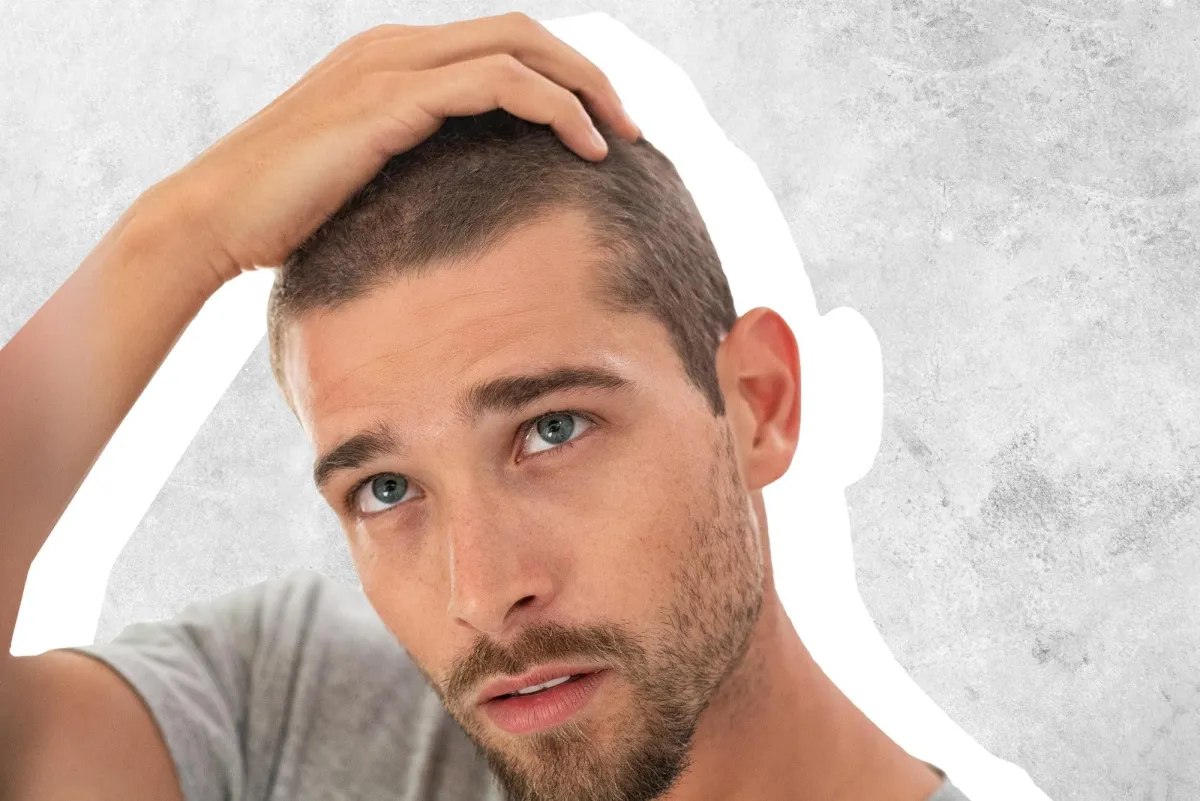
Losing your hair is never a good feeling, most men tend to feel self-conscious about it. Some men decide to completely shave off their heads or constantly wear a hat. One of the most common insecurities men face is hair thinning; for some men, it starts as early as in their 20s. The loss of confidence really starts to affect the way men do their hair and the types of hair cuts they get. Men start to worry about how they will be perceived by friends, family, and colleagues. Hair thinning should not be the cause of self distraughtness, and it should not limit men to have to continuously cover their heads. CADMEN Barbershop has compiled a list of the top 5 best haircuts for men experiencing early hair loss.
How to Fade Natural Afro Hair: Technique Adjustments for High-Density Texture
How to Fade Natural Afro Hair: Technique Adjustments for High-Density Texture
Fading natural afro or high-density coiled hair (commonly referred to as type 4 texture) requires meaningful technique adjustments compared to straight or wavy hair. The density, coil pattern, and shrinkage factor all change how the clipper works and how the blade behaves on the hair.
A barber who has only worked with straight or loosely wavy hair and tries to apply the same technique to dense coiled hair will get uneven results. This guide covers the specific adjustments that make the difference.
Key Differences Between Straight and Coiled Hair
Density
High-density afro hair packs significantly more strands per square centimetre than most straight-hair textures. The clipper blade passes through more material per stroke. This affects how quickly the blade gets clogged and how much resistance the clipper motor encounters. Oil the blades more frequently on dense textures. A clipper that runs hot or begins dragging during a service is usually a blade-clogging issue that oil solves in 30 seconds.
Shrinkage
Natural coiled hair can shrink significantly from its actual length. A client with 5 centimetres of actual hair length may present with hair that appears 2 to 3 centimetres. The fade you are creating reflects the stretched length, not the resting length. This matters most at the top of the fade where the hair is longer: the graduation you see in the chair may look different when the client leaves and the hair returns to its resting state.
Experienced barbers account for shrinkage during the cut. If the blend looks right at the resting state, it may look uneven when the client stretches or styles the hair. Blend higher than the intended endpoint to compensate.
Coil direction
Straight hair has a predictable growth and lay direction. Coiled hair's natural coils mean the blade needs to work in multiple directions to ensure even coverage. Single-direction passes that work fine on straight hair leave uncut sections in dense coiled hair. Work the fade from multiple angles.
Blade and Guard Adjustments
Start lower on the guard scale
Dense coiled hair appears longer at any given guard size than straight hair does. A guard 1 on dense afro hair may look similar to a guard 1.5 or 2 on straight hair when viewed from a distance because the coils add visual volume. This means the fade graduation often needs to start with a lower guard or with bare blades lower on the head to achieve the same visual effect.
On first-time clients with dense natural hair, start conservatively lower than you think you need and build up. It is always easier to remove more than to explain why you removed too much.
Blade angle matters more
On straight hair, the blade can sit relatively flat against the head for most of the fade work. On dense coiled hair, a slightly elevated blade angle (the spine of the clipper tilted slightly away from the head) allows the blade to engage the hair without plowing through too much at once. This produces a cleaner cut with less drag and better blade control.
Experiment with blade elevation on dense textures to find the angle that produces clean, consistent cuts without resistance.
More frequent blending passes
The visual density of afro hair means transitions between guard sizes show more prominently. What reads as a smooth blend on straight hair may read as a visible line on dense coiled hair. Plan on making more blending passes between guard sizes and using the fade brush more actively at each transition point.
Dry vs. Damp Hair
On straight hair, opinions differ on whether damp or dry hair is easier to fade. On dense natural hair, dry hair is almost always preferable for fade work. Damp natural hair clumps and compresses, making it harder to see where the blend is. Dry hair shows the coil pattern and fade graduation more clearly.
If a client arrives with wet hair, let it dry before starting the fade, or use a diffuser or hair dryer on a low-heat setting.
Finishing the Style on Top
After the fade, the top section of natural afro hair is typically finished with a pick or afro comb to lift and shape the hair. The shape of the top (round, flat, angled) is a style decision that should be confirmed in the consultation.
Some clients want the top shaped with scissors after the fade, removing bulk and shaping the outer silhouette. This requires freehand scissor work without a guide, which is a separate skill from clipper work. If you do not do scissor-over-comb regularly on dense natural hair, be honest about that before committing to it.
Building Versatility Across Textures
Barbers who can work confidently across all hair types build larger and more diverse client bases. A shop where natural-hair clients feel comfortable and well-served generates strong word-of-mouth in the natural hair community specifically, because the experience is less reliable than it should be in many shops.
CADMEN's 2-day intensive fade classes in Mississauga include live clients across a range of hair textures. Maximum 3 students. Direct correction from master barber Francis Paua on every cut.
Fade class: $1,750 + HST (small group) or $1,950 + HST (1-on-1). Book at academy.cadmen.ca/in-person-training.
Frequently Asked Questions
How do you fade natural afro hair?
The technique fundamentals are the same as any fade, but with adjustments for density and coil pattern: work from multiple blade angles, use lower guard sizes to account for visual density, make more blending passes between guard sizes, oil the blades more frequently, and work on dry hair rather than damp. Account for shrinkage when setting the blend graduation.
What guard do you use for a fade on natural hair?
Start lower than you would on straight hair for the same visual effect. Dense natural hair adds visual volume at every guard size. A guard 1 on dense afro hair can appear similar to a 1.5 or 2 on straight hair. Build up from a lower starting point on first-time clients and assess as you go.
Why is my fade uneven on natural hair?
The most common causes: single-direction passes missing coils that grow in different directions (fix: work from multiple angles), blade clogging from high density (fix: oil frequently and check blades), not compensating for shrinkage (fix: blend higher than the resting endpoint), and not making enough passes between guard sizes (fix: more transition work and more fade brush use).
Should natural afro hair be dry or damp for a fade?
Dry. Damp natural hair clumps and compresses, which makes it harder to see the blend and the gradient accurately. Dry hair shows the coil pattern and the fade graduation more clearly. If a client arrives with wet hair, let it dry before starting fade work.
How do you blend a fade on type 4 hair?
Use more blending passes between guard sizes than you would on straight hair. The density makes transitions more visible. Use a fade brush actively at each transition point. Slightly elevate the blade angle (spine away from the head) to let the blade engage the hair without excess drag. Check from multiple angles under direct lighting before finishing.
Related Reading From CADMEN Barber Academy
- The Afro Fade: How It's Done and What Makes It Work
- The Afro Fade: Combining Natural Volume with a Defined Graduation
- Afro Fade Technique: How to Fade and Shape Natural Afro Hair
- The Afro Fade: How It Works and Why It Suits Natural Texture
- Bald Fade vs Skin Fade: Are They the Same Thing?
- Cutting Afro and Type 4 Hair: Techniques for Barbers Working with Coily Textures
Want to learn to cut an afro fade yourself? CADMEN Barber Academy teaches cutting hands-on, with an educator beside you. See the barber academy in Mississauga or view in-person classes and send an enquiry.
Learn this fade step by step in our free Fade Tutorials playlist on YouTube.

5 Best Haircuts for Men with
Early Hair Thinning
Losing your hair is never a good feeling, most men tend to feel self-conscious about it. Some men decide to completely shave off their heads or constantly wear a hat. One of the most common insecurities men face is hair thinning; for some men, it starts as early as in their 20s. The loss of confidence really starts to affect the way men do their hair and the types of hair cuts they get. Men start to worry about how they will be perceived by friends, family, and colleagues. Hair thinning should not be the cause of self distraughtness, and it should not limit men to have to continuously cover their heads. CADMEN Barbershop has compiled a list of the top 5 best haircuts for men experiencing early hair loss.


For any request, please contact us at info@cadmen.ca