
Barber Tips & Tricks
Follow us for the latest barber techniques and tips
Barber Tips & Tricks
Follow us for the latest barber techniques and tips
Top 7 Reasons Why Your Clients
Aren't Returning
Stay Ahead in the Barbering Game: Nurturing
Lifelong Clientele
You might have come across the saying “give a client a good cut at a reasonable price, and they'll be yours for life.” Unfortunately in reality this is not always the case. That’s where we come in! Check out some of the reasons why your clients may not be returning, whether they were long-term customers or a first-time appointment, below.

Top 7 Reasons Why Your Clients
Aren't Returning
Stay Ahead in the Barbering Game: Nurturing
Lifelong Clientele
You might have come across the saying “give a client a good cut at a reasonable price, and they'll be yours for life.” Unfortunately in reality this is not always the case. That’s where we come in! Check out some of the reasons why your clients may not be returning, whether they were long-term customers or a first-time appointment, below.
Career in Mobile Barbering: Key
Things You Need to Know about
While most barbers work in physical barbershops or hair salons, there are a growing number of barbers who work on-call. What does it mean to be a mobile barber? What are their primary responsibilities? Where to find them? In this blog, we will explain some key terms you should know about mobile barbering and how you can start a new career in it.

Career in Mobile Barbering: Key
Things You Need to Know about
While most barbers work in physical barbershops or hair salons, there are a growing number of barbers who work on-call. What does it mean to be a mobile barber? What are their primary responsibilities? Where to find them? In this blog, we will explain some key terms you should know about mobile barbering and how you can start a new career in it.
Top 4 Ways for Barbers to
Promote Themselves
Marketing is key. Knowing how to market yourself as a barber can be the difference between having 5 to 20 clients a day. If you are interested in boosting the number of your customers and furthering your advertising skills, read the list below with four ways to promote yourself as a barber.

Top 4 Ways for Barbers to
Promote Themselves
Marketing is key. Knowing how to market yourself as a barber can be the difference between having 5 to 20 clients a day. If you are interested in boosting the number of your customers and furthering your advertising skills, read the list below with four ways to promote yourself as a barber.
5 Tips for Social Media Content
Creating as a Barber
It is next to impossible to find someone who is not on social media today. More than just a tool for connection, social media is key helping barbers market themselves and promote their names and skills. If you want to up your barber game quickly, here are five tips on how to promote content online that you don't want to miss out on.

5 Tips for Social Media Content
Creating as a Barber
It is next to impossible to find someone who is not on social media today. More than just a tool for connection, social media is key helping barbers market themselves and promote their names and skills. If you want to up your barber game quickly, here are five tips on how to promote content online that you don't want to miss out on.
5 Best Haircuts for Men with
Early Hair Thinning
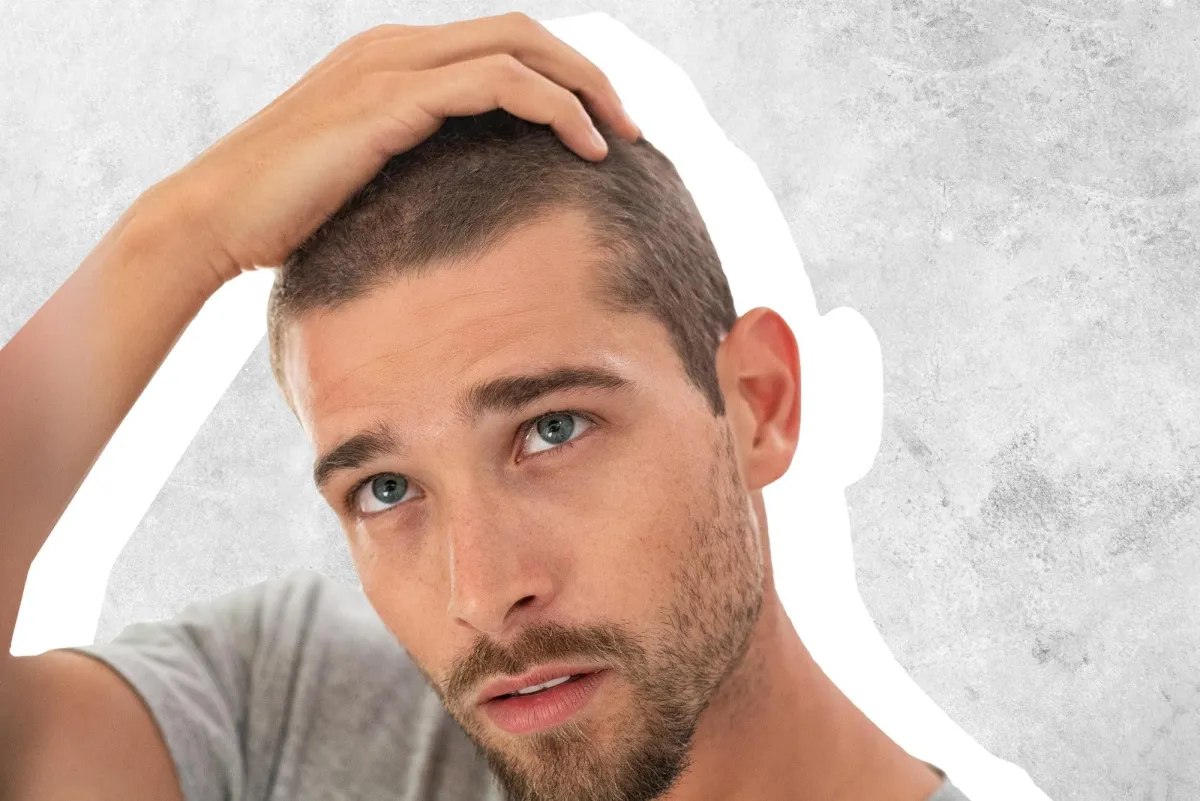
Losing your hair is never a good feeling, most men tend to feel self-conscious about it. Some men decide to completely shave off their heads or constantly wear a hat. One of the most common insecurities men face is hair thinning; for some men, it starts as early as in their 20s. The loss of confidence really starts to affect the way men do their hair and the types of hair cuts they get. Men start to worry about how they will be perceived by friends, family, and colleagues. Hair thinning should not be the cause of self distraughtness, and it should not limit men to have to continuously cover their heads. CADMEN Barbershop has compiled a list of the top 5 best haircuts for men experiencing early hair loss.
The Afro Fade: How It's Done and What Makes It Work
The Afro Fade: How It's Done and What Makes It Work
The afro fade pairs the volume and texture of natural afro hair on top with faded sides that create a clean, defined silhouette. It is one of the most technically involved men's cuts because the afro section requires shaping that accounts for curl shrinkage, volume distribution, and the specific growth pattern of Type 4 hair, while the fade requires the same precision blending as any other skin or mid-fade.
The Two-Part Structure
The top section is worked with afro picks and scissors (or clippers with guards) to shape the natural volume into the desired profile, round, flat-top, or tapered top depending on the style. This section is shaped dry or with minimal product because the curl pattern needs to be in its natural state for accurate assessment. The growth pattern is read to identify where the hair sits higher or denser and the shape is adjusted accordingly.
The sides are faded with the same technique used for any skin or taper fade, progressive guard blending from skin or near-skin at the bottom up to the length where the afro section begins. The transition zone where the fade meets the afro section is the most demanding part: the barber must blend the fade into the dense coily hair without creating a visible line between the faded section and the natural volume above it.
Maintenance Considerations
The afro section requires moisturizing product to stay healthy. Without regular moisturizing, Type 4 hair loses moisture quickly and becomes dry and brittle. The fade portion requires the same maintenance schedule as any skin or mid-fade, every 1 to 2 weeks for a skin fade, 2 to 3 weeks for a mid-fade, before the contrast between the faded sides and the growing natural section becomes visually undefined.
CADMEN Training
Natural hair techniques and type-specific fading are covered in CADMEN's barbering program. academy.cadmen.ca/in-person-training.
Frequently Asked Questions
What is an afro fade?
An afro fade is a men's haircut that combines natural afro hair on the top section with faded sides and back. The top section retains and shapes the natural curl pattern of Type 3 or Type 4 hair, allowing the volume and texture of the natural afro to be the visual focus. The sides are cut using a fade technique that blends from very short or skin at the bottom upward toward the afro section, creating clean contrast between the faded perimeter and the natural volume on top. Key variations of the afro fade: round afro fade, the top section is shaped into a symmetrical rounded dome. Consistent volume around the entire top, faded cleanly on all sides. This is the most classic interpretation. Flat-top fade, the top section is cut with a flat horizontal plane on top, creating a geometric silhouette with the sides faded. The flat top requires significant skill to achieve a truly flat, level surface given the curl pattern variation across the head. Tapered afro, the afro section itself is shorter and closer to the head, with the volume kept moderate rather than maximized. The fade on the sides follows the same technique but the overall silhouette is less voluminous. The afro fade has been a significant part of barbershop culture for decades, with its roots in the cultural expression of natural Black hair in the United States. Its contemporary iteration pairs the natural section with modern fade techniques for a clean, deliberate result that honors the hair's natural characteristics while bringing barbershop-level precision to the overall cut.
How do I take care of an afro fade at home?
Caring for an afro fade at home involves two different sets of requirements: the natural afro section and the faded sides. For the afro section: moisturize regularly. Type 4 hair (the most common for afro styles) loses moisture faster than straighter hair types because the tightly coiled structure prevents the natural scalp oil from traveling down the hair shaft the way it does on straight hair. A leave-in conditioner or hair moisturizer applied 2 to 3 times per week keeps the hair hydrated and prevents the brittleness that causes breakage. Seal moisture in after moisturizing with a lightweight oil (jojoba, argan, or a dedicated sealant oil). Apply a small amount on top of the moisturizer to lock it in. Sleep protection: sleeping on a cotton pillowcase draws moisture from hair. A satin or silk pillowcase, or a satin bonnet/durag, preserves the moisture added during styling and reduces friction that can cause frizz and breakage. Pick the hair gently with an afro pick to maintain volume and shape between barbershop visits. Start at the ends and work upward, never force the pick through tangles from root to end. For the faded sides: the faded sections do not require the same moisturizing attention but benefit from a light scalp moisturizer to prevent dryness on the skin at the faded area. The faded sections will need barbershop maintenance every 1 to 3 weeks depending on how fast the hair grows and how sharp you want to keep the contrast.
What do I tell my barber for an afro fade?
Communicating your afro fade request effectively covers the top section, the fade type, and any specific shape preferences. For the top section: specify how much length and volume you want. "Keep the top full" versus "keep the top shorter and closer" versus "flat-top" are meaningfully different directions. If you have a specific shape in mind (round dome, flat top, tapered top), say so or bring a reference photo. For the fade: specify the height (low, mid, high) and whether you want a skin fade or a closer-but-not-skin finish. Low skin fade on the sides, mid-fade, high taper, these are specific enough for an experienced barber to execute. For the transition zone: if you have had afro fades before and experienced a specific issue (a visible line where the fade meets the afro section, uneven blending on one side), mention it. Barbers who know about a specific problem can address it proactively. For the shape outline: the outline of the afro (the defined edge around the perimeter of the natural section) can be sharp and geometric or softer. Specifying "sharp outline" or "natural outline" tells the barber how much definition you want at the boundary between the afro and the fade. A reference photo that shows your preferred shape, fade height, and outline sharpness in one image is the most efficient way to communicate a specific afro fade style, especially with a new barber who has not worked with your hair before.
Related Reading From CADMEN Barber Academy
- How to Fade Natural Afro Hair: Technique Adjustments for High-Density Texture
- The Afro Fade: Combining Natural Volume with a Defined Graduation
- Afro Fade Technique: How to Fade and Shape Natural Afro Hair
- The Afro Fade: How It Works and Why It Suits Natural Texture
- Bald Fade vs Skin Fade: Are They the Same Thing?
- Cutting Afro and Type 4 Hair: Techniques for Barbers Working with Coily Textures
Want to learn to cut an afro fade yourself? CADMEN Barber Academy teaches cutting hands-on, with an educator beside you. See the barber academy in Mississauga or view in-person classes and send an enquiry.
Learn this fade step by step in our free Fade Tutorials playlist on YouTube.

5 Best Haircuts for Men with
Early Hair Thinning
Losing your hair is never a good feeling, most men tend to feel self-conscious about it. Some men decide to completely shave off their heads or constantly wear a hat. One of the most common insecurities men face is hair thinning; for some men, it starts as early as in their 20s. The loss of confidence really starts to affect the way men do their hair and the types of hair cuts they get. Men start to worry about how they will be perceived by friends, family, and colleagues. Hair thinning should not be the cause of self distraughtness, and it should not limit men to have to continuously cover their heads. CADMEN Barbershop has compiled a list of the top 5 best haircuts for men experiencing early hair loss.


For any request, please contact us at info@cadmen.ca