
Barber Tips & Tricks
Follow us for the latest barber techniques and tips
Barber Tips & Tricks
Follow us for the latest barber techniques and tips
Top 7 Reasons Why Your Clients
Aren't Returning
Stay Ahead in the Barbering Game: Nurturing
Lifelong Clientele
You might have come across the saying “give a client a good cut at a reasonable price, and they'll be yours for life.” Unfortunately in reality this is not always the case. That’s where we come in! Check out some of the reasons why your clients may not be returning, whether they were long-term customers or a first-time appointment, below.

Top 7 Reasons Why Your Clients
Aren't Returning
Stay Ahead in the Barbering Game: Nurturing
Lifelong Clientele
You might have come across the saying “give a client a good cut at a reasonable price, and they'll be yours for life.” Unfortunately in reality this is not always the case. That’s where we come in! Check out some of the reasons why your clients may not be returning, whether they were long-term customers or a first-time appointment, below.
Career in Mobile Barbering: Key
Things You Need to Know about
While most barbers work in physical barbershops or hair salons, there are a growing number of barbers who work on-call. What does it mean to be a mobile barber? What are their primary responsibilities? Where to find them? In this blog, we will explain some key terms you should know about mobile barbering and how you can start a new career in it.

Career in Mobile Barbering: Key
Things You Need to Know about
While most barbers work in physical barbershops or hair salons, there are a growing number of barbers who work on-call. What does it mean to be a mobile barber? What are their primary responsibilities? Where to find them? In this blog, we will explain some key terms you should know about mobile barbering and how you can start a new career in it.
Top 4 Ways for Barbers to
Promote Themselves
Marketing is key. Knowing how to market yourself as a barber can be the difference between having 5 to 20 clients a day. If you are interested in boosting the number of your customers and furthering your advertising skills, read the list below with four ways to promote yourself as a barber.

Top 4 Ways for Barbers to
Promote Themselves
Marketing is key. Knowing how to market yourself as a barber can be the difference between having 5 to 20 clients a day. If you are interested in boosting the number of your customers and furthering your advertising skills, read the list below with four ways to promote yourself as a barber.
5 Tips for Social Media Content
Creating as a Barber
It is next to impossible to find someone who is not on social media today. More than just a tool for connection, social media is key helping barbers market themselves and promote their names and skills. If you want to up your barber game quickly, here are five tips on how to promote content online that you don't want to miss out on.

5 Tips for Social Media Content
Creating as a Barber
It is next to impossible to find someone who is not on social media today. More than just a tool for connection, social media is key helping barbers market themselves and promote their names and skills. If you want to up your barber game quickly, here are five tips on how to promote content online that you don't want to miss out on.
5 Best Haircuts for Men with
Early Hair Thinning
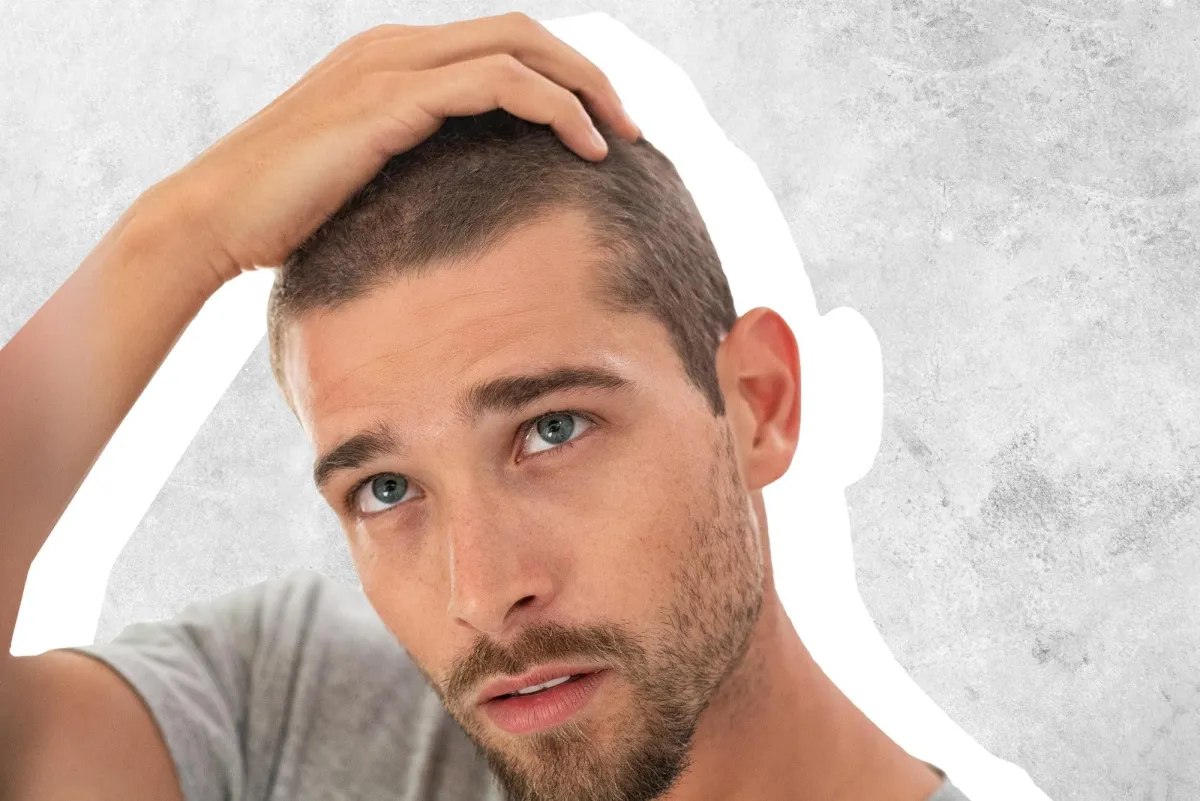
Losing your hair is never a good feeling, most men tend to feel self-conscious about it. Some men decide to completely shave off their heads or constantly wear a hat. One of the most common insecurities men face is hair thinning; for some men, it starts as early as in their 20s. The loss of confidence really starts to affect the way men do their hair and the types of hair cuts they get. Men start to worry about how they will be perceived by friends, family, and colleagues. Hair thinning should not be the cause of self distraughtness, and it should not limit men to have to continuously cover their heads. CADMEN Barbershop has compiled a list of the top 5 best haircuts for men experiencing early hair loss.
How to Communicate With Your Barber to Get the Haircut You Actually Want
How to Communicate With Your Barber to Get the Haircut You Actually Want
The gap between "what I wanted" and "what I got" at the barbershop is almost always a communication gap, not a skill gap. A competent barber needs accurate information to produce the right result. Words like "short," "trim," and "clean it up" mean entirely different things to different people. Here is what actually communicates your intent.
Use a Reference Photo
A photo communicates more precisely than any description. The word "fade" covers hundreds of variations. A photo of a specific fade shows the exact level, the contrast, and the overall style. Find one photo that represents what you want most accurately and show it at the start of the appointment. If your hair type differs significantly from the person in the photo, acknowledge that and ask the barber how close they can get given your hair's characteristics.
Describe Length in Inches or Clipper Numbers
"Short" is not a length. "About 2 inches on top, down from about 3 right now" is a length. Clipper guard numbers (1 through 8, each corresponding to a specific 1/8-inch increment) give the barber exact information for the sides and back. "Guard 2 on the sides, 2 inches on top, tapered neckline" leaves little room for misinterpretation.
Describe the Style Direction
Where does the hair on top go? Side-parted and swept, back-swept, textured and up, flat and forward? The intended direction of the top section determines how it should be cut, not just how long. State what you are going for and if needed, show it by running your hand through your hair in the direction you intend to style it.
Ask Before the Cut Is Made
After the consultation, ask the barber to repeat back what they understand you want. This catches misalignment before scissors are used. A confident barber will not be offended by this, they would rather confirm than guess.
CADMEN Training
Client consultation is a dedicated component of the CADMEN Barber Academy curriculum. academy.cadmen.ca/in-person-training.
Frequently Asked Questions
What should I say when I sit in the barber's chair?
The most effective consultation at the barbershop covers four pieces of information: the top, the sides, the neckline, and any relevant context about your hair. The top: state the length you want on top and the direction. "About 2.5 inches on top, textured, side part" or "Crop it down to about 1.5 inches, leave some texture, going straight back." The sides: state the treatment and level. "Mid fade on the sides, taken to skin" or "Guard 3 taper on the sides, no skin." The neckline: state your preference for the neckline shape. "Tapered neckline" or "squared neckline" or "keep the current shape but clean it up." Context: anything your barber should know about your hair. "My hair is thick and grows fast" or "I have a cowlick at the back right that tends to stick up" or "I'm trying to grow this out so I only want length taken off the sides." Then add: a reference photo if you have one. A photo of where your hair is now if you have recently had anything done to it. The goal of the consultation is to align on a single shared mental image of the finished cut before anything is started. A complete consultation takes 60 to 90 seconds. The time invested prevents a 4-week wait to try again with a different instruction.
How do I tell my barber I don't like the haircut?
Telling a barber you are not satisfied with a haircut is uncomfortable for most people, but it is the right thing to do in the chair rather than after you have paid and left. What to say in the chair: be specific about what is not right. "The fade is higher than I was expecting" or "the top is shorter than I wanted" is more useful than "I don't like it." A specific description gives the barber something to fix or explain. Ask whether it can be adjusted. Some issues can be corrected (a neckline that is not right, a fade that could be taken lower). Others cannot be undone (hair that is too short). A barber who understands what went wrong can often make adjustments that improve the result. Ask calmly and directly. Most barbers want to know if something is off. Saying "it's coming out a bit different from what I was going for" and pointing to the specific area is professional, not rude. What to do after you have left and are unhappy: call or message the shop within 24 to 48 hours. Explain what was not right. Many barbershops will offer a complimentary adjustment within a short window for this reason. What not to do: say nothing and leave the shop unhappy, then leave a negative review without giving the shop a chance to make it right. A direct, specific conversation is more likely to result in an outcome you are happy with than venting later. How to prevent it next time: write down exactly what you want before the appointment. Include the elements that you liked about today's cut (if any) and what you want changed. The notes are your own reference for the next consultation.
What does "blended" mean at the barbershop?
When a barber says they will "blend" the hair, they are describing the technique of creating a smooth, seamless transition between sections of different lengths. In a haircut, blending prevents visible lines where one length stops and another starts. The most common blending contexts: between the sides and the top. The transition from short sides to longer top needs to be blended so there is no visible shelf or line where the two lengths meet. A barber who does not blend the transition properly leaves a hard ledge of hair where the guard changes, which looks unfinished. Fade blending. Within the fade itself, each guard transition needs to be blended so the gradient is smooth rather than stepped. A well-blended fade looks like a continuous, flowing change from skin to hair. Poorly blended fades have visible rings where each guard change happened. Between different scissor-cut sections on top. When the top has multiple lengths (shorter at the front, longer toward the crown, for instance), those sections need to be blended so the transition is natural. In beard work. The beard and sideburn connection, or the fade at the cheeklines, is blended to prevent hard lines at the edges. How to ask for blending: if you want a haircut that transitions naturally between lengths, use the word "blended" in your consultation. "I want the sides blended into the top" or "make sure the fade is well blended" communicates that a smooth transition matters to you. Barbers who know blending is a priority will take extra time on the transition zones.
Related Reading From CADMEN Barber Academy
- Barber Client Communication: How to Run a Consultation That Produces the Right Haircut Every Time
- How to Use a Photo to Communicate Your Haircut to a Barber
- The Barbershop Consultation: How to Get the Cut Right Every Time
- Barber Client Consultation Tips: Getting the Information You Need Before the First Cut
- Skin Fade Aftercare: How to Keep It Sharp Between Visits
- How Much to Tip Your Barber: What Is Standard
- Barbering Topics Index: Every Guide by Subject

5 Best Haircuts for Men with
Early Hair Thinning
Losing your hair is never a good feeling, most men tend to feel self-conscious about it. Some men decide to completely shave off their heads or constantly wear a hat. One of the most common insecurities men face is hair thinning; for some men, it starts as early as in their 20s. The loss of confidence really starts to affect the way men do their hair and the types of hair cuts they get. Men start to worry about how they will be perceived by friends, family, and colleagues. Hair thinning should not be the cause of self distraughtness, and it should not limit men to have to continuously cover their heads. CADMEN Barbershop has compiled a list of the top 5 best haircuts for men experiencing early hair loss.


For any request, please contact us at info@cadmen.ca