
Barber Tips & Tricks
Follow us for the latest barber techniques and tips
Barber Tips & Tricks
Follow us for the latest barber techniques and tips
Top 7 Reasons Why Your Clients
Aren't Returning
Stay Ahead in the Barbering Game: Nurturing
Lifelong Clientele
You might have come across the saying “give a client a good cut at a reasonable price, and they'll be yours for life.” Unfortunately in reality this is not always the case. That’s where we come in! Check out some of the reasons why your clients may not be returning, whether they were long-term customers or a first-time appointment, below.

Top 7 Reasons Why Your Clients
Aren't Returning
Stay Ahead in the Barbering Game: Nurturing
Lifelong Clientele
You might have come across the saying “give a client a good cut at a reasonable price, and they'll be yours for life.” Unfortunately in reality this is not always the case. That’s where we come in! Check out some of the reasons why your clients may not be returning, whether they were long-term customers or a first-time appointment, below.
Career in Mobile Barbering: Key
Things You Need to Know about
While most barbers work in physical barbershops or hair salons, there are a growing number of barbers who work on-call. What does it mean to be a mobile barber? What are their primary responsibilities? Where to find them? In this blog, we will explain some key terms you should know about mobile barbering and how you can start a new career in it.

Career in Mobile Barbering: Key
Things You Need to Know about
While most barbers work in physical barbershops or hair salons, there are a growing number of barbers who work on-call. What does it mean to be a mobile barber? What are their primary responsibilities? Where to find them? In this blog, we will explain some key terms you should know about mobile barbering and how you can start a new career in it.
Top 4 Ways for Barbers to
Promote Themselves
Marketing is key. Knowing how to market yourself as a barber can be the difference between having 5 to 20 clients a day. If you are interested in boosting the number of your customers and furthering your advertising skills, read the list below with four ways to promote yourself as a barber.

Top 4 Ways for Barbers to
Promote Themselves
Marketing is key. Knowing how to market yourself as a barber can be the difference between having 5 to 20 clients a day. If you are interested in boosting the number of your customers and furthering your advertising skills, read the list below with four ways to promote yourself as a barber.
5 Tips for Social Media Content
Creating as a Barber
It is next to impossible to find someone who is not on social media today. More than just a tool for connection, social media is key helping barbers market themselves and promote their names and skills. If you want to up your barber game quickly, here are five tips on how to promote content online that you don't want to miss out on.

5 Tips for Social Media Content
Creating as a Barber
It is next to impossible to find someone who is not on social media today. More than just a tool for connection, social media is key helping barbers market themselves and promote their names and skills. If you want to up your barber game quickly, here are five tips on how to promote content online that you don't want to miss out on.
5 Best Haircuts for Men with
Early Hair Thinning
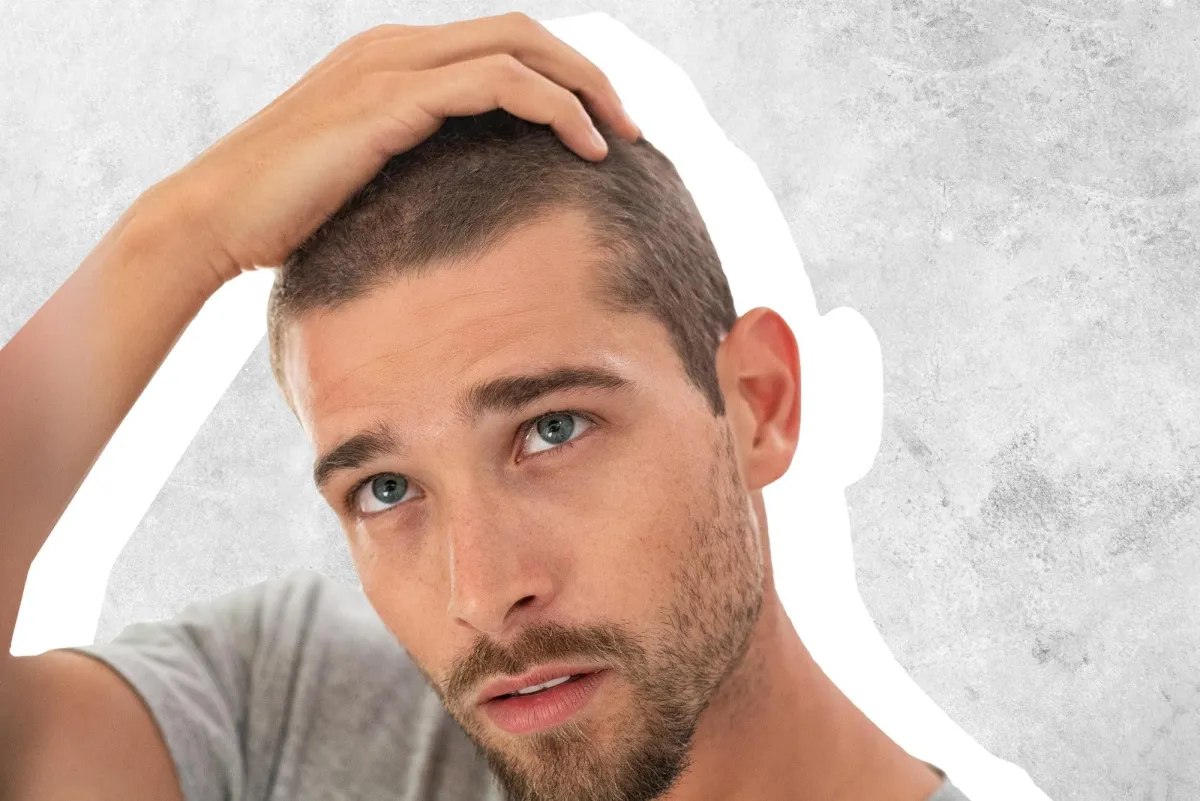
Losing your hair is never a good feeling, most men tend to feel self-conscious about it. Some men decide to completely shave off their heads or constantly wear a hat. One of the most common insecurities men face is hair thinning; for some men, it starts as early as in their 20s. The loss of confidence really starts to affect the way men do their hair and the types of hair cuts they get. Men start to worry about how they will be perceived by friends, family, and colleagues. Hair thinning should not be the cause of self distraughtness, and it should not limit men to have to continuously cover their heads. CADMEN Barbershop has compiled a list of the top 5 best haircuts for men experiencing early hair loss.
Scalp Health for Men: What Barbers See and What to Do About It
Scalp Health for Men: What Barbers See and What to Do About It
Barbers work close to the scalp on every client. They see scalp conditions regularly that clients may not notice or not know how to address. Here are the most common scalp issues barbers encounter and what actually helps.
Dry Scalp and Dandruff
These are the two most common scalp conditions barbers see, and they are often confused. Dry scalp produces small, white, powdery flakes. The scalp feels tight and itchy. The cause is a lack of moisture at the scalp level, often worsened by cold weather, over-washing with harsh shampoos, or not using conditioner. The fix is reducing wash frequency, switching to a sulfate-free shampoo, and using a scalp moisturizer or scalp oil between washes.
Dandruff (seborrheic dermatitis) produces larger, oilier flakes that often have a yellowish tinge. The cause is a yeast that feeds on scalp oil, producing an inflammatory response that accelerates scalp cell turnover. Dandruff shampoos containing zinc pyrithione, ketoconazole, or selenium sulfide address the yeast and reduce the inflammatory response. Used 2 to 3 times per week initially, then reduced to maintenance frequency once the condition is controlled. Over-the-counter options handle most dandruff cases; persistent or severe cases benefit from a dermatologist assessment.
Product Build-Up
Men who use daily product without a thorough weekly wash accumulate product residue at the scalp. This shows as a dull, slightly grey layer at the roots and along the hairline. It can contribute to scalp irritation and affects the performance of subsequent product applications. A clarifying shampoo used once every 2 to 4 weeks removes build-up that regular shampoo does not fully clear. Alternating a clarifying wash with a moisturizing shampoo maintains scalp cleanliness without the dryness that using clarifying shampoo exclusively would cause.
Ingrown Hairs at the Neckline
Men with tight, coily hair frequently develop ingrown hairs (razor bumps) at the neckline and around the beard line after a haircut or shave. The curl pattern causes the cut hair to curl back into the skin rather than growing outward. This produces red bumps that can become painful and infected. Prevention: using a single-blade razor or clippers without the closest guard at the neckline, exfoliating the neckline 2 to 3 times per week to keep pores clear, and applying a targeted ingrown hair serum (containing salicylic acid or glycolic acid) to the bump-prone zones after haircuts. If existing bumps are present, do not shave over them until they resolve.
Frequently Asked Questions
Should I tell my barber about scalp issues before the haircut?
Yes. Barbers will often notice scalp conditions during the cut, but informing them before they start allows them to work around sensitive areas and use the right approach. If you have active razor bumps, active eczema patches, or psoriasis plaques at the neckline or scalp, your barber can adjust the technique to avoid aggravating them. Most barbers appreciate the heads-up; it is a normal part of the client-barber communication.
Can a barber make scalp conditions worse?
A poorly cleaned set of tools can spread fungal or bacterial scalp conditions between clients. Licensed barbershops sanitize tools between clients using barbicide or UV sterilizers as required by health codes. If you have a fungal scalp condition (tinea capitis, ringworm), your barber should know before using clippers on the affected area; the infection can spread via shared tools. Most barbers who follow standard sanitation protocols present minimal risk; barbershops that visibly do not sanitize tools are a genuine concern.
Is scalp massage useful?
Scalp massage increases blood flow to the hair follicles and may contribute to healthier hair growth over time. It is most useful for men dealing with hair thinning at the crown, where increased follicle stimulation is one of the accessible non-chemical interventions. Daily 5-minute scalp massage with fingertips (not nails, which can scratch the scalp) on a damp scalp is the standard approach. The effect is modest and takes months to observe; it is a supportive measure rather than a primary treatment for significant thinning.
What should I put on my scalp between haircuts?
For dry scalp: a lightweight scalp oil (jojoba, argan, or grapeseed) applied to the scalp with a dropper once or twice a week. Massage gently into the scalp and leave for at least 30 minutes (or overnight) before washing out. For normal scalp: nothing beyond regular washing is typically needed. For oily scalp: reducing wash frequency paradoxically helps; adding oil to an already-oily scalp is counterproductive. The goal for normal and oily scalps is a balanced sebum production level, which comes from not over-washing rather than from adding products between washes.
Related Reading From CADMEN Barber Academy
- Men's Scalp Health: What Affects It and How to Keep It in Good Condition
- Scalp Health for Men: What Causes Issues and How to Fix Them
- Men's Scalp Problems: What Barbers Commonly See and What to Do About Them
- Barber Wrist and Hand Health: Preventing and Managing Repetitive Strain Injuries
- Dry Scalp in Men: What Causes It and What Helps
- Men's Scalp Care: What to Know and What to Do

5 Best Haircuts for Men with
Early Hair Thinning
Losing your hair is never a good feeling, most men tend to feel self-conscious about it. Some men decide to completely shave off their heads or constantly wear a hat. One of the most common insecurities men face is hair thinning; for some men, it starts as early as in their 20s. The loss of confidence really starts to affect the way men do their hair and the types of hair cuts they get. Men start to worry about how they will be perceived by friends, family, and colleagues. Hair thinning should not be the cause of self distraughtness, and it should not limit men to have to continuously cover their heads. CADMEN Barbershop has compiled a list of the top 5 best haircuts for men experiencing early hair loss.


For any request, please contact us at info@cadmen.ca