
Barber Tips & Tricks
Follow us for the latest barber techniques and tips
Barber Tips & Tricks
Follow us for the latest barber techniques and tips
Top 7 Reasons Why Your Clients
Aren't Returning
Stay Ahead in the Barbering Game: Nurturing
Lifelong Clientele
You might have come across the saying “give a client a good cut at a reasonable price, and they'll be yours for life.” Unfortunately in reality this is not always the case. That’s where we come in! Check out some of the reasons why your clients may not be returning, whether they were long-term customers or a first-time appointment, below.

Top 7 Reasons Why Your Clients
Aren't Returning
Stay Ahead in the Barbering Game: Nurturing
Lifelong Clientele
You might have come across the saying “give a client a good cut at a reasonable price, and they'll be yours for life.” Unfortunately in reality this is not always the case. That’s where we come in! Check out some of the reasons why your clients may not be returning, whether they were long-term customers or a first-time appointment, below.
Career in Mobile Barbering: Key
Things You Need to Know about
While most barbers work in physical barbershops or hair salons, there are a growing number of barbers who work on-call. What does it mean to be a mobile barber? What are their primary responsibilities? Where to find them? In this blog, we will explain some key terms you should know about mobile barbering and how you can start a new career in it.

Career in Mobile Barbering: Key
Things You Need to Know about
While most barbers work in physical barbershops or hair salons, there are a growing number of barbers who work on-call. What does it mean to be a mobile barber? What are their primary responsibilities? Where to find them? In this blog, we will explain some key terms you should know about mobile barbering and how you can start a new career in it.
Top 4 Ways for Barbers to
Promote Themselves
Marketing is key. Knowing how to market yourself as a barber can be the difference between having 5 to 20 clients a day. If you are interested in boosting the number of your customers and furthering your advertising skills, read the list below with four ways to promote yourself as a barber.

Top 4 Ways for Barbers to
Promote Themselves
Marketing is key. Knowing how to market yourself as a barber can be the difference between having 5 to 20 clients a day. If you are interested in boosting the number of your customers and furthering your advertising skills, read the list below with four ways to promote yourself as a barber.
5 Tips for Social Media Content
Creating as a Barber
It is next to impossible to find someone who is not on social media today. More than just a tool for connection, social media is key helping barbers market themselves and promote their names and skills. If you want to up your barber game quickly, here are five tips on how to promote content online that you don't want to miss out on.

5 Tips for Social Media Content
Creating as a Barber
It is next to impossible to find someone who is not on social media today. More than just a tool for connection, social media is key helping barbers market themselves and promote their names and skills. If you want to up your barber game quickly, here are five tips on how to promote content online that you don't want to miss out on.
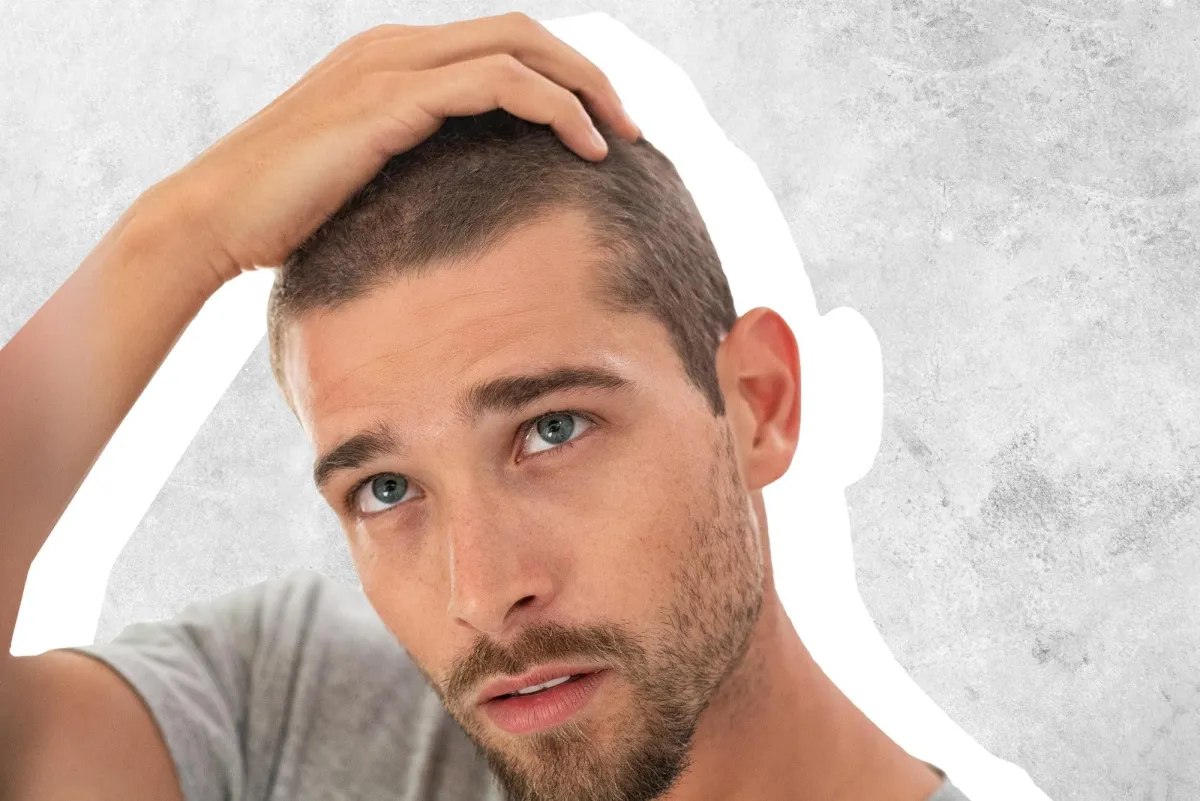
5 Best Haircuts for Men with
Early Hair Thinning
Losing your hair is never a good feeling, most men tend to feel self-conscious about it. Some men decide to completely shave off their heads or constantly wear a hat. One of the most common insecurities men face is hair thinning; for some men, it starts as early as in their 20s. The loss of confidence really starts to affect the way men do their hair and the types of hair cuts they get. Men start to worry about how they will be perceived by friends, family, and colleagues. Hair thinning should not be the cause of self distraughtness, and it should not limit men to have to continuously cover their heads. CADMEN Barbershop has compiled a list of the top 5 best haircuts for men experiencing early hair loss.

Barber Wrist and Hand Health: Preventing and Managing Repetitive Strain Injuries
Barber Wrist and Hand Health: Preventing and Managing Repetitive Strain Injuries
The most common career-ending problem in professional barbering is not poor technique or business failure. It is repetitive strain injury to the hands, wrists, and forearms. Barbers who cut 8 to 10 heads per day, 5 to 6 days per week, for years, make thousands of identical small movements: clipper pressure, scissor rotation, comb tension. Without deliberate injury prevention, the accumulation produces tendinitis, carpal tunnel syndrome, or more severe soft tissue damage that is either very slow to heal or not fully reversible. The time to address this is before the pain starts, not after.
The Injuries Barbering Produces
Tendinitis (barber's elbow / wrist tendinitis). Inflammation of the tendons connecting the forearm muscles to the wrist and elbow from repetitive gripping and rotation. Symptoms: localized aching or burning along the forearm or at the wrist, tenderness to touch, increased pain after a heavy booking day. Common in scissor-heavy barbers who use significant grip pressure throughout the day.
Carpal tunnel syndrome. Compression of the median nerve as it passes through the carpal tunnel in the wrist. Symptoms: tingling, numbness, or burning sensation in the thumb, index, and middle fingers; weakness in grip; symptoms worse at night. The clipper-holding hand and the comb hand are both at risk depending on the barber's grip habits.
De Quervain's tenosynovitis. Inflammation of the tendons on the thumb side of the wrist. Common in barbers who hold scissors with a high thumb load and repeat the scissor-over-comb motion for hours at a stretch. Symptoms: pain and swelling at the base of the thumb, difficulty gripping or pinching.
Prevention: What Actually Works
Neutral wrist position. The most important ergonomic adjustment: keep the wrist in a neutral (straight) position as much as possible during cutting. Bent wrists (either up, down, or to the side) during sustained repetitive motion load the tendons and nerve pathways. Barbers who consistently work with bent wrists from poor ergonomic habits or incorrect technique develop strain faster than those who maintain neutral alignment.
Grip pressure management. Many barbers grip tools far harder than necessary. Excess grip pressure throughout the day produces far more cumulative tendon load than necessary. Practice consciously using the minimum grip that maintains tool control, not the maximum your hand can produce.
Warm-up and cool-down. A 5-minute hand and wrist stretch routine before and after long booking days. Wrist circles, finger extensions, forearm stretches, and grip releases. This is not optional wellness advice; it is injury prevention protocol that reduces the compounding inflammation from high-volume days.
Tool quality and weight. Heavier clippers produce more fatigue and load per cut than lighter tools. Professional-grade clippers are designed for ergonomic balance at professional use volumes. Cutting heavy volume with consumer-grade tools is an injury risk factor.
Volume management. A booking day that regularly exceeds 8 to 10 heads without breaks creates compounding strain that rest alone cannot fully recover before the next booking day. Building break time into the schedule is an occupational health requirement, not a scheduling inefficiency.
Warning Signs That Require Medical Attention
Any of these should prompt medical evaluation before continuing at full volume: persistent tingling or numbness in the hands or fingers, sharp pain during specific cutting movements (not general fatigue), swelling visible at the wrist or base of thumb, weakness in grip that affects cutting quality, pain that does not resolve after 2 to 3 rest days.
Continuing to work at full volume through these symptoms converts a manageable strain injury into a surgical case in many instances. See a physiotherapist or occupational medicine physician. This is not an area where self-diagnosis and self-treatment work well.
Frequently Asked Questions
How common are wrist injuries for barbers?
A 2015 survey of 299 hairdressers in Lagos, Nigeria reported a 75.6% prevalence of musculoskeletal disorders during the previous 12 months. That figure covers multiple body areas; it is not a lifetime wrist-injury rate for all barbers. Record which tasks bring on discomfort and discuss persistent pain, numbness or reduced grip with a qualified healthcare professional. Ask for an assessment of your workstation and tool handling instead of using a population statistic to diagnose yourself. Read the source.
What is the best way to hold clippers to prevent wrist injury?
Neutral wrist, thumb on the side of the clipper body rather than underneath, minimum grip pressure that maintains control, and varying the grip position slightly throughout the day to distribute load across different muscle groups. The specific ergonomics vary by clipper model; some barbers find that switching between two different clipper styles for different parts of a cut distributes repetitive load more effectively than using the same tool for every phase.
Can you continue barbering with carpal tunnel syndrome?
It depends on severity and treatment response. Mild carpal tunnel is often manageable with ergonomic adjustments, night splinting, and physiotherapy. Moderate to severe carpal tunnel may require surgical decompression, and the recovery timeline from that procedure is 4 to 12+ weeks of restricted hand use. The earlier carpal tunnel is identified and addressed, the less likely it is to reach a severity that requires surgery. Any barber with suspected carpal tunnel symptoms should seek assessment rather than waiting to see if it resolves on its own.
Related Reading From CADMEN Barber Academy
- Men's Scalp Health: What Affects It and How to Keep It in Good Condition
- Scalp Health for Men: What Causes Issues and How to Fix Them
- Scalp Health for Men: What Barbers See and What to Do About It
- Barber Hygiene and Sanitation: The Standards That Protect Clients and Protect the Shop
- Barbershop Sanitation: What Professional Standards Look Like
- Barbershop Sanitation: What Standards Apply and Why They Matter
- Barbering Topics Index: Every Guide by Subject

5 Best Haircuts for Men with
Early Hair Thinning
Losing your hair is never a good feeling, most men tend to feel self-conscious about it. Some men decide to completely shave off their heads or constantly wear a hat. One of the most common insecurities men face is hair thinning; for some men, it starts as early as in their 20s. The loss of confidence really starts to affect the way men do their hair and the types of hair cuts they get. Men start to worry about how they will be perceived by friends, family, and colleagues. Hair thinning should not be the cause of self distraughtness, and it should not limit men to have to continuously cover their heads. CADMEN Barbershop has compiled a list of the top 5 best haircuts for men experiencing early hair loss.


For any request, please contact us at info@cadmen.ca