
Barber Tips & Tricks
Follow us for the latest barber techniques and tips
Barber Tips & Tricks
Follow us for the latest barber techniques and tips
Top 7 Reasons Why Your Clients
Aren't Returning
Stay Ahead in the Barbering Game: Nurturing
Lifelong Clientele
You might have come across the saying “give a client a good cut at a reasonable price, and they'll be yours for life.” Unfortunately in reality this is not always the case. That’s where we come in! Check out some of the reasons why your clients may not be returning, whether they were long-term customers or a first-time appointment, below.

Top 7 Reasons Why Your Clients
Aren't Returning
Stay Ahead in the Barbering Game: Nurturing
Lifelong Clientele
You might have come across the saying “give a client a good cut at a reasonable price, and they'll be yours for life.” Unfortunately in reality this is not always the case. That’s where we come in! Check out some of the reasons why your clients may not be returning, whether they were long-term customers or a first-time appointment, below.
Career in Mobile Barbering: Key
Things You Need to Know about
While most barbers work in physical barbershops or hair salons, there are a growing number of barbers who work on-call. What does it mean to be a mobile barber? What are their primary responsibilities? Where to find them? In this blog, we will explain some key terms you should know about mobile barbering and how you can start a new career in it.

Career in Mobile Barbering: Key
Things You Need to Know about
While most barbers work in physical barbershops or hair salons, there are a growing number of barbers who work on-call. What does it mean to be a mobile barber? What are their primary responsibilities? Where to find them? In this blog, we will explain some key terms you should know about mobile barbering and how you can start a new career in it.
Top 4 Ways for Barbers to
Promote Themselves
Marketing is key. Knowing how to market yourself as a barber can be the difference between having 5 to 20 clients a day. If you are interested in boosting the number of your customers and furthering your advertising skills, read the list below with four ways to promote yourself as a barber.

Top 4 Ways for Barbers to
Promote Themselves
Marketing is key. Knowing how to market yourself as a barber can be the difference between having 5 to 20 clients a day. If you are interested in boosting the number of your customers and furthering your advertising skills, read the list below with four ways to promote yourself as a barber.
5 Tips for Social Media Content
Creating as a Barber
It is next to impossible to find someone who is not on social media today. More than just a tool for connection, social media is key helping barbers market themselves and promote their names and skills. If you want to up your barber game quickly, here are five tips on how to promote content online that you don't want to miss out on.

5 Tips for Social Media Content
Creating as a Barber
It is next to impossible to find someone who is not on social media today. More than just a tool for connection, social media is key helping barbers market themselves and promote their names and skills. If you want to up your barber game quickly, here are five tips on how to promote content online that you don't want to miss out on.
5 Best Haircuts for Men with
Early Hair Thinning
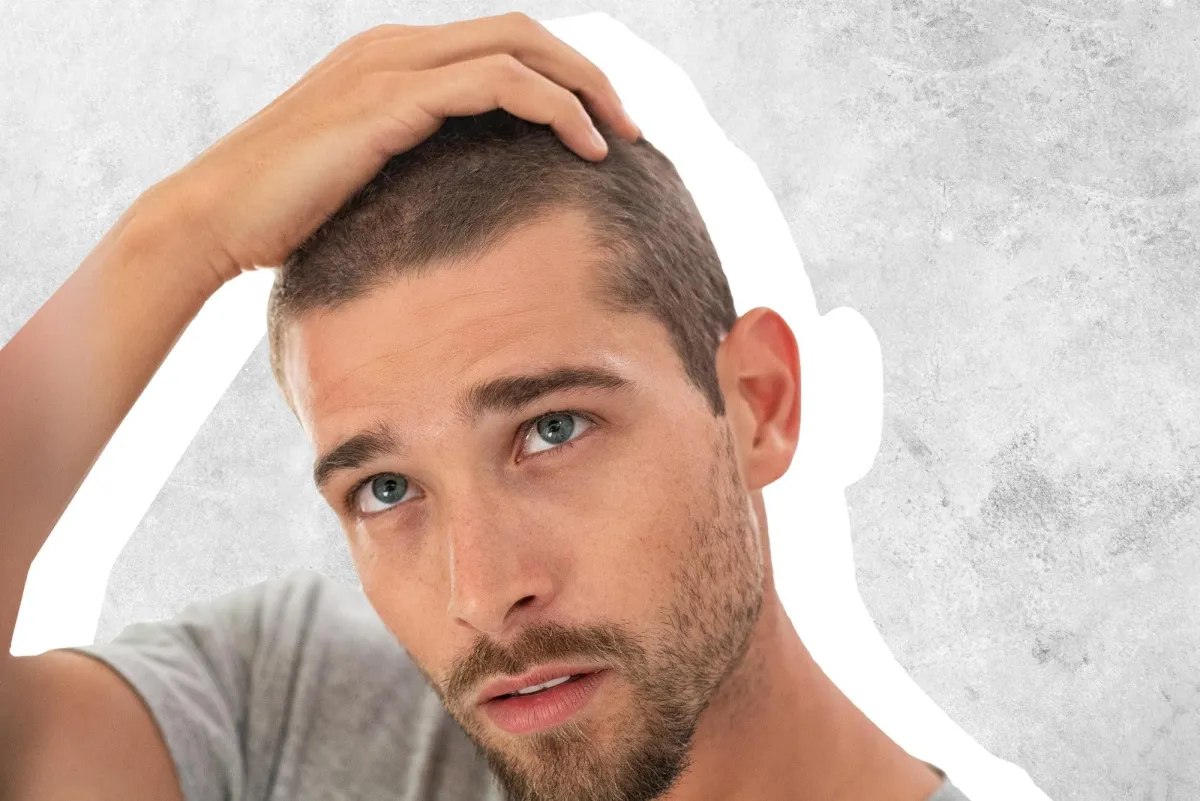
Losing your hair is never a good feeling, most men tend to feel self-conscious about it. Some men decide to completely shave off their heads or constantly wear a hat. One of the most common insecurities men face is hair thinning; for some men, it starts as early as in their 20s. The loss of confidence really starts to affect the way men do their hair and the types of hair cuts they get. Men start to worry about how they will be perceived by friends, family, and colleagues. Hair thinning should not be the cause of self distraughtness, and it should not limit men to have to continuously cover their heads. CADMEN Barbershop has compiled a list of the top 5 best haircuts for men experiencing early hair loss.
Men's Hair Parting Guide: Side Part, Center Part, and No Part
Men's Hair Parting Guide: Side Part, Center Part, and No Part
The part is a small decision with a significant effect on how a haircut looks. It changes the visual proportions of the face and the overall silhouette of the style. Here is how each option works and which face shapes each suits.
The Side Part
The side part divides the hair with a line running from a point on the scalp above the outer corner of one eye, back through the crown. The hair on the smaller side is combed to one side; the hair on the larger side is combed to the opposite side. The asymmetry created by the side part produces visual width on one side and visual length on the other. The traditional hard side part (created with a comb and held with pomade or a light product) reads as classic and formal. The natural side part (following a cowlick-determined natural part without a defined line) reads as less structured. The side part suits most face shapes because the asymmetry breaks up the uniformity of round or square faces and adds dimension to flat or broad facial profiles.
The Center Part
The center part divides the hair equally down the midline of the scalp, with hair falling symmetrically to both sides. It creates bilateral symmetry, which emphasizes the width of the face equally on both sides. The center part suits faces that are naturally longer or more narrow (oblong, oval) because the symmetrical fall of the hair frames the face evenly without adding extra visual width to one side. On round or wide faces, the center part can emphasize the width; for these face shapes, a side part typically produces better proportions. The center part has a strong stylistic identity (associated with curtains, longer flow styles, and some surfer-influenced aesthetics) that makes it a more deliberate style choice than the neutral side part.
No Part (Pushed Back or Textured Forward)
No-part styles push the hair back from the forehead, to the side as a mass rather than a line, or forward with texture. They work for men who prefer a less structured, more movement-heavy aesthetic or whose hair does not naturally hold a part. No-part styles show more forehead than parted styles, which elongates the visual profile. They are versatile across face shapes and generally require less daily styling precision than maintaining a defined part line. Textured crops, pushed-back styles, and most short contemporary cuts often fall into the no-part category.
How to Hold a Part in Place
Create the part on damp hair with a fine-tooth comb. Apply a light pomade, cream, or water-based product to the front sections and comb the part while the hair is still slightly damp. Allow to air dry in place; the product and the drying process together set the direction. For a harder part line, use the pointed end of a comb to draw a precise line before styling. Blow drying the parted sections downward in their parted direction while damp reinforces the direction and helps the hair learn the part over time.
Frequently Asked Questions
How do I know which side to part my hair on?
Most men have a natural part on one side, determined by the direction their hair grows from the crown. Following the natural part requires less daily effort because the hair already grows in that direction. To find your natural part: wet your hair, push it forward onto your forehead, then push it back. It will naturally fall to one side. That is your natural part. If your hair is equally uncooperative on both sides, either side is workable. Stylistically, some barbers suggest that the part on the side of the dominant hand reads as more natural and balanced.
Does the part direction affect how the face looks?
Yes, mildly. The side with more hair over it gains a small amount of visual coverage and framing. For a face that is slightly asymmetrical (all human faces are), parting toward the side with more asymmetry to correct (usually the side where the face appears slightly narrower) can create a more balanced visual impression. This is a subtle effect, not a dramatic one. Most people would not notice the difference in a photograph, but the person wearing the part can feel the effect in the mirror.
Does hair texture affect which part works best?
Texture influences the cleanness and hold of the part rather than which direction to use it. Fine, straight hair holds a part cleanly and precisely; a defined side part on fine straight hair looks sharp. Coarse, thick hair holds a part less precisely and may require more product to maintain the line. Curly and wavy hair can be parted but the parted sections produce a more voluminous, natural result than the flat, precise part you see on straight hair. Tightly coiled hair can hold a center part or side part but the part line may not be as visible due to the volume and texture of the curl pattern.
Related Reading From CADMEN Barber Academy
- How to Part Men's Hair: The Basics That Actually Matter
- Men's Hair Parting Styles: Side Part, Center Part, and No Part
- Cutting Coily Hair: The Techniques That Work and the Mistakes That Damage the Pattern
- Cutting Curly Hair: What Barbers Do Differently
- How to Cut Curly Hair: Barber Techniques and Approach
- Curly Hair at the Barbershop: What Barbers Do Differently

5 Best Haircuts for Men with
Early Hair Thinning
Losing your hair is never a good feeling, most men tend to feel self-conscious about it. Some men decide to completely shave off their heads or constantly wear a hat. One of the most common insecurities men face is hair thinning; for some men, it starts as early as in their 20s. The loss of confidence really starts to affect the way men do their hair and the types of hair cuts they get. Men start to worry about how they will be perceived by friends, family, and colleagues. Hair thinning should not be the cause of self distraughtness, and it should not limit men to have to continuously cover their heads. CADMEN Barbershop has compiled a list of the top 5 best haircuts for men experiencing early hair loss.


For any request, please contact us at info@cadmen.ca