
Barber Tips & Tricks
Follow us for the latest barber techniques and tips
Barber Tips & Tricks
Follow us for the latest barber techniques and tips
Top 7 Reasons Why Your Clients
Aren't Returning
Stay Ahead in the Barbering Game: Nurturing
Lifelong Clientele
You might have come across the saying “give a client a good cut at a reasonable price, and they'll be yours for life.” Unfortunately in reality this is not always the case. That’s where we come in! Check out some of the reasons why your clients may not be returning, whether they were long-term customers or a first-time appointment, below.

Top 7 Reasons Why Your Clients
Aren't Returning
Stay Ahead in the Barbering Game: Nurturing
Lifelong Clientele
You might have come across the saying “give a client a good cut at a reasonable price, and they'll be yours for life.” Unfortunately in reality this is not always the case. That’s where we come in! Check out some of the reasons why your clients may not be returning, whether they were long-term customers or a first-time appointment, below.
Career in Mobile Barbering: Key
Things You Need to Know about
While most barbers work in physical barbershops or hair salons, there are a growing number of barbers who work on-call. What does it mean to be a mobile barber? What are their primary responsibilities? Where to find them? In this blog, we will explain some key terms you should know about mobile barbering and how you can start a new career in it.

Career in Mobile Barbering: Key
Things You Need to Know about
While most barbers work in physical barbershops or hair salons, there are a growing number of barbers who work on-call. What does it mean to be a mobile barber? What are their primary responsibilities? Where to find them? In this blog, we will explain some key terms you should know about mobile barbering and how you can start a new career in it.
Top 4 Ways for Barbers to
Promote Themselves
Marketing is key. Knowing how to market yourself as a barber can be the difference between having 5 to 20 clients a day. If you are interested in boosting the number of your customers and furthering your advertising skills, read the list below with four ways to promote yourself as a barber.

Top 4 Ways for Barbers to
Promote Themselves
Marketing is key. Knowing how to market yourself as a barber can be the difference between having 5 to 20 clients a day. If you are interested in boosting the number of your customers and furthering your advertising skills, read the list below with four ways to promote yourself as a barber.
5 Tips for Social Media Content
Creating as a Barber
It is next to impossible to find someone who is not on social media today. More than just a tool for connection, social media is key helping barbers market themselves and promote their names and skills. If you want to up your barber game quickly, here are five tips on how to promote content online that you don't want to miss out on.

5 Tips for Social Media Content
Creating as a Barber
It is next to impossible to find someone who is not on social media today. More than just a tool for connection, social media is key helping barbers market themselves and promote their names and skills. If you want to up your barber game quickly, here are five tips on how to promote content online that you don't want to miss out on.
5 Best Haircuts for Men with
Early Hair Thinning
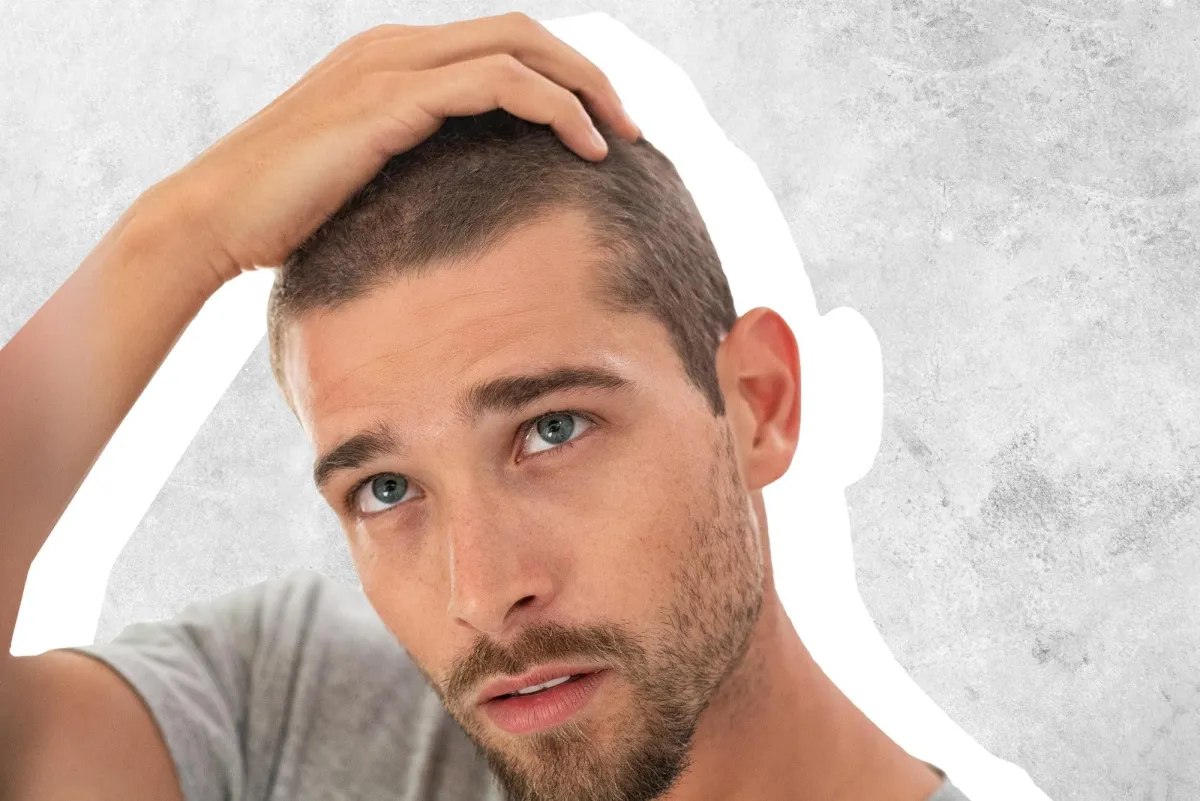
Losing your hair is never a good feeling, most men tend to feel self-conscious about it. Some men decide to completely shave off their heads or constantly wear a hat. One of the most common insecurities men face is hair thinning; for some men, it starts as early as in their 20s. The loss of confidence really starts to affect the way men do their hair and the types of hair cuts they get. Men start to worry about how they will be perceived by friends, family, and colleagues. Hair thinning should not be the cause of self distraughtness, and it should not limit men to have to continuously cover their heads. CADMEN Barbershop has compiled a list of the top 5 best haircuts for men experiencing early hair loss.
How to Grow Hair Faster: What Men Can Actually Do
How to Grow Hair Faster: What Men Can Actually Do
Hair grows at approximately half an inch per month on average, with a range of roughly 0.4 to 0.6 inches per month for most men. The rate is primarily genetic. What you can do is optimize the conditions for growth and avoid the things that slow it down. Here is what is supported and what is not.
What Determines Growth Rate
Hair growth rate is primarily controlled by genetics and hormonal factors. The anagen (active growth) phase of the hair cycle lasts 2 to 7 years depending on genetics; longer anagen phases mean more potential length. Age, hormonal levels (testosterone, DHT, thyroid hormones), and overall health state also affect growth rate. You cannot change your genetic baseline through topical products or scalp habits, but you can create conditions where the hair grows at its genetic maximum rather than below it.
What Actually Supports Growth
Adequate protein intake is the most directly relevant dietary factor: hair is made of keratin, a protein, and insufficient protein in the diet produces slower growth and more shedding. 50 to 75 grams of protein per day is adequate for most men; athletes and heavier individuals need more. Iron, zinc, biotin, and vitamin D are micronutrients where deficiencies specifically impair hair growth. Blood tests can confirm whether you are deficient in any of these; supplementing only where a deficiency is confirmed is more effective than taking general hair supplements as a precaution. Scalp health also matters: a healthy scalp with good circulation and no inflammation supports hair follicle function better than a dry, irritated, or product-buildup-heavy scalp.
What Does Not Work
Hair products marketed for growth stimulation (most shampoos, conditioners, and topical serums claiming to accelerate growth) have limited evidence of meaningful effect on growth rate in people without underlying deficiencies. Cutting hair does not make it grow faster: this is a persistent myth with no biological basis. The rate of growth at the follicle is unaffected by trimming the ends. What cutting does is remove split ends, which prevents breakage from traveling up the shaft; this preserves length, but it does not accelerate growth. Scalp massage has some evidence for modest increases in scalp blood flow, which may marginally support follicle health, but the effect size is small.
Minimizing Breakage
Achieving more length is also a function of retaining what grows. Heat damage from frequent blow drying on high heat, rough towel drying (rubbing rather than patting), tight elastics or accessories pulling at the hair, and chemical damage from frequent bleaching or coloring all cause breakage that reduces the length you retain. At medium to long lengths, reducing breakage is as important as maximizing growth rate. Using a heat protectant before heat styling, patting hair dry with a microfiber towel, and conditioning regularly to maintain hair elasticity all reduce breakage.
Frequently Asked Questions
How long does it take to grow hair from short to shoulder length?
At 0.5 inches per month, shoulder length (approximately 12 to 14 inches from the scalp) requires 24 to 28 months of growth from a completely shaved head. From a typical short haircut (1 to 2 inches of length), shoulder length takes 20 to 24 months. Individual growth rates vary; men with faster growth rates (0.6 inches per month) reach shoulder length about 4 months sooner than average. The intermediate stages where hair is too long to style as a short cut but too short to style as a longer cut (typically 3 to 5 inches) are the most common reason men abandon the grow-out process.
Does finasteride affect hair growth rate?
Finasteride reduces DHT (dihydrotestosterone), which in men with androgenic alopecia causes follicle miniaturization over time. By reducing DHT, finasteride can slow, stop, or in some cases partially reverse follicle miniaturization in men with pattern hair loss. It does not accelerate the growth rate of healthy follicles above the genetic baseline; its mechanism is preserving follicle health in DHT-sensitive follicles. It is a prescribed medication with documented side effects; the decision to use it should involve a physician rather than being based on general information.
Are biotin supplements worth taking for hair growth?
Biotin (vitamin B7) supplementation for hair growth is only clinically supported in men who are biotin-deficient. Biotin deficiency is rare in men who eat a varied diet; biotin is found in eggs, meat, nuts, and legumes. Most men who take biotin supplements are not deficient, and there is limited evidence that supplementation above adequate levels produces additional hair growth benefit. If you want to assess whether deficiency is contributing to hair loss or slow growth, a blood test is more informative than preventively supplementing. Biotin supplements are low-risk (excess is excreted), but the expectation of significant growth improvement in non-deficient men is not supported by current evidence.
Related Reading From CADMEN Barber Academy
- How to Make Your Hair Grow Faster: What Works and What Does Not
- Cutting Coily Hair: The Techniques That Work and the Mistakes That Damage the Pattern
- Cutting Curly Hair: What Barbers Do Differently
- How to Cut Curly Hair: Barber Techniques and Approach
- Curly Hair at the Barbershop: What Barbers Do Differently
- Curly Hair at the Barbershop: Cuts and Products That Actually Work

5 Best Haircuts for Men with
Early Hair Thinning
Losing your hair is never a good feeling, most men tend to feel self-conscious about it. Some men decide to completely shave off their heads or constantly wear a hat. One of the most common insecurities men face is hair thinning; for some men, it starts as early as in their 20s. The loss of confidence really starts to affect the way men do their hair and the types of hair cuts they get. Men start to worry about how they will be perceived by friends, family, and colleagues. Hair thinning should not be the cause of self distraughtness, and it should not limit men to have to continuously cover their heads. CADMEN Barbershop has compiled a list of the top 5 best haircuts for men experiencing early hair loss.


For any request, please contact us at info@cadmen.ca