
Barber Tips & Tricks
Follow us for the latest barber techniques and tips
Barber Tips & Tricks
Follow us for the latest barber techniques and tips
Top 7 Reasons Why Your Clients
Aren't Returning
Stay Ahead in the Barbering Game: Nurturing
Lifelong Clientele
You might have come across the saying “give a client a good cut at a reasonable price, and they'll be yours for life.” Unfortunately in reality this is not always the case. That’s where we come in! Check out some of the reasons why your clients may not be returning, whether they were long-term customers or a first-time appointment, below.

Top 7 Reasons Why Your Clients
Aren't Returning
Stay Ahead in the Barbering Game: Nurturing
Lifelong Clientele
You might have come across the saying “give a client a good cut at a reasonable price, and they'll be yours for life.” Unfortunately in reality this is not always the case. That’s where we come in! Check out some of the reasons why your clients may not be returning, whether they were long-term customers or a first-time appointment, below.
Career in Mobile Barbering: Key
Things You Need to Know about
While most barbers work in physical barbershops or hair salons, there are a growing number of barbers who work on-call. What does it mean to be a mobile barber? What are their primary responsibilities? Where to find them? In this blog, we will explain some key terms you should know about mobile barbering and how you can start a new career in it.

Career in Mobile Barbering: Key
Things You Need to Know about
While most barbers work in physical barbershops or hair salons, there are a growing number of barbers who work on-call. What does it mean to be a mobile barber? What are their primary responsibilities? Where to find them? In this blog, we will explain some key terms you should know about mobile barbering and how you can start a new career in it.
Top 4 Ways for Barbers to
Promote Themselves
Marketing is key. Knowing how to market yourself as a barber can be the difference between having 5 to 20 clients a day. If you are interested in boosting the number of your customers and furthering your advertising skills, read the list below with four ways to promote yourself as a barber.

Top 4 Ways for Barbers to
Promote Themselves
Marketing is key. Knowing how to market yourself as a barber can be the difference between having 5 to 20 clients a day. If you are interested in boosting the number of your customers and furthering your advertising skills, read the list below with four ways to promote yourself as a barber.
5 Tips for Social Media Content
Creating as a Barber
It is next to impossible to find someone who is not on social media today. More than just a tool for connection, social media is key helping barbers market themselves and promote their names and skills. If you want to up your barber game quickly, here are five tips on how to promote content online that you don't want to miss out on.

5 Tips for Social Media Content
Creating as a Barber
It is next to impossible to find someone who is not on social media today. More than just a tool for connection, social media is key helping barbers market themselves and promote their names and skills. If you want to up your barber game quickly, here are five tips on how to promote content online that you don't want to miss out on.
5 Best Haircuts for Men with
Early Hair Thinning
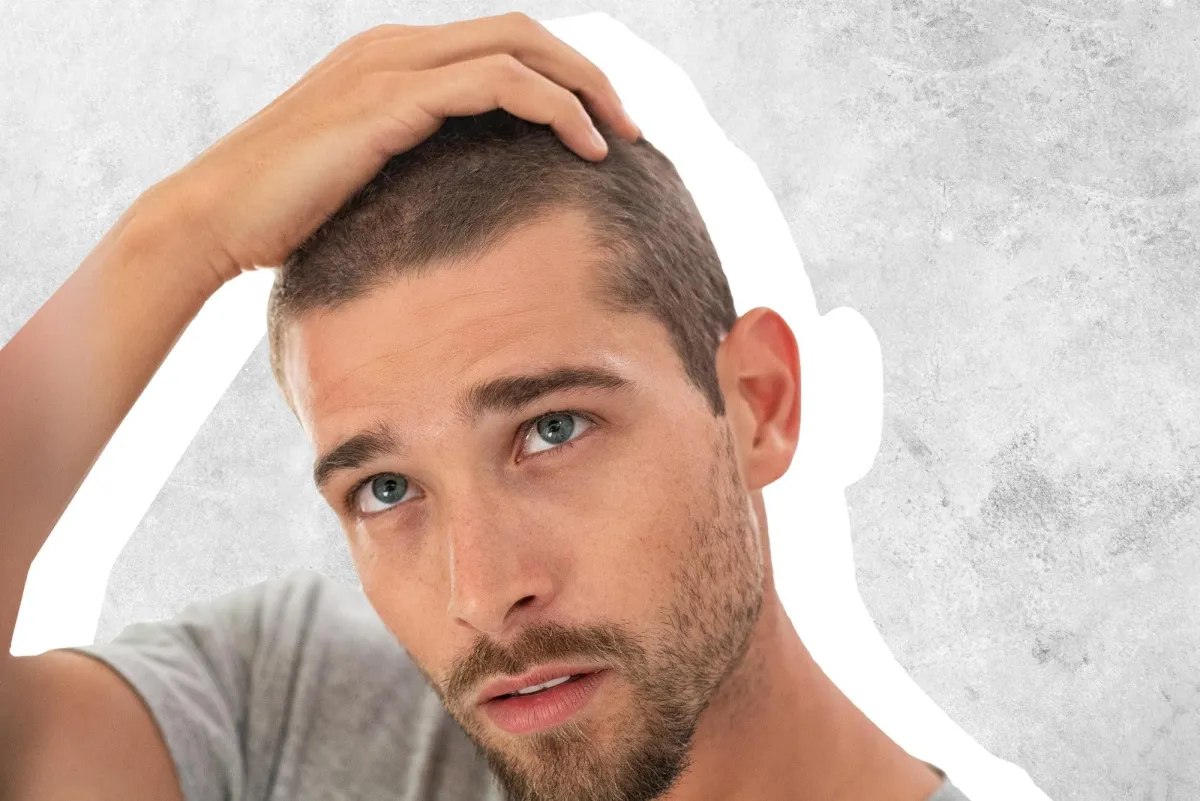
Losing your hair is never a good feeling, most men tend to feel self-conscious about it. Some men decide to completely shave off their heads or constantly wear a hat. One of the most common insecurities men face is hair thinning; for some men, it starts as early as in their 20s. The loss of confidence really starts to affect the way men do their hair and the types of hair cuts they get. Men start to worry about how they will be perceived by friends, family, and colleagues. Hair thinning should not be the cause of self distraughtness, and it should not limit men to have to continuously cover their heads. CADMEN Barbershop has compiled a list of the top 5 best haircuts for men experiencing early hair loss.
Afro Fade Technique: How to Fade and Shape Natural Afro Hair
Afro Fade Technique: How to Fade and Shape Natural Afro Hair
Fading afro hair and shaping natural afro styles require technique adjustments from the standard straight-hair fade approach. The natural coil pattern of afro hair (Type 4 on the natural hair typing system) affects how blades interact with the hair, how the outline reads at the hairline, and what the finished shape communicates. Barbers who have primarily cut straight or wavy hair and approach afro textures with the same technique assumptions will produce suboptimal results until they adjust for the specific characteristics of coily hair.
How Coily Hair Behaves Differently
Afro hair in its natural state shrinks significantly from its actual length due to the tight coil pattern. A client with 3 inches of actual hair length may present with 1 to 1.5 inches of visible height in the natural state. When the hair is stretched (with a pick or by the clipper blade tension), the length difference becomes visible. This shrinkage factor affects guard selection: a guard that produces a certain length on straight hair will appear longer relative to the natural coil on afro hair.
Blade tracking: the tight coil pattern can cause clipper blades to skip or catch if the barber uses the same angle and pressure as on straight hair. Slightly less blade pressure, a more perpendicular blade angle to the scalp, and working across the grain of the natural coil pattern (rather than with it) produces cleaner cutting on type 4 hair. Dull blades are more noticeable on coily hair than on straight hair; ensure blades are freshly sharpened and oiled before cutting high volumes of afro-texture clients.
Fading Afro Hair
The fade mechanics are the same as on any hair type: establish the base, blend upward through guard increments, and ensure smooth graduation at each transition. What differs on afro hair: the visual read of the blend is different because the coil pattern diffuses the gradient slightly. A blend that would appear very smooth on straight hair may appear slightly less defined on type 4 hair due to the texture. Tighter guard progressions (0 to 0.5 to 1 to 1.5 etc. rather than 0 to 1 to 2) produce smoother-reading fades on afro textures.
The Outline on Afro Hair
The hairline perimeter on afro hair is typically less sharp at the edges than on straight hair because the coils follow the hairline boundary loosely rather than lying flat. The outliner defines the perimeter cleanly, but the technique requires more precise work to follow the natural hairline curve rather than a geometric shape. A natural, smooth hairline shape that respects the client's actual growth pattern looks better and lasts longer between trims than an artificially geometric shape that grows in unevenly within 2 weeks.
Afro Shaping
Shaping a natural afro (rounding and evening the afro silhouette without fading down to short lengths) uses an afro comb and scissors or a clipper on a longer guard. The technique: comb a section of hair upward and out from the scalp to its natural height, cut or clip at a consistent length, and move systematically around the head. The goal is an even, rounded perimeter with no flat spots or bumps in the silhouette. Checking from multiple angles (front, side, back) and having the client stand for the final shaping check (seated position can slightly compress the back) ensures a clean result.
Frequently Asked Questions
Can any barber cut afro hair?
A barber who has developed specific experience with afro and type 4 hair textures will consistently produce better results on those textures than one who has not. The technique adjustments are learnable; they are not instinctive for barbers whose entire training and daily work has been on straight or wavy hair. Clients with afro hair textures quickly learn which barbers in their area have genuine experience with their hair type and return to those barbers specifically. A barber who wants to serve this clientele effectively should seek deliberate practice on afro textures, not assume that general fading experience transfers without adjustment.
What guards do you use for an afro fade?
The guard progression depends on the starting length of the natural hair and the desired result. For a short afro fade (tight natural with high fade): 0 or 0.5 at the base, progressing through 1, 1.5, 2, 3 in tight increments toward the top. For a longer natural with a lower fade: the base guard depends on how close the fade needs to come to the skin; the upper guards track the natural length of the top section. The tight guard progression (half-size increments) produces smoother blends on afro textures compared to full-number jumps.
How often does an afro fade need to be refreshed?
Every 2 to 4 weeks depending on the client's hair growth rate and how short the fade goes. Afro hair that is tightly faded at the base shows new growth visibly within 2 to 3 weeks due to the contrast between the new growth and the faded section. Clients who want the fade sharp book at 2-week intervals. Clients with longer naturals and a less tight fade can go 3 to 4 weeks before the fade reads as significantly grown out.
Related Reading From CADMEN Barber Academy
- How to Fade Natural Afro Hair: Technique Adjustments for High-Density Texture
- The Afro Fade: How It's Done and What Makes It Work
- The Afro Fade: Combining Natural Volume with a Defined Graduation
- The Afro Fade: How It Works and Why It Suits Natural Texture
- Bald Fade vs Skin Fade: Are They the Same Thing?
- Cutting Afro and Type 4 Hair: Techniques for Barbers Working with Coily Textures
Want to learn to cut an afro fade yourself? CADMEN Barber Academy teaches cutting hands-on, with an educator beside you. See the barber academy in Mississauga or view in-person classes and send an enquiry.
Learn this fade step by step in our free Fade Tutorials playlist on YouTube.

5 Best Haircuts for Men with
Early Hair Thinning
Losing your hair is never a good feeling, most men tend to feel self-conscious about it. Some men decide to completely shave off their heads or constantly wear a hat. One of the most common insecurities men face is hair thinning; for some men, it starts as early as in their 20s. The loss of confidence really starts to affect the way men do their hair and the types of hair cuts they get. Men start to worry about how they will be perceived by friends, family, and colleagues. Hair thinning should not be the cause of self distraughtness, and it should not limit men to have to continuously cover their heads. CADMEN Barbershop has compiled a list of the top 5 best haircuts for men experiencing early hair loss.


For any request, please contact us at info@cadmen.ca