
Barber Tips & Tricks
Follow us for the latest barber techniques and tips
Barber Tips & Tricks
Follow us for the latest barber techniques and tips
Top 7 Reasons Why Your Clients
Aren't Returning
Stay Ahead in the Barbering Game: Nurturing
Lifelong Clientele
You might have come across the saying “give a client a good cut at a reasonable price, and they'll be yours for life.” Unfortunately in reality this is not always the case. That’s where we come in! Check out some of the reasons why your clients may not be returning, whether they were long-term customers or a first-time appointment, below.

Top 7 Reasons Why Your Clients
Aren't Returning
Stay Ahead in the Barbering Game: Nurturing
Lifelong Clientele
You might have come across the saying “give a client a good cut at a reasonable price, and they'll be yours for life.” Unfortunately in reality this is not always the case. That’s where we come in! Check out some of the reasons why your clients may not be returning, whether they were long-term customers or a first-time appointment, below.
Career in Mobile Barbering: Key
Things You Need to Know about
While most barbers work in physical barbershops or hair salons, there are a growing number of barbers who work on-call. What does it mean to be a mobile barber? What are their primary responsibilities? Where to find them? In this blog, we will explain some key terms you should know about mobile barbering and how you can start a new career in it.

Career in Mobile Barbering: Key
Things You Need to Know about
While most barbers work in physical barbershops or hair salons, there are a growing number of barbers who work on-call. What does it mean to be a mobile barber? What are their primary responsibilities? Where to find them? In this blog, we will explain some key terms you should know about mobile barbering and how you can start a new career in it.
Top 4 Ways for Barbers to
Promote Themselves
Marketing is key. Knowing how to market yourself as a barber can be the difference between having 5 to 20 clients a day. If you are interested in boosting the number of your customers and furthering your advertising skills, read the list below with four ways to promote yourself as a barber.

Top 4 Ways for Barbers to
Promote Themselves
Marketing is key. Knowing how to market yourself as a barber can be the difference between having 5 to 20 clients a day. If you are interested in boosting the number of your customers and furthering your advertising skills, read the list below with four ways to promote yourself as a barber.
5 Tips for Social Media Content
Creating as a Barber
It is next to impossible to find someone who is not on social media today. More than just a tool for connection, social media is key helping barbers market themselves and promote their names and skills. If you want to up your barber game quickly, here are five tips on how to promote content online that you don't want to miss out on.

5 Tips for Social Media Content
Creating as a Barber
It is next to impossible to find someone who is not on social media today. More than just a tool for connection, social media is key helping barbers market themselves and promote their names and skills. If you want to up your barber game quickly, here are five tips on how to promote content online that you don't want to miss out on.
5 Best Haircuts for Men with
Early Hair Thinning
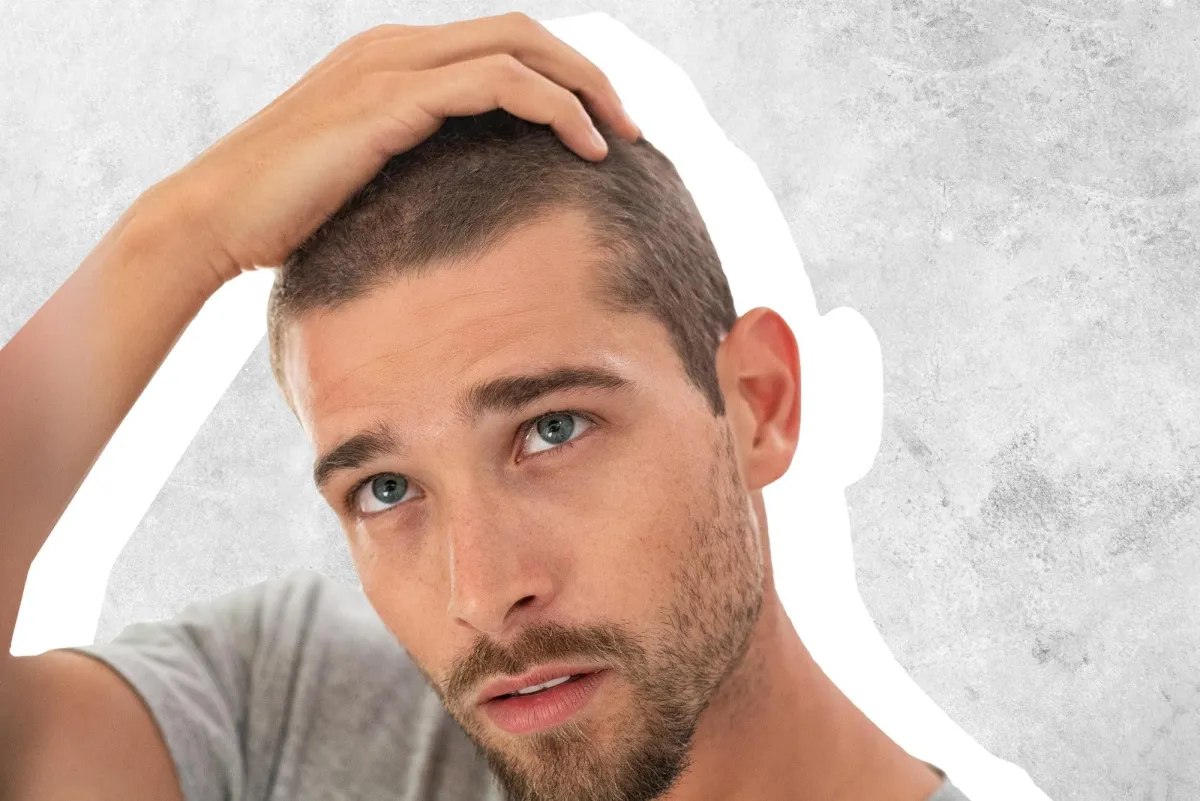
Losing your hair is never a good feeling, most men tend to feel self-conscious about it. Some men decide to completely shave off their heads or constantly wear a hat. One of the most common insecurities men face is hair thinning; for some men, it starts as early as in their 20s. The loss of confidence really starts to affect the way men do their hair and the types of hair cuts they get. Men start to worry about how they will be perceived by friends, family, and colleagues. Hair thinning should not be the cause of self distraughtness, and it should not limit men to have to continuously cover their heads. CADMEN Barbershop has compiled a list of the top 5 best haircuts for men experiencing early hair loss.
Burst Fade: What It Is, How to Cut It, and When Clients Ask for It
Burst Fade: What It Is, How to Cut It, and When Clients Ask for It
The burst fade is a specific variation of the standard fade where the fade radiates outward in a curved arc around the ear rather than traveling straight across the head at a uniform height. The result is a semi-circular shape on the side of the head, with the ear at the center of the arc, blending from close at the bottom and up and forward toward the top. It is most commonly requested on mohawk-adjacent styles, mullets, and on textured hair where the burst perimeter creates a visual frame for the top section.
How the Burst Fade Differs From a Standard High Fade
In a standard high fade, the fade line travels at a consistent horizontal height across the side of the head. The line is relatively straight from front to back. In a burst fade, the fade does not travel horizontally; it arcs around the ear in a semicircle, with the lowest point of the arc below the ear and the fade rising up both in front of and behind the ear to meet the top section. This curved perimeter is the defining visual characteristic of the burst fade. When done correctly, the ear appears centered within a semi-circular burst of faded length.
The Technique
Establish the guide arc first. Using the outliner or a close-cutting clipper, draw the curved perimeter around the ear before blending. The arc starts approximately 1 to 1.5 inches above and in front of the ear, curves down to just below the ear, and arcs back up 1 to 1.5 inches above and behind the ear. This guide line defines the perimeter of the burst.
From the perimeter guide, blend upward and outward using the same guard progression as a standard fade: base guard (0 or 0.5) at the perimeter, progressing through 1, 1.5, 2, 3, and up into the top section. The difference is that the blending happens following the arc of the burst perimeter rather than traveling in a horizontal line. The clipper moves in a curved pattern following the shape of the fade, not a straight across-the-head sweep.
The area directly behind the ear (the occipital region) is typically left with more length or fades more gradually in a burst fade compared to a high skin fade, because the burst arc does not extend fully across the back of the head in the classic style. Confirm with the client what they want in the back before cutting; some clients want a high fade in the back that connects to the burst sides, and some want a softer or tapered back.
What Styles Work With a Burst Fade
The burst fade frames the top section distinctly. It is most visually effective with: mohawk and faux hawk styles where the burst creates a visual base for the raised center strip, mullet-inspired cuts where the burst perimeter defines the transition from short sides to longer back, and natural/afro styles where the arc of the burst creates a rounded silhouette around a full top section. On clients who want a conventional taper or low-key style, the burst may be too visually distinct; it is a statement cut, not a conservative one.
Frequently Asked Questions
What is the difference between a burst fade and a drop fade?
A drop fade also has a non-horizontal fade line, but it drops specifically at the back of the head (the nape area), creating a "drop" or downward curve at the back of the hairline. A burst fade creates a complete arc around the ear, centering the ear in a semicircular burst shape. The drop fade is more subtle; the burst fade is a more prominent, centered arc specifically around the ear. They are different shapes with different visual outcomes; a barber who receives a burst fade request and performs a drop fade has not delivered what the client asked for.
How long does a burst fade take to cut?
5 to 10 minutes longer than a standard fade of equivalent base length, because the arc perimeter requires more precision to establish and blend than a straight horizontal fade line. A total service time for a full haircut with a burst fade is typically 30 to 50 minutes depending on the barber's experience level with the style and the complexity of the top section. Barbers who have not regularly cut burst fades should account for additional time when booking until the technique is fluent.
Can any barber cut a burst fade?
A barber who is competent at standard high fades can learn the burst fade with practice. The added requirement is precision in drawing and maintaining the curved arc, which requires spatial awareness of the arc shape and consistency across both sides of the head. The most common mistake from barbers new to the burst fade is making the arc asymmetrical (higher on one side than the other) or making the arc too flat (which makes it look like a poorly placed high fade rather than a true burst). Deliberate practice on the arc shape specifically is the fastest path to consistency.
Related Reading From CADMEN Barber Academy
- The Burst Fade: What It Is and How to Ask for One
- Burst Fade Haircut: The Technique for Executing the Curved Fade Around the Ear
- Bald Fade vs Skin Fade: Are They the Same Thing?
- How to Fade Natural Afro Hair: Technique Adjustments for High-Density Texture
- The Afro Fade: How It's Done and What Makes It Work
- How to Cut a Bald Fade Step by Step
Want to learn to cut a burst fade yourself? CADMEN Barber Academy teaches cutting hands-on, with an educator beside you. See the barber academy in Mississauga or view in-person classes and send an enquiry.
Learn this fade step by step in our free Fade Tutorials playlist on YouTube.

5 Best Haircuts for Men with
Early Hair Thinning
Losing your hair is never a good feeling, most men tend to feel self-conscious about it. Some men decide to completely shave off their heads or constantly wear a hat. One of the most common insecurities men face is hair thinning; for some men, it starts as early as in their 20s. The loss of confidence really starts to affect the way men do their hair and the types of hair cuts they get. Men start to worry about how they will be perceived by friends, family, and colleagues. Hair thinning should not be the cause of self distraughtness, and it should not limit men to have to continuously cover their heads. CADMEN Barbershop has compiled a list of the top 5 best haircuts for men experiencing early hair loss.


For any request, please contact us at info@cadmen.ca