
Barber Tips & Tricks
Follow us for the latest barber techniques and tips
Barber Tips & Tricks
Follow us for the latest barber techniques and tips
Top 7 Reasons Why Your Clients
Aren't Returning
Stay Ahead in the Barbering Game: Nurturing
Lifelong Clientele
You might have come across the saying “give a client a good cut at a reasonable price, and they'll be yours for life.” Unfortunately in reality this is not always the case. That’s where we come in! Check out some of the reasons why your clients may not be returning, whether they were long-term customers or a first-time appointment, below.

Top 7 Reasons Why Your Clients
Aren't Returning
Stay Ahead in the Barbering Game: Nurturing
Lifelong Clientele
You might have come across the saying “give a client a good cut at a reasonable price, and they'll be yours for life.” Unfortunately in reality this is not always the case. That’s where we come in! Check out some of the reasons why your clients may not be returning, whether they were long-term customers or a first-time appointment, below.
Career in Mobile Barbering: Key
Things You Need to Know about
While most barbers work in physical barbershops or hair salons, there are a growing number of barbers who work on-call. What does it mean to be a mobile barber? What are their primary responsibilities? Where to find them? In this blog, we will explain some key terms you should know about mobile barbering and how you can start a new career in it.

Career in Mobile Barbering: Key
Things You Need to Know about
While most barbers work in physical barbershops or hair salons, there are a growing number of barbers who work on-call. What does it mean to be a mobile barber? What are their primary responsibilities? Where to find them? In this blog, we will explain some key terms you should know about mobile barbering and how you can start a new career in it.
Top 4 Ways for Barbers to
Promote Themselves
Marketing is key. Knowing how to market yourself as a barber can be the difference between having 5 to 20 clients a day. If you are interested in boosting the number of your customers and furthering your advertising skills, read the list below with four ways to promote yourself as a barber.

Top 4 Ways for Barbers to
Promote Themselves
Marketing is key. Knowing how to market yourself as a barber can be the difference between having 5 to 20 clients a day. If you are interested in boosting the number of your customers and furthering your advertising skills, read the list below with four ways to promote yourself as a barber.
5 Tips for Social Media Content
Creating as a Barber
It is next to impossible to find someone who is not on social media today. More than just a tool for connection, social media is key helping barbers market themselves and promote their names and skills. If you want to up your barber game quickly, here are five tips on how to promote content online that you don't want to miss out on.

5 Tips for Social Media Content
Creating as a Barber
It is next to impossible to find someone who is not on social media today. More than just a tool for connection, social media is key helping barbers market themselves and promote their names and skills. If you want to up your barber game quickly, here are five tips on how to promote content online that you don't want to miss out on.
5 Best Haircuts for Men with
Early Hair Thinning
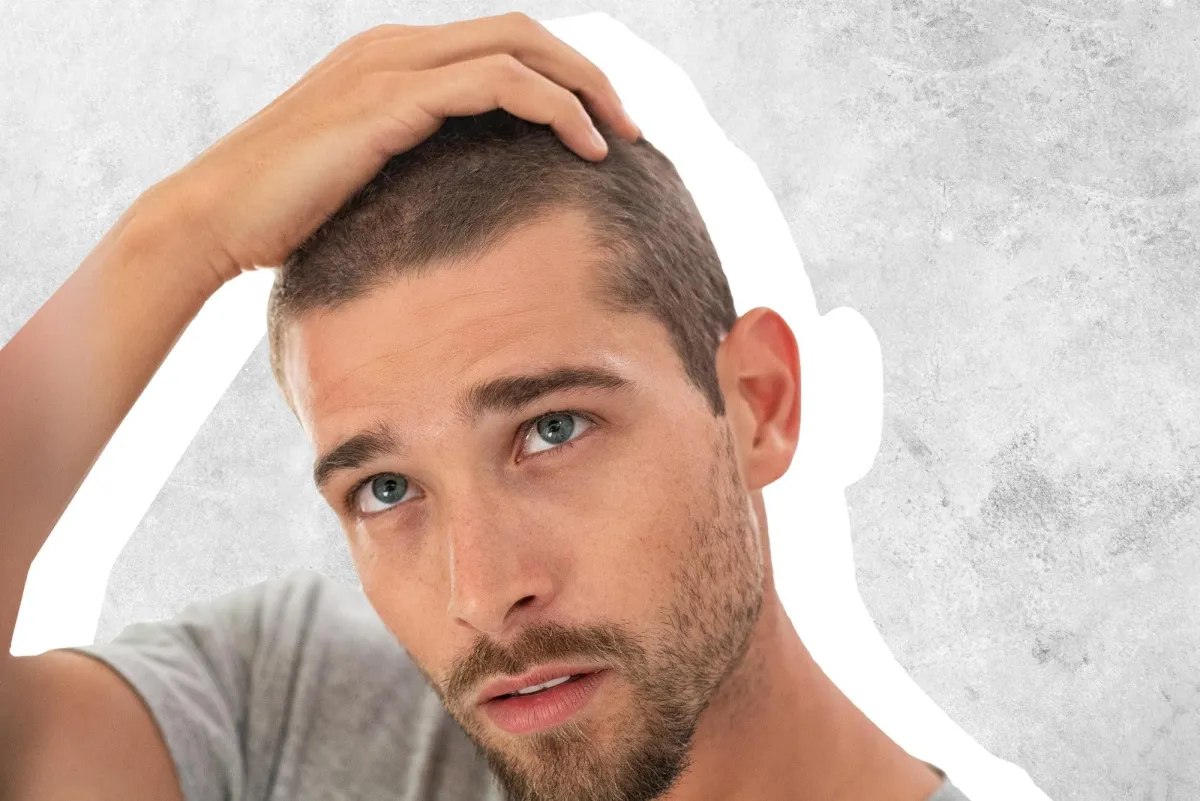
Losing your hair is never a good feeling, most men tend to feel self-conscious about it. Some men decide to completely shave off their heads or constantly wear a hat. One of the most common insecurities men face is hair thinning; for some men, it starts as early as in their 20s. The loss of confidence really starts to affect the way men do their hair and the types of hair cuts they get. Men start to worry about how they will be perceived by friends, family, and colleagues. Hair thinning should not be the cause of self distraughtness, and it should not limit men to have to continuously cover their heads. CADMEN Barbershop has compiled a list of the top 5 best haircuts for men experiencing early hair loss.

Men's Hair Loss Patterns: What Each Stage Looks Like and What It Means
Men's Hair Loss Patterns: What Each Stage Looks Like and What It Means
Male pattern hair loss (androgenetic alopecia) follows a predictable progression in most men. The Norwood Scale is the standard classification system, used by dermatologists and barbers to describe the stage of hair loss. Understanding where you are on the scale tells you what options exist, what a barber can do with your current hair, and what a dermatologist might recommend.
The Norwood Scale Stages
Type 1: no significant hair loss. The hairline is at its original juvenile position. Type 2: slight recession at the temples. A slight triangular recession at both temples, the earliest visible sign of male pattern loss. Type 3: more defined temple recession forming the characteristic M-shape. This is often when men first notice and start thinking about their hair. Type 3 vertex: the M-shape continues plus a circular thinning spot begins at the crown (vertex). Types 4 and 5: the M-shaped recession and the crown thinning expand. The band of hair between the front recession and the crown thins. Type 6: the front section and the crown section merge, leaving a U-shaped band of hair on the sides and back. Type 7: the most advanced stage, only a thin band of hair remains on the sides and back.
What Stage You Are At Matters for Barbers
At earlier stages (Types 2 and 3), haircuts that use texture and fringe placement can create the visual impression of more density. At later stages (Types 5 through 7), hair transplants become the only option for restoring coverage, no haircut creates hair that is not there. Understanding the stage also tells you whether treatment (minoxidil, finasteride) has sufficient active follicles to work with.
When to Start Treatment
The earlier, the better. Treatment maintains existing hair and can improve thinning follicles but cannot revive dead ones. Starting at Type 2 or 3 gives treatment the most to work with.
CADMEN Training
CADMEN Barber Academy trains barbers to assess hair health and guide clients on care and style options. academy.cadmen.ca/in-person-training.
Frequently Asked Questions
Can you tell if you will go bald by looking at your father?
The genetics of male pattern hair loss are more complex than the popular "look at your maternal grandfather" rule suggests. The complete picture: male pattern baldness is polygenic, influenced by multiple genes from both parents. The androgen receptor gene on the X chromosome (which sons inherit from their mothers) is one significant genetic factor, which is why the maternal grandfather connection has some basis. However, genes from the father's side also contribute meaningfully, and the combination of genetic factors from both parents determines the likelihood and pattern. What this means practically: looking at your father gives you relevant information. If your father has significant male pattern baldness, that is a risk factor for you. Same with maternal uncles and maternal grandfather. But neither parent's hair pattern is a guarantee of yours. Men with bald fathers have sometimes retained a full head of hair into old age. Men with no family history of baldness can still develop pattern loss, though at lower rates. The most reliable predictor: your own hair. If you are already showing temple recession at age 20 to 25, that is more predictive of your eventual pattern than your father's hair at 60. Early onset tends to correlate with more significant eventual loss. If hair loss is a concern, monitoring your own hairline with photos from the same angle every 6 to 12 months is more useful than trying to predict from family genetics. When to consult a dermatologist: if you are actively losing hair, especially if it is progressing quickly, a dermatologist can assess whether the pattern is androgenetic alopecia or another cause (alopecia areata, telogen effluvium, nutritional deficiency) and recommend appropriate treatment if indicated.
What haircuts work best at each stage of hair loss?
The right haircut at each stage of male pattern hair loss serves two goals: working with the hair that exists and minimizing visual emphasis on the areas that are thinning. Early stages (Norwood 2 to 3): there is still enough hair to work with from a styling perspective. Textured, slightly shorter cuts on top can create the visual impression of volume and density. A slight forward fringe can reduce the visual emphasis on temple recession. Avoiding very long hair on top is useful because long hair that thins shows the scalp beneath it more visibly. Shorter, textured styles use the hair's natural volume rather than relying on length for coverage. Mid stages (Norwood 4 to 5): the crown thinning and front recession are now significant enough that styling for coverage is increasingly difficult. Shorter haircuts that do not draw attention to the thinning versus dense contrast are more effective. Many men at this stage choose shorter all-over cuts (guard 2 to 3) that reduce the visual difference between thinning and dense sections. Comb-overs and strategic length management become obvious at these stages and are generally considered less effective than honest short cuts. Advanced stages (Norwood 6 to 7): the remaining horseshoe of hair on the sides and back is typically cut short to match the overall head shape. Attempting to grow out the remaining hair to cover the top rarely looks better than keeping it very short or shaving it entirely. Many men at stages 6 and 7 find that a fully shaved head or very close buzz cut is the best-looking option, it presents the natural state honestly and confidently rather than attempting management that draws attention to the loss.
At what age does male pattern hair loss typically start?
Male pattern hair loss can begin as early as the late teenage years or early 20s, though the most common onset is during the 20s and 30s. Statistical context: approximately 25% of men with male pattern hair loss begin noticing recession before age 21. By age 35, approximately 66% of men have some degree of hair loss. By age 50, approximately 85% of men have significantly thinner hair. Early onset (starting before 25): when hair loss begins early, it often progresses more aggressively than hair loss that starts later. A 22-year-old at Norwood 3 is likely to progress further than a 40-year-old at the same stage, because the younger person has more years ahead for the process to continue. Early onset is one of the clearest signals to consider treatment (minoxidil, finasteride) sooner rather than later, more follicles are still active and more can be maintained. Late onset (starting after 40 or 50): men who begin losing hair later in life typically experience slower progression. The full pattern may never develop to the most advanced stages simply because the rate of loss is slow. This is a meaningful practical difference from early-onset loss. The most important individual factor is not age but rate of progression. A barber who sees the same client regularly over time often notices changes in the hairline before the client does, and can note whether the recession is stable or actively progressing. This perspective is useful context for deciding whether and when to seek a dermatology consultation.
Related Reading From CADMEN Barber Academy
- Haircuts for Thinning Hair: What Works and Why
- Hair Loss Treatments for Men: What the Evidence Says Actually Works
- Hair Loss and Barbershop Services: What Men Should Know
- Hair Loss at the Barbershop: What Your Barber Can and Cannot Do
- Early Signs of Hair Loss in Men: What to Look For and What to Do First
- Early Signs of Hair Loss in Men and What to Do About Them

5 Best Haircuts for Men with
Early Hair Thinning
Losing your hair is never a good feeling, most men tend to feel self-conscious about it. Some men decide to completely shave off their heads or constantly wear a hat. One of the most common insecurities men face is hair thinning; for some men, it starts as early as in their 20s. The loss of confidence really starts to affect the way men do their hair and the types of hair cuts they get. Men start to worry about how they will be perceived by friends, family, and colleagues. Hair thinning should not be the cause of self distraughtness, and it should not limit men to have to continuously cover their heads. CADMEN Barbershop has compiled a list of the top 5 best haircuts for men experiencing early hair loss.


For any request, please contact us at info@cadmen.ca