
Barber Tips & Tricks
Follow us for the latest barber techniques and tips
Barber Tips & Tricks
Follow us for the latest barber techniques and tips
Top 7 Reasons Why Your Clients
Aren't Returning
Stay Ahead in the Barbering Game: Nurturing
Lifelong Clientele
You might have come across the saying “give a client a good cut at a reasonable price, and they'll be yours for life.” Unfortunately in reality this is not always the case. That’s where we come in! Check out some of the reasons why your clients may not be returning, whether they were long-term customers or a first-time appointment, below.

Top 7 Reasons Why Your Clients
Aren't Returning
Stay Ahead in the Barbering Game: Nurturing
Lifelong Clientele
You might have come across the saying “give a client a good cut at a reasonable price, and they'll be yours for life.” Unfortunately in reality this is not always the case. That’s where we come in! Check out some of the reasons why your clients may not be returning, whether they were long-term customers or a first-time appointment, below.
Career in Mobile Barbering: Key
Things You Need to Know about
While most barbers work in physical barbershops or hair salons, there are a growing number of barbers who work on-call. What does it mean to be a mobile barber? What are their primary responsibilities? Where to find them? In this blog, we will explain some key terms you should know about mobile barbering and how you can start a new career in it.

Career in Mobile Barbering: Key
Things You Need to Know about
While most barbers work in physical barbershops or hair salons, there are a growing number of barbers who work on-call. What does it mean to be a mobile barber? What are their primary responsibilities? Where to find them? In this blog, we will explain some key terms you should know about mobile barbering and how you can start a new career in it.
Top 4 Ways for Barbers to
Promote Themselves
Marketing is key. Knowing how to market yourself as a barber can be the difference between having 5 to 20 clients a day. If you are interested in boosting the number of your customers and furthering your advertising skills, read the list below with four ways to promote yourself as a barber.

Top 4 Ways for Barbers to
Promote Themselves
Marketing is key. Knowing how to market yourself as a barber can be the difference between having 5 to 20 clients a day. If you are interested in boosting the number of your customers and furthering your advertising skills, read the list below with four ways to promote yourself as a barber.
5 Tips for Social Media Content
Creating as a Barber
It is next to impossible to find someone who is not on social media today. More than just a tool for connection, social media is key helping barbers market themselves and promote their names and skills. If you want to up your barber game quickly, here are five tips on how to promote content online that you don't want to miss out on.

5 Tips for Social Media Content
Creating as a Barber
It is next to impossible to find someone who is not on social media today. More than just a tool for connection, social media is key helping barbers market themselves and promote their names and skills. If you want to up your barber game quickly, here are five tips on how to promote content online that you don't want to miss out on.
5 Best Haircuts for Men with
Early Hair Thinning
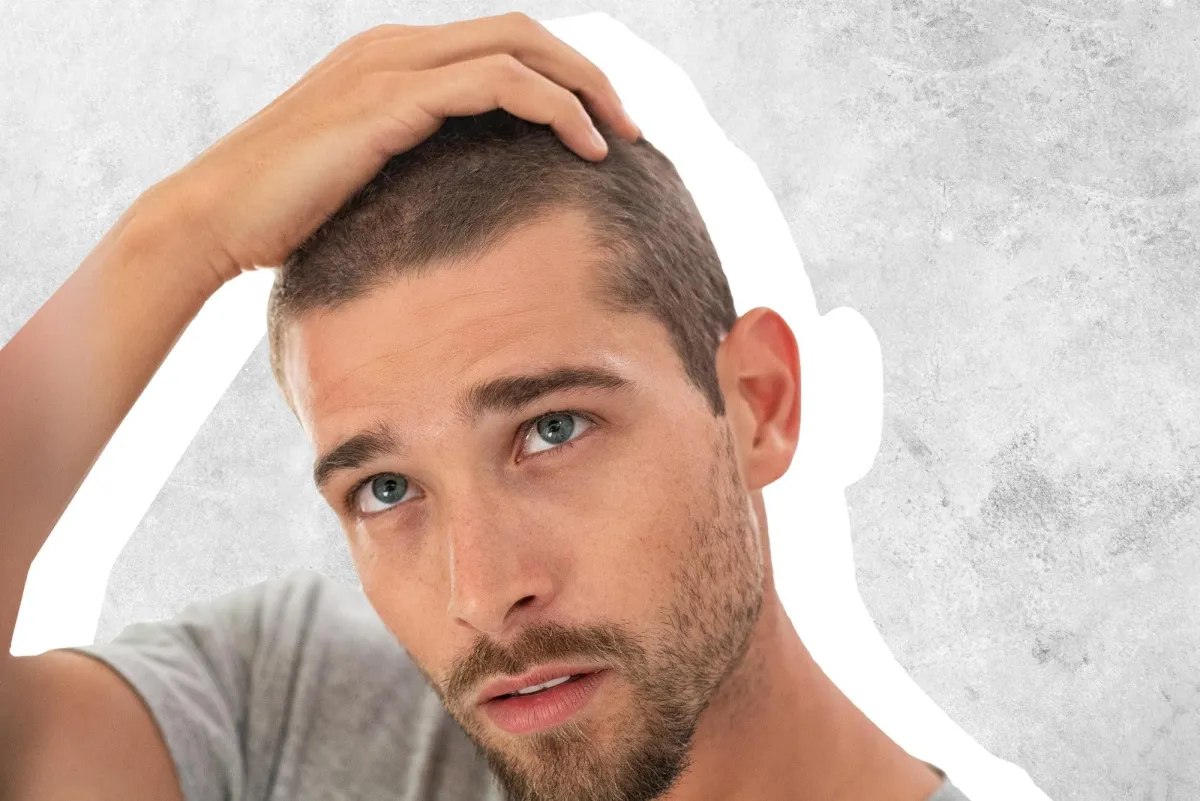
Losing your hair is never a good feeling, most men tend to feel self-conscious about it. Some men decide to completely shave off their heads or constantly wear a hat. One of the most common insecurities men face is hair thinning; for some men, it starts as early as in their 20s. The loss of confidence really starts to affect the way men do their hair and the types of hair cuts they get. Men start to worry about how they will be perceived by friends, family, and colleagues. Hair thinning should not be the cause of self distraughtness, and it should not limit men to have to continuously cover their heads. CADMEN Barbershop has compiled a list of the top 5 best haircuts for men experiencing early hair loss.
How Men's Hair Parts Work and Which One to Ask For
How Men's Hair Parts Work and Which One to Ask For
A hair part is a line in the hair where the hair changes direction, with each side falling away from the line. The part determines the overall direction of the hairstyle and significantly affects how the face looks. Most men default to where their hair naturally wants to part or to one side based on habit. But the part is a meaningful style decision, and choosing the right placement can improve the visual proportions of the hairstyle.
The Main Part Types
Side part: the most common men's part. The hair is divided with the parting line positioned to one side rather than in the center. A side part creates asymmetry and visual weight on one side, producing a classic, polished look. The specific placement, deep side part close to the temple vs. a softer side part closer to the center, affects how graphic or subtle the parting looks. Center part: the hair divides at the midpoint of the head, with each half falling to its respective side. Center parts tend to be more casual and are associated with curtains and surf-influenced styles. They emphasize facial symmetry. No visible part (swept or textured): no defined part line is cut or styled. The hair is textured, swept, or moved without a structural line. This approach suits textured, casual, and volume-forward styles.
Natural Part vs. Styled Part
Most men have a natural part, the direction their hair naturally falls when unstyled. Working with the natural part requires less product and effort than fighting it. Working against the natural part requires more hold and daily re-training.
CADMEN Training
Part selection and hairline work are part of CADMEN's barbering program. academy.cadmen.ca/in-person-training.
Frequently Asked Questions
Which side should a man part his hair on?
The question of which side to part hair on comes down to natural part direction, face shape, and personal preference. There is no universal rule. Starting with the natural part: the easiest answer is to part on the side where your hair naturally falls. Hair follicle angles are set genetically, and most men have a dominant natural part direction. Working with this natural direction means less daily effort, the hair falls where it wants to go, and product or styling is used to refine rather than override. Finding your natural part: wet your hair with no product, towel dry roughly, and observe which side the hair naturally falls to at the front of the head. For most men, there is a clear natural division. Face shape considerations: for asymmetrical features, most people's faces are slightly asymmetrical. Some barbers recommend parting on the side opposite the more dominant or larger facial feature to balance the visual weight. For men with wider foreheads, a side part on the side with more visual "space" can create balance. For men with prominent features on one side, the part direction can either draw attention to that side (part toward it) or redirect attention from it (part away). For oblong or long face shapes, a side part with some height can be used to visually shorten the face. For round face shapes, a side part combined with height adds length. The practical approach: most men try both sides and observe in a mirror which one looks more proportional on their specific face. A 30-second comparison of left side vs. right side part is more informative than any rule, because individual facial proportions vary significantly. What about the "left side looks smarter" claim: some people claim left-side parts look more professional and right-side parts look more casual. This is an aesthetic perception that varies across cultures and individual observers and should not be the deciding factor in your own part placement.
How do I create a hard part in my hair?
A hard part is a clearly defined, sharp line in the hair created by a razor or clipper at the barbershop rather than a naturally blurred part created by combing. The hard part is cut into the hair, not just styled. How it is created at a barbershop: the barber uses a straight razor or the edge of the clipper blade to cut a thin, defined line through the hair at the desired part location. The line is typically 1 to 3mm wide. The hair on each side of the line is cut shorter to create a visible gap between the two sections, which defines the edge of each side. The result is a sharp, visible part line that maintains its definition even as the hair grows and even without product. This is the key difference from a combed part, a hard part is structural (cut into the hair) rather than just styled. Getting a hard part: you ask your barber for a "hard part" and specify which side you want it on and approximately where (how far from the temple). The barber will then mark and cut the line during the haircut. Many barbers include or offer the hard part as part of a regular fade or tapered cut, as it is a common addition to contemporary men's styles. Maintenance: the hard part grows out and softens over 2 to 4 weeks. It needs to be refreshed at each haircut, or at a standalone shape-up. A clean hard part is one of the indicators of a fresh, recently cut hairstyle. The advantage of a hard part over a combed part: no daily effort to create the line. The part is visible without product from the moment you wake up. For men who want a clean, defined hairstyle without significant daily styling, a hard part removes one variable from the morning routine. What to consider before getting one: a hard part is a more defined look that becomes part of the haircut's structure. If you later want to change your part placement or eliminate the part, the line will need to grow out. Some men find the permanence until the next haircut restrictive. If you are unsure, a very defined combed part with a small amount of product is a lower-commitment way to test the look before committing to having it cut in.
Does hair parting affect how my face shape looks?
Yes, hair part placement measurably affects the visual proportions of the face, and it is one of the easiest adjustments to make that can change how a hairstyle interacts with face shape. The mechanisms: side parts create visual asymmetry. When the hair is divided off-center, one side of the head has more visible hair and the other has less. This creates a horizontal movement that the eye follows, which can add or reduce perceived width at different parts of the face. Center parts create bilateral symmetry, which emphasizes the symmetry or asymmetry of the face. If your facial features are fairly symmetrical, a center part can be flattering. If there is significant asymmetry in your features, a center part highlights it, while a side part can counterbalance it. Height and volume above the part: where the hair is lifted or has volume in relation to the part affects the perceived height of the head. A side part with volume swept away from the face adds perceived height on that side, which visually elongates. Part placement specific effects: for round face shapes. A deep side part (placed further toward the temple) combined with volume swept to one side creates asymmetry that breaks the round silhouette. This is one of the most commonly recommended adjustments for round faces. For long or oblong face shapes. A softer side part or a center part, combined with width on the sides and less top height, creates horizontal visual weight that reduces the perceived length of the face. For square face shapes. Side or center parts both work, but a side part with softer styling around the corners can soften the angular jaw slightly. For heart face shapes (wider forehead, narrower jaw). A center part that divides the wider forehead in half can balance the visual weight. Side parts can be used strategically to redirect visual attention away from the widest part of the forehead. The overall point: the part is a free styling tool that can shift proportions without changing the haircut. Experimenting with part placement at home before committing to it at the barbershop costs nothing and takes 30 seconds.
Related Reading From CADMEN Barber Academy
- How to Find Your Natural Hair Part and When to Change It
- Cutting Coily Hair: The Techniques That Work and the Mistakes That Damage the Pattern
- Cutting Curly Hair: What Barbers Do Differently
- How to Cut Curly Hair: Barber Techniques and Approach
- Curly Hair at the Barbershop: What Barbers Do Differently
- Curly Hair at the Barbershop: Cuts and Products That Actually Work

5 Best Haircuts for Men with
Early Hair Thinning
Losing your hair is never a good feeling, most men tend to feel self-conscious about it. Some men decide to completely shave off their heads or constantly wear a hat. One of the most common insecurities men face is hair thinning; for some men, it starts as early as in their 20s. The loss of confidence really starts to affect the way men do their hair and the types of hair cuts they get. Men start to worry about how they will be perceived by friends, family, and colleagues. Hair thinning should not be the cause of self distraughtness, and it should not limit men to have to continuously cover their heads. CADMEN Barbershop has compiled a list of the top 5 best haircuts for men experiencing early hair loss.


For any request, please contact us at info@cadmen.ca