
Barber Tips & Tricks
Follow us for the latest barber techniques and tips
Barber Tips & Tricks
Follow us for the latest barber techniques and tips
Top 7 Reasons Why Your Clients
Aren't Returning
Stay Ahead in the Barbering Game: Nurturing
Lifelong Clientele
You might have come across the saying “give a client a good cut at a reasonable price, and they'll be yours for life.” Unfortunately in reality this is not always the case. That’s where we come in! Check out some of the reasons why your clients may not be returning, whether they were long-term customers or a first-time appointment, below.

Top 7 Reasons Why Your Clients
Aren't Returning
Stay Ahead in the Barbering Game: Nurturing
Lifelong Clientele
You might have come across the saying “give a client a good cut at a reasonable price, and they'll be yours for life.” Unfortunately in reality this is not always the case. That’s where we come in! Check out some of the reasons why your clients may not be returning, whether they were long-term customers or a first-time appointment, below.
Career in Mobile Barbering: Key
Things You Need to Know about
While most barbers work in physical barbershops or hair salons, there are a growing number of barbers who work on-call. What does it mean to be a mobile barber? What are their primary responsibilities? Where to find them? In this blog, we will explain some key terms you should know about mobile barbering and how you can start a new career in it.

Career in Mobile Barbering: Key
Things You Need to Know about
While most barbers work in physical barbershops or hair salons, there are a growing number of barbers who work on-call. What does it mean to be a mobile barber? What are their primary responsibilities? Where to find them? In this blog, we will explain some key terms you should know about mobile barbering and how you can start a new career in it.
Top 4 Ways for Barbers to
Promote Themselves
Marketing is key. Knowing how to market yourself as a barber can be the difference between having 5 to 20 clients a day. If you are interested in boosting the number of your customers and furthering your advertising skills, read the list below with four ways to promote yourself as a barber.

Top 4 Ways for Barbers to
Promote Themselves
Marketing is key. Knowing how to market yourself as a barber can be the difference between having 5 to 20 clients a day. If you are interested in boosting the number of your customers and furthering your advertising skills, read the list below with four ways to promote yourself as a barber.
5 Tips for Social Media Content
Creating as a Barber
It is next to impossible to find someone who is not on social media today. More than just a tool for connection, social media is key helping barbers market themselves and promote their names and skills. If you want to up your barber game quickly, here are five tips on how to promote content online that you don't want to miss out on.

5 Tips for Social Media Content
Creating as a Barber
It is next to impossible to find someone who is not on social media today. More than just a tool for connection, social media is key helping barbers market themselves and promote their names and skills. If you want to up your barber game quickly, here are five tips on how to promote content online that you don't want to miss out on.
5 Best Haircuts for Men with
Early Hair Thinning
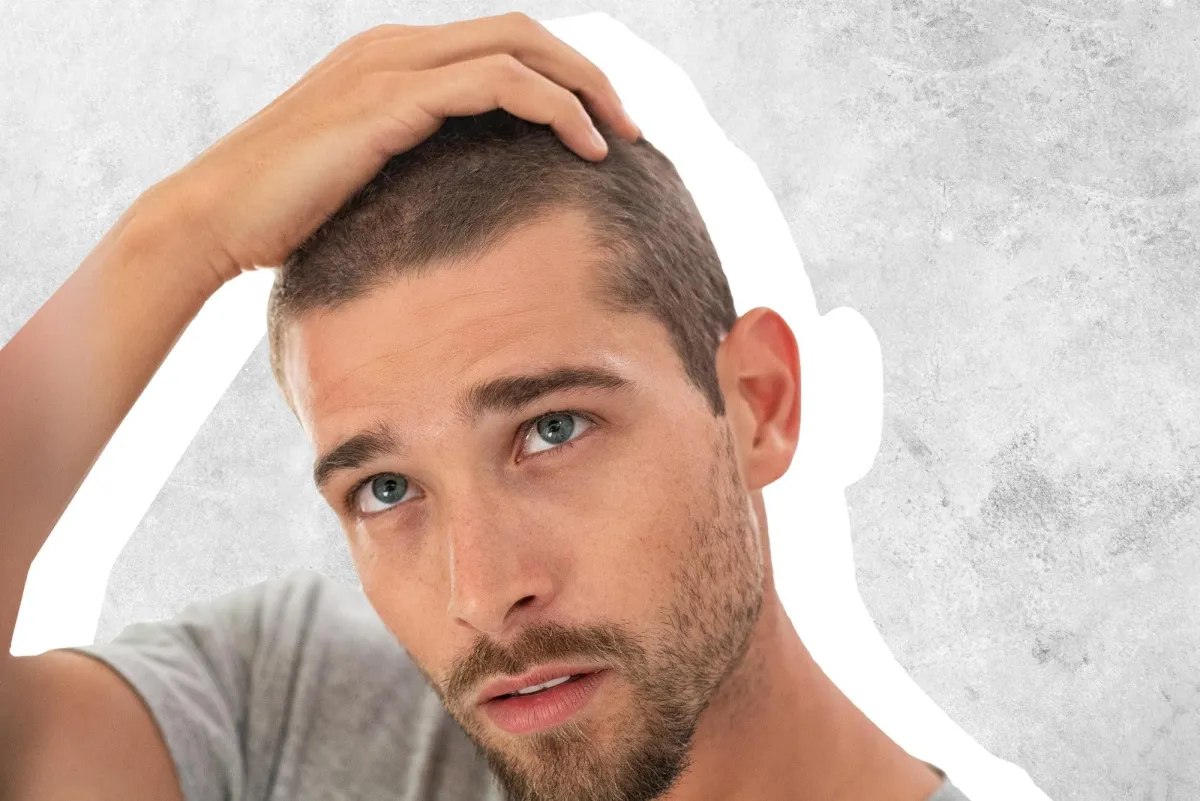
Losing your hair is never a good feeling, most men tend to feel self-conscious about it. Some men decide to completely shave off their heads or constantly wear a hat. One of the most common insecurities men face is hair thinning; for some men, it starts as early as in their 20s. The loss of confidence really starts to affect the way men do their hair and the types of hair cuts they get. Men start to worry about how they will be perceived by friends, family, and colleagues. Hair thinning should not be the cause of self distraughtness, and it should not limit men to have to continuously cover their heads. CADMEN Barbershop has compiled a list of the top 5 best haircuts for men experiencing early hair loss.

Undercut Haircut for Men: How to Cut It
Undercut Haircut for Men: How to Cut It
The undercut creates a sharp visual contrast between the sides and the top. Unlike a fade, which blends the sides into the top gradually, the undercut features a disconnected separation: the sides are cut short or to the skin, and the top is left significantly longer. The two lengths do not blend. The disconnect between them is the defining characteristic.
Disconnected Undercut vs. Undercut Fade
Disconnected undercut: The sides are clippered short (guard 0 through 2 depending on the look) and there is a hard, visible line where the short sides meet the longer top. No blending at the transition. The line is intentional. The contrast is the style.
Undercut fade: The sides are faded (skin to a moderate guard), but unlike a standard fade that connects seamlessly to the top, the undercut fade still features a defined separation where the fade ends and the top length begins. It has blended sides but a distinct boundary with the top, rather than a smooth gradient all the way up.
The choice between the two depends on how sharp the client wants the contrast. The disconnected undercut is more dramatic. The undercut fade is more versatile and often preferred by clients who want the undercut look with a cleaner transition.
Cutting the Disconnected Undercut
Step 1: Define the separation line
The separation line is the boundary between the short sides and the long top. It typically runs along the parietal ridge (the highest point on the side of the head before the top begins) or slightly below it. The exact position depends on the client's desired look: higher separation means more of the short side shows, lower means more of the top hair falls over the sides.
Confirm the separation line with the client before cutting anything. Use a comb to part the hair at the proposed line and show them in the mirror. Adjust based on their reaction before you commit to the line with clippers.
Step 2: Section the top hair
Clip or pin the top hair out of the way, above the separation line. The sides and back will be clippered and should not be cluttered with falling top hair during the process.
Step 3: Clipper the sides and back
With the top hair clipped up and out of the way, clipper the sides and back below the separation line. For a disconnected undercut, use the desired guard (0 for skin, 1 or 2 for a slightly longer side). Cut clean to the separation line. There is no blending required at the top boundary for a true disconnected undercut, the hard line stays hard.
For the neckline: follow the client's preferred neckline shape (tapered, squared, or natural fade to skin).
Step 4: The top
Release the top hair. For most undercuts, the top is 3 to 5 inches or longer. Cut the top length using scissors. The top can be texturized (point cutting or thinning scissors) to add movement and reduce weight, which helps the longer top fall and style naturally rather than sitting flat.
Step 5: Define the separation line
With the sides cut and the top done, define the separation line cleanly. Use a T-liner or the corner of the clipper to sharpen the boundary if needed. For a true disconnected undercut, this line should be clean and visible when the top hair is pushed back or styled up.
Styling the Undercut
The undercut's versatility comes from the ability to style the long top in multiple ways:
- Back: Swept back with medium-hold pomade or clay. Shows the full contrast between sides and top.
- Side: Comb over to one side. One of the most popular combinations with the undercut.
- Up: Pushed upward into a textured quiff or peak. More dramatic, works well for special occasions.
- Down: Let the top fall forward over the separation line. Hides the undercut and gives a completely different everyday appearance.
Maintenance
The sides of an undercut grow out faster visually than a fade because the blunt, disconnected edge becomes visually soft as hair grows back. Most clients return every 3 to 4 weeks to maintain the separation line. Some maintain every 2 weeks if they want a very sharp edge.
CADMEN Training
Disconnected undercuts, separation line definition, and top scissor work are covered in CADMEN's fade and scissors programs. Book at academy.cadmen.ca/in-person-training.
Frequently Asked Questions
What is the difference between an undercut and a fade?
A fade blends the sides into the top through a gradient, starting short at the base and gradually increasing in length until it connects seamlessly with the top. An undercut has a distinct separation between the short sides and the longer top. The sides and top do not blend, they meet at a defined line. The visual contrast between the two lengths is the defining feature of the undercut.
How long does the top need to be for an undercut?
Typically 3 to 5 inches minimum for the disconnected undercut to look intentional rather than unfinished. Shorter tops (2 to 3 inches) can work but leave less styling flexibility. The longer the top, the more versatile the styling options. Clients who want to wear the top swept back, in a quiff, or in a comb over typically prefer 3.5 to 5 inches on top.
How do you maintain an undercut?
Every 3 to 4 weeks for most clients. The sides and separation line are the key maintenance points. The top grows slower in visual terms (length changes are less immediately visible on longer hair). Clients who want a very clean, sharp separation line may prefer 2-week visits for the sides only, with a full cut every 4 to 6 weeks.
What face shape suits an undercut?
The undercut works on most face shapes because the top length and styling direction can be adapted. Oval and oblong faces suit most undercut styles. Round faces benefit from height on top (a quiff or swept-back top) to add vertical visual length. Square faces with strong jawlines look sharp with an undercut because the defined separation line echoes the angular face shape. The main shape that the undercut flatters less is a very narrow face, where the contrast can emphasize width unevenness.
Can you do an undercut on short hair?
The top needs enough length to create a visible contrast with the sides. A true undercut requires at least 2 to 3 inches on top. On shorter tops (under 2 inches), the visual disconnect is minimal and the result looks more like a standard short taper than an undercut. If the client has short hair and wants an undercut, the realistic conversation is that the top needs to grow out before the undercut will look the way the reference photos they bring in appear.
Related Reading From CADMEN Barber Academy
- The Disconnected Undercut: What It Is and How It's Cut
- The Men's Undercut: How to Cut and Wear It
- The Undercut: What It Is, How Barbers Cut It, and Why It Remains One of the Most Requested Men's Styles
- The Undercut Haircut: A Complete Guide for Men
- The Undercut: What It Is, Why It Works, and the Variations to Know
- The Undercut for Men: What It Is and Why It Works
Want to learn to cut an undercut yourself? CADMEN Barber Academy teaches cutting hands-on, with an educator beside you. See the barber academy in Mississauga or view in-person classes and send an enquiry.
Watch the free Barbering for Beginners playlist on YouTube.

5 Best Haircuts for Men with
Early Hair Thinning
Losing your hair is never a good feeling, most men tend to feel self-conscious about it. Some men decide to completely shave off their heads or constantly wear a hat. One of the most common insecurities men face is hair thinning; for some men, it starts as early as in their 20s. The loss of confidence really starts to affect the way men do their hair and the types of hair cuts they get. Men start to worry about how they will be perceived by friends, family, and colleagues. Hair thinning should not be the cause of self distraughtness, and it should not limit men to have to continuously cover their heads. CADMEN Barbershop has compiled a list of the top 5 best haircuts for men experiencing early hair loss.


For any request, please contact us at info@cadmen.ca