
Barber Tips & Tricks
Follow us for the latest barber techniques and tips
Barber Tips & Tricks
Follow us for the latest barber techniques and tips
Top 7 Reasons Why Your Clients
Aren't Returning
Stay Ahead in the Barbering Game: Nurturing
Lifelong Clientele
You might have come across the saying “give a client a good cut at a reasonable price, and they'll be yours for life.” Unfortunately in reality this is not always the case. That’s where we come in! Check out some of the reasons why your clients may not be returning, whether they were long-term customers or a first-time appointment, below.

Top 7 Reasons Why Your Clients
Aren't Returning
Stay Ahead in the Barbering Game: Nurturing
Lifelong Clientele
You might have come across the saying “give a client a good cut at a reasonable price, and they'll be yours for life.” Unfortunately in reality this is not always the case. That’s where we come in! Check out some of the reasons why your clients may not be returning, whether they were long-term customers or a first-time appointment, below.
Career in Mobile Barbering: Key
Things You Need to Know about
While most barbers work in physical barbershops or hair salons, there are a growing number of barbers who work on-call. What does it mean to be a mobile barber? What are their primary responsibilities? Where to find them? In this blog, we will explain some key terms you should know about mobile barbering and how you can start a new career in it.

Career in Mobile Barbering: Key
Things You Need to Know about
While most barbers work in physical barbershops or hair salons, there are a growing number of barbers who work on-call. What does it mean to be a mobile barber? What are their primary responsibilities? Where to find them? In this blog, we will explain some key terms you should know about mobile barbering and how you can start a new career in it.
Top 4 Ways for Barbers to
Promote Themselves
Marketing is key. Knowing how to market yourself as a barber can be the difference between having 5 to 20 clients a day. If you are interested in boosting the number of your customers and furthering your advertising skills, read the list below with four ways to promote yourself as a barber.

Top 4 Ways for Barbers to
Promote Themselves
Marketing is key. Knowing how to market yourself as a barber can be the difference between having 5 to 20 clients a day. If you are interested in boosting the number of your customers and furthering your advertising skills, read the list below with four ways to promote yourself as a barber.
5 Tips for Social Media Content
Creating as a Barber
It is next to impossible to find someone who is not on social media today. More than just a tool for connection, social media is key helping barbers market themselves and promote their names and skills. If you want to up your barber game quickly, here are five tips on how to promote content online that you don't want to miss out on.

5 Tips for Social Media Content
Creating as a Barber
It is next to impossible to find someone who is not on social media today. More than just a tool for connection, social media is key helping barbers market themselves and promote their names and skills. If you want to up your barber game quickly, here are five tips on how to promote content online that you don't want to miss out on.
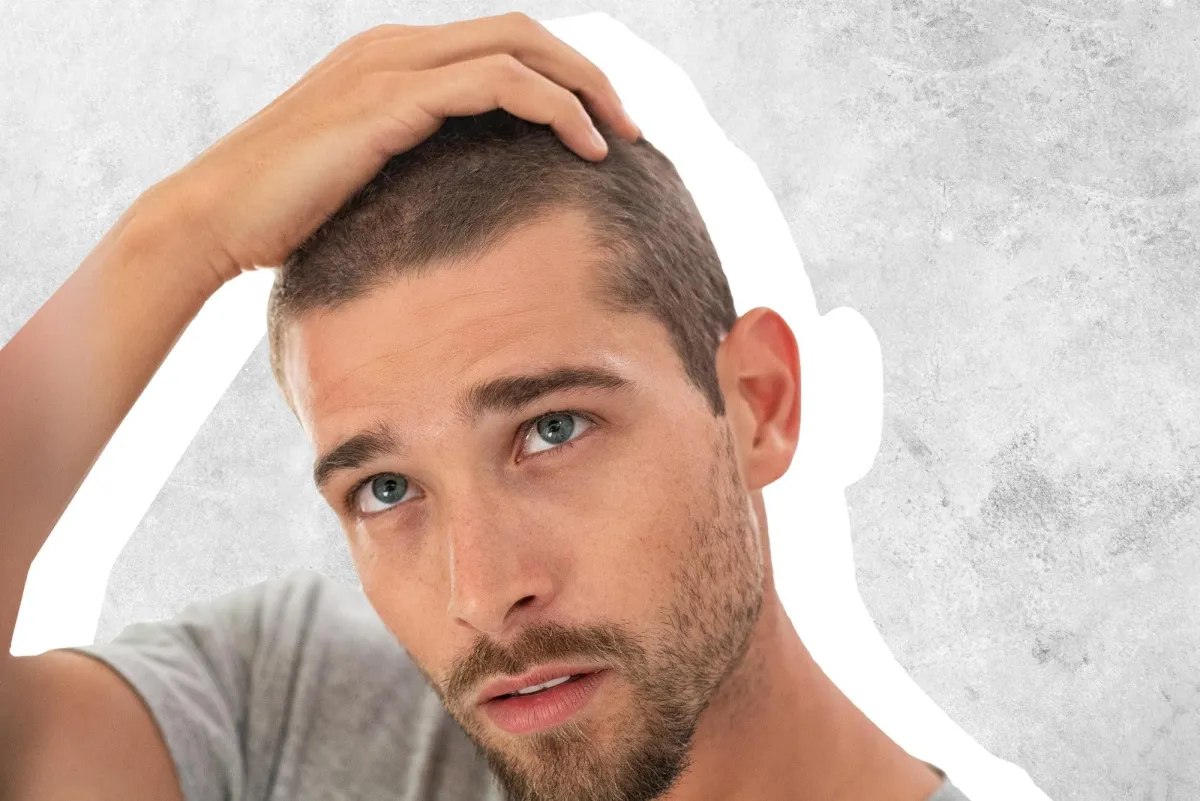
5 Best Haircuts for Men with
Early Hair Thinning
Losing your hair is never a good feeling, most men tend to feel self-conscious about it. Some men decide to completely shave off their heads or constantly wear a hat. One of the most common insecurities men face is hair thinning; for some men, it starts as early as in their 20s. The loss of confidence really starts to affect the way men do their hair and the types of hair cuts they get. Men start to worry about how they will be perceived by friends, family, and colleagues. Hair thinning should not be the cause of self distraughtness, and it should not limit men to have to continuously cover their heads. CADMEN Barbershop has compiled a list of the top 5 best haircuts for men experiencing early hair loss.

The Undercut Haircut: A Complete Guide for Men
The Undercut Haircut: A Complete Guide for Men
The undercut is one of the clearest, most recognizable men's haircuts. It has been worn by barbers, musicians, and athletes for decades. The silhouette is distinctive: shaved or very short sides with noticeably longer hair on top.
Here is a thorough breakdown of how the cut works, what variations exist, and how to keep it looking sharp.
What Defines an Undercut
The undercut is defined by a hard separation between the sides and the top. Unlike a taper or a fade, which blend gradually from short to long, the undercut has a clear line where the shaved or closely cropped sides meet the longer top section.
The top can be any length and styled in many directions. The defining feature is always that sharp contrast on the sides.
Undercut Variations
The classic undercut shaves the sides and back completely or leaves a very short length, with the top hanging over or being swept to one side. This is the version most associated with the style historically.
The disconnected undercut goes a step further. The line between the shaved sides and the top is intentionally stark with no blending at all. The two sections look fully separate, like two distinct haircuts on one head. This version has become very popular in the past 10 years.
The textured undercut leaves the top longer with a deliberately messy or tousled finish. The sides are still closely clipped but the top is styled to look loose rather than structured. This version suits men who want the contrast of the undercut without the precision-required styling of the classic version.
The undercut fade blends the sides into a fade rather than keeping them a uniform short length. The fade gives the style a more polished, barbershop finish while retaining the long-top contrast that defines the undercut.
How to Ask for It
Bring a reference photo. Tell your barber how high you want the line between the sides and the top. A higher line means more of the sides are shaved, increasing the contrast. A lower line is more subtle.
Specify how you want the top. Left long and loose, or trimmed and styled. The barber needs to know the goal for the top before they start so they cut the right length.
Which Hair Types Work Best
Straight and wavy hair are easiest to work with for most undercut variations. The top lies in a controlled direction and holds styling products well.
Thick hair gives the top more weight and body, which can look excellent in a classic swept undercut. The challenge is managing bulk so the top does not look overly puffy.
Curly hair produces a different result. A curly undercut has a more voluminous, rounded top. Some barbers specialize in curly undercuts and the results can be striking. The key is a barber who understands how curly hair behaves when it grows out.
Styling the Top
For a swept or slicked-back undercut, use a medium to high hold pomade. Apply to damp hair, comb through, and direct the hair back or to one side.
For a textured undercut, clay or paste gives a matte, natural-looking finish. Work through damp or dry hair with your fingers rather than a comb.
For a disconnected undercut where the top hangs forward, a light hold product with shine keeps the hair controlled without looking stiff.
Maintenance
The sides need touching up every 2 to 3 weeks to keep the line sharp. The top can often go 4 to 6 weeks before it needs trimming, depending on how quickly your hair grows.
If you let the sides grow too long before a touch-up, the defining contrast of the undercut blurs and the style loses its identity. Staying on schedule is what keeps this cut looking intentional.
Frequently Asked Questions
Is an undercut high maintenance?
The sides require more frequent trimming than most cuts because the shaved or very short sides grow out quickly. If you can commit to touching up every 2 to 3 weeks, the undercut is manageable. If you prefer longer intervals between cuts, a style with a more gradual fade will hold its shape better.
Does the undercut suit all face shapes?
It works well on oval and rectangular face shapes. The added height on top can elongate rounder faces, though very rounder faces may want to avoid too much volume on top. Square jaws look strong with the clean lines of an undercut. Talk to your barber about which variation best suits your proportions.
Can I get an undercut if my hair is thinning?
The undercut works against thinning hair in some cases because the shaved sides make thinning at the temples or crown more visible. A consultation with your barber about which styles best work with your specific hair density is the right first step.
How short should the sides be for an undercut?
That depends on the level of contrast you want. A number 1 or number 2 clipper guard leaves a very small amount of hair. A complete shave gives maximum contrast. Most undercuts land between a number 0 and a number 2 on the sides.
What is the difference between an undercut and a fade?
A fade blends gradually from very short at the bottom to longer toward the top of the sides. An undercut has a defined line where short sides meet long top, with no gradual blending. An undercut fade combines both: the sides are faded rather than uniform, but the length difference between sides and top is still pronounced.
Related Reading From CADMEN Barber Academy
- The Men's Undercut: How to Cut and Wear It
- The Undercut: What It Is, How Barbers Cut It, and Why It Remains One of the Most Requested Men's Styles
- Cutting Afro and Type 4 Hair: Techniques for Barbers Working with Coily Textures
- The Blowout Haircut: What It Is and How to Maintain It
- The Brush Up Haircut: What It Is and How to Style It
- The Caesar Haircut: What Makes It a Caesar and How to Cut It Cleanly
Want to learn to cut an undercut yourself? CADMEN Barber Academy teaches cutting hands-on, with an educator beside you. See the barber academy in Mississauga or view in-person classes and send an enquiry.
Watch the free Barbering for Beginners playlist on YouTube.

5 Best Haircuts for Men with
Early Hair Thinning
Losing your hair is never a good feeling, most men tend to feel self-conscious about it. Some men decide to completely shave off their heads or constantly wear a hat. One of the most common insecurities men face is hair thinning; for some men, it starts as early as in their 20s. The loss of confidence really starts to affect the way men do their hair and the types of hair cuts they get. Men start to worry about how they will be perceived by friends, family, and colleagues. Hair thinning should not be the cause of self distraughtness, and it should not limit men to have to continuously cover their heads. CADMEN Barbershop has compiled a list of the top 5 best haircuts for men experiencing early hair loss.


For any request, please contact us at info@cadmen.ca