
Barber Tips & Tricks
Follow us for the latest barber techniques and tips
Barber Tips & Tricks
Follow us for the latest barber techniques and tips
Top 7 Reasons Why Your Clients
Aren't Returning
Stay Ahead in the Barbering Game: Nurturing
Lifelong Clientele
You might have come across the saying “give a client a good cut at a reasonable price, and they'll be yours for life.” Unfortunately in reality this is not always the case. That’s where we come in! Check out some of the reasons why your clients may not be returning, whether they were long-term customers or a first-time appointment, below.

Top 7 Reasons Why Your Clients
Aren't Returning
Stay Ahead in the Barbering Game: Nurturing
Lifelong Clientele
You might have come across the saying “give a client a good cut at a reasonable price, and they'll be yours for life.” Unfortunately in reality this is not always the case. That’s where we come in! Check out some of the reasons why your clients may not be returning, whether they were long-term customers or a first-time appointment, below.
Career in Mobile Barbering: Key
Things You Need to Know about
While most barbers work in physical barbershops or hair salons, there are a growing number of barbers who work on-call. What does it mean to be a mobile barber? What are their primary responsibilities? Where to find them? In this blog, we will explain some key terms you should know about mobile barbering and how you can start a new career in it.

Career in Mobile Barbering: Key
Things You Need to Know about
While most barbers work in physical barbershops or hair salons, there are a growing number of barbers who work on-call. What does it mean to be a mobile barber? What are their primary responsibilities? Where to find them? In this blog, we will explain some key terms you should know about mobile barbering and how you can start a new career in it.
Top 4 Ways for Barbers to
Promote Themselves
Marketing is key. Knowing how to market yourself as a barber can be the difference between having 5 to 20 clients a day. If you are interested in boosting the number of your customers and furthering your advertising skills, read the list below with four ways to promote yourself as a barber.

Top 4 Ways for Barbers to
Promote Themselves
Marketing is key. Knowing how to market yourself as a barber can be the difference between having 5 to 20 clients a day. If you are interested in boosting the number of your customers and furthering your advertising skills, read the list below with four ways to promote yourself as a barber.
5 Tips for Social Media Content
Creating as a Barber
It is next to impossible to find someone who is not on social media today. More than just a tool for connection, social media is key helping barbers market themselves and promote their names and skills. If you want to up your barber game quickly, here are five tips on how to promote content online that you don't want to miss out on.

5 Tips for Social Media Content
Creating as a Barber
It is next to impossible to find someone who is not on social media today. More than just a tool for connection, social media is key helping barbers market themselves and promote their names and skills. If you want to up your barber game quickly, here are five tips on how to promote content online that you don't want to miss out on.
5 Best Haircuts for Men with
Early Hair Thinning
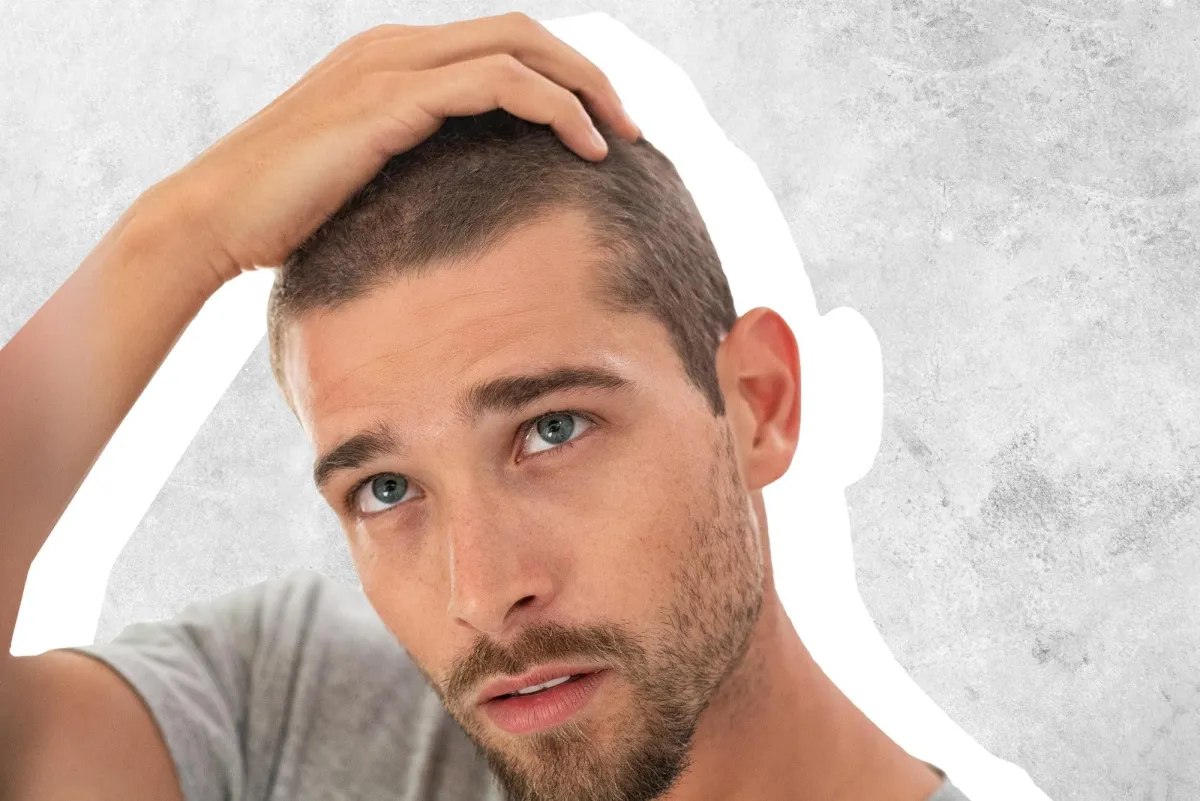
Losing your hair is never a good feeling, most men tend to feel self-conscious about it. Some men decide to completely shave off their heads or constantly wear a hat. One of the most common insecurities men face is hair thinning; for some men, it starts as early as in their 20s. The loss of confidence really starts to affect the way men do their hair and the types of hair cuts they get. Men start to worry about how they will be perceived by friends, family, and colleagues. Hair thinning should not be the cause of self distraughtness, and it should not limit men to have to continuously cover their heads. CADMEN Barbershop has compiled a list of the top 5 best haircuts for men experiencing early hair loss.

How to Do a Skin Fade: Step-by-Step Technique
How to Do a Skin Fade: Step-by-Step Technique
A skin fade blends the hair from zero at the skin all the way up to whatever length the client carries on top. It is one of the most in-demand cuts in barbering and one of the most technically demanding. The difference between a smooth skin fade and a patchy one comes down to guard sequence, speed control, and how the transitions are finished.
What You Need
- Clippers (main and a second set if available)
- T-liner/trimmer for the edges and neckline
- Guards: 0.5, 1, 1.5, 2, 3 (at minimum)
- Comb
- Brush for cleaning the neck during the cut
Step 1: Establish the Zero Line
With the clippers set to zero (bald/skin), establish the neckline and the sides at the baseline. This is the lowest point of the fade, the area that will be entirely bald skin. The zero line typically sits at or just above the natural hairline on the neckline, and wraps around the sides at the lowest point of where hair starts.
Use the T-liner or the clipper with no guard. Work the outline at the neckline first (U-shape, C-shape, or square based on client preference), then clean the base of the sides. This baseline becomes the anchor point that everything above blends into.
Step 2: Build the Gradient: Guard Sequence
The skin fade is built by working through guards from lowest to highest, with each guard covering progressively higher on the head. Each pass creates a band of length that needs to blend into the band above and below it.
Common sequence for a mid-fade:
- Guard 0.5: from the zero line, about 1 to 1.5 inches up
- Guard 1: overlapping into the 0.5 zone and extending about 1 inch above it
- Guard 1.5: overlapping into guard 1 territory and extending above
- Guard 2: continuing up toward the parietal ridge
- Guard 3 or higher: connecting to the top length
Each guard should overlap significantly with the zone below it. The overlap is where the blending happens. Do not cut clean horizontal bands and then try to blend them, the overlap IS the blend.
Step 3: The Flicking Motion
The flicking motion is the foundation of clean fade technique. As the clipper moves up through a section, the wrist rotates outward away from the head at the top of the pass. This releases the clipper from the hair gradually rather than cutting a hard line at the top of the guard pass.
A flat, straight clipper pass cuts a hard horizontal line where the guard ends. A flicking motion at the top of the pass creates a soft transition. Practice this on every pass from the first guard upward.
Step 4: Check and Blend After Each Guard
After completing a guard pass, step back and look at the fade from directly behind the client, then from each side. Any visible lines between guard zones should be blended before moving to the next guard. Trying to blend everything at the end is harder than catching the lines as they appear.
To blend between two adjacent guard levels: hold one guard on the clippers, use the lever to open it slightly (which reduces the cutting length), and work in the transition zone between the two guard bands. The lever adjustment is one of the main blending tools in a skin fade.
Step 5: The Zero Blending Pass
After building the gradient from guard 0.5 upward, the area between the skin (zero) and the 0.5 guard zone needs to be blended. This is where most fade patches appear.
Technique: With the clippers at zero, tilt the blade slightly away from the skin (cutting with just the corner of the blade) and make upward passes in the transition zone between zero and 0.5. This cuts some hair from the 0.5 zone, softening the transition to bare skin.
Alternatively: use a 0.5 guard with the lever half-open and work the same zone. This gives slightly more control for beginners because you cannot accidentally cut too deep.
Step 6: Final Check With the Neck Strip
Brush the neck and lower head clean of all clippings. Then look at the fade on clean, uncluttered skin. Small patches or lines that were hidden by clippings will now be visible. Fix any remaining lines before the client leaves the chair.
Common Skin Fade Mistakes
Cutting bands instead of gradients: Moving cleanly through a guard zone without overlapping the zones above and below creates visible horizontal banding. Every pass should overlap the adjacent zone.
Not using the lever: The lever is a precision blending tool. Barbers who do not use the lever between guards have fewer blending options and tend to produce harder transitions.
Rushing the zero-to-0.5 transition: This is the most visible part of the fade. Spending extra time here is always worth it.
Not checking from behind: The neckline and lower fade are only fully visible from behind the client. Checking only from the sides misses the most scrutinized part of the cut.
CADMEN Fade Training
Live fade training in Mississauga. Approximately 10 live haircuts over 2 days. Maximum 3 students. Direct correction from Francis Paua on every cut.
Fade class: $1,750 + HST (small group) or $1,950 + HST (1-on-1). Book at academy.cadmen.ca/in-person-training.
Frequently Asked Questions
What is a skin fade in barbering?
A skin fade blends the hair from zero (bare skin) at the sides and back up to a longer length at the top of the head. The hair transitions smoothly through multiple lengths, creating a gradient from skin to the client's desired top length. It can be positioned at different heights on the head: low, mid, or high, depending on where the zero area ends and the gradient begins.
What guards do you need for a skin fade?
At minimum: 0.5, 1, 1.5, 2, and 3. More guard options give more precision in the blending zones. Many barbers also rely on the lever (which adjusts cutting length between guard sizes) as an additional blending tool. The specific guards used depend on how high the fade goes and how dense the client's hair is.
How do you blend a skin fade?
Blending happens through three techniques: the flicking motion (wrist rotating outward at the top of each pass), the lever adjustment (opening the lever to cut slightly shorter than the selected guard in transition zones), and the overlap between adjacent guard passes. All three work together. Blending is not a separate step at the end, it is built into every pass from the first guard upward.
How long does a skin fade take to learn?
Most barbers can produce a clean skin fade after 50 to 100 live haircut repetitions with direct feedback. The physical mechanics of the flicking motion and lever control can be learned quickly; the visual judgment for checking transitions and catching patches takes more repetitions to develop. Intensive training with immediate correction on each haircut compresses the learning time significantly compared to independent practice.
What is the difference between a skin fade and a zero fade?
These terms are often used interchangeably. Both refer to a fade that starts at bare skin (zero) at the base. Some barbers use "zero fade" to specify that the zero area is small (just the neckline and very base of the sides), while "skin fade" implies a wider area of bare skin. In practice, the terms mean the same cut in most shop contexts.
Related Reading From CADMEN Barber Academy
- Bald Fade vs Skin Fade: Are They the Same Thing?
- The Skin Fade: A Complete Guide to What It Is and How It Is Done
- Skin Fade Guide: Low, Mid, and High Fade Explained
- The Skin Fade: How It's Done and What Makes It Sharp
- Skin Fade Maintenance Between Barbershop Visits
- Skin Fade Step by Step: The Sequence That Builds a Clean Zero
Want to learn to cut a skin fade yourself? CADMEN Barber Academy teaches cutting hands-on, with an educator beside you. See the barber academy in Mississauga or view in-person classes and send an enquiry.
Learn this fade step by step in our free Fade Tutorials playlist on YouTube.

5 Best Haircuts for Men with
Early Hair Thinning
Losing your hair is never a good feeling, most men tend to feel self-conscious about it. Some men decide to completely shave off their heads or constantly wear a hat. One of the most common insecurities men face is hair thinning; for some men, it starts as early as in their 20s. The loss of confidence really starts to affect the way men do their hair and the types of hair cuts they get. Men start to worry about how they will be perceived by friends, family, and colleagues. Hair thinning should not be the cause of self distraughtness, and it should not limit men to have to continuously cover their heads. CADMEN Barbershop has compiled a list of the top 5 best haircuts for men experiencing early hair loss.


For any request, please contact us at info@cadmen.ca