
Barber Tips & Tricks
Follow us for the latest barber techniques and tips
Barber Tips & Tricks
Follow us for the latest barber techniques and tips
Top 7 Reasons Why Your Clients
Aren't Returning
Stay Ahead in the Barbering Game: Nurturing
Lifelong Clientele
You might have come across the saying “give a client a good cut at a reasonable price, and they'll be yours for life.” Unfortunately in reality this is not always the case. That’s where we come in! Check out some of the reasons why your clients may not be returning, whether they were long-term customers or a first-time appointment, below.

Top 7 Reasons Why Your Clients
Aren't Returning
Stay Ahead in the Barbering Game: Nurturing
Lifelong Clientele
You might have come across the saying “give a client a good cut at a reasonable price, and they'll be yours for life.” Unfortunately in reality this is not always the case. That’s where we come in! Check out some of the reasons why your clients may not be returning, whether they were long-term customers or a first-time appointment, below.
Career in Mobile Barbering: Key
Things You Need to Know about
While most barbers work in physical barbershops or hair salons, there are a growing number of barbers who work on-call. What does it mean to be a mobile barber? What are their primary responsibilities? Where to find them? In this blog, we will explain some key terms you should know about mobile barbering and how you can start a new career in it.

Career in Mobile Barbering: Key
Things You Need to Know about
While most barbers work in physical barbershops or hair salons, there are a growing number of barbers who work on-call. What does it mean to be a mobile barber? What are their primary responsibilities? Where to find them? In this blog, we will explain some key terms you should know about mobile barbering and how you can start a new career in it.
Top 4 Ways for Barbers to
Promote Themselves
Marketing is key. Knowing how to market yourself as a barber can be the difference between having 5 to 20 clients a day. If you are interested in boosting the number of your customers and furthering your advertising skills, read the list below with four ways to promote yourself as a barber.

Top 4 Ways for Barbers to
Promote Themselves
Marketing is key. Knowing how to market yourself as a barber can be the difference between having 5 to 20 clients a day. If you are interested in boosting the number of your customers and furthering your advertising skills, read the list below with four ways to promote yourself as a barber.
5 Tips for Social Media Content
Creating as a Barber
It is next to impossible to find someone who is not on social media today. More than just a tool for connection, social media is key helping barbers market themselves and promote their names and skills. If you want to up your barber game quickly, here are five tips on how to promote content online that you don't want to miss out on.

5 Tips for Social Media Content
Creating as a Barber
It is next to impossible to find someone who is not on social media today. More than just a tool for connection, social media is key helping barbers market themselves and promote their names and skills. If you want to up your barber game quickly, here are five tips on how to promote content online that you don't want to miss out on.
5 Best Haircuts for Men with
Early Hair Thinning
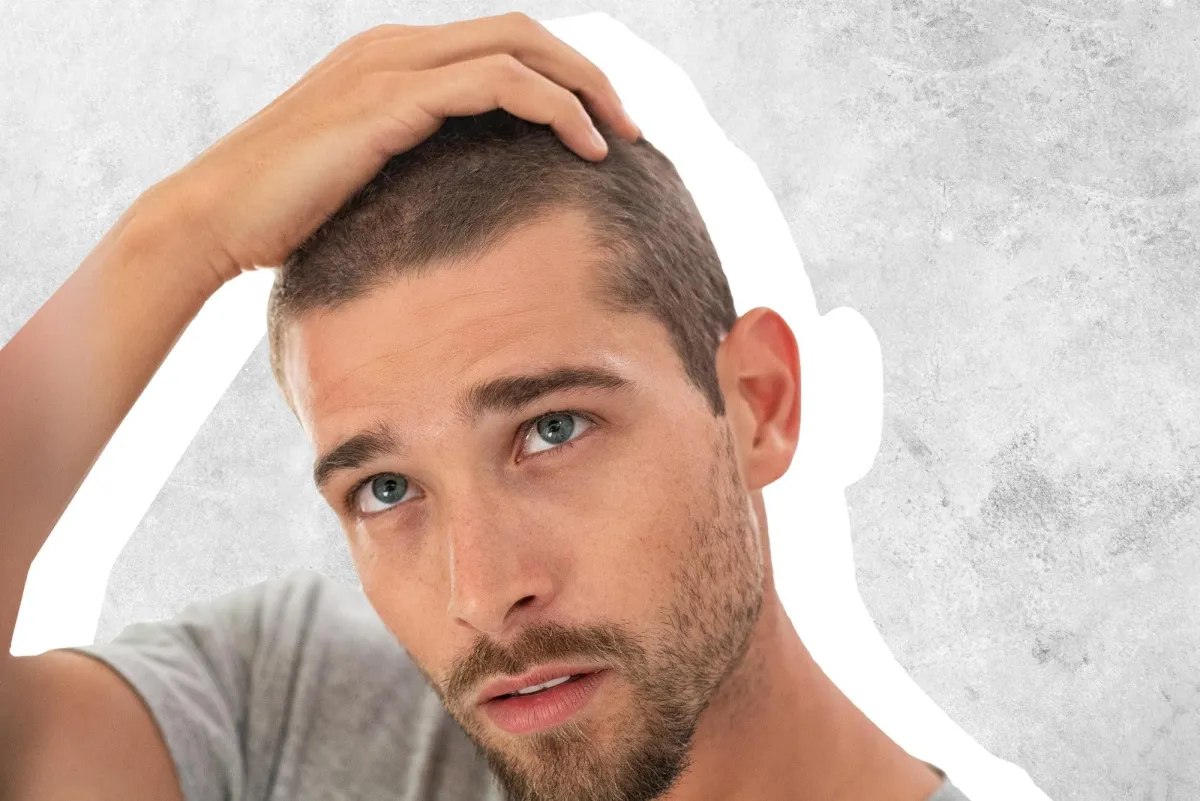
Losing your hair is never a good feeling, most men tend to feel self-conscious about it. Some men decide to completely shave off their heads or constantly wear a hat. One of the most common insecurities men face is hair thinning; for some men, it starts as early as in their 20s. The loss of confidence really starts to affect the way men do their hair and the types of hair cuts they get. Men start to worry about how they will be perceived by friends, family, and colleagues. Hair thinning should not be the cause of self distraughtness, and it should not limit men to have to continuously cover their heads. CADMEN Barbershop has compiled a list of the top 5 best haircuts for men experiencing early hair loss.

The Skin Fade: A Complete Guide to What It Is and How It Is Done
The Skin Fade: A Complete Guide to What It Is and How It Is Done
The skin fade is the standard by which many clients judge a barber's technical skill. It requires precise execution across multiple guard lengths, freehand clipper technique, and the ability to see and correct imperfections in real time. Here is exactly what it is, how it is built, and what separates a great skin fade from a mediocre one.
What Defines a Skin Fade
A skin fade starts at skin level (zero guard, blade flat against the skin) at the lowest section of the sides and back, and gradually increases in length as it moves up the head until it transitions into the main body of the haircut. The word "skin" refers to the starting point, visible scalp at the base. The word "fade" refers to the graduation from that skin level up through progressively longer lengths. There are no visible lines or distinct jumps between lengths. The gradient is smooth and continuous.
How a Skin Fade Is Built
The barber works through multiple passes at different guard heights, starting from the skin at the bottom and working up. They establish the zero line (skin level) first, then pass a 0.5 or 1 guard slightly higher, then a 1.5 or 2 slightly higher still, continuing up the head. Between each guard level, freehand technique is used, holding the clipper at an angle off the scalp, to blend the transition. The barber repeatedly checks the gradient from multiple angles, correcting any visible lines or uneven blending. The process requires consistent blade tension across the entire fade area and precise spatial awareness of where each guard ends.
What Makes a Good Skin Fade
No visible lines between guard levels. The skin level has no choppy starting point. The gradient softens evenly from all sides. The fade is symmetric from side to side. The fade resolves cleanly at the neckline without an awkward angle. These are the technical requirements. Any visible line, any choppy area, any asymmetry between sides indicates incomplete blending or inconsistent clipper angle. These flaws are visible immediately after the cut and become more obvious as the hair grows out.
CADMEN Training
CADMEN Barber Academy's fade training is the core technical curriculum. academy.cadmen.ca/in-person-training.
Frequently Asked Questions
What is the difference between a high skin fade, mid skin fade, and low skin fade?
The height designation (high, mid, low) refers to how far up the head the skin-level portion of the fade extends. This changes the overall look and the amount of contrast between the skin-level base and the hair above. Low skin fade: the skin-level portion starts at the very base of the hairline (at or just above the ear) and the fade transitions to longer lengths quickly. The skin is visible only at the lowest band of the sides. This creates less contrast and a more gradual overall gradient. The total faded area is smaller. This type grows out more slowly and is more forgiving for men who go longer between cuts. Mid skin fade: the skin-level portion extends to roughly the middle of the side of the head (approximately level with the upper ear). The fade transitions from skin through several guard lengths before reaching the top section. More contrast and more visible gradient than a low fade. The most commonly requested version for general wear. High skin fade (also called a high and tight or temple fade in certain contexts): the skin-level portion extends up toward the temples and the upper sides of the head. This creates the maximum contrast between the shaved sides and the top section. The most dramatic version, grows out the fastest because the skin zone is closest to the top. When the client says they want a skin fade without specifying height: the barber will typically default to a mid fade. Specifying the height at the start of the service produces a precise result rather than the barber's default interpretation of the request.
How do you know if a barber can do a good skin fade before you sit down?
Evaluating a barber's fade capability before booking comes down to three observable sources: portfolio, reputation, and observation. Portfolio: most barbers maintain an Instagram or social media presence showing their work. Skin fade quality is visible in photos, look for zero visible lines between guard levels, clean transitions, and symmetric execution from side to side. A barber without a portfolio showing fades has either not built one (a red flag for a claimed fade specialist) or primarily does other work. Be specific about what you are looking for in the photos: the nape area (where most errors occur), the blend at ear level, and the symmetry from side to side. Reputation and reviews: client reviews that specifically mention fades, edge-ups, or technical precision are more useful than general "great barber" reviews. A client who describes the specific quality of a cut is giving more reliable information than one who comments on personality or atmosphere. Direct observation: if you visit a shop and observe a barber mid-service on a skin fade client, you can see the process. The cleanliness of the lines, the number of passes required (excessive re-passes indicate correcting errors), and whether the barber checks the gradient from multiple angles are all visible quality indicators. The direct question: asking a prospective barber "do you do a lot of skin fades?" or "can I see examples of skin fades you have done?" is completely appropriate. A confident, skilled barber will have examples readily available and will welcome the question. A barber who deflects or cannot produce examples is giving you relevant information.
Why does a skin fade sometimes look patchy a week after the cut and what causes it?
A patchy appearance one to two weeks after a skin fade has two common causes: grow-out revealing poor blending, and uneven hair growth rate. Grow-out revealing poor blending: the most common cause of post-cut patchiness. When the fade was executed, the blending between guard levels may have been incomplete in specific areas. While the hair is freshly cut, slight blending imperfections can be masked by the surrounding hair length. As new growth fills in, the imperfections become visible. This is essentially the fade's grow-out pattern revealing the quality of the original blend. A fade blended correctly grows out as a smooth, gradual softening of the gradient. A fade with blending gaps produces bands or patches as the hair grows. Uneven growth rate: hair does not grow at a perfectly uniform rate across every follicle. In some areas, particularly around the temples and nape, hair may grow in faster or slower than the surrounding sections. This can produce an uneven appearance even with perfect original blending, particularly in men with irregular growth patterns. The practical distinction: if the same area patches in the same way every time with every barber, it is likely a growth pattern issue. If the patchiness occurs in different areas cut to cut, or if the fade never looks quite smooth even freshly cut, it is more likely a blending quality issue. The reliable indicator of original blend quality: look at the fade one to three days after the cut, before significant new growth has occurred. A well-executed skin fade should have no visible lines or abrupt transitions immediately post-cut. If lines are visible within the first week, they were present from the start of the cut and became more obvious as growth pushed the longer sections up.
Related Reading From CADMEN Barber Academy
- Bald Fade vs Skin Fade: Are They the Same Thing?
- Skin Fade Guide: Low, Mid, and High Fade Explained
- The Skin Fade: How It's Done and What Makes It Sharp
- How to Do a Skin Fade: Step-by-Step Technique
- Skin Fade Maintenance Between Barbershop Visits
- Skin Fade Step by Step: The Sequence That Builds a Clean Zero
Want to learn to cut a skin fade yourself? CADMEN Barber Academy teaches cutting hands-on, with an educator beside you. See the barber academy in Mississauga or view in-person classes and send an enquiry.
Learn this fade step by step in our free Fade Tutorials playlist on YouTube.

5 Best Haircuts for Men with
Early Hair Thinning
Losing your hair is never a good feeling, most men tend to feel self-conscious about it. Some men decide to completely shave off their heads or constantly wear a hat. One of the most common insecurities men face is hair thinning; for some men, it starts as early as in their 20s. The loss of confidence really starts to affect the way men do their hair and the types of hair cuts they get. Men start to worry about how they will be perceived by friends, family, and colleagues. Hair thinning should not be the cause of self distraughtness, and it should not limit men to have to continuously cover their heads. CADMEN Barbershop has compiled a list of the top 5 best haircuts for men experiencing early hair loss.


For any request, please contact us at info@cadmen.ca