
Barber Tips & Tricks
Follow us for the latest barber techniques and tips
Barber Tips & Tricks
Follow us for the latest barber techniques and tips
Top 7 Reasons Why Your Clients
Aren't Returning
Stay Ahead in the Barbering Game: Nurturing
Lifelong Clientele
You might have come across the saying “give a client a good cut at a reasonable price, and they'll be yours for life.” Unfortunately in reality this is not always the case. That’s where we come in! Check out some of the reasons why your clients may not be returning, whether they were long-term customers or a first-time appointment, below.

Top 7 Reasons Why Your Clients
Aren't Returning
Stay Ahead in the Barbering Game: Nurturing
Lifelong Clientele
You might have come across the saying “give a client a good cut at a reasonable price, and they'll be yours for life.” Unfortunately in reality this is not always the case. That’s where we come in! Check out some of the reasons why your clients may not be returning, whether they were long-term customers or a first-time appointment, below.
Career in Mobile Barbering: Key
Things You Need to Know about
While most barbers work in physical barbershops or hair salons, there are a growing number of barbers who work on-call. What does it mean to be a mobile barber? What are their primary responsibilities? Where to find them? In this blog, we will explain some key terms you should know about mobile barbering and how you can start a new career in it.

Career in Mobile Barbering: Key
Things You Need to Know about
While most barbers work in physical barbershops or hair salons, there are a growing number of barbers who work on-call. What does it mean to be a mobile barber? What are their primary responsibilities? Where to find them? In this blog, we will explain some key terms you should know about mobile barbering and how you can start a new career in it.
Top 4 Ways for Barbers to
Promote Themselves
Marketing is key. Knowing how to market yourself as a barber can be the difference between having 5 to 20 clients a day. If you are interested in boosting the number of your customers and furthering your advertising skills, read the list below with four ways to promote yourself as a barber.

Top 4 Ways for Barbers to
Promote Themselves
Marketing is key. Knowing how to market yourself as a barber can be the difference between having 5 to 20 clients a day. If you are interested in boosting the number of your customers and furthering your advertising skills, read the list below with four ways to promote yourself as a barber.
5 Tips for Social Media Content
Creating as a Barber
It is next to impossible to find someone who is not on social media today. More than just a tool for connection, social media is key helping barbers market themselves and promote their names and skills. If you want to up your barber game quickly, here are five tips on how to promote content online that you don't want to miss out on.

5 Tips for Social Media Content
Creating as a Barber
It is next to impossible to find someone who is not on social media today. More than just a tool for connection, social media is key helping barbers market themselves and promote their names and skills. If you want to up your barber game quickly, here are five tips on how to promote content online that you don't want to miss out on.
5 Best Haircuts for Men with
Early Hair Thinning
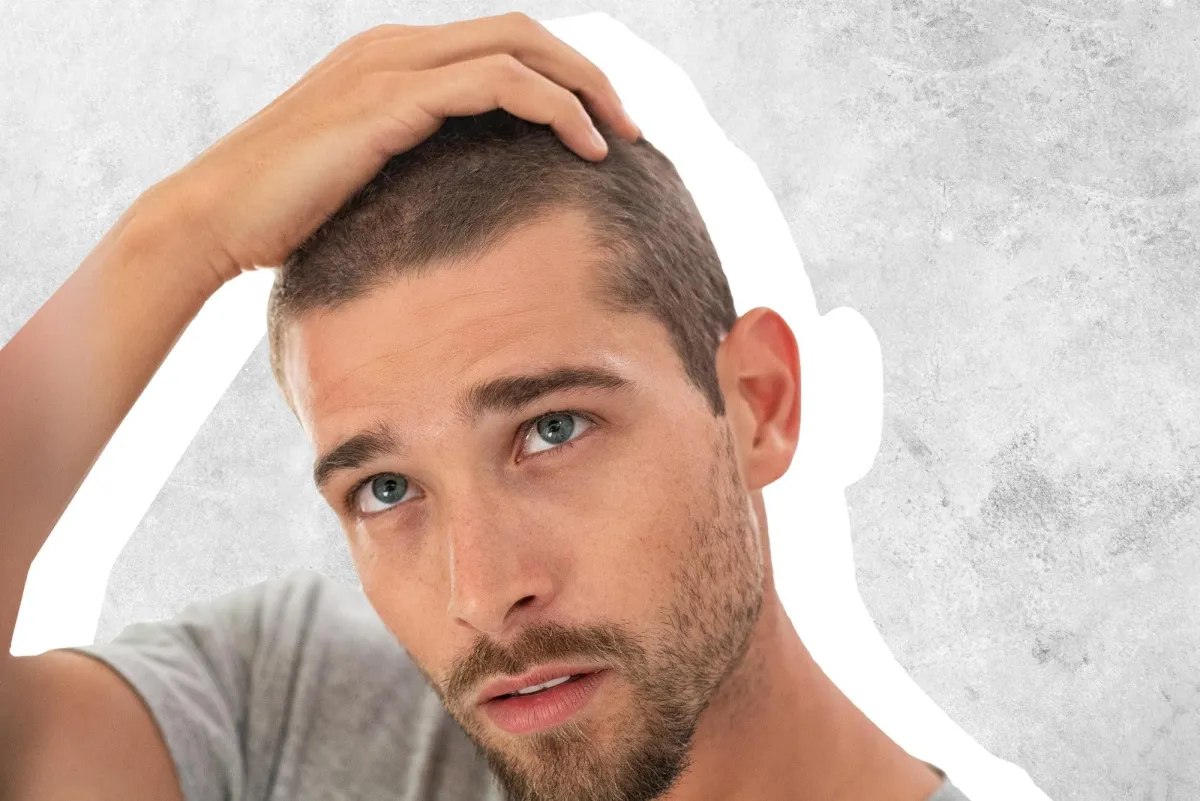
Losing your hair is never a good feeling, most men tend to feel self-conscious about it. Some men decide to completely shave off their heads or constantly wear a hat. One of the most common insecurities men face is hair thinning; for some men, it starts as early as in their 20s. The loss of confidence really starts to affect the way men do their hair and the types of hair cuts they get. Men start to worry about how they will be perceived by friends, family, and colleagues. Hair thinning should not be the cause of self distraughtness, and it should not limit men to have to continuously cover their heads. CADMEN Barbershop has compiled a list of the top 5 best haircuts for men experiencing early hair loss.

The Skin Fade: How It's Done and What Makes It Sharp
The Skin Fade: How It's Done and What Makes It Sharp
A skin fade is a fade that ends at bare skin at the lowest point of the sides or neckline. It is the most technically demanding type of fade in barbering because any inconsistency in the blending is immediately visible against the skin. A clean skin fade looks seamless from below, the eye cannot identify a specific line where skin ends and hair begins. A poor skin fade has visible tracks, lines, or an abrupt transition between bare skin and the hair above it.
The Technique
A skin fade is built in multiple passes. The barber first identifies the height (low, mid, or high) where the skin will begin. From that point downward, the hair is taken to the skin with the clipper blade open or with no guard. The critical work is the blending zone directly above the skin line, the several centimeters where the hair transitions from bare skin to progressively longer lengths toward the bulk of the cut. This zone is worked in multiple passes with different guard lengths and blade angles until the transition is seamless. Each pass removes more of the visible line between guard lengths. A barber rushing through this zone or not making enough passes leaves visible "steps" between guard lengths rather than a true fade.
What Makes It Sharp vs. Sloppy
Three specific things separate a precise skin fade from an imprecise one: the consistency of the lowest skin line (it should be even when the head is viewed straight on), the smoothness of the blending zone (no steps, no shadow lines between guard changes), and the edge work at the hairline (trimmer-crisp lines at the sideburn, neckline, and temple points). All three must be correct for the result to look professional.
CADMEN Training
Fade technique, blending mechanics, and edge work are the core of CADMEN's hands-on barbering curriculum. academy.cadmen.ca/in-person-training.
Frequently Asked Questions
What is a skin fade and how is it different from a regular fade?
A skin fade is a type of fade where the gradient blends all the way down to bare skin at the lowest point of the sides and neckline. The hair at the very bottom is cut against the scalp with no guard, producing an area of bare skin. Above the skin line, the hair gradually lengthens in a seamless blend upward toward the top. A "regular" fade, sometimes called a taper fade or low/mid/high fade when not specifically designated as a skin fade, may or may not go down to bare skin. Many fades end at a very short but not quite skin-bare length at the bottom (a guard 0.5 or 1, which leaves visible stubble). The visual difference between a skin fade and a close-but-not-skin fade: a skin fade produces a more dramatic contrast between the sides and the top because the sides are completely bare at the lowest point. The contrast is maximized. A fade that ends at a short guard produces a similar gradient but with slightly less maximum contrast. The practical differences: a skin fade requires more precision because the skin makes the contrast and any imperfection in blending immediately visible. A skin fade requires more frequent maintenance because normal stubble growth re-covers the skin line visibly within 1 to 2 weeks. The skin fade became dominant in contemporary North American barbershop culture in the early 2010s and remains among the most requested services in the current period, particularly when paired with textured crops, pompadours, and other contemporary styles.
How long does a skin fade last before needing a touch-up?
A skin fade begins to look grown-out at 1 to 2 weeks for most men. The specific timeline depends on individual hair growth rate and how high the fade is set. What happens over time: days 1 to 7, the fade looks at its sharpest. The skin line is clean and the blending is precise. Stubble begins growing over the skin area but is very short and does not visually disrupt the fade. Days 7 to 14, visible stubble covers the previously bare skin area. The contrast that defined the skin line is softened. The gradient from skin to hair is less dramatic but may still look intentional depending on the fade height and the client's hair growth rate. Days 14 to 21, the skin area has meaningful stubble growth. The fade line is no longer clearly visible. The overall shape of the haircut begins to look noticeably grown-out at the sides. The difference between the well-faded sides and the top section becomes visually muddy. Beyond 3 weeks, the fade is effectively gone and the hair on the sides has grown to a length that requires a full fade rebuild rather than a simple touch-up. High skin fades deteriorate faster than low skin fades because the contrast is more dramatic at the start, the grown-out appearance is more noticeable. The maintenance schedule for men who want to maintain a sharp skin fade consistently: every 1.5 to 2 weeks. Men who are comfortable with the fade looking slightly soft for part of the cycle can extend to 3 weeks, though a full rebuild may be required at that point.
What should I tell my barber for a skin fade?
Communicating clearly with your barber about a skin fade ensures you get the specific result you want. The most important things to specify: the height of the fade, this determines where on the head the skin becomes visible and is the primary visual characteristic. Low skin fade: skin line starts near the natural hairline, just above the ear. Mid skin fade: skin line at mid-ear height. High skin fade: skin line at temple level or above. If you are unsure which height you want, bring a reference photo. The fade height is also something a barber can recommend based on the overall cut you want and your face shape. The cut on top, the skin fade is a finishing technique for the sides, not a complete haircut in itself. Specifying what you want on top (textured crop, pompadour, close crop, etc.) or bringing a photo of the overall style you want gives the barber the full picture. Whether you want a hard part, some skin fade styles include a shaved part line between the top section and the sides. If you want or do not want a hard part, say so explicitly. How tight you want the lines, some clients prefer very sharp, defined hairline edges (sideburns, neckline, forehead hairline). Others prefer a softer, more natural edge. Specifying "sharp lines" or "natural finish" saves the guessing at the end of the service. If you have a reference photo: show it. A photo eliminates ambiguity about fade height, line sharpness, top length, and overall style in a way that words alone cannot.
Related Reading From CADMEN Barber Academy
- Bald Fade vs Skin Fade: Are They the Same Thing?
- The Skin Fade: A Complete Guide to What It Is and How It Is Done
- Skin Fade Guide: Low, Mid, and High Fade Explained
- How to Do a Skin Fade: Step-by-Step Technique
- Skin Fade Maintenance Between Barbershop Visits
- Skin Fade Step by Step: The Sequence That Builds a Clean Zero
Want to learn to cut a skin fade yourself? CADMEN Barber Academy teaches cutting hands-on, with an educator beside you. See the barber academy in Mississauga or view in-person classes and send an enquiry.
Learn this fade step by step in our free Fade Tutorials playlist on YouTube.

5 Best Haircuts for Men with
Early Hair Thinning
Losing your hair is never a good feeling, most men tend to feel self-conscious about it. Some men decide to completely shave off their heads or constantly wear a hat. One of the most common insecurities men face is hair thinning; for some men, it starts as early as in their 20s. The loss of confidence really starts to affect the way men do their hair and the types of hair cuts they get. Men start to worry about how they will be perceived by friends, family, and colleagues. Hair thinning should not be the cause of self distraughtness, and it should not limit men to have to continuously cover their heads. CADMEN Barbershop has compiled a list of the top 5 best haircuts for men experiencing early hair loss.


For any request, please contact us at info@cadmen.ca