
Barber Tips & Tricks
Follow us for the latest barber techniques and tips
Barber Tips & Tricks
Follow us for the latest barber techniques and tips
Top 7 Reasons Why Your Clients
Aren't Returning
Stay Ahead in the Barbering Game: Nurturing
Lifelong Clientele
You might have come across the saying “give a client a good cut at a reasonable price, and they'll be yours for life.” Unfortunately in reality this is not always the case. That’s where we come in! Check out some of the reasons why your clients may not be returning, whether they were long-term customers or a first-time appointment, below.

Top 7 Reasons Why Your Clients
Aren't Returning
Stay Ahead in the Barbering Game: Nurturing
Lifelong Clientele
You might have come across the saying “give a client a good cut at a reasonable price, and they'll be yours for life.” Unfortunately in reality this is not always the case. That’s where we come in! Check out some of the reasons why your clients may not be returning, whether they were long-term customers or a first-time appointment, below.
Career in Mobile Barbering: Key
Things You Need to Know about
While most barbers work in physical barbershops or hair salons, there are a growing number of barbers who work on-call. What does it mean to be a mobile barber? What are their primary responsibilities? Where to find them? In this blog, we will explain some key terms you should know about mobile barbering and how you can start a new career in it.

Career in Mobile Barbering: Key
Things You Need to Know about
While most barbers work in physical barbershops or hair salons, there are a growing number of barbers who work on-call. What does it mean to be a mobile barber? What are their primary responsibilities? Where to find them? In this blog, we will explain some key terms you should know about mobile barbering and how you can start a new career in it.
Top 4 Ways for Barbers to
Promote Themselves
Marketing is key. Knowing how to market yourself as a barber can be the difference between having 5 to 20 clients a day. If you are interested in boosting the number of your customers and furthering your advertising skills, read the list below with four ways to promote yourself as a barber.

Top 4 Ways for Barbers to
Promote Themselves
Marketing is key. Knowing how to market yourself as a barber can be the difference between having 5 to 20 clients a day. If you are interested in boosting the number of your customers and furthering your advertising skills, read the list below with four ways to promote yourself as a barber.
5 Tips for Social Media Content
Creating as a Barber
It is next to impossible to find someone who is not on social media today. More than just a tool for connection, social media is key helping barbers market themselves and promote their names and skills. If you want to up your barber game quickly, here are five tips on how to promote content online that you don't want to miss out on.

5 Tips for Social Media Content
Creating as a Barber
It is next to impossible to find someone who is not on social media today. More than just a tool for connection, social media is key helping barbers market themselves and promote their names and skills. If you want to up your barber game quickly, here are five tips on how to promote content online that you don't want to miss out on.
5 Best Haircuts for Men with
Early Hair Thinning
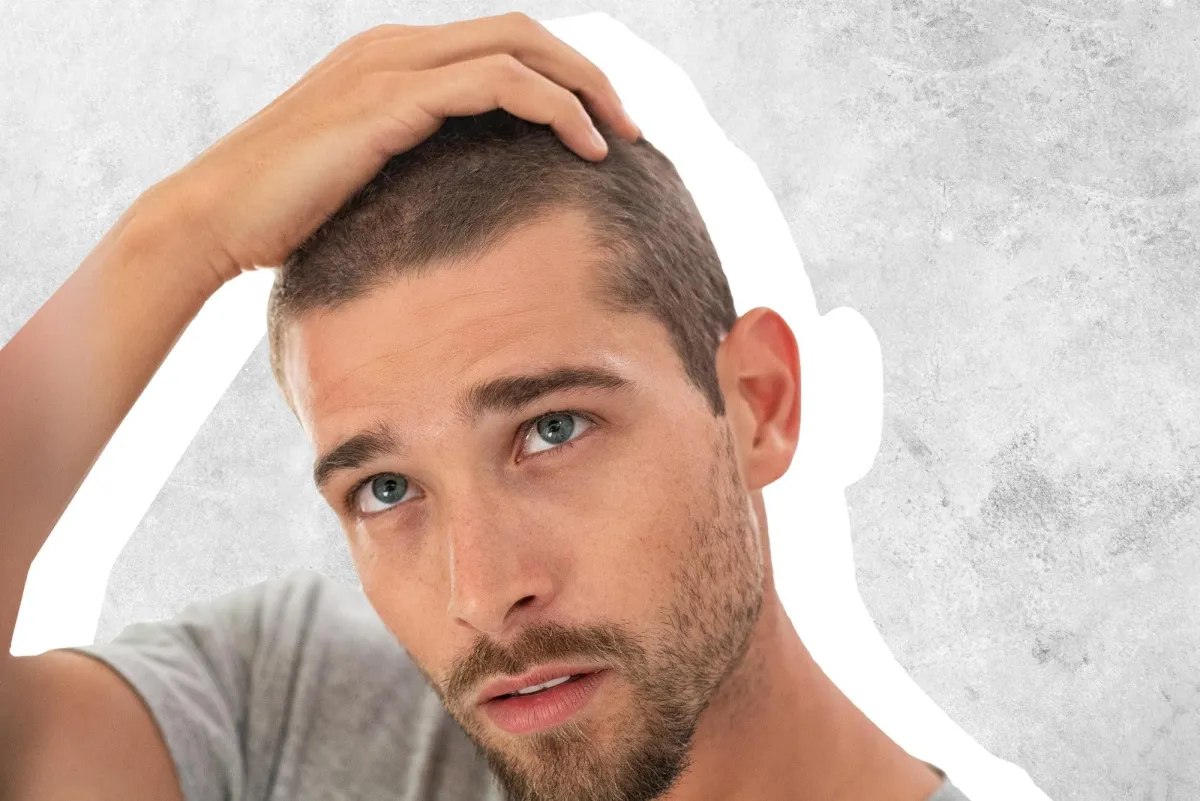
Losing your hair is never a good feeling, most men tend to feel self-conscious about it. Some men decide to completely shave off their heads or constantly wear a hat. One of the most common insecurities men face is hair thinning; for some men, it starts as early as in their 20s. The loss of confidence really starts to affect the way men do their hair and the types of hair cuts they get. Men start to worry about how they will be perceived by friends, family, and colleagues. Hair thinning should not be the cause of self distraughtness, and it should not limit men to have to continuously cover their heads. CADMEN Barbershop has compiled a list of the top 5 best haircuts for men experiencing early hair loss.

How Barbers Read a Client in the Consultation
How Barbers Read a Client in the Consultation
Before a tool touches the hair, an experienced barber has already collected a significant amount of information. Most clients think the consultation is a formality before the cut starts. It is not. Here is what is actually being assessed in those first minutes and why it matters for the result.
Hair Texture and Growth Direction
A barber runs their fingers through the hair and observes how it moves, how it holds a position, and where it naturally falls. They are identifying: the thickness of individual strands (fine, medium, coarse), the hair's natural movement pattern (straight, wavy, curly, coily), and where cowlicks, whorls, or directional irregularities exist. Every cut needs to account for these. A cowlick at the crown changes how the top section will behave at any length. Fine hair requires different product and length decisions than coarse hair. These are not discovered after the cut; they are assessed before it.
Face Shape
Different face shapes respond differently to cut elements. A high-contrast skin fade on a round face emphasizes the round shape; a more gradual fade reduces it. A quiff on an already-long face adds height that may not be ideal. An experienced barber observes the face shape in the consultation and adjusts their recommendation accordingly. They are not following a rigid rule system, they are making a judgment call about what elements of the requested cut will look best on this specific face and what to modify or avoid.
The Client's Prior Cut History
How long ago was the last cut? What did it look like growing out? Is the current length a desired length or grown-out from something shorter? These questions place the current state of the hair in context. A client who says "I get this cut every 5 weeks and it's grown out a bit" is giving the barber useful calibration. A first-time client with no prior cut reference requires the barber to do more assessment work.
What the Client Actually Wants
A good barber listens for the gap between what a client says and what they mean. "Just clean it up" often means something more specific than it sounds. "A little shorter" varies significantly by client. A photo brings both parties to a shared visual reference point. Asking what the client does not want is as useful as asking what they do want.
CADMEN Training
CADMEN Barber Academy curriculum covers client consultation as a core skill. academy.cadmen.ca/in-person-training.
Frequently Asked Questions
What should you tell a barber at the start of a cut?
The most useful information you can give a barber at the start is: the outcome you want (specific length references, a style name, a photo), what you do not want (if there is a previous cut result you are specifically trying to avoid), and any specific hair challenges you have encountered. The outcome information: "I want a mid skin fade on the sides, about 2 inches on top, textured" is complete and gives the barber all the key parameters. "Short on the sides and long on top" is too vague to be useful alone, every barber will interpret "short" and "long" differently. The photo: if you have a reference photo, show it at the start, not during the cut. A photo shown mid-cut means the barber has already committed to certain length decisions that may not match the photo. The "do not want" information is underused. Men who have had unsatisfying cuts before often know what went wrong, the fade was too high, the top was too short, the neckline was squared when they wanted it rounded. This information prevents the barber from repeating the same mistake with similar intent. Hair challenges: if you have a strong cowlick, very fine hair that lies flat, or a growth pattern that has caused problems in previous cuts, mentioning it before the cut gives the barber the information to account for it. They will discover it themselves, but earlier awareness means earlier strategy rather than mid-cut adjustment. The one thing not useful to communicate: "whatever you think." This does not give the barber enough information to make a confident decision on your behalf, especially on a first visit. A barber who has cut your hair for years can make this call; a barber who has never seen your head needs actual parameters.
Why do barbers look at the back and sides before starting and what are they checking?
When a barber moves around the chair and examines the back and sides of your head before starting, they are gathering information that is not visible from the front. The specific assessments they are making: neckline shape. The natural hairline at the nape varies significantly between people. Some have a natural V-shape, some have a W-shape (double point), some have a wide flat neckline, and some have a very uneven or irregular hairline. The barber is deciding whether to follow the natural neckline, create a clean straight neckline by outlining, or follow the natural line but clean up its edges. This decision affects the entire back of the cut. Head shape at the back: the occipital prominence (the bump at the back of the skull) affects how the back of a fade resolves. A prominent occipital bone creates natural volume at the back that affects how shorter guard lengths sit. A flat back of the head requires the barber to manage the transition differently. Cowlicks at the crown: the crown area is visible from behind and above. Whorls or cowlicks here affect how the top of the head will behave at any length. Identifying them before starting allows the barber to adjust where they start cutting the top section and how much length to leave around the cowlick. Previous cut lines: if the hair has grown out from a previous cut, the ghost of the original cut line is often visible at the back. Seeing where the previous fade was set tells the barber whether to maintain that height or adjust it. Grain direction: the hair on the back of the head often grows in a different direction than the top. The barber checks the direction so they know which way to move the clippers for each section of the back.
What does a barber mean when they say your hair has "a lot of texture" or "is very fine"?
These terms describe two different properties that are often confused: texture (which refers to the individual strand thickness and surface quality) and density (which refers to how many hairs per square inch are present). Understanding the difference helps when a barber makes recommendations based on these properties. Texture describes what an individual strand is like. Fine hair: thin individual strands, smooth surface, low weight. Fine hair lies flat easily, has trouble holding volume, and shows the scalp more readily at any given density level. Coarse hair: thick individual strands, rougher surface, substantial weight. Coarse hair can be harder to cut cleanly, holds shape well, and may have more bulk than desired at longer lengths. Medium texture: between the two. The majority of men fall in this range. Density describes the number of hairs present. High density: many hairs per square inch, appearing thick regardless of individual strand texture. Low density: fewer hairs per square inch, appearing thin regardless of individual strand texture. A person can have fine hair (thin individual strands) at high density (many of them), this appears full but struggles to hold volume because individual strands are light. A person can have coarse hair (thick strands) at low density (few of them), this can create an irregular, patchy appearance. What barbers are telling you: when a barber says "you have very fine hair," they are typically telling you that the cut recommendations change, shorter lengths, lightweight products, avoiding too much length that will just lie flat under its own weight. When they say "you have a lot of texture," they may be referring to high density, coarse strands, natural wave pattern, or some combination. Asking "what does that mean for the cut?" is a reasonable follow-up that most barbers will answer directly.
Related Reading From CADMEN Barber Academy
- The Barber Consultation: What to Ask Before Every Cut
- Barber Client Consultation Tips: Getting the Information You Need Before the First Cut
- How to Do a Client Consultation Before Every Haircut
- The Barbershop Consultation: How to Get the Cut Right Every Time
- Barber Client Communication: How to Run a Consultation That Produces the Right Haircut Every Time
- How to Choose a Barber in Toronto for the Best Fade

5 Best Haircuts for Men with
Early Hair Thinning
Losing your hair is never a good feeling, most men tend to feel self-conscious about it. Some men decide to completely shave off their heads or constantly wear a hat. One of the most common insecurities men face is hair thinning; for some men, it starts as early as in their 20s. The loss of confidence really starts to affect the way men do their hair and the types of hair cuts they get. Men start to worry about how they will be perceived by friends, family, and colleagues. Hair thinning should not be the cause of self distraughtness, and it should not limit men to have to continuously cover their heads. CADMEN Barbershop has compiled a list of the top 5 best haircuts for men experiencing early hair loss.


For any request, please contact us at info@cadmen.ca