
Barber Tips & Tricks
Follow us for the latest barber techniques and tips
Barber Tips & Tricks
Follow us for the latest barber techniques and tips
Top 7 Reasons Why Your Clients
Aren't Returning
Stay Ahead in the Barbering Game: Nurturing
Lifelong Clientele
You might have come across the saying “give a client a good cut at a reasonable price, and they'll be yours for life.” Unfortunately in reality this is not always the case. That’s where we come in! Check out some of the reasons why your clients may not be returning, whether they were long-term customers or a first-time appointment, below.

Top 7 Reasons Why Your Clients
Aren't Returning
Stay Ahead in the Barbering Game: Nurturing
Lifelong Clientele
You might have come across the saying “give a client a good cut at a reasonable price, and they'll be yours for life.” Unfortunately in reality this is not always the case. That’s where we come in! Check out some of the reasons why your clients may not be returning, whether they were long-term customers or a first-time appointment, below.
Career in Mobile Barbering: Key
Things You Need to Know about
While most barbers work in physical barbershops or hair salons, there are a growing number of barbers who work on-call. What does it mean to be a mobile barber? What are their primary responsibilities? Where to find them? In this blog, we will explain some key terms you should know about mobile barbering and how you can start a new career in it.

Career in Mobile Barbering: Key
Things You Need to Know about
While most barbers work in physical barbershops or hair salons, there are a growing number of barbers who work on-call. What does it mean to be a mobile barber? What are their primary responsibilities? Where to find them? In this blog, we will explain some key terms you should know about mobile barbering and how you can start a new career in it.
Top 4 Ways for Barbers to
Promote Themselves
Marketing is key. Knowing how to market yourself as a barber can be the difference between having 5 to 20 clients a day. If you are interested in boosting the number of your customers and furthering your advertising skills, read the list below with four ways to promote yourself as a barber.

Top 4 Ways for Barbers to
Promote Themselves
Marketing is key. Knowing how to market yourself as a barber can be the difference between having 5 to 20 clients a day. If you are interested in boosting the number of your customers and furthering your advertising skills, read the list below with four ways to promote yourself as a barber.
5 Tips for Social Media Content
Creating as a Barber
It is next to impossible to find someone who is not on social media today. More than just a tool for connection, social media is key helping barbers market themselves and promote their names and skills. If you want to up your barber game quickly, here are five tips on how to promote content online that you don't want to miss out on.

5 Tips for Social Media Content
Creating as a Barber
It is next to impossible to find someone who is not on social media today. More than just a tool for connection, social media is key helping barbers market themselves and promote their names and skills. If you want to up your barber game quickly, here are five tips on how to promote content online that you don't want to miss out on.
5 Best Haircuts for Men with
Early Hair Thinning
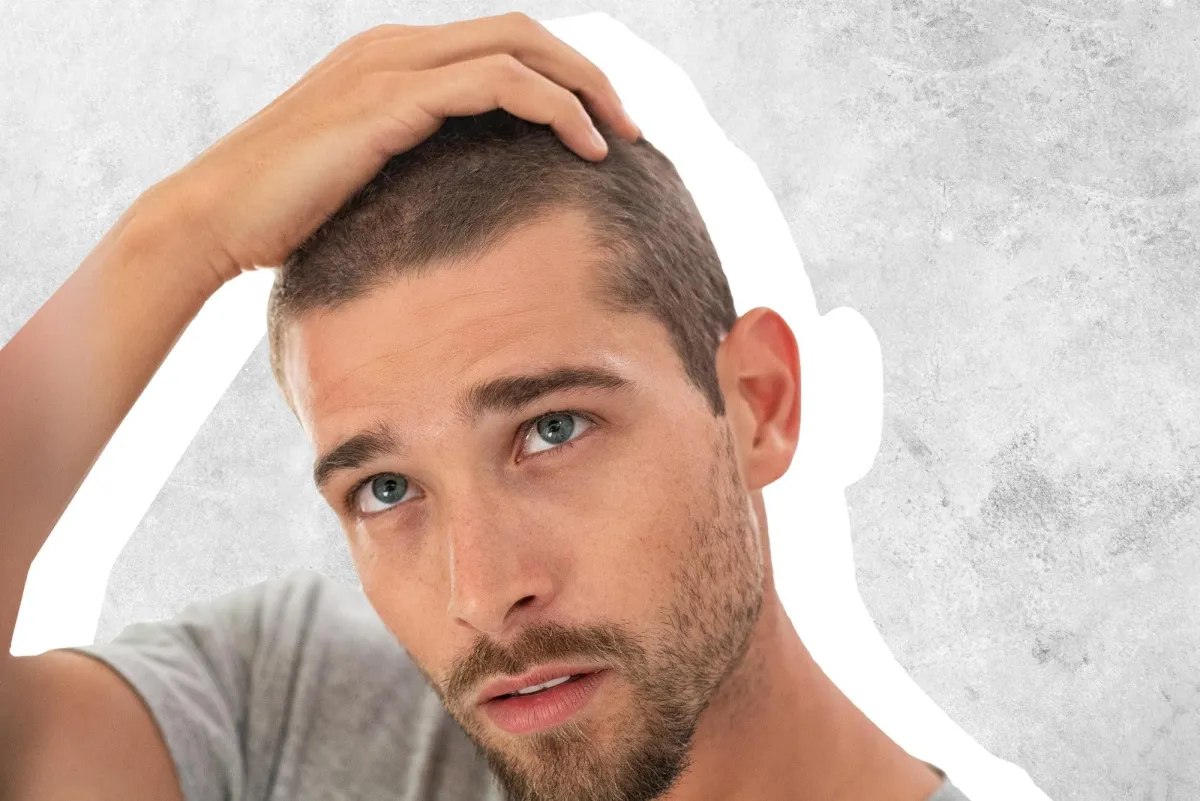
Losing your hair is never a good feeling, most men tend to feel self-conscious about it. Some men decide to completely shave off their heads or constantly wear a hat. One of the most common insecurities men face is hair thinning; for some men, it starts as early as in their 20s. The loss of confidence really starts to affect the way men do their hair and the types of hair cuts they get. Men start to worry about how they will be perceived by friends, family, and colleagues. Hair thinning should not be the cause of self distraughtness, and it should not limit men to have to continuously cover their heads. CADMEN Barbershop has compiled a list of the top 5 best haircuts for men experiencing early hair loss.

The Ivy League Haircut: Classic, Versatile, and Still Relevant
The Ivy League Haircut: Classic, Versatile, and Still Relevant
The Ivy League haircut has been a standard at barbershops for decades because it solves a problem that newer styles often do not: it is appropriate everywhere. Business meetings, formal events, casual weekends. The cut adapts to context without needing a different style for each. Here is what it is and why it still works.
What the Ivy League Haircut Is
The Ivy League is a short to medium cut with a clear side part. The top section has enough length to comb, typically 1.5 to 3 inches, while the sides and back are cut shorter with a taper or low fade. The defining feature is the ability to part and comb the hair, creating a clean, groomed appearance without requiring styling product for structure.
It sits between the crew cut (too short to comb) and the classic business cut (longer on top, potentially requiring more product). The Ivy League occupies the middle ground where the cut is short enough to look professional and tidy on its own but long enough to style when the occasion calls for it.
How It Differs from Similar Cuts
The crew cut has the same short sides but the top is too short to part or style significantly. The Ivy League top length is what distinguishes it.
The classic side part can be similar but the Ivy League specifically implies a shorter overall length than most side part styles. A man wearing a side part with 4 to 5 inches on top has a different cut from the Ivy League, which keeps the top at 1.5 to 3 inches.
The taper cut is a technique used in the Ivy League at the sides and back, but a taper can be applied to many styles. The Ivy League specifically combines the taper sides with the comb-ready top length and part.
Why It Remains Relevant
Trend cycles move through new styles, but professional environments consistently favor cuts that communicate control and intention. The Ivy League has always been that cut. It was popular in the 1950s, has maintained consistent presence since, and has never read as dated in the way that specific decade-associated styles do.
The practical advantage is real: the cut works without styling, looks clean growing out, and requires less frequent maintenance than shorter faded cuts because the taper does not disappear as visibly as a high fade.
How to Style It
Without product: combed with a natural part and left to air dry, the Ivy League looks clean and intentional. The comb-through is the minimum.
With product: a small amount of water-based pomade or light wax combed through the top creates a polished, groomed appearance. The side part becomes more defined. For a more casual look, a light cream worked through with fingers rather than a comb creates texture and movement while keeping the general direction of the part.
Frequently Asked Questions
Is the Ivy League the same as a Harvard Clip?
Yes. Harvard Clip, Ivy League, Princeton, and Yale cut are all names for the same style with minor regional variations. All refer to a short, side-parted, taper-sided cut with a comb-ready top length. The specific name varies by barbershop and region but the cut is the same.
What face shape suits the Ivy League best?
Oval and oblong face shapes naturally suit the Ivy League because the cut does not aggressively add or subtract width. For round faces, the side part adds visual asymmetry that can work well. For square faces, the clean lines of the Ivy League complement the angular jaw. There is no face shape that the Ivy League is particularly wrong for.
How often does the Ivy League need cutting?
Every 4 to 6 weeks. The taper at the sides grows out more slowly than a high fade and the top length at 1.5 to 3 inches has room to grow before it loses the proportions of the style. This is one of the practical advantages of the cut over high-contrast faded styles.
Can the Ivy League work without a side part?
The side part is the signature element of the classic Ivy League. Without a part, you are closer to a textured crop or a generic short top, which is a different style. The Ivy League is specifically the combination of the side part, comb-ready length, and taper sides. If a part does not suit someone, a crew cut or textured crop with similar lengths but without the part direction is a closer alternative.
What product should I use for the Ivy League?
A water-based pomade or a light wax for a polished finish. A light cream for a softer, less structured result. The choice depends on whether you want the appearance to be groomed and formal or relaxed and natural. Most men using the Ivy League in professional settings use a medium-hold water-based pomade applied with a comb for a clean result.
Related Reading From CADMEN Barber Academy
- The Ivy League Haircut: What It Is and How It Differs From a Crew Cut
- The Ivy League Haircut: Professional and Easy to Wear
- The Ivy League Cut: What It Is, Who It Works For, and How to Ask for It
- Ivy League Haircut for Men: What It Is and How to Get It
- The Ivy League Haircut: What It Is and Why It Stays Relevant
- The Ivy League Haircut: What It Is and When to Wear It
Build your cutting skills
If you want to learn barbering techniques, explore hands-on training at CADMEN Barber Academy in Mississauga and ask about the class that fits your experience.
Want to learn to cut an Ivy League cut yourself? CADMEN Barber Academy teaches cutting hands-on, with an educator beside you. See the barber academy in Mississauga or view in-person classes and send an enquiry.
Watch the free Barbering for Beginners playlist on YouTube.

5 Best Haircuts for Men with
Early Hair Thinning
Losing your hair is never a good feeling, most men tend to feel self-conscious about it. Some men decide to completely shave off their heads or constantly wear a hat. One of the most common insecurities men face is hair thinning; for some men, it starts as early as in their 20s. The loss of confidence really starts to affect the way men do their hair and the types of hair cuts they get. Men start to worry about how they will be perceived by friends, family, and colleagues. Hair thinning should not be the cause of self distraughtness, and it should not limit men to have to continuously cover their heads. CADMEN Barbershop has compiled a list of the top 5 best haircuts for men experiencing early hair loss.


For any request, please contact us at info@cadmen.ca