
Barber Tips & Tricks
Follow us for the latest barber techniques and tips
Barber Tips & Tricks
Follow us for the latest barber techniques and tips
Top 7 Reasons Why Your Clients
Aren't Returning
Stay Ahead in the Barbering Game: Nurturing
Lifelong Clientele
You might have come across the saying “give a client a good cut at a reasonable price, and they'll be yours for life.” Unfortunately in reality this is not always the case. That’s where we come in! Check out some of the reasons why your clients may not be returning, whether they were long-term customers or a first-time appointment, below.

Top 7 Reasons Why Your Clients
Aren't Returning
Stay Ahead in the Barbering Game: Nurturing
Lifelong Clientele
You might have come across the saying “give a client a good cut at a reasonable price, and they'll be yours for life.” Unfortunately in reality this is not always the case. That’s where we come in! Check out some of the reasons why your clients may not be returning, whether they were long-term customers or a first-time appointment, below.
Career in Mobile Barbering: Key
Things You Need to Know about
While most barbers work in physical barbershops or hair salons, there are a growing number of barbers who work on-call. What does it mean to be a mobile barber? What are their primary responsibilities? Where to find them? In this blog, we will explain some key terms you should know about mobile barbering and how you can start a new career in it.

Career in Mobile Barbering: Key
Things You Need to Know about
While most barbers work in physical barbershops or hair salons, there are a growing number of barbers who work on-call. What does it mean to be a mobile barber? What are their primary responsibilities? Where to find them? In this blog, we will explain some key terms you should know about mobile barbering and how you can start a new career in it.
Top 4 Ways for Barbers to
Promote Themselves
Marketing is key. Knowing how to market yourself as a barber can be the difference between having 5 to 20 clients a day. If you are interested in boosting the number of your customers and furthering your advertising skills, read the list below with four ways to promote yourself as a barber.

Top 4 Ways for Barbers to
Promote Themselves
Marketing is key. Knowing how to market yourself as a barber can be the difference between having 5 to 20 clients a day. If you are interested in boosting the number of your customers and furthering your advertising skills, read the list below with four ways to promote yourself as a barber.
5 Tips for Social Media Content
Creating as a Barber
It is next to impossible to find someone who is not on social media today. More than just a tool for connection, social media is key helping barbers market themselves and promote their names and skills. If you want to up your barber game quickly, here are five tips on how to promote content online that you don't want to miss out on.

5 Tips for Social Media Content
Creating as a Barber
It is next to impossible to find someone who is not on social media today. More than just a tool for connection, social media is key helping barbers market themselves and promote their names and skills. If you want to up your barber game quickly, here are five tips on how to promote content online that you don't want to miss out on.
5 Best Haircuts for Men with
Early Hair Thinning
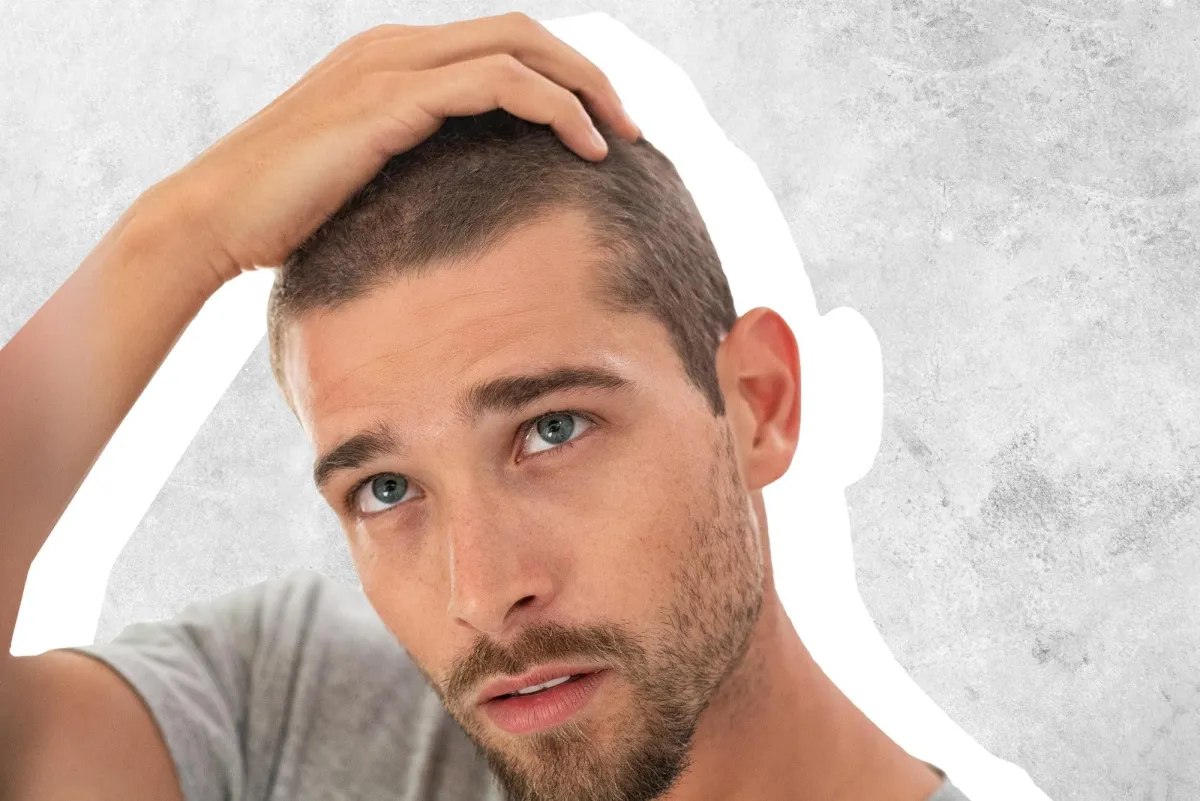
Losing your hair is never a good feeling, most men tend to feel self-conscious about it. Some men decide to completely shave off their heads or constantly wear a hat. One of the most common insecurities men face is hair thinning; for some men, it starts as early as in their 20s. The loss of confidence really starts to affect the way men do their hair and the types of hair cuts they get. Men start to worry about how they will be perceived by friends, family, and colleagues. Hair thinning should not be the cause of self distraughtness, and it should not limit men to have to continuously cover their heads. CADMEN Barbershop has compiled a list of the top 5 best haircuts for men experiencing early hair loss.

Thinning Shears: What They Do and When Barbers Use Them
Thinning Shears: What They Do and When Barbers Use Them
Thinning shears are scissors with one or both blades serrated (notched with evenly spaced teeth) rather than smooth. When a thinning shear closes, the teeth remove some of the hair in each cut while leaving other hairs at the original length. The net effect: reduced bulk and density in a section without visibly removing overall length the way a blunt cut would.
Why They Are Used
Thinning shears address two problems: excess bulk (hair that is too dense and heavy, making the cut appear shapeless) and the blunt, solid ends that can result from straight scissor cuts on certain hair types. For men with very thick, coarse hair, thinning shears remove the weight that makes the hair sit flat and heavy. For men with medium hair that has a "helmet" or puffed-out appearance at certain lengths, thinning creates movement and airiness in the section.
What They Do Not Do
Thinning shears do not significantly reduce length. They are not the right tool if you want the hair shorter, that requires regular scissors or clippers. They also do not work well on fine or thin hair, removing density from hair that is already low density creates gaps and sparse sections.
Thinning Shears vs. Texturizing Shears
These terms are used interchangeably in some contexts but refer to different tools. Thinning shears have finer, more closely spaced teeth and are designed specifically for removing bulk. Texturizing shears have wider-spaced, larger teeth and remove more hair per cut, creating more pronounced texture. Both are used for similar purposes but produce different degrees of effect.
CADMEN Training
Scissor technique and advanced finishing are core to CADMEN's barbering curriculum. academy.cadmen.ca/in-person-training.
Frequently Asked Questions
What do thinning shears do to hair?
Thinning shears selectively remove some hairs from a section while leaving others at full length. The serrated blade (one blade has evenly spaced teeth; the other is typically a straight blade) functions as a comb that cuts only the hairs that fall between its teeth. When the shears close, roughly 30 to 50 percent of the hairs in the section are cut at that point; the remaining hairs pass through the spaces in the teeth uncut and remain at full length. The effect on the hair section: reduced density, fewer hairs per section means less overall volume and bulk. This is useful for hair that is too dense and heavy for the desired cut profile. Reduced weight, the section becomes lighter, which allows it to move more freely. Very dense hair can sit flat under its own weight; thinning allows the shorter underlayer to support the outer layer with less overall mass pressing down. Improved movement and texture, the mix of full-length and shorter hairs in the section creates a more varied texture that moves more naturally than a uniform blunt section. This is particularly beneficial for cuts where organic movement and texture are part of the style. The visual result from outside the head: the overall length appears unchanged because the longest hairs remain at full length. From a distance, a thinned section looks the same length as an unthinned section. The difference is in how it sits, less bulky, less rigid, more natural movement. Who benefits: men with thick, heavy, coarse hair who want more movement without losing length. Men with dense hair that creates a "box" or "mushroom" silhouette at certain lengths. Who does NOT benefit: men with fine or thin hair (thinning already sparse hair creates visible gaps). Men who want the actual length reduced (use regular scissors or clippers instead).
Will thinning shears damage hair?
Thinning shears do not damage hair when used correctly by a skilled barber, but improper use can create problems. What correct use looks like: thinning shears are used on dry or slightly damp hair (not soaking wet, the weight of wet hair makes accurate assessment of density difficult). They are used in the mid-section and ends of the hair, not near the roots. Using thinning shears at the scalp level creates very short, disconnected hairs that can stick up uncontrollably when the hair dries. The barber uses them judiciously, checking after each pass and removing only as much density as is needed to achieve the desired effect, not over-thinning in a single session. What can go wrong: over-thinning, removing too much density creates thin, sparse sections. This is permanent until the thinned hairs grow back to full length, which takes months. A barber who over-thins hair does real visible damage that cannot be quickly corrected. Using them too close to the scalp, creating stubby short hairs at the root level that stand up and create the appearance of damaged, flyaway hair throughout the growth cycle. Using them on fine hair, thinning already low-density hair creates visible gaps that look damaged. The "damaged" look from thinning shears: most clients who feel their hair was damaged by thinning shears either had too much removed, had the shears used too close to the roots, or had fine hair that was not a good candidate for the tool. In skilled hands on appropriate hair types, thinning shears are a routine finishing tool that produces a better result than scissors alone for dense, heavy hair.
Should I ask my barber to use thinning shears?
Whether to ask for thinning shears depends on your hair type and what problem you want to solve. You should ask for thinning shears (or they should be part of the service) if: your hair is very thick and heavy and consistently appears bulky at the sides or on top regardless of the cut. You have dense hair that "puffs" out at certain lengths or that holds no movement, it just sits as a solid mass. You want the overall length to stay the same but want the hair to move more naturally and have more texture. You have a specific section that consistently looks too heavy and drags the cut out of proportion. You should NOT ask for thinning shears if: your hair is fine or thin. Removing more density is counterproductive. You want the actual length of the hair reduced, thinning shears will not achieve this the way scissors or clippers do. You want very precise, uniform texture throughout the cut, thinning shears create a randomized texture that does not produce uniform results. The better approach: rather than prescribing the tool, describe the problem to your barber. "My hair is very thick and it ends up looking boxy on the sides after a few weeks" or "the top section is so heavy it just lies flat, I want more movement" gives your barber the information to decide whether thinning shears or another technique is the right solution. An experienced barber will reach for thinning shears when appropriate without needing to be asked if you describe the problem accurately.
Related Reading From CADMEN Barber Academy
- Men's Hair Thinning: What Causes It and What You Can Actually Do About It
- Men's Hair Thinning: What to Tell Your Barber and What Actually Helps
- Barber Shears: How to Choose the Right Scissors and What the Differences Actually Mean
- Cutting Hair on Clients with Thinning Hair: What Works and What Makes It Worse
- How to Cut Hair That Is Thinning: Barber Techniques and Advice
- Thinning Hair at the Barbershop: What Barbers Actually Do

5 Best Haircuts for Men with
Early Hair Thinning
Losing your hair is never a good feeling, most men tend to feel self-conscious about it. Some men decide to completely shave off their heads or constantly wear a hat. One of the most common insecurities men face is hair thinning; for some men, it starts as early as in their 20s. The loss of confidence really starts to affect the way men do their hair and the types of hair cuts they get. Men start to worry about how they will be perceived by friends, family, and colleagues. Hair thinning should not be the cause of self distraughtness, and it should not limit men to have to continuously cover their heads. CADMEN Barbershop has compiled a list of the top 5 best haircuts for men experiencing early hair loss.


For any request, please contact us at info@cadmen.ca