
Barber Tips & Tricks
Follow us for the latest barber techniques and tips
Barber Tips & Tricks
Follow us for the latest barber techniques and tips
Top 7 Reasons Why Your Clients
Aren't Returning
Stay Ahead in the Barbering Game: Nurturing
Lifelong Clientele
You might have come across the saying “give a client a good cut at a reasonable price, and they'll be yours for life.” Unfortunately in reality this is not always the case. That’s where we come in! Check out some of the reasons why your clients may not be returning, whether they were long-term customers or a first-time appointment, below.

Top 7 Reasons Why Your Clients
Aren't Returning
Stay Ahead in the Barbering Game: Nurturing
Lifelong Clientele
You might have come across the saying “give a client a good cut at a reasonable price, and they'll be yours for life.” Unfortunately in reality this is not always the case. That’s where we come in! Check out some of the reasons why your clients may not be returning, whether they were long-term customers or a first-time appointment, below.
Career in Mobile Barbering: Key
Things You Need to Know about
While most barbers work in physical barbershops or hair salons, there are a growing number of barbers who work on-call. What does it mean to be a mobile barber? What are their primary responsibilities? Where to find them? In this blog, we will explain some key terms you should know about mobile barbering and how you can start a new career in it.

Career in Mobile Barbering: Key
Things You Need to Know about
While most barbers work in physical barbershops or hair salons, there are a growing number of barbers who work on-call. What does it mean to be a mobile barber? What are their primary responsibilities? Where to find them? In this blog, we will explain some key terms you should know about mobile barbering and how you can start a new career in it.
Top 4 Ways for Barbers to
Promote Themselves
Marketing is key. Knowing how to market yourself as a barber can be the difference between having 5 to 20 clients a day. If you are interested in boosting the number of your customers and furthering your advertising skills, read the list below with four ways to promote yourself as a barber.

Top 4 Ways for Barbers to
Promote Themselves
Marketing is key. Knowing how to market yourself as a barber can be the difference between having 5 to 20 clients a day. If you are interested in boosting the number of your customers and furthering your advertising skills, read the list below with four ways to promote yourself as a barber.
5 Tips for Social Media Content
Creating as a Barber
It is next to impossible to find someone who is not on social media today. More than just a tool for connection, social media is key helping barbers market themselves and promote their names and skills. If you want to up your barber game quickly, here are five tips on how to promote content online that you don't want to miss out on.

5 Tips for Social Media Content
Creating as a Barber
It is next to impossible to find someone who is not on social media today. More than just a tool for connection, social media is key helping barbers market themselves and promote their names and skills. If you want to up your barber game quickly, here are five tips on how to promote content online that you don't want to miss out on.
5 Best Haircuts for Men with
Early Hair Thinning
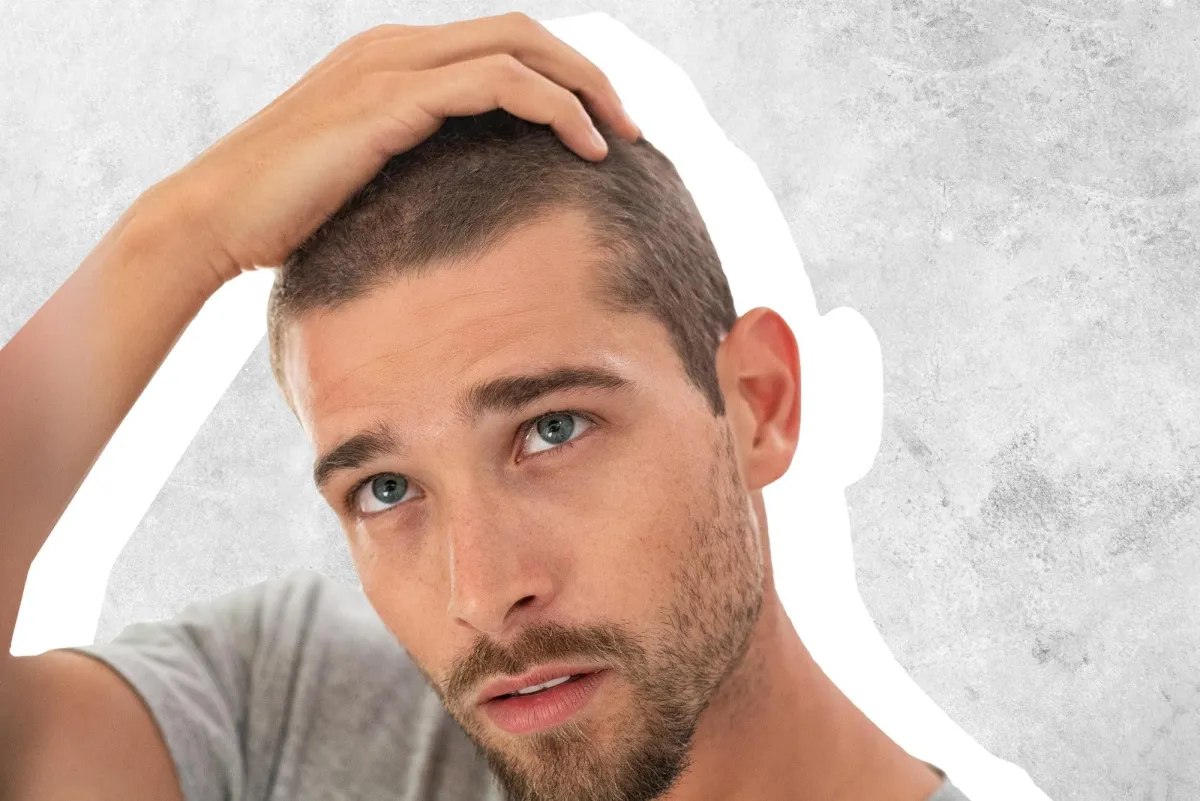
Losing your hair is never a good feeling, most men tend to feel self-conscious about it. Some men decide to completely shave off their heads or constantly wear a hat. One of the most common insecurities men face is hair thinning; for some men, it starts as early as in their 20s. The loss of confidence really starts to affect the way men do their hair and the types of hair cuts they get. Men start to worry about how they will be perceived by friends, family, and colleagues. Hair thinning should not be the cause of self distraughtness, and it should not limit men to have to continuously cover their heads. CADMEN Barbershop has compiled a list of the top 5 best haircuts for men experiencing early hair loss.
Men's Hair Thinning: What Causes It and What You Can Actually Do About It
Men's Hair Thinning: What Causes It and What You Can Actually Do About It
Hair thinning is the gradual reduction of hair density, either from individual strands becoming thinner in diameter, fewer strands growing, or both. It is different from rapid shedding and different from pattern baldness, though it can be an early indicator of either. Understanding what is causing the thinning determines what intervention, if any, will have an effect.
Androgenetic Alopecia (Male Pattern Hair Loss)
The most common cause of hair thinning in men. Caused by a genetic sensitivity to dihydrotestosterone (DHT), a hormone derived from testosterone that shrinks hair follicles over time. The follicles produce progressively thinner, shorter strands until they stop producing hair. This typically follows the recognized pattern: recession at the temples and thinning at the crown. It is progressive without intervention. FDA-approved treatments that have evidence for slowing or reversing this: minoxidil (topical, applied to the scalp) and finasteride (oral, prescription). Both work by different mechanisms and are often used together.
Nutritional Deficiency
Deficiencies in iron, ferritin, vitamin D, zinc, and B vitamins have been associated with increased hair shedding and reduced growth. A blood test can confirm whether a deficiency exists. If confirmed, correcting the deficiency typically improves shedding within 3 to 6 months.
Stress and Telogen Effluvium
Significant physical or emotional stress can push a large number of hair follicles into the resting phase simultaneously, resulting in noticeable shedding 2 to 3 months after the stressor. This is typically temporary, hair density recovers once the stressor resolves.
What a Barber Can Do
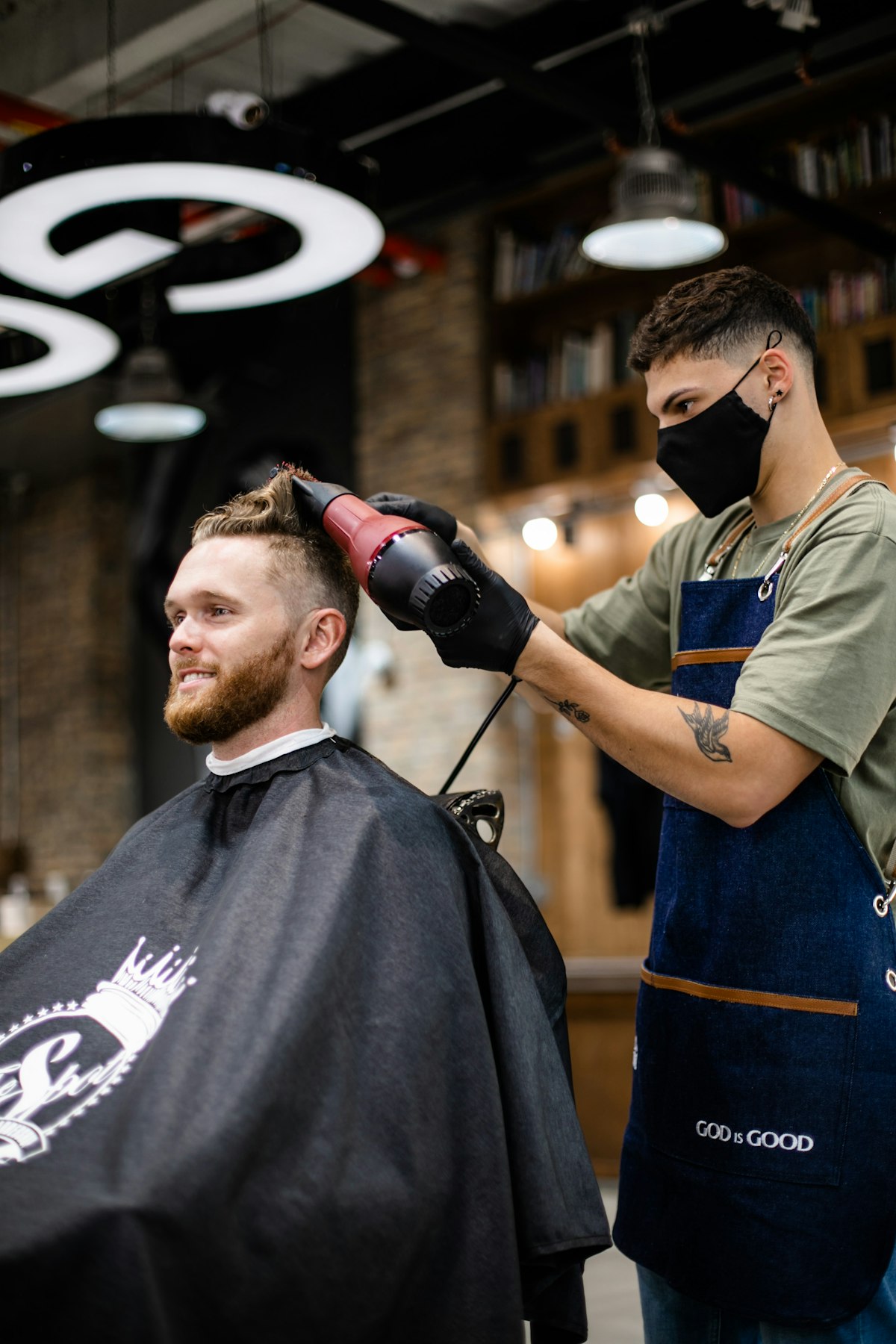
A skilled barber cannot reverse thinning but can cut strategically to minimize its visual impact. Length, texture techniques, and the placement of the fade or taper can all affect how thin areas appear. This is worth discussing at the consultation.
CADMEN Training
Scalp assessment and cutting for thin hair are covered at CADMEN Barber Academy. academy.cadmen.ca/in-person-training.
Frequently Asked Questions
At what age does men's hair start thinning?
Male pattern hair loss can begin at any age after puberty, though it becomes more common and more pronounced as men age. The general pattern by age range: 20s: approximately 20% of men show early signs of male pattern hair loss by age 20. This typically presents as slight recession at the temples or a slight reduction in density at the crown that the man may not notice initially. 30s: approximately 30% of men have some degree of visible hair loss by age 30. For many men, this is when the recession or thinning becomes obvious enough to register consciously. 40s: approximately 40-50% of men show significant hair loss by their 40s. 50+: by age 50, the majority of men show some degree of pattern hair loss. These are rough population figures, not predictions for any individual. The rate and extent of progression varies enormously based on genetics. Men whose fathers and maternal grandfathers both experienced significant hair loss have a higher probability of following a similar pattern, though it is not deterministic. Early signs to watch for: a gradually widening part in the hair, recession at the temples that is more pronounced than in previous years, increased visibility of the scalp at the crown when the hair is under a light, or noticeable increase in hair shedding on the shower floor or pillow. Starting treatment earlier is more effective than starting later, because androgenetic alopecia progressively destroys follicles over time. Follicles that are already dead cannot be revived by any currently available treatment. Treatments like minoxidil and finasteride work best when there is still active follicle function to preserve.
Does wearing hats cause hair loss?
No. Wearing hats does not cause hair loss. This is a persistent myth with no credible evidence supporting it. The mechanism people suggest is that hats cut off blood flow to the scalp or "suffocate" the follicles, neither of which is how hair loss actually works. Follicle nourishment comes from blood supply within the scalp tissue, not from the external surface. A hat sitting on top of the head does not meaningfully restrict blood flow to follicles. Male pattern hair loss is caused by genetic sensitivity to DHT, not external pressure or coverage of the scalp. Men who wear hats consistently do not show higher rates of hair loss than men who do not. Where the confusion may originate: men who are experiencing early hair loss often start wearing hats more frequently to conceal the thinning. An observer might notice a connection between hat-wearing and hair loss, but the causation is reversed. The hair loss came first; the hat-wearing was a response to it. What hats can cause: excessive friction from a hat that fits too tightly or is worn for very long periods can cause localized hair breakage at the point of contact. This is breakage of existing strands from physical stress, not follicle damage or hair loss. It is also minor and temporary. Tight hairstyles that apply sustained traction to the follicle itself (very tight braid, cornrow, or ponytail worn daily over years) can cause a form of hair loss called traction alopecia, but this requires sustained mechanical tension on the follicle, which a normal-fitting hat does not produce.
What haircuts are best for thinning hair?
The goal when cutting thinning hair is to minimize the contrast between areas of higher and lower density, and to create an overall appearance that looks full and intentional rather than showing gaps or scalp through the hair. The principles barbers apply for thinning hair: shorter overall length. Long thin hair can look flat and stringy because the strands separate and the scalp shows through. Short hair, because of its closer proximity to the scalp, appears denser. A fade or close taper reduces the density gradually from top to sides rather than creating a high-contrast line that draws attention to specific areas. Texture throughout the top section. Texturizing cuts (using scissors to remove weight and create movement in the strands) make hair appear fuller and less flat. Flat, heavy hair on a thinning scalp looks sparser than the same hair with movement and texture. Avoiding hard parts. A hard part (shaved or very sharply defined) draws the eye directly to a line, which can highlight thinning near the part. Softer, comb-defined parts are less attention-drawing. For receeding hairlines specifically: a low, natural-looking fade at the front hairline softens the appearance of the recession rather than drawing a hard line around it. Some men embrace the recession by taking the front very short, which removes the contrast between the receded hairline and the remaining hair. The buzz cut route: for men with significant diffuse thinning across the top, a short all-over cut (guard 2-4 all over) is often the most flattering option because it eliminates the density differential between thinning and non-thinning sections. The scalp is uniformly visible, which reads as a style choice rather than a medical condition. Discussing this directly with your barber is the most effective approach. Tell them where the thinning is most visible, what your goal is (maximize apparent fullness versus minimize maintenance), and let them recommend accordingly.
Related Reading From CADMEN Barber Academy
- Men's Hair Thinning: What to Tell Your Barber and What Actually Helps
- Cutting Hair on Clients with Thinning Hair: What Works and What Makes It Worse
- How to Cut Hair That Is Thinning: Barber Techniques and Advice
- Thinning Hair at the Barbershop: What Barbers Actually Do
- Men's Thinning Hair: What Barbershop Techniques Actually Help
- Men's Hair Thinning: What Is Actually Happening and What the Barbershop Can Do

5 Best Haircuts for Men with
Early Hair Thinning
Losing your hair is never a good feeling, most men tend to feel self-conscious about it. Some men decide to completely shave off their heads or constantly wear a hat. One of the most common insecurities men face is hair thinning; for some men, it starts as early as in their 20s. The loss of confidence really starts to affect the way men do their hair and the types of hair cuts they get. Men start to worry about how they will be perceived by friends, family, and colleagues. Hair thinning should not be the cause of self distraughtness, and it should not limit men to have to continuously cover their heads. CADMEN Barbershop has compiled a list of the top 5 best haircuts for men experiencing early hair loss.


For any request, please contact us at info@cadmen.ca