
Barber Tips & Tricks
Follow us for the latest barber techniques and tips
Barber Tips & Tricks
Follow us for the latest barber techniques and tips
Top 7 Reasons Why Your Clients
Aren't Returning
Stay Ahead in the Barbering Game: Nurturing
Lifelong Clientele
You might have come across the saying “give a client a good cut at a reasonable price, and they'll be yours for life.” Unfortunately in reality this is not always the case. That’s where we come in! Check out some of the reasons why your clients may not be returning, whether they were long-term customers or a first-time appointment, below.

Top 7 Reasons Why Your Clients
Aren't Returning
Stay Ahead in the Barbering Game: Nurturing
Lifelong Clientele
You might have come across the saying “give a client a good cut at a reasonable price, and they'll be yours for life.” Unfortunately in reality this is not always the case. That’s where we come in! Check out some of the reasons why your clients may not be returning, whether they were long-term customers or a first-time appointment, below.
Career in Mobile Barbering: Key
Things You Need to Know about
While most barbers work in physical barbershops or hair salons, there are a growing number of barbers who work on-call. What does it mean to be a mobile barber? What are their primary responsibilities? Where to find them? In this blog, we will explain some key terms you should know about mobile barbering and how you can start a new career in it.

Career in Mobile Barbering: Key
Things You Need to Know about
While most barbers work in physical barbershops or hair salons, there are a growing number of barbers who work on-call. What does it mean to be a mobile barber? What are their primary responsibilities? Where to find them? In this blog, we will explain some key terms you should know about mobile barbering and how you can start a new career in it.
Top 4 Ways for Barbers to
Promote Themselves
Marketing is key. Knowing how to market yourself as a barber can be the difference between having 5 to 20 clients a day. If you are interested in boosting the number of your customers and furthering your advertising skills, read the list below with four ways to promote yourself as a barber.

Top 4 Ways for Barbers to
Promote Themselves
Marketing is key. Knowing how to market yourself as a barber can be the difference between having 5 to 20 clients a day. If you are interested in boosting the number of your customers and furthering your advertising skills, read the list below with four ways to promote yourself as a barber.
5 Tips for Social Media Content
Creating as a Barber
It is next to impossible to find someone who is not on social media today. More than just a tool for connection, social media is key helping barbers market themselves and promote their names and skills. If you want to up your barber game quickly, here are five tips on how to promote content online that you don't want to miss out on.

5 Tips for Social Media Content
Creating as a Barber
It is next to impossible to find someone who is not on social media today. More than just a tool for connection, social media is key helping barbers market themselves and promote their names and skills. If you want to up your barber game quickly, here are five tips on how to promote content online that you don't want to miss out on.
5 Best Haircuts for Men with
Early Hair Thinning
Losing your hair is never a good feeling, most men tend to feel self-conscious about it. Some men decide to completely shave off their heads or constantly wear a hat. One of the most common insecurities men face is hair thinning; for some men, it starts as early as in their 20s. The loss of confidence really starts to affect the way men do their hair and the types of hair cuts they get. Men start to worry about how they will be perceived by friends, family, and colleagues. Hair thinning should not be the cause of self distraughtness, and it should not limit men to have to continuously cover their heads. CADMEN Barbershop has compiled a list of the top 5 best haircuts for men experiencing early hair loss.
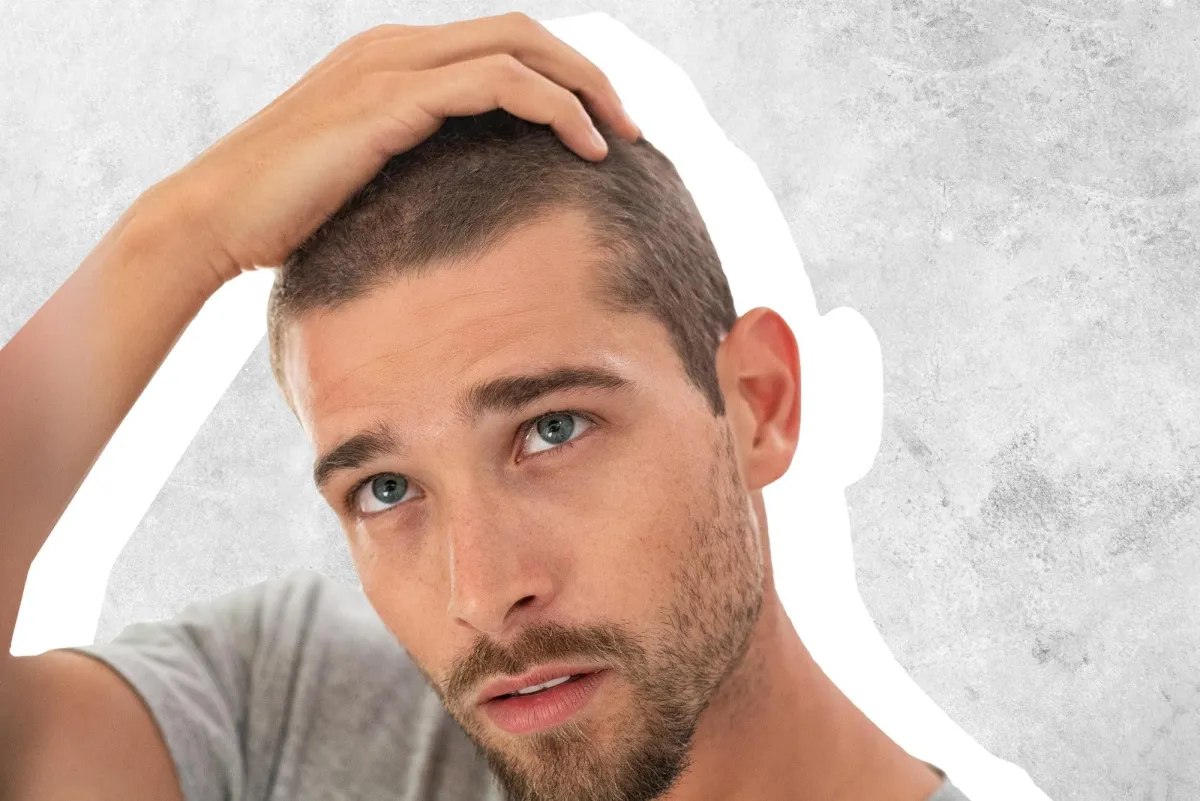
Men's Hair Thinning: What Is Actually Happening and What the Barbershop Can Do
Men's Hair Thinning: What Is Actually Happening and What the Barbershop Can Do
Roughly 50 percent of men experience noticeable hair thinning by age 50. The percentage by age 35 is already significant, around 40 percent. Despite how common it is, most men handle it poorly, either ignoring it and ending up with a look that emphasizes the problem, or overcorrecting in ways that draw more attention.
A good barber working with someone experiencing thinning hair can make a real difference. Understanding what is happening and what the options are leads to better decisions.
What Causes Hair Thinning
The most common form of hair thinning in men is androgenetic alopecia, also called male pattern baldness. It is caused by a genetic sensitivity to dihydrotestosterone (DHT), a derivative of testosterone. Follicles that are sensitive to DHT gradually miniaturize, producing thinner, shorter hairs over time until they stop producing hair entirely.
The pattern typically follows a predictable sequence: thinning at the temples, then the crown, then eventual connection of those thinned areas into the horseshoe pattern associated with advanced male pattern baldness. The rate at which this progresses is highly individual and is largely genetically determined.
Other causes of thinning include telogen effluvium (temporary shedding triggered by stress, illness, or nutritional deficiency), alopecia areata (an autoimmune condition), and traction alopecia (damage from tight hairstyles over time). These differ from androgenetic alopecia in their pattern and reversibility.
What a Barber Can Do
A skilled barber working with a client experiencing thinning hair focuses on two things: choosing cuts that work with the current density rather than against it, and applying techniques that maximize the visual appearance of fullness.
Shorter overall length is typically more flattering for thinning hair than trying to maintain longer styles. Longer hair is heavier and lies flatter, which emphasizes density loss. Shorter hair can appear fuller because it stands away from the scalp with more volume per strand.
Texture and movement help disguise uniform thinning. A barber who adds texture through scissor work gives the hair visual complexity that draws attention away from density.
For men with crown thinning, length on top styled with volume can maintain coverage for a significant period of thinning before the coverage becomes difficult to maintain naturally. A barber who knows your specific pattern can cut in a way that maximizes this window.
For men with hairline recession, a shorter overall cut that does not attempt to maintain significant volume at a receding front can look cleaner and more intentional than fighting the recession with length and styling.
What a Barber Cannot Do
No haircut stops hair loss. Cutting hair shorter does not make it grow back thicker, nor does any styling product. Barbers who suggest otherwise are overstating their role.
Scalp massage during a cut increases blood circulation temporarily but does not stimulate follicle activity in a medically meaningful way for androgenetic alopecia. The massage component of a barbershop visit has comfort and stress-reduction value, but it should not be presented as a treatment for hair loss.
If hair loss is a significant concern, treatments with clinical evidence include finasteride (an oral DHT blocker), minoxidil (a topical that prolongs the growth phase of the hair cycle), and hair transplant procedures. These are decisions to discuss with a dermatologist or hair loss specialist, not a barber.
The Buzz Cut Decision
Many men reach a point in their thinning where they consider shaving their head or going very short. This decision gets more attention and analysis than it deserves.
A buzz cut at a guard 1 or 2 is a low-maintenance, clean option that works well for most men experiencing significant thinning. It eliminates the asymmetry between thinned areas and remaining hair. It does not require daily styling. It grows out evenly and requires only a short appointment to maintain.
The head shape concern is often overstated. Most head shapes look fine with short hair. The men who avoid going short because they fear their head shape often look better with short hair than they expected.
The right time to make this decision is personal and has no correct answer. It is worth trying at least once to see how it looks and feels. Most men who make this shift report that adjusting to it was easier than anticipated.
Cuts That Work Well for Thinning Hair
Cuts that tend to work better for thinning hair:
- Short textured crops: the reduced length and added texture maintain the appearance of density
- Buzz cuts: remove the contrast between thinned and non-thinned areas
- Skin fades with short tops: the contrast is focused on the sides rather than the top, which draws the eye away from crown thinning
- Caesar cut: the blunt fringe creates a defined front that works well with receding temples
Cuts that tend to work against thinning hair:
- Long layered tops: weight and length emphasize flat, thin appearance
- Comb-overs: a long-discredited approach that rarely improves appearance and often worsens it
- Very textured, lifted styles: if density is already very low, lifted styles expose the scalp more visibly
Thinning Hair and Product Use
Volume-building products help thinning hair by coating the hair shaft and increasing its physical diameter slightly. Products labeled "volumizing," "thickening," or "densifying" typically contain polymers or proteins that achieve this. The effect is cosmetic and temporary, lasting until the hair is washed, but it makes a visible difference.
Avoid heavy pomades, waxes, or oils on very thin hair. Heavy products weigh the hair down and can make density loss more visible. Lightweight styling products, applied in small amounts to dry hair, produce the best results.
Frequently Asked Questions
Does cutting hair make it grow back thicker?
No. Hair thickness is determined by the follicle, not the cutting history. The perception that cut hair grows back thicker comes from the fact that a freshly cut hair has a blunt tip, which feels coarser against the skin than a naturally tapered tip. The actual diameter of the hair strand is unchanged.
At what point should I stop trying to maintain length and cut short?
There is no precise threshold. The practical consideration is whether maintaining your current length requires daily effort that the result does not justify. When the styling required to maintain coverage or fullness becomes significant relative to the result, that is a reasonable signal to consider going shorter. Most barbers will give you an honest assessment if you ask.
Does stress cause hair loss?
Significant acute stress can trigger telogen effluvium, a temporary shedding that occurs two to three months after the stressful event. This type of hair loss typically reverses within six to nine months once the triggering stress resolves. Chronic stress may worsen androgenetic alopecia progression, though the relationship is less clearly established.
What scalp care helps with thinning hair?
Keeping the scalp clean reduces follicle-clogging buildup. Ketoconazole shampoo (available over the counter) has some evidence for modest benefit in androgenetic alopecia, likely by reducing scalp inflammation. Avoiding tight hairstyles that cause traction prevents a form of alopecia that is preventable. Beyond these basics, scalp care products marketed for hair growth have limited clinical support.
Can a barber tell me if my hair loss is abnormal?
A barber who sees you regularly can note changes in your density and pattern over time. They cannot diagnose the cause or recommend medical treatment. If your hair loss is sudden, patchy, or accompanied by scalp symptoms like itching or flaking, a dermatologist is the right starting point, not a barber.
Related Reading From CADMEN Barber Academy
- Men's Hair Thinning: What Causes It and What You Can Actually Do About It
- Men's Hair Thinning: What to Tell Your Barber and What Actually Helps
- Cutting Hair on Clients with Thinning Hair: What Works and What Makes It Worse
- How to Cut Hair That Is Thinning: Barber Techniques and Advice
- Thinning Hair at the Barbershop: What Barbers Actually Do
- Men's Thinning Hair: What Barbershop Techniques Actually Help

5 Best Haircuts for Men with
Early Hair Thinning
Losing your hair is never a good feeling, most men tend to feel self-conscious about it. Some men decide to completely shave off their heads or constantly wear a hat. One of the most common insecurities men face is hair thinning; for some men, it starts as early as in their 20s. The loss of confidence really starts to affect the way men do their hair and the types of hair cuts they get. Men start to worry about how they will be perceived by friends, family, and colleagues. Hair thinning should not be the cause of self distraughtness, and it should not limit men to have to continuously cover their heads. CADMEN Barbershop has compiled a list of the top 5 best haircuts for men experiencing early hair loss.


For any request, please contact us at info@cadmen.ca