
Barber Tips & Tricks
Follow us for the latest barber techniques and tips
Barber Tips & Tricks
Follow us for the latest barber techniques and tips
Top 7 Reasons Why Your Clients
Aren't Returning
Stay Ahead in the Barbering Game: Nurturing
Lifelong Clientele
You might have come across the saying “give a client a good cut at a reasonable price, and they'll be yours for life.” Unfortunately in reality this is not always the case. That’s where we come in! Check out some of the reasons why your clients may not be returning, whether they were long-term customers or a first-time appointment, below.

Top 7 Reasons Why Your Clients
Aren't Returning
Stay Ahead in the Barbering Game: Nurturing
Lifelong Clientele
You might have come across the saying “give a client a good cut at a reasonable price, and they'll be yours for life.” Unfortunately in reality this is not always the case. That’s where we come in! Check out some of the reasons why your clients may not be returning, whether they were long-term customers or a first-time appointment, below.
Career in Mobile Barbering: Key
Things You Need to Know about
While most barbers work in physical barbershops or hair salons, there are a growing number of barbers who work on-call. What does it mean to be a mobile barber? What are their primary responsibilities? Where to find them? In this blog, we will explain some key terms you should know about mobile barbering and how you can start a new career in it.

Career in Mobile Barbering: Key
Things You Need to Know about
While most barbers work in physical barbershops or hair salons, there are a growing number of barbers who work on-call. What does it mean to be a mobile barber? What are their primary responsibilities? Where to find them? In this blog, we will explain some key terms you should know about mobile barbering and how you can start a new career in it.
Top 4 Ways for Barbers to
Promote Themselves
Marketing is key. Knowing how to market yourself as a barber can be the difference between having 5 to 20 clients a day. If you are interested in boosting the number of your customers and furthering your advertising skills, read the list below with four ways to promote yourself as a barber.

Top 4 Ways for Barbers to
Promote Themselves
Marketing is key. Knowing how to market yourself as a barber can be the difference between having 5 to 20 clients a day. If you are interested in boosting the number of your customers and furthering your advertising skills, read the list below with four ways to promote yourself as a barber.
5 Tips for Social Media Content
Creating as a Barber
It is next to impossible to find someone who is not on social media today. More than just a tool for connection, social media is key helping barbers market themselves and promote their names and skills. If you want to up your barber game quickly, here are five tips on how to promote content online that you don't want to miss out on.

5 Tips for Social Media Content
Creating as a Barber
It is next to impossible to find someone who is not on social media today. More than just a tool for connection, social media is key helping barbers market themselves and promote their names and skills. If you want to up your barber game quickly, here are five tips on how to promote content online that you don't want to miss out on.
5 Best Haircuts for Men with
Early Hair Thinning
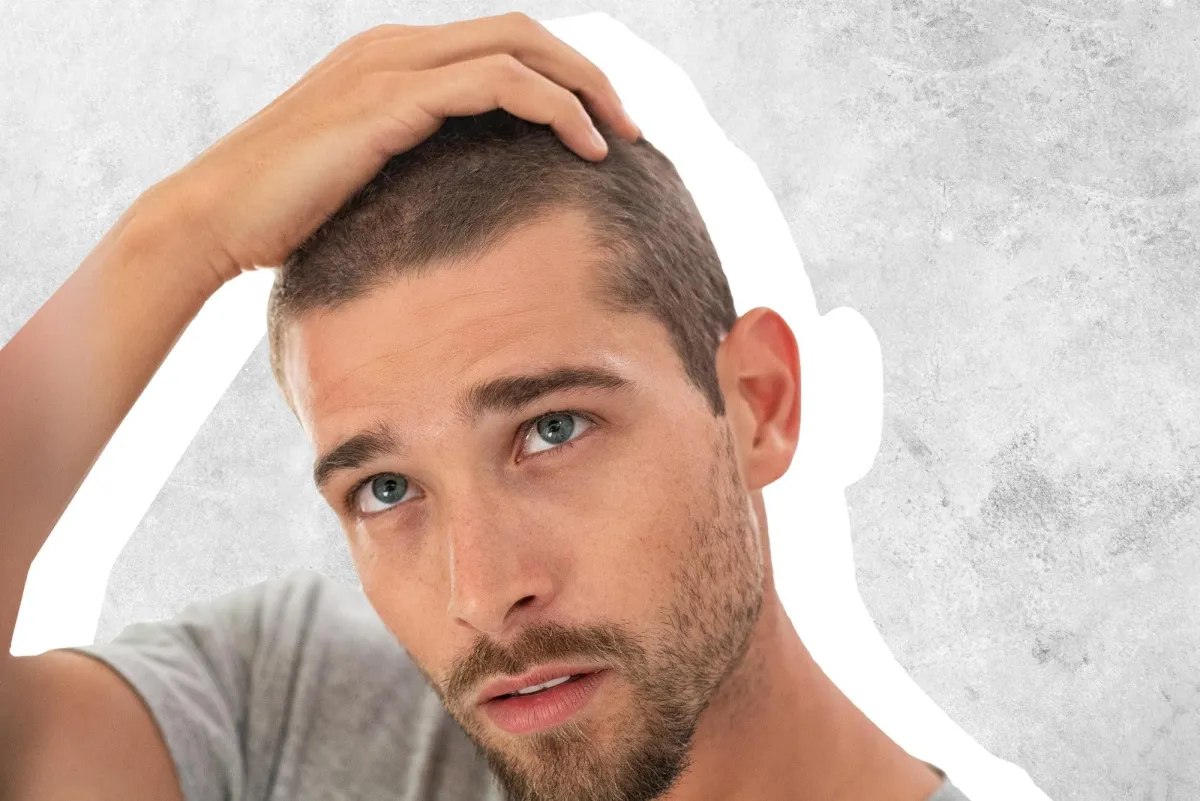
Losing your hair is never a good feeling, most men tend to feel self-conscious about it. Some men decide to completely shave off their heads or constantly wear a hat. One of the most common insecurities men face is hair thinning; for some men, it starts as early as in their 20s. The loss of confidence really starts to affect the way men do their hair and the types of hair cuts they get. Men start to worry about how they will be perceived by friends, family, and colleagues. Hair thinning should not be the cause of self distraughtness, and it should not limit men to have to continuously cover their heads. CADMEN Barbershop has compiled a list of the top 5 best haircuts for men experiencing early hair loss.
Barbershop Product Retail: How to Add Product Sales Without Becoming a Pushy Salesperson
Barbershop Product Retail: How to Add Product Sales Without Becoming a Pushy Salesperson
Retail product sales are one of the most consistent and highest-margin revenue additions a barbershop can make without adding chair time, staff, or client volume. A client who spends $50 on a haircut and $25 on product in the same visit has doubled the revenue of that booking slot without extending it. In a 3-chair shop doing 20 services per day at $50 each, adding a 20% product attachment rate at a $20 average product sale adds $200/day, $4,000/month, $48,000/year. The products are already in the shop; the system to sell them often is not.
Why Most Barbers Do Not Sell Products Well
The barrier is not willingness. Most barbers who do not sell products fall into one of two patterns: they never mention the product, or they mention it at checkout in a way that feels like a sales pitch after the service is over. The first approach leaves every potential product sale on the table. The second approach creates the "pushy salesperson" discomfort that makes both the barber and client uncomfortable and produces low conversion.
The solution is product conversation integration during the service, not after it. Products should be a natural extension of what is already happening in the service: you are using a pomade on the client's hair, you mention what it is and why you chose it for their hair type, and the client asks about it because they saw you use it. That is not a sales pitch; it is an expert recommendation made in context.
The Integration Approach
Use products during the service and narrate them. "I'm going to use a medium-hold matte clay on the top to give it some texture without shine, based on your hair type." This plants the product naturally in the conversation without asking for anything. The client watches you apply something that produces the result they wanted; the product is now associated with the result.
Ask about home routine. "What are you using at home to hold this?" is an information-gathering question, not a sales question. The client's answer either confirms they have something that works (no action needed) or reveals a gap ("I usually just use whatever" or "I stopped using anything because nothing was working"). The gap is the product opportunity.
Recommend specifically, not generally. "You should probably get some pomade" is vague and easy to defer. "I just used X on your hair and it's holding well with your texture; I have it on the shelf if you want to take one with you" is specific, demonstrable, and easy to say yes to. The specificity removes the client's evaluation burden; you just made the decision for them.
Which Products Move in Barbershops
The highest-selling product categories in professional barbershops: styling products (pomades, clays, waxes, volumizers), beard care (beard oil, beard balm, beard wash), scalp and hair care (shampoo, conditioner, scalp treatments), and after-shave/post-service products. Products that are actively used in the service move better than products on a shelf that the barber never references. Stock what you use; your personal use of the product during the service is the best demonstration possible.
Frequently Asked Questions
How much can a barbershop make from retail product sales?
The range is wide. A 1-chair barber doing 8 services per day with a 15% product attachment rate at $20 average product sale generates $24/day in retail revenue, roughly $500/month. A 3-chair shop with trained staff doing consistent product conversation generates $3,000 to $6,000+/month in retail. The margin on retail products (typically 50 to 100% over wholesale cost) makes this one of the best revenue-per-minute additions available to any shop.
What products should a barbershop sell?
Stock what you use and can speak to specifically. The worst retail shelf is one full of products the barber cannot explain or recommend from direct experience. Start with 3 to 5 products across the core categories (1 or 2 styling products, a beard oil, a shampoo/conditioner) that you use regularly and can genuinely recommend. Expand based on what clients ask for and what sells. A curated 5-product retail shelf that every barber in the shop knows and uses outperforms a 30-product shelf that no one actively recommends.
Do clients expect barbershops to sell products?
Increasingly yes, especially in mid-market to premium shops. Clients who trust their barber's product expertise are often looking for a recommendation; they spend money on grooming products regardless of whether they buy from the shop. The client who leaves your chair without a product recommendation goes home and buys something from a drugstore or online. You could have been that purchase if the recommendation happened in the chair.
Related Reading From CADMEN Barber Academy
- How to Sell Retail Products in Your Barbershop
- Barbershop Retail Products: How to Build a Product Revenue Line That Actually Sells
- Men's Hair Products: What They Do, When to Use Them, and How to Recommend the Right One
- Why Barbershops Sell Grooming Products (And Why It Matters)
- How to Increase Product Sales in Your Barbershop
- Barbershop Retail Products: Why Selling Product at the Chair Is the Easiest Revenue Line You Are Not Using

5 Best Haircuts for Men with
Early Hair Thinning
Losing your hair is never a good feeling, most men tend to feel self-conscious about it. Some men decide to completely shave off their heads or constantly wear a hat. One of the most common insecurities men face is hair thinning; for some men, it starts as early as in their 20s. The loss of confidence really starts to affect the way men do their hair and the types of hair cuts they get. Men start to worry about how they will be perceived by friends, family, and colleagues. Hair thinning should not be the cause of self distraughtness, and it should not limit men to have to continuously cover their heads. CADMEN Barbershop has compiled a list of the top 5 best haircuts for men experiencing early hair loss.


For any request, please contact us at info@cadmen.ca