
Barber Tips & Tricks
Follow us for the latest barber techniques and tips
Barber Tips & Tricks
Follow us for the latest barber techniques and tips
Top 7 Reasons Why Your Clients
Aren't Returning
Stay Ahead in the Barbering Game: Nurturing
Lifelong Clientele
You might have come across the saying “give a client a good cut at a reasonable price, and they'll be yours for life.” Unfortunately in reality this is not always the case. That’s where we come in! Check out some of the reasons why your clients may not be returning, whether they were long-term customers or a first-time appointment, below.

Top 7 Reasons Why Your Clients
Aren't Returning
Stay Ahead in the Barbering Game: Nurturing
Lifelong Clientele
You might have come across the saying “give a client a good cut at a reasonable price, and they'll be yours for life.” Unfortunately in reality this is not always the case. That’s where we come in! Check out some of the reasons why your clients may not be returning, whether they were long-term customers or a first-time appointment, below.
Career in Mobile Barbering: Key
Things You Need to Know about
While most barbers work in physical barbershops or hair salons, there are a growing number of barbers who work on-call. What does it mean to be a mobile barber? What are their primary responsibilities? Where to find them? In this blog, we will explain some key terms you should know about mobile barbering and how you can start a new career in it.

Career in Mobile Barbering: Key
Things You Need to Know about
While most barbers work in physical barbershops or hair salons, there are a growing number of barbers who work on-call. What does it mean to be a mobile barber? What are their primary responsibilities? Where to find them? In this blog, we will explain some key terms you should know about mobile barbering and how you can start a new career in it.
Top 4 Ways for Barbers to
Promote Themselves
Marketing is key. Knowing how to market yourself as a barber can be the difference between having 5 to 20 clients a day. If you are interested in boosting the number of your customers and furthering your advertising skills, read the list below with four ways to promote yourself as a barber.

Top 4 Ways for Barbers to
Promote Themselves
Marketing is key. Knowing how to market yourself as a barber can be the difference between having 5 to 20 clients a day. If you are interested in boosting the number of your customers and furthering your advertising skills, read the list below with four ways to promote yourself as a barber.
5 Tips for Social Media Content
Creating as a Barber
It is next to impossible to find someone who is not on social media today. More than just a tool for connection, social media is key helping barbers market themselves and promote their names and skills. If you want to up your barber game quickly, here are five tips on how to promote content online that you don't want to miss out on.

5 Tips for Social Media Content
Creating as a Barber
It is next to impossible to find someone who is not on social media today. More than just a tool for connection, social media is key helping barbers market themselves and promote their names and skills. If you want to up your barber game quickly, here are five tips on how to promote content online that you don't want to miss out on.
5 Best Haircuts for Men with
Early Hair Thinning
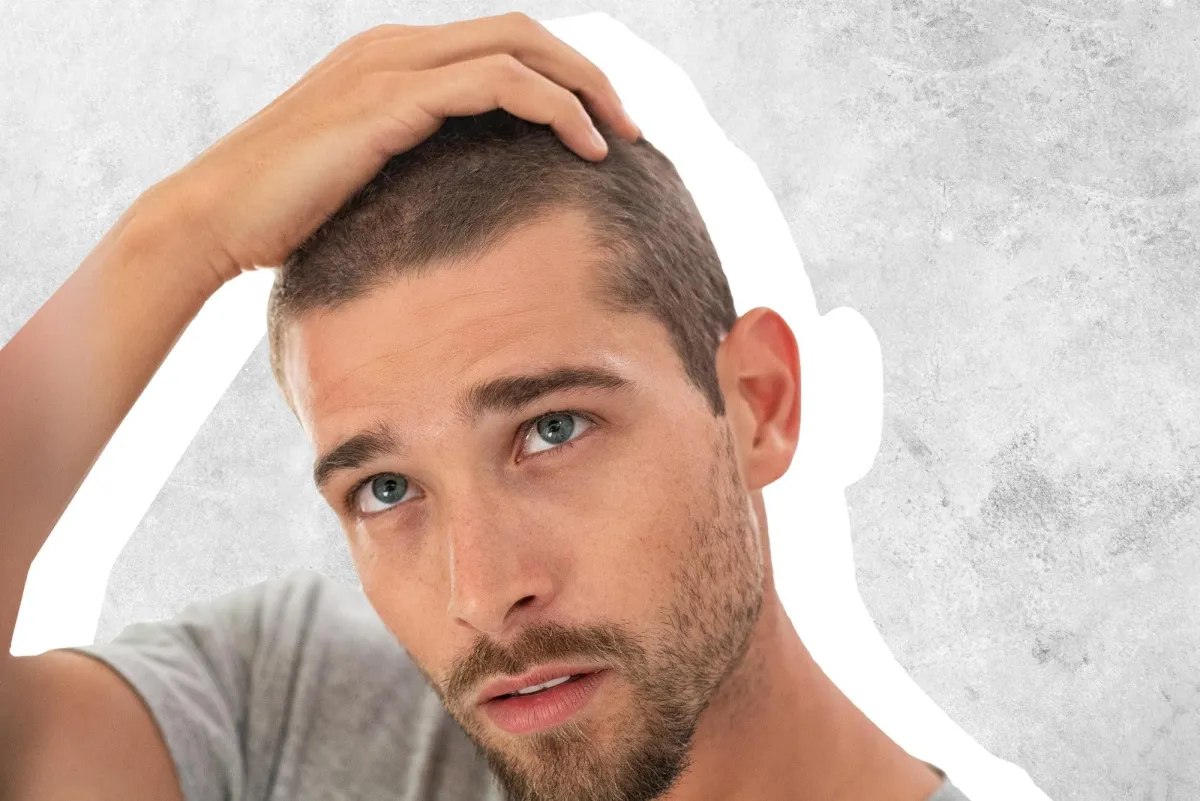
Losing your hair is never a good feeling, most men tend to feel self-conscious about it. Some men decide to completely shave off their heads or constantly wear a hat. One of the most common insecurities men face is hair thinning; for some men, it starts as early as in their 20s. The loss of confidence really starts to affect the way men do their hair and the types of hair cuts they get. Men start to worry about how they will be perceived by friends, family, and colleagues. Hair thinning should not be the cause of self distraughtness, and it should not limit men to have to continuously cover their heads. CADMEN Barbershop has compiled a list of the top 5 best haircuts for men experiencing early hair loss.
Barbershop Pricing: How Shops Set Their Rates and What You're Paying For
Barbershop Pricing: How Shops Set Their Rates and What You're Paying For
Barbershop prices in North America range from $15 at a budget shop to $60 or more at a premium barbershop. This range is not arbitrary. Each tier has a different service model, physical environment, barber experience level, and time-per-service allocation. Understanding what drives the price helps both clients choose a shop that fits their needs and shop owners think clearly about their own pricing strategy.
The Cost Drivers Behind Barbershop Prices
Rent and location: A barbershop in downtown Toronto or Manhattan pays dramatically more per square foot than a shop in a suburban strip mall. That overhead is factored into the pricing. Shops in high-rent locations typically start at a higher baseline price.
Barber wages and commission: Most barbershops pay barbers on commission (50 to 60% of service revenue) or booth rent. If a haircut is $40 and the barber earns 50%, the barber receives $20 and the shop keeps $20 to cover rent, utilities, supplies, and profit. Shops with higher-wage markets (major cities, areas with high cost of living) need to charge more to sustain the commission structure.
Service time: A $25 cut that takes 20 minutes generates more revenue per hour than a $50 cut that takes 50 minutes. Premium barbershops that offer detailed consultations, razor finishing, hot towel treatment, and thorough blending allocate more time per client. This has to be priced accordingly.
Barber experience and reputation: A barber with 15 years of experience, a strong social media following, and a waitlist charges more than a barber starting out. This is supply and demand, clients who want that specific barber's skill and outcome pay the premium.
What the Price Tiers Look Like
$15 to $25: Quick-service shops, chain budget barbershops, or low-overhead locations. Barbers are often newer to the trade or the shop is designed for speed (15 to 20 minute cuts). The cut is functional. No extras, minimal consultation, no razor work.
$30 to $45: Standard professional barbershops. Experienced barbers, defined service menu, proper consultation, razor neckline finishing. This is the largest segment of the market.
$50 to $100+: Premium barbershops. Senior or named barbers with established reputations. Extended service time. Luxury environment. Additional services (hot towel, products applied). Appointment-only or hybrid model.
How to Set Prices as a Shop Owner
Start from cost, not from the competition. Calculate your monthly break-even (rent + wages + supplies + utilities) and divide by realistic service volume. Add the margin you need to build the business. If that number is higher than most shops in your area, the answer is to differentiate, environment, barber quality, service quality, marketing, not to undercut yourself into a losing operation.
CADMEN Business Coaching
Pricing strategy and financial modeling for barbershops are covered in CADMEN's owner coaching program. academy.cadmen.ca.
Frequently Asked Questions
How much does a haircut cost at a barbershop?
In Canada and the US, a professional barbershop haircut ranges from approximately $20 to $60 CAD / $15 to $50 USD, with the most common range for a quality independent barbershop sitting between $35 and $55 CAD. Factors that affect where a specific shop falls in this range: the shop's location (urban vs. suburban, high-rent vs. low-rent area), the barber's experience level, the service time and detail included, and the shop's physical environment and brand positioning. Budget chain barbershops (Sports Clips, Cost Cutters, etc.) typically price at $20 to $30 CAD. Mid-range independent barbershops are typically $35 to $50 CAD. Premium or specialty barbershops with senior barbers and luxury environments typically price at $50 to $80+ CAD. Most shops also offer additional services (beard trim, hot towel shave, etc.) at incremental prices above the base haircut.
Why are some barbershops more expensive than others?
Price differences between barbershops reflect four main factors: rent (a shop in a high-traffic downtown location pays more and passes that cost on), barber wages (experienced barbers earn higher commissions, which require higher service prices to sustain), service time (premium shops allocate 30 to 50 minutes per client vs. 15 to 20 minutes at budget shops), and physical environment and product costs (leather chairs, professional products, premium environment cost more to maintain). A $55 haircut at a premium shop is not the same service as a $25 haircut at a budget shop, the time, skill level, environment, and extras differ. Whether the additional cost is worth it depends on the individual's priority: clients who care primarily about a functional, efficient cut at minimum cost are the budget shop's customer. Clients who care about experience, relationship with a specific barber, and consistent premium outcome are the premium shop's customer.
How do barbers decide what to charge?
Most barbers (whether booth-renting or employed on commission) do not individually set prices, the shop owner sets the price list. Shop owners set prices by calculating break-even from monthly costs (rent, utilities, supplies, insurance, wages or commission split) divided by realistic monthly service volume, then adding the profit margin needed to sustain and grow the business. Barbers at the senior end of their market, with established reputations, full books, and strong referral networks, often command higher prices either by working at premium shops or by setting their own rates as booth renters. The practical check: a barber whose appointment book is consistently full at current prices has room to raise prices. A barber with frequent empty slots may need to adjust either pricing downward or marketing upward.
Should a barbershop charge more for long hair?
Many barbershops charge extra for longer hair because longer cuts take more time, more scissor work, more sections to blend, more product used, longer service time overall. A standard men's haircut at a typical barbershop is priced for hair at medium length (2 to 6 inches). Hair above 6 to 8 inches often qualifies for an additional charge. The industry-standard approach: a base haircut price plus an upcharge for "long hair" or "extended service" when the hair length or density significantly extends the service time. This is most common at shops with high volume and tight appointment schedules where a 30-minute overrun on one client creates cascading delays. A shop that prices by service type rather than time is also common, the menu lists "Fade + Cut: $40," "Scissor Cut: $45," "Long Hair Cut: $55" and clients self-select based on their needs.
Is it worth paying more for a premium barbershop?
Depends on what the extra cost buys. A premium price is worth it when: the barber has significantly more experience and produces a noticeably better result on your specific style; the shop has a booking system that reliably gives you your preferred barber at your preferred time without long waits; the experience itself (environment, conversation, treatment) is something you value; or the premium shop consistently produces a cut that requires fewer corrections and grows out more gracefully than cheaper alternatives. It is not worth it when: the premium price is driven by location or environment alone and the actual service quality is equivalent to what a mid-range shop provides; you have a simple haircut request that does not require high technical skill; or your hair grows quickly enough that the quality advantage disappears within 2 to 3 weeks regardless of which shop cut it. The practical test: compare the grown-out result at 3 weeks from your premium shop and your budget shop. If the premium shop's cut still looks intentional at 3 weeks and the other does not, the premium is justified.
Related Reading From CADMEN Barber Academy
- Barber Pricing Guide: How to Price Your Services and When to Raise Rates
- Barbershop Pricing Strategy: How to Set Prices That Reflect the Value You Deliver
- How to Price Barbershop Services: A Practical Guide
- How to Price Your Barbershop Services
- Barbershop Pricing: What You're Actually Paying For
- CADMEN Barbershop Toronto: Prices, Barbers, Booking

5 Best Haircuts for Men with
Early Hair Thinning
Losing your hair is never a good feeling, most men tend to feel self-conscious about it. Some men decide to completely shave off their heads or constantly wear a hat. One of the most common insecurities men face is hair thinning; for some men, it starts as early as in their 20s. The loss of confidence really starts to affect the way men do their hair and the types of hair cuts they get. Men start to worry about how they will be perceived by friends, family, and colleagues. Hair thinning should not be the cause of self distraughtness, and it should not limit men to have to continuously cover their heads. CADMEN Barbershop has compiled a list of the top 5 best haircuts for men experiencing early hair loss.


For any request, please contact us at info@cadmen.ca