
Barber Tips & Tricks
Follow us for the latest barber techniques and tips
Barber Tips & Tricks
Follow us for the latest barber techniques and tips
Top 7 Reasons Why Your Clients
Aren't Returning
Stay Ahead in the Barbering Game: Nurturing
Lifelong Clientele
You might have come across the saying “give a client a good cut at a reasonable price, and they'll be yours for life.” Unfortunately in reality this is not always the case. That’s where we come in! Check out some of the reasons why your clients may not be returning, whether they were long-term customers or a first-time appointment, below.

Top 7 Reasons Why Your Clients
Aren't Returning
Stay Ahead in the Barbering Game: Nurturing
Lifelong Clientele
You might have come across the saying “give a client a good cut at a reasonable price, and they'll be yours for life.” Unfortunately in reality this is not always the case. That’s where we come in! Check out some of the reasons why your clients may not be returning, whether they were long-term customers or a first-time appointment, below.
Career in Mobile Barbering: Key
Things You Need to Know about
While most barbers work in physical barbershops or hair salons, there are a growing number of barbers who work on-call. What does it mean to be a mobile barber? What are their primary responsibilities? Where to find them? In this blog, we will explain some key terms you should know about mobile barbering and how you can start a new career in it.

Career in Mobile Barbering: Key
Things You Need to Know about
While most barbers work in physical barbershops or hair salons, there are a growing number of barbers who work on-call. What does it mean to be a mobile barber? What are their primary responsibilities? Where to find them? In this blog, we will explain some key terms you should know about mobile barbering and how you can start a new career in it.
Top 4 Ways for Barbers to
Promote Themselves
Marketing is key. Knowing how to market yourself as a barber can be the difference between having 5 to 20 clients a day. If you are interested in boosting the number of your customers and furthering your advertising skills, read the list below with four ways to promote yourself as a barber.

Top 4 Ways for Barbers to
Promote Themselves
Marketing is key. Knowing how to market yourself as a barber can be the difference between having 5 to 20 clients a day. If you are interested in boosting the number of your customers and furthering your advertising skills, read the list below with four ways to promote yourself as a barber.
5 Tips for Social Media Content
Creating as a Barber
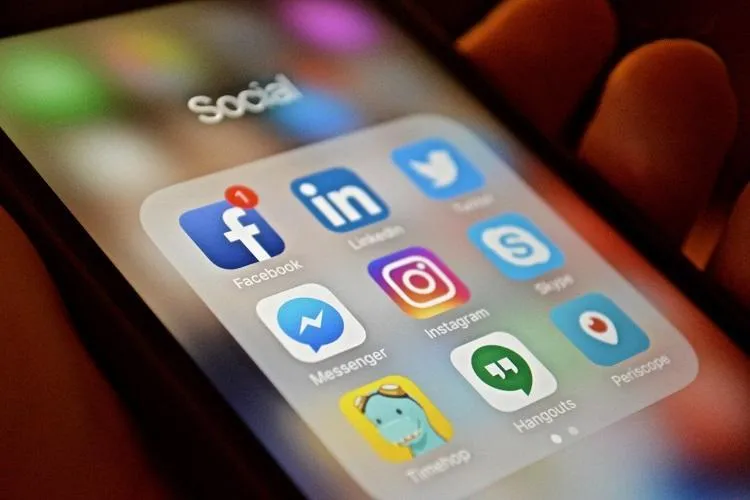
It is next to impossible to find someone who is not on social media today. More than just a tool for connection, social media is key helping barbers market themselves and promote their names and skills. If you want to up your barber game quickly, here are five tips on how to promote content online that you don't want to miss out on.
5 Tips for Social Media Content
Creating as a Barber
It is next to impossible to find someone who is not on social media today. More than just a tool for connection, social media is key helping barbers market themselves and promote their names and skills. If you want to up your barber game quickly, here are five tips on how to promote content online that you don't want to miss out on.
5 Best Haircuts for Men with
Early Hair Thinning
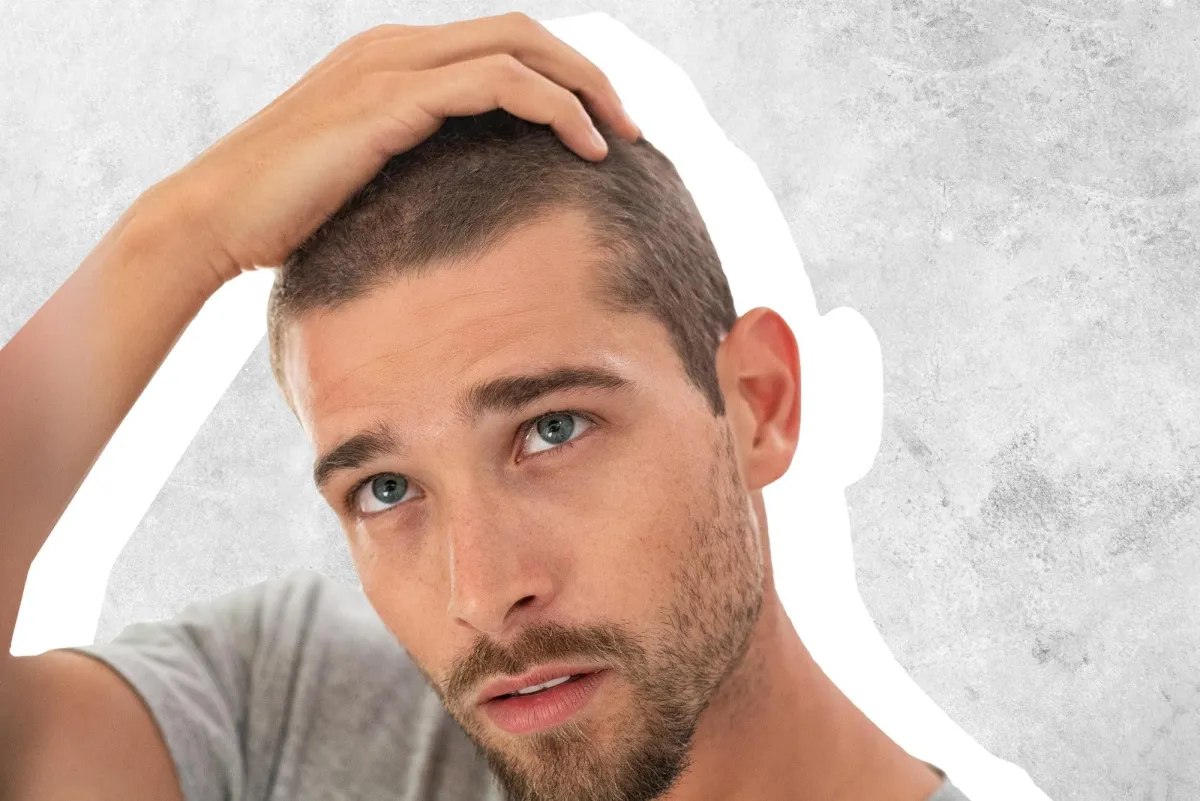
Losing your hair is never a good feeling, most men tend to feel self-conscious about it. Some men decide to completely shave off their heads or constantly wear a hat. One of the most common insecurities men face is hair thinning; for some men, it starts as early as in their 20s. The loss of confidence really starts to affect the way men do their hair and the types of hair cuts they get. Men start to worry about how they will be perceived by friends, family, and colleagues. Hair thinning should not be the cause of self distraughtness, and it should not limit men to have to continuously cover their heads. CADMEN Barbershop has compiled a list of the top 5 best haircuts for men experiencing early hair loss.
Barber Pricing Guide: How to Price Your Services and When to Raise Rates
Barber Pricing Guide: How to Price Your Services and When to Raise Rates
Most barbershops are underpriced. Not slightly underpriced. Materially underpriced in a way that limits their growth and makes the owner work harder than the business should require. Pricing is the single highest-leverage variable in barbershop economics because there is a ceiling on how many haircuts you can do per day and no ceiling on what you charge for each one.
Here is how to think about pricing, what the market actually supports, and how to raise rates without losing the clients you have built.
What Determines the Right Price Point
Four factors set your pricing ceiling:
- The market range in your area. What premium shops in your neighborhood charge is your upper reference point. What budget chains charge is your floor. You want to know both.
- Your positioning. A shop with no clear identity gets compared on price. A shop with a reputation, a known barber, and a specific client base commands a premium over undifferentiated competitors.
- Your cost structure. Rent, labor, supplies, and overhead create a minimum below which you cannot operate profitably. Know this number before setting prices.
- Your client's alternative. If a client can walk two blocks and get an equivalent cut for $5 less, your price has a ceiling. If your nearest real competitor is across town, your ceiling is higher.
The mistake most barbers make is setting prices based on what they think clients will pay rather than what the market research shows they actually do pay. Check what premium competitors charge before concluding that your market cannot support higher prices.
Ontario Market Reference Points (2025 Benchmarks)
Based on general market observation across the Greater Toronto Area and Southern Ontario:
- Budget chains: $20 to $30 per cut. No frills, high volume, no appointment.
- Mid-range barbershops: $35 to $55 per cut. Standard men's cuts, fades, beard work available.
- Premium barbershops: $55 to $85+ per cut. Established reputation, specific barbers, strong review profiles, premium experience.
- 1-on-1 with a known barber or celebrity barber: $80 to $150+.
If you are cutting at $35 in a neighborhood where established shops are at $55, the question is not whether you can raise prices. The question is what you need to build to justify $55, and how quickly you can build it.
When to Raise Rates
Raise rates when any of these are true:
- You are consistently booked out 2 or more weeks in advance
- Your prices have not changed in over 12 months while your costs have increased
- You are significantly below market for comparable shops in your area
- Clients regularly tell you your prices are lower than what they expected
A fully booked barber who has not raised prices in two years is subsidizing their clients. Supply and demand are both telling you to raise prices. The only reason not to is the emotional friction of the conversation, which is not a business reason.
How to Raise Rates Without Losing Clients
A rate increase done correctly loses 5% to 15% of clients. A rate increase done incorrectly loses more. Here is what works:
Give notice
Announce price increases 30 days in advance, in person and via text or email to your client list. Clients who feel respected give more latitude on price. Clients who are surprised at checkout feel disrespected regardless of the amount.
Increase incrementally, not dramatically
A $5 to $10 increase is absorbed far more easily than a $20 jump. If you need to close a large gap between your current prices and market rates, make two or three increases over 12 to 18 months rather than one large correction.
Raise for all services, not selectively
Selective increases create perception problems: clients wonder why some services went up and others did not, and start auditing everything. Raise everything uniformly by the same percentage or flat amount.
Do not apologize for the increase
State the change directly: "Starting [date], our pricing will be [new prices]. I appreciate your continued support." Excessive apology signals that the price is unjustified. State it clearly and move on.
What to Charge for Add-On Services
Add-on services are the highest-margin revenue a barbershop generates. No additional chair time is used. The client is already in the seat.
Standard add-on pricing relative to base cut:
- Beard trim/shape: $10 to $20 above the base cut
- Hot towel shave or straight razor neck shave: $15 to $30 above
- Scalp treatment or product application: $10 to $20 above
- Full beard shaping with hot towel: $25 to $45 standalone
Barbers who ask "would you like a beard cleanup with that?" on every appointment that includes any facial hair consistently add 15% to 25% to their average ticket without adding chair time.
For Barbershop Owners Building a Pricing Strategy
Pricing architecture, including tiered service menus, how to position against competitors, and how to raise rates without damaging retention, is covered in depth in CADMEN's barbershop owner coaching program. The program is built from the operational experience of CADMEN's multi-location GTA barbershop business. $4,000 USD. Apply at academy.cadmen.ca/business-coaching.
Frequently Asked Questions
How much should a barber charge for a haircut in Ontario?
Mid-range barbershops in Ontario typically charge $35 to $55 for a standard men's cut with fade. Premium shops in Toronto and the GTA charge $55 to $85+. Budget chains sit at $20 to $30. Where you price depends on your shop's positioning, location, and the quality tier you are operating at.
How often should a barbershop raise prices?
At minimum every 12 to 18 months to keep pace with cost increases. More frequently if you are significantly below market or fully booked. A shop that has not raised prices in 3 years is effectively giving its clients a discount that compounds every year.
Will clients leave if I raise my prices?
Some will. A well-executed price increase typically results in 5% to 15% client attrition, and that attrition is usually replaced by higher-value clients within 2 to 3 months. The net revenue impact of a $5 to $10 increase is almost always positive even accounting for churn. Run the math on your current client base before assuming the answer is no.
Should a barber charge more for longer hair or complex cuts?
Yes. Pricing by complexity and time is standard across service industries. A simple taper that takes 25 minutes should be priced differently from a complex fade with beard detailing that takes 55 minutes. A tiered service menu (basic, standard, premium) allows this without requiring the barber to estimate every cut individually.
Is it okay to have different prices for different barbers at the same shop?
Yes, and this is common at established shops. A senior or highly sought-after barber charging more than a newer barber is market-appropriate. The pricing difference signals quality tier and helps clients self-select. It also protects senior barbers from being undercut by the shop's base price.
Related Reading From CADMEN Barber Academy
- Barbershop Pricing Strategy: How to Set Prices That Reflect the Value You Deliver
- How to Price Barbershop Services: A Practical Guide
- How to Price Your Barbershop Services
- Barbershop Pricing: What You're Actually Paying For
- Barbershop Pricing: Why Haircuts Cost What They Do
- CADMEN Barbershop Toronto: Prices, Barbers, Booking

5 Best Haircuts for Men with
Early Hair Thinning
Losing your hair is never a good feeling, most men tend to feel self-conscious about it. Some men decide to completely shave off their heads or constantly wear a hat. One of the most common insecurities men face is hair thinning; for some men, it starts as early as in their 20s. The loss of confidence really starts to affect the way men do their hair and the types of hair cuts they get. Men start to worry about how they will be perceived by friends, family, and colleagues. Hair thinning should not be the cause of self distraughtness, and it should not limit men to have to continuously cover their heads. CADMEN Barbershop has compiled a list of the top 5 best haircuts for men experiencing early hair loss.


For any request, please contact us at info@cadmen.ca