
Barber Tips & Tricks
Follow us for the latest barber techniques and tips
Barber Tips & Tricks
Follow us for the latest barber techniques and tips
Top 7 Reasons Why Your Clients
Aren't Returning
Stay Ahead in the Barbering Game: Nurturing
Lifelong Clientele
You might have come across the saying “give a client a good cut at a reasonable price, and they'll be yours for life.” Unfortunately in reality this is not always the case. That’s where we come in! Check out some of the reasons why your clients may not be returning, whether they were long-term customers or a first-time appointment, below.

Top 7 Reasons Why Your Clients
Aren't Returning
Stay Ahead in the Barbering Game: Nurturing
Lifelong Clientele
You might have come across the saying “give a client a good cut at a reasonable price, and they'll be yours for life.” Unfortunately in reality this is not always the case. That’s where we come in! Check out some of the reasons why your clients may not be returning, whether they were long-term customers or a first-time appointment, below.
Career in Mobile Barbering: Key
Things You Need to Know about
While most barbers work in physical barbershops or hair salons, there are a growing number of barbers who work on-call. What does it mean to be a mobile barber? What are their primary responsibilities? Where to find them? In this blog, we will explain some key terms you should know about mobile barbering and how you can start a new career in it.

Career in Mobile Barbering: Key
Things You Need to Know about
While most barbers work in physical barbershops or hair salons, there are a growing number of barbers who work on-call. What does it mean to be a mobile barber? What are their primary responsibilities? Where to find them? In this blog, we will explain some key terms you should know about mobile barbering and how you can start a new career in it.
Top 4 Ways for Barbers to
Promote Themselves
Marketing is key. Knowing how to market yourself as a barber can be the difference between having 5 to 20 clients a day. If you are interested in boosting the number of your customers and furthering your advertising skills, read the list below with four ways to promote yourself as a barber.

Top 4 Ways for Barbers to
Promote Themselves
Marketing is key. Knowing how to market yourself as a barber can be the difference between having 5 to 20 clients a day. If you are interested in boosting the number of your customers and furthering your advertising skills, read the list below with four ways to promote yourself as a barber.
5 Tips for Social Media Content
Creating as a Barber
It is next to impossible to find someone who is not on social media today. More than just a tool for connection, social media is key helping barbers market themselves and promote their names and skills. If you want to up your barber game quickly, here are five tips on how to promote content online that you don't want to miss out on.

5 Tips for Social Media Content
Creating as a Barber
It is next to impossible to find someone who is not on social media today. More than just a tool for connection, social media is key helping barbers market themselves and promote their names and skills. If you want to up your barber game quickly, here are five tips on how to promote content online that you don't want to miss out on.
5 Best Haircuts for Men with
Early Hair Thinning
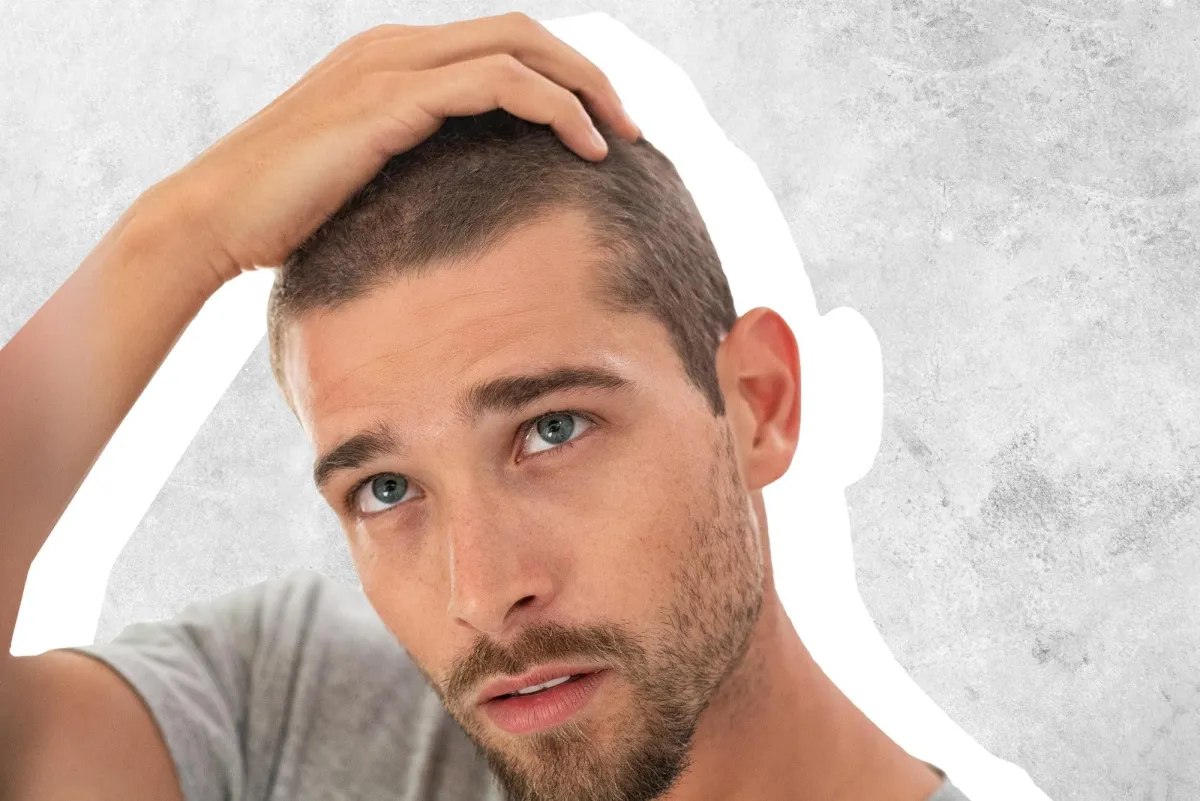
Losing your hair is never a good feeling, most men tend to feel self-conscious about it. Some men decide to completely shave off their heads or constantly wear a hat. One of the most common insecurities men face is hair thinning; for some men, it starts as early as in their 20s. The loss of confidence really starts to affect the way men do their hair and the types of hair cuts they get. Men start to worry about how they will be perceived by friends, family, and colleagues. Hair thinning should not be the cause of self distraughtness, and it should not limit men to have to continuously cover their heads. CADMEN Barbershop has compiled a list of the top 5 best haircuts for men experiencing early hair loss.
Barbershop Price List Guide: How to Set Prices That Reflect Your Value
Barbershop Price List Guide: How to Set Prices That Reflect Your Value
Barbershop pricing communicates quality before a client experiences the service. A price that is too low signals to a new client that the service is basic, the barber is inexperienced, or the shop is competing on cost. A price that is correctly positioned for the market and skill level communicates confidence and attracts clients who value quality. Pricing is a marketing decision as much as an operational one.
The Variables That Determine Your Price
Market comparables
What do other barbershops in your specific area charge? Not what barbershops in general charge; what the 5 to 10 shops within 2 kilometers of your location charge for comparable services. This establishes the reference range your potential clients are already aware of. Position within that range based on your differentiation (experience level, specialization, shop environment, booking availability).
Skill and experience level
A barber with 1 year of experience and a barber with 15 years of experience are not pricing the same service. The 15-year barber's price reflects their efficiency (more clients per hour at the same result), their reputation (which drives referral traffic), and their service consistency. Starting lower and increasing as skill and reputation develop is the normal trajectory. Starting too low in an attempt to attract volume can trap a barber below the price point their skill level already justifies.
Service duration
Price reflects time as well as skill. A fade with a beard service taking 50 minutes should not be priced the same as a 20-minute cleanup. Calculate your target hourly rate (what you need to earn per hour to cover overhead, personal income, and a reasonable profit margin) and price services based on their duration at that rate. A 20-minute service at a $90/hour target rate = $30 minimum. A 50-minute service = $75 minimum.
Overhead
A barbershop with a downtown location, modern equipment, premium supplies, and a booking system has higher overhead than a chair in a basement. That overhead is legitimately reflected in price. Clients in premium locations expect to pay more and are willing to. Pricing below what the shop's overhead requires is a path to unsustainability regardless of volume.
How to Raise Prices Without Losing Clients
Price increases are most smoothly received when:
- They are announced in advance (at least 2 to 4 weeks for regular clients via text or email)
- They are framed as a service improvement announcement, not an apology ("Our new pricing starting [date]: [list]")
- They are moderate rather than large (5% to 15% at once; 20%+ increases lose a higher percentage of clients)
Clients who leave over a modest price increase are typically clients who were price-sensitive rather than loyalty-driven. Clients who stay are the ones who were coming for the relationship and the quality. The revenue impact of a 10% price increase with 5% client attrition is net positive in almost all cases because the remaining 95% of clients are generating 10% more revenue.
The Price-Quality Signal
New clients use price as a proxy for quality when they have no other information. A barbershop priced at $28 for a haircut signals one level of service expectation. A shop priced at $55 signals a different level. The higher price attracts clients who are already expecting a better experience, which makes the service easier to deliver to expectation. Low-price positioning attracts a segment that is harder to retain and more price-sensitive to future increases.
This does not mean every shop should be premium-priced. It means the pricing decision should reflect the experience and result being delivered, not an attempt to compete on being the cheapest option in the area.
Frequently Asked Questions
What is the average price for a haircut in Ontario?
As of 2026, haircut prices in Ontario barbershops range from approximately $25 to $75 for a standard fade or cut, with significant variation by city, neighborhood, and shop positioning. Downtown Toronto and GTA premium shops typically charge $45 to $75 for a full service. Community shops in suburban markets range from $25 to $45. Specialty or high-reputation barbers charge at the upper end regardless of location. These are current market observations, not fixed benchmarks; confirm current rates in your specific area.
Should barbershop prices be posted online?
Yes. Publishing prices on the website and booking page removes the friction of uncertainty for new clients who are comparing options. A new client who has to call to find out the price is a client who may book elsewhere rather than make the call. Published pricing also attracts the clients who are comfortable with your price point and filters out those who are not, reducing the awkward in-person price conversation.
How often should a barbershop raise prices?
Annually in line with general business cost increases (inflation, supply costs, lease increases) is a reasonable baseline. More frequent than once per year can feel unstable to regular clients. Less frequent than once every 2 years in a growing business typically means prices drift below what the market and the barber's skill level now support. Review annually and make a deliberate decision rather than leaving prices static indefinitely.
Should a newer barber charge lower prices than an experienced barber?
Typically yes, as a starting point, with a plan to increase as skill and client base grow. A newer barber who underprices relative to their actual skill level trains their client base to expect low prices and makes the future price increase more disruptive. Price at the lower end of the market initially; increase as the skill and reputation grow rather than staying at the introductory price indefinitely.
Does offering discounts hurt a barbershop's reputation?
Regular, open discounts (always 20% off Tuesdays, permanent student discounts advertised everywhere) train the client base to wait for discounts rather than booking at full price. Targeted, time-limited promotions for specific purposes (new client first visit, re-engagement of lapsed clients) are lower risk. The distinction is whether the discount is a standing feature of the pricing model or a specific tactical tool used deliberately.
Related Reading From CADMEN Barber Academy
- How to Set Your Barbershop Price List: What to Charge and How to Justify It
- Barber Tools List: Every Piece of Equipment a Professional Barber Needs
- Barbershop Equipment List: What You Need to Open and What to Buy First
- How to Price Barbershop Services: A Guide for Shop Owners
- How to Set Barbershop Service Prices
- CADMEN Barbershop Toronto: Prices, Barbers, Booking

5 Best Haircuts for Men with
Early Hair Thinning
Losing your hair is never a good feeling, most men tend to feel self-conscious about it. Some men decide to completely shave off their heads or constantly wear a hat. One of the most common insecurities men face is hair thinning; for some men, it starts as early as in their 20s. The loss of confidence really starts to affect the way men do their hair and the types of hair cuts they get. Men start to worry about how they will be perceived by friends, family, and colleagues. Hair thinning should not be the cause of self distraughtness, and it should not limit men to have to continuously cover their heads. CADMEN Barbershop has compiled a list of the top 5 best haircuts for men experiencing early hair loss.


For any request, please contact us at info@cadmen.ca