
Barber Tips & Tricks
Follow us for the latest barber techniques and tips
Barber Tips & Tricks
Follow us for the latest barber techniques and tips
Top 7 Reasons Why Your Clients
Aren't Returning
Stay Ahead in the Barbering Game: Nurturing
Lifelong Clientele
You might have come across the saying “give a client a good cut at a reasonable price, and they'll be yours for life.” Unfortunately in reality this is not always the case. That’s where we come in! Check out some of the reasons why your clients may not be returning, whether they were long-term customers or a first-time appointment, below.

Top 7 Reasons Why Your Clients
Aren't Returning
Stay Ahead in the Barbering Game: Nurturing
Lifelong Clientele
You might have come across the saying “give a client a good cut at a reasonable price, and they'll be yours for life.” Unfortunately in reality this is not always the case. That’s where we come in! Check out some of the reasons why your clients may not be returning, whether they were long-term customers or a first-time appointment, below.
Career in Mobile Barbering: Key
Things You Need to Know about
While most barbers work in physical barbershops or hair salons, there are a growing number of barbers who work on-call. What does it mean to be a mobile barber? What are their primary responsibilities? Where to find them? In this blog, we will explain some key terms you should know about mobile barbering and how you can start a new career in it.

Career in Mobile Barbering: Key
Things You Need to Know about
While most barbers work in physical barbershops or hair salons, there are a growing number of barbers who work on-call. What does it mean to be a mobile barber? What are their primary responsibilities? Where to find them? In this blog, we will explain some key terms you should know about mobile barbering and how you can start a new career in it.
Top 4 Ways for Barbers to
Promote Themselves
Marketing is key. Knowing how to market yourself as a barber can be the difference between having 5 to 20 clients a day. If you are interested in boosting the number of your customers and furthering your advertising skills, read the list below with four ways to promote yourself as a barber.

Top 4 Ways for Barbers to
Promote Themselves
Marketing is key. Knowing how to market yourself as a barber can be the difference between having 5 to 20 clients a day. If you are interested in boosting the number of your customers and furthering your advertising skills, read the list below with four ways to promote yourself as a barber.
5 Tips for Social Media Content
Creating as a Barber
It is next to impossible to find someone who is not on social media today. More than just a tool for connection, social media is key helping barbers market themselves and promote their names and skills. If you want to up your barber game quickly, here are five tips on how to promote content online that you don't want to miss out on.

5 Tips for Social Media Content
Creating as a Barber
It is next to impossible to find someone who is not on social media today. More than just a tool for connection, social media is key helping barbers market themselves and promote their names and skills. If you want to up your barber game quickly, here are five tips on how to promote content online that you don't want to miss out on.
5 Best Haircuts for Men with
Early Hair Thinning
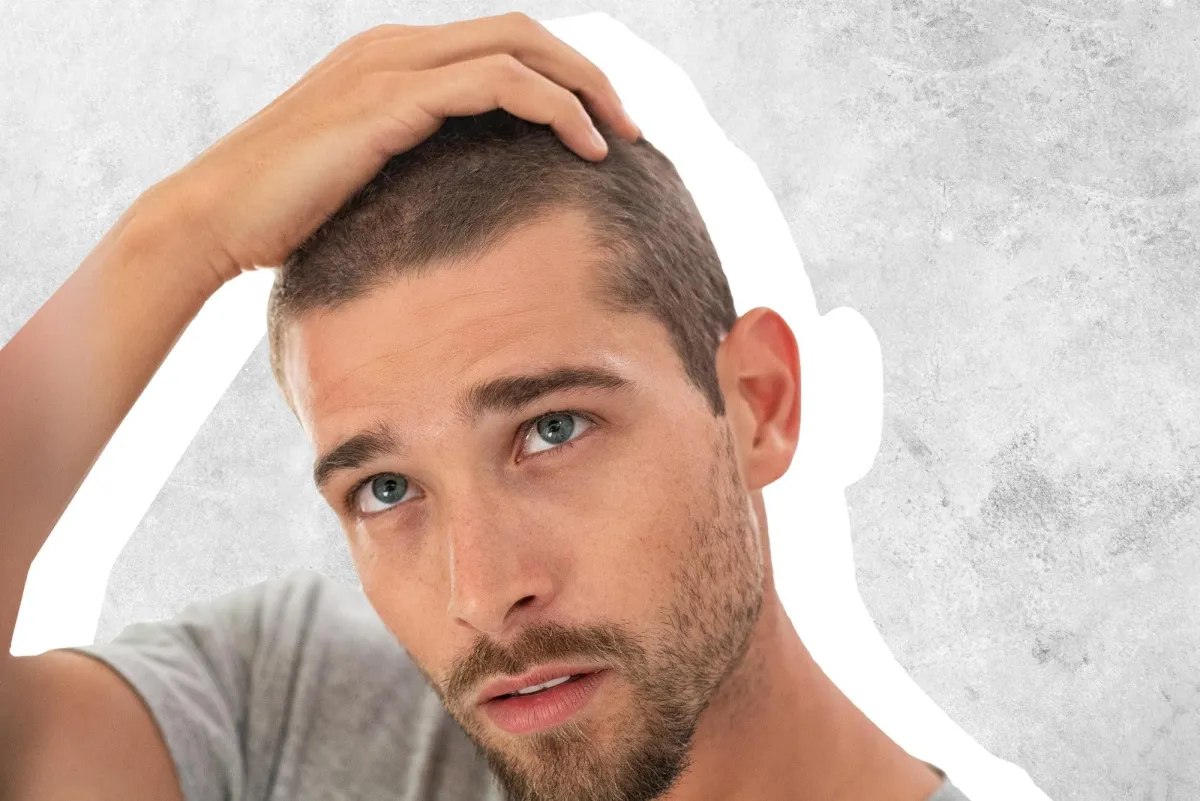
Losing your hair is never a good feeling, most men tend to feel self-conscious about it. Some men decide to completely shave off their heads or constantly wear a hat. One of the most common insecurities men face is hair thinning; for some men, it starts as early as in their 20s. The loss of confidence really starts to affect the way men do their hair and the types of hair cuts they get. Men start to worry about how they will be perceived by friends, family, and colleagues. Hair thinning should not be the cause of self distraughtness, and it should not limit men to have to continuously cover their heads. CADMEN Barbershop has compiled a list of the top 5 best haircuts for men experiencing early hair loss.
Barber Tools List: Every Piece of Equipment a Professional Barber Needs
Barber Tools List: Every Piece of Equipment a Professional Barber Needs
A working barber's tool kit is a capital investment that affects their daily output. Quality equipment performs consistently and lasts longer; budget equipment introduces variation in cut quality and failure points during the service. The list below covers every tool category a professional barber needs, with context on what to prioritize when building a kit from scratch.
Clippers
Clippers are the primary tool for barbering and the most important equipment investment. A professional working 8 hours per day needs clippers that can handle continuous use without overheating, perform consistently across all hair textures, and hold their blade alignment through daily use.
What to look for: professional-grade motors (rotary or magnetic), metal housing (more durable than plastic under heavy use), adjustable taper lever, and a range of compatible guards. Common professional-grade brands in Canada: Andis, Wahl, BaByliss Pro.
A working barber should have at minimum 2 sets of clippers: a primary set for cutting and a backup. A single clipper failure mid-service without a backup stops the work. At $150 to $400 per professional clipper, two sets represent a foundational kit investment of $300 to $800.
Trimmers / Detailers
Trimmers (also called T-liners or detailers) are zero-gap or zero-tooth trimmer models used for outlining, detailing around the hairline, and creating clean lines. They are not interchangeable with clippers. A barber who tries to do outline work with a standard clipper will produce a softer, less defined line than a trimmer allows.
Key brands: Andis T-Outliner, BaByliss FX Skeleton, Wahl Detailer. A quality professional trimmer runs $60 to $200. Two trimmers (primary and backup) is the professional standard.
Straight Razor
A straight razor is used for beard shaping, line definition, and bald fade finishing. The two types used in professional barbering:
- Shavette (changeable blade razor): uses disposable blades. Standard in professional barbering because each client gets a fresh blade, eliminating cross-contamination concerns. Requires no stropping or sharpening.
- Traditional straight razor: requires stropping and periodic professional sharpening. Used by some barbers for their own personal shaving or in specific performance contexts. Not the standard in Canadian commercial barbering due to hygiene compliance requirements around reusable blades on multiple clients.
A quality shavette: $30 to $80. Stock disposable blades appropriate for your specific model.
Scissors / Shears
Scissors are used for scissor-over-comb blending, point cutting, and any service where clipper-only work does not produce the desired finish. A barber who does any texture work, scissor fades, or longer haircuts needs at least one quality pair of cutting shears.
Professional cutting shears: $80 to $400+. Entry-level professional shears ($80 to $150) are adequate for a starting barber. As scissor work becomes a larger part of the service menu, investing in higher-quality shears ($200+) is worth it. Quality shears hold their edge longer, require less sharpening, and produce cleaner cuts.
For thinning and texturizing: a pair of thinning shears or texturizing shears ($60 to $150) expands the range of finish options available.
Combs
Three comb types are standard in a barber kit:
- Barber comb: the all-purpose cutting comb. Wide tooth section for detangling, fine tooth section for scissor-over-comb work.
- Rattail comb: the pointed tail allows sectioning and precise part creation.
- Blade comb (or Oster comb): heat-resistant plastic comb used for clipper-over-comb work on wet or dry hair.
Quality combs: $5 to $20 each. Non-negotiable hygiene standard: combs are sanitized between every client in barbicide or appropriate disinfectant solution.
Brushes
Neck duster: removes cut hair from the client's neck and face before the cape is removed. Every professional setup needs a neck duster or neck brush.
Boar bristle brush: for brushing and training natural wave patterns, particularly on textured hair. Not used on every client but valuable for clients working on wave patterns.
Fade brush: a soft-bristle brush used to feather and blend the bottom of a fade line. Used to soften clipper marks at the end of the cut.
Capes
A cutting cape covers the client's clothing during the service. Barber capes: vinyl or polyester, full-coverage, with snap or velcro neck closure. Professional shops maintain multiple capes per chair to allow laundering while keeping clean ones available. Minimum 4 to 6 capes per active barber station.
Spray Bottle
Used to dampen hair for scissor-over-comb work and product distribution. A standard adjustable spray bottle: $3 to $10. Clean and refill with water regularly; do not use for anything other than water in a spray bottle that contacts client hair.
Sterilization Equipment
Ontario health and safety regulations for barbershops require sanitization of tools between clients. Standard setup: barbicide jar for combs and non-clipper tools, clipper spray or blade wash for clipper blades, and a disinfectant spray for clipper bodies. Some shops use UV sterilizer cabinets as an additional measure. Compliance with Ontario's personal services settings health regulations is a legal requirement, not optional.
Optional but Professional-Grade Additions
- Hair dryer / blow dryer: for scissor cuts, longer styles, and wave activation work
- Foil shaver: for bald fade finishing and close shave work on sensitive skin
- Clipper guards (complete set): #0.5 through #8 plus magnetic or clip-on guards; a complete guard set for each clipper model
- Handheld mirror: for showing the client the back of the cut during and after the service
Frequently Asked Questions
What tools does a beginner barber need?
The essential starting kit: 2 clippers, 1 to 2 trimmers, 1 shavette with blades, 1 pair of cutting shears, a barber comb set (3 combs), a neck duster, capes, a spray bottle, and barbicide/sanitization supplies. Total cost for a functional professional starting kit with mid-range quality tools: $800 to $1,500. Compromising on clipper quality at this stage creates performance issues that limit skill development.
How much does a barber kit cost in Canada?
A professional barber kit with 2 clippers, 2 trimmers, shears, straight razor, combs, and accessories runs $1,000 to $2,500 in Canada depending on brand selection. Premium setups with higher-end Andis or BaByliss Pro equipment and quality shears can reach $3,000 to $4,000. Entry-level kit with budget brands: $400 to $700, though quality trade-offs affect daily performance and longevity.
What clippers do professional barbers use?
Andis, Wahl, and BaByliss Pro are the three most widely used professional clipper brands in Canada. The Andis Master and Andis Fade Master are common choices for fade work. The Wahl Senior and Wahl Magic Clip are popular all-purpose cutting clippers. BaByliss Pro's FX line (FX870, FX672N) is widely used for both cutting and detailing. The specific model preference varies by barber; what matters is professional-grade quality in the chosen brand.
Do barbers need to own their own tools?
In most professional barbering arrangements in Canada, barbers own their own clippers, trimmers, shears, and hand tools. Some shops provide barbicide jars, capes, and sterilization equipment as shop supplies. Whether tools are provided by the shop or the barber depends on the employment or rental arrangement. Independent chair renters always own their own tools. Employed barbers may or may not be required to provide their own, depending on the shop's policies.
Related Reading From CADMEN Barber Academy
- The Top 5 Most Important Tools to Have in Your Barber Beginner Kit
- Barber Tools: What Professional Barbers Use and Why
- What Tools Do You Need to Start as a Barber: The Starter Kit That Covers Every Cut
- Barber Tools: What Each One Does and Why Barbers Use It
- Barber Tools Explained: What Every Instrument in the Shop Actually Does
- Barbershop Equipment List: What You Need to Open and What to Buy First

5 Best Haircuts for Men with
Early Hair Thinning
Losing your hair is never a good feeling, most men tend to feel self-conscious about it. Some men decide to completely shave off their heads or constantly wear a hat. One of the most common insecurities men face is hair thinning; for some men, it starts as early as in their 20s. The loss of confidence really starts to affect the way men do their hair and the types of hair cuts they get. Men start to worry about how they will be perceived by friends, family, and colleagues. Hair thinning should not be the cause of self distraughtness, and it should not limit men to have to continuously cover their heads. CADMEN Barbershop has compiled a list of the top 5 best haircuts for men experiencing early hair loss.


For any request, please contact us at info@cadmen.ca