
Barber Tips & Tricks
Follow us for the latest barber techniques and tips
Barber Tips & Tricks
Follow us for the latest barber techniques and tips
Top 7 Reasons Why Your Clients
Aren't Returning
Stay Ahead in the Barbering Game: Nurturing
Lifelong Clientele
You might have come across the saying “give a client a good cut at a reasonable price, and they'll be yours for life.” Unfortunately in reality this is not always the case. That’s where we come in! Check out some of the reasons why your clients may not be returning, whether they were long-term customers or a first-time appointment, below.

Top 7 Reasons Why Your Clients
Aren't Returning
Stay Ahead in the Barbering Game: Nurturing
Lifelong Clientele
You might have come across the saying “give a client a good cut at a reasonable price, and they'll be yours for life.” Unfortunately in reality this is not always the case. That’s where we come in! Check out some of the reasons why your clients may not be returning, whether they were long-term customers or a first-time appointment, below.
Career in Mobile Barbering: Key
Things You Need to Know about
While most barbers work in physical barbershops or hair salons, there are a growing number of barbers who work on-call. What does it mean to be a mobile barber? What are their primary responsibilities? Where to find them? In this blog, we will explain some key terms you should know about mobile barbering and how you can start a new career in it.

Career in Mobile Barbering: Key
Things You Need to Know about
While most barbers work in physical barbershops or hair salons, there are a growing number of barbers who work on-call. What does it mean to be a mobile barber? What are their primary responsibilities? Where to find them? In this blog, we will explain some key terms you should know about mobile barbering and how you can start a new career in it.
Top 4 Ways for Barbers to
Promote Themselves
Marketing is key. Knowing how to market yourself as a barber can be the difference between having 5 to 20 clients a day. If you are interested in boosting the number of your customers and furthering your advertising skills, read the list below with four ways to promote yourself as a barber.

Top 4 Ways for Barbers to
Promote Themselves
Marketing is key. Knowing how to market yourself as a barber can be the difference between having 5 to 20 clients a day. If you are interested in boosting the number of your customers and furthering your advertising skills, read the list below with four ways to promote yourself as a barber.
5 Tips for Social Media Content
Creating as a Barber
It is next to impossible to find someone who is not on social media today. More than just a tool for connection, social media is key helping barbers market themselves and promote their names and skills. If you want to up your barber game quickly, here are five tips on how to promote content online that you don't want to miss out on.

5 Tips for Social Media Content
Creating as a Barber
It is next to impossible to find someone who is not on social media today. More than just a tool for connection, social media is key helping barbers market themselves and promote their names and skills. If you want to up your barber game quickly, here are five tips on how to promote content online that you don't want to miss out on.
5 Best Haircuts for Men with
Early Hair Thinning
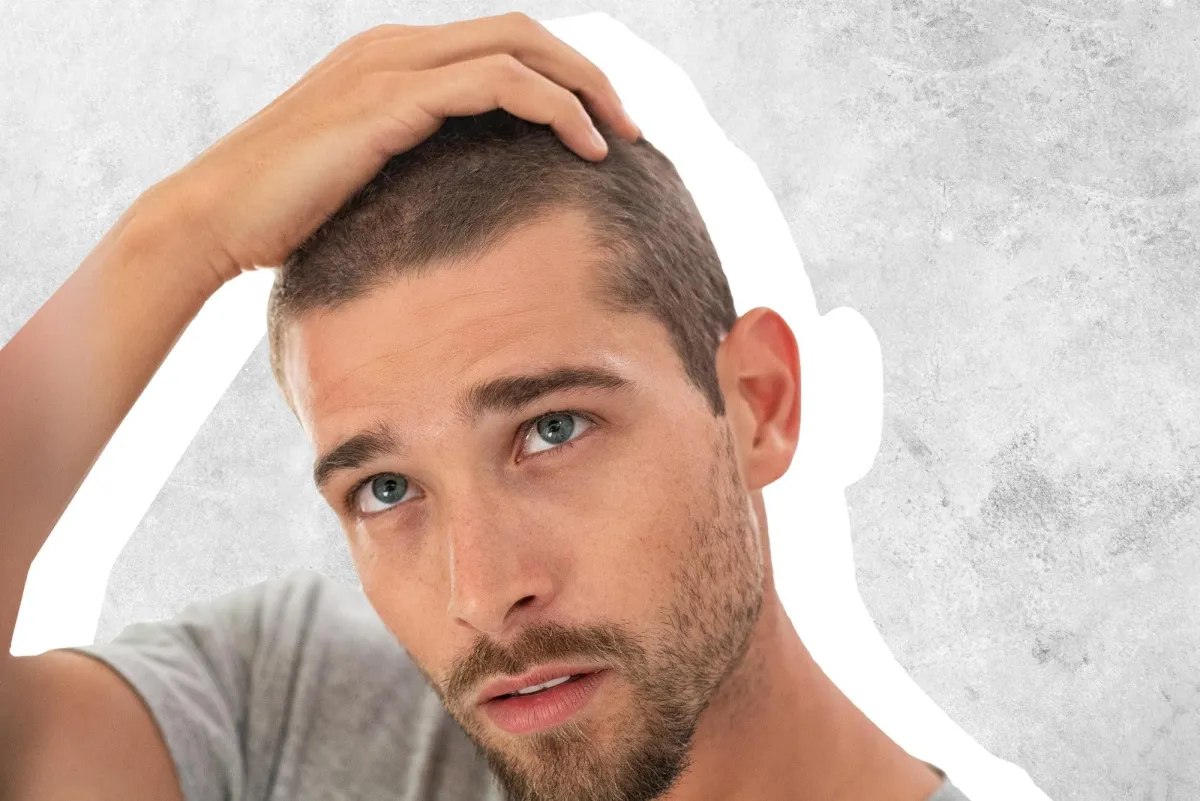
Losing your hair is never a good feeling, most men tend to feel self-conscious about it. Some men decide to completely shave off their heads or constantly wear a hat. One of the most common insecurities men face is hair thinning; for some men, it starts as early as in their 20s. The loss of confidence really starts to affect the way men do their hair and the types of hair cuts they get. Men start to worry about how they will be perceived by friends, family, and colleagues. Hair thinning should not be the cause of self distraughtness, and it should not limit men to have to continuously cover their heads. CADMEN Barbershop has compiled a list of the top 5 best haircuts for men experiencing early hair loss.
The Barbershop Consultation: How to Communicate What You Want Clearly
The Barbershop Consultation: How to Communicate What You Want Clearly
Most haircut disappointments happen in the consultation, not the cut. The barber executes what they understood from the conversation. If the communication was vague, the interpretation was a guess. This guide covers how to give your barber enough specific information that the result is predictable rather than a variable outcome.
Why Vague Requests Produce Inconsistent Results
Words like "short," "clean," and "a little off" mean different things to different barbers and in different contexts. "Short" at a barbershop that specializes in skin fades might mean a number 2 with a skin fade. "Short" at a traditional barbershop might mean a two-inch taper with a clean neckline. Neither interpretation is wrong; they are both reasonable readings of a vague request.
The more specific the description, the narrower the range of interpretations. Specific requests produce specific results. Vague requests produce whatever the barber's default interpretation is, which may or may not match what you had in mind.
What to Specify
Length on the sides and back: use guard numbers, measurements, or specific references. "Number 2 on the sides" is unambiguous. "Short on the sides" is not. If you know which guard number produces your preferred length, use it every time with every barber.
Length on top: describe it in terms of measurement or reference to a previous cut. "One inch on top" is useful. "A little longer than the sides" is not precise because it depends on what the sides are. If you have a previous haircut that you liked, say so and describe when and where you got it so the barber can calibrate.
Fade type and height: specify whether you want a low, mid, or high fade, and whether it should be a skin fade, a zero-guard fade, or a taper. If you do not know the exact terminology, describe the result you want: "I want the sides very close near the ear and to blend into the hair gradually higher up."
Neckline: mention whether you want a squared neckline, a rounded neckline, or a tapered neckline. If you have no preference, the barber will choose, and their default may not be yours.
Any specific features: cowlicks, a widow's peak, areas of thinning, or hair behaviors that affect the cut should be mentioned before the cut begins. These are not complaints; they are useful information the barber needs to design the cut correctly.
How to Use a Reference Photo
A photo shows the barber what the finished style looks like rather than requiring them to translate your words into a visual. This is the most reliable way to communicate a specific style, particularly for a cut you have not had before or with a barber you have not seen previously.
When using a photo, identify which elements of the photo you want and which you are flexible on. "I want this fade height and this general shape on top, but the top doesn't have to be exactly this length" is more useful than silently handing over a photo and assuming everything in it will be replicated. The photo narrows the target. Your verbal clarification refines it.
Use a photo of a person with a similar hair type and texture to your own when possible. A photo of a style on someone with thick, coarse hair will not translate identically onto fine, straight hair. The proportions change and the barber will need to adapt. Acknowledging this ("I know my hair is different but I want this general shape") prevents the barber from feeling they cannot tell you that the exact replication is not possible.
Frequently Asked Questions
What if I do not know the terminology?
Describe the result you want in plain terms. "I want the sides to be very short, shorter at the bottom and longer at the top where it meets the longer hair" describes a fade without using the word fade. "I want a line at the back that looks clean" describes a defined neckline without using neckline terminology. Barbers work with clients who do not know the technical terms every day; what matters is that the description is specific enough to narrow the interpretation.
Should I bring the same photo every time?
If you have found a photo that consistently produces the result you want, yes. Save it on your phone and use it every time with every barber. Your regular barber will remember your preferences over time, but a photo eliminates any ambiguity and is especially useful the first time you see a new barber.
What should I do if the barber is cutting more than I wanted?
Say something immediately. A barber in the middle of a cut who is told "that's shorter than I wanted, can we keep the rest at this length?" can adjust. A barber told at the end "that's shorter than I wanted" cannot undo the cut. Speak during the cut if something is going differently than you expected. A professional barber will not take this as a criticism; it is exactly the information they need to correct course.
How do I describe what I do NOT want?
Describe the specific outcome you want to avoid and explain why. "I do not want the temples shaved in" means the barber should avoid taking the temple hair too short or squaring the hairline at the temple. "I do not want it too tight on the sides" means preserve more length at the sides than a close fade would. Negative descriptions are useful when paired with the reason: "I have been burned by getting it too short before and I prefer to keep more length."
Does giving detailed instructions make the barber uncomfortable?
No. Specific instructions are easier to work with than vague ones. A barber given clear instructions knows they are delivering what was asked for. A barber working from a vague request is guessing and hoping. Most barbers prefer clients who communicate clearly because it eliminates the uncertainty of whether the client will like the result. The consultation is the barber's opportunity to collect information; use it.
Related Reading From CADMEN Barber Academy
- The Bowl Cut Is Back: The Modern Version and How to Get It
- How to Cut a Buzz Cut: Guard Selection, Blending, and Common Mistakes
- The Buzz Cut: What It Is and What Face Shapes It Actually Works For
- Buzz Cut Guard Sizes: What Each Length Looks Like and How to Choose the Right One
- Buzz Cut Guard Lengths: What Each Number Does to Your Hair
- How to Choose a Barber in Toronto for the Best Fade

5 Best Haircuts for Men with
Early Hair Thinning
Losing your hair is never a good feeling, most men tend to feel self-conscious about it. Some men decide to completely shave off their heads or constantly wear a hat. One of the most common insecurities men face is hair thinning; for some men, it starts as early as in their 20s. The loss of confidence really starts to affect the way men do their hair and the types of hair cuts they get. Men start to worry about how they will be perceived by friends, family, and colleagues. Hair thinning should not be the cause of self distraughtness, and it should not limit men to have to continuously cover their heads. CADMEN Barbershop has compiled a list of the top 5 best haircuts for men experiencing early hair loss.


For any request, please contact us at info@cadmen.ca