
Barber Tips & Tricks
Follow us for the latest barber techniques and tips
Barber Tips & Tricks
Follow us for the latest barber techniques and tips
Top 7 Reasons Why Your Clients
Aren't Returning
Stay Ahead in the Barbering Game: Nurturing
Lifelong Clientele
You might have come across the saying “give a client a good cut at a reasonable price, and they'll be yours for life.” Unfortunately in reality this is not always the case. That’s where we come in! Check out some of the reasons why your clients may not be returning, whether they were long-term customers or a first-time appointment, below.

Top 7 Reasons Why Your Clients
Aren't Returning
Stay Ahead in the Barbering Game: Nurturing
Lifelong Clientele
You might have come across the saying “give a client a good cut at a reasonable price, and they'll be yours for life.” Unfortunately in reality this is not always the case. That’s where we come in! Check out some of the reasons why your clients may not be returning, whether they were long-term customers or a first-time appointment, below.
Career in Mobile Barbering: Key
Things You Need to Know about
While most barbers work in physical barbershops or hair salons, there are a growing number of barbers who work on-call. What does it mean to be a mobile barber? What are their primary responsibilities? Where to find them? In this blog, we will explain some key terms you should know about mobile barbering and how you can start a new career in it.

Career in Mobile Barbering: Key
Things You Need to Know about
While most barbers work in physical barbershops or hair salons, there are a growing number of barbers who work on-call. What does it mean to be a mobile barber? What are their primary responsibilities? Where to find them? In this blog, we will explain some key terms you should know about mobile barbering and how you can start a new career in it.
Top 4 Ways for Barbers to
Promote Themselves
Marketing is key. Knowing how to market yourself as a barber can be the difference between having 5 to 20 clients a day. If you are interested in boosting the number of your customers and furthering your advertising skills, read the list below with four ways to promote yourself as a barber.

Top 4 Ways for Barbers to
Promote Themselves
Marketing is key. Knowing how to market yourself as a barber can be the difference between having 5 to 20 clients a day. If you are interested in boosting the number of your customers and furthering your advertising skills, read the list below with four ways to promote yourself as a barber.
5 Tips for Social Media Content
Creating as a Barber
It is next to impossible to find someone who is not on social media today. More than just a tool for connection, social media is key helping barbers market themselves and promote their names and skills. If you want to up your barber game quickly, here are five tips on how to promote content online that you don't want to miss out on.

5 Tips for Social Media Content
Creating as a Barber
It is next to impossible to find someone who is not on social media today. More than just a tool for connection, social media is key helping barbers market themselves and promote their names and skills. If you want to up your barber game quickly, here are five tips on how to promote content online that you don't want to miss out on.
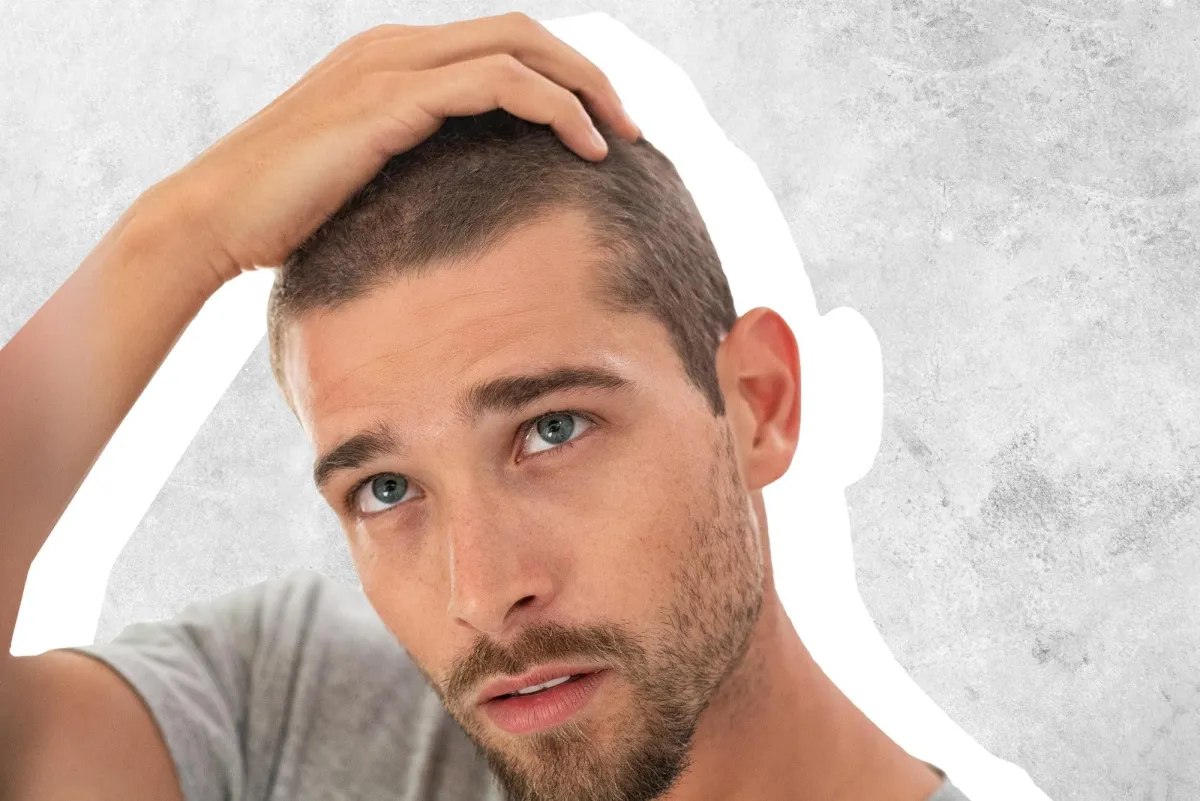
5 Best Haircuts for Men with
Early Hair Thinning
Losing your hair is never a good feeling, most men tend to feel self-conscious about it. Some men decide to completely shave off their heads or constantly wear a hat. One of the most common insecurities men face is hair thinning; for some men, it starts as early as in their 20s. The loss of confidence really starts to affect the way men do their hair and the types of hair cuts they get. Men start to worry about how they will be perceived by friends, family, and colleagues. Hair thinning should not be the cause of self distraughtness, and it should not limit men to have to continuously cover their heads. CADMEN Barbershop has compiled a list of the top 5 best haircuts for men experiencing early hair loss.

Clipper Guard Sizes: What Each Number Does and When Barbers Use Them
Clipper Guard Sizes: What Each Number Does and When Barbers Use Them
Clipper guards are numbered attachments that control how close the blades cut to the scalp. Each number corresponds to a specific length: the higher the number, the more hair is left. Understanding the guard system lets you request a specific length instead of using vague descriptors like "short" or "medium" that mean different things to different people.
Standard Guard Sizes and Lengths
The most common guards across most clipper brands, in 1/8-inch increments:
Guard 0 (no guard): Closest possible cut with the blades alone. Not skin, the blades leave approximately 1/16 inch of hair. Often used for the bottom of a skin fade before a razor is used for true skin.
Guard 1: 1/8 inch. Very close. Standard for the shortest section of a low fade or the bottom of many tapers.
Guard 2: 1/4 inch. Common for the sides on a close-cut style. Many men who want "short sides" end up with a guard 2.
Guard 3: 3/8 inch. Medium-short. Used for slightly longer sides or as a transition guard in blending.
Guard 4: 1/2 inch. Medium. Often used as the base for a taper on the sides or as the top length for a very short overall cut like a crew cut.
Guard 5: 5/8 inch. Used for a moderate overall cut length or as the top guard when more length is wanted on the sides.
Guard 6: 3/4 inch. Medium-long for clipper work. Often used for the top of a classic crew cut or an overall cut where some length is wanted without going scissors-only.
Guard 7: 7/8 inch. Longer clipper work. Less commonly used in typical men's cuts but useful for length-on-top styles where clippers handle the bulk before scissors refine.
Guard 8: 1 inch. The longest standard guard. Leaves an inch of hair. Used when men want a uniform length all over that is still structured, or as a starting point before scissor work.
CADMEN Training
Clipper technique and guard application are foundational at CADMEN Barber Academy. academy.cadmen.ca/in-person-training.
Frequently Asked Questions
What clipper guard should I ask for if I want a fade?
A fade uses multiple guards in sequence to create a gradual transition, so there is no single guard number that defines a fade. The fade is described by its position (low, mid, high) and its starting and ending lengths. How a typical skin fade is cut: the barber starts with no guard (or guard 0) at the very bottom of the fade, taking the hair as close as possible to skin. Moving up the head, the barber switches to successively higher guards to create the gradient: guard 1, then guard 1.5 (available on clipper brands with half-size guards), then guard 2, then guard 3, blending at each transition. The exact guards used depend on the fade level (how high up the head the fade extends) and the desired contrast. Low fade: the skin or near-skin section is kept below the temple line, usually below or just above the ear. The transition happens in a narrow band just above the natural hairline. The guard sequence stays in a smaller zone. High fade: the skin or near-skin section extends up to the temple or higher. A wider zone of the head is involved in the transition, and more guards are used across a greater vertical distance. When requesting: instead of asking for a specific guard, describe the fade level and the length you want on top. "Low fade on the sides, skin at the bottom, and leave about 2.5 inches on top" gives the barber what they need. Using a reference photo alongside that description removes ambiguity entirely.
What is the difference between a number 2 and a number 3 cut?
A number 2 cut leaves 1/4 inch (approximately 6mm) of hair. A number 3 cut leaves 3/8 inch (approximately 10mm) of hair. The practical difference: on the sides of a haircut, this is a visible length distinction. A number 2 on the sides produces a close, very neat appearance where the scalp is visible through the hair. A number 3 on the sides is noticeably longer, there is more coverage of the scalp and the hair appears denser at the sides. For an overall uniform cut (the same guard all over, like a military-style all-over cut), the distinction becomes more about overall density and coverage. A number 2 all over is a very close, almost buzz-cut appearance. A number 3 all over has more visible hair length and shows hair texture more clearly. How the choice affects maintenance: a number 2 cut grows out past its "fresh" appearance faster than a number 3, because the starting point is shorter and any growth creates more contrast with the original length. A number 3 stays within an acceptable range for slightly longer after the cut. How it affects appearance: the right choice depends on the client's preference for how visible the scalp is. Men who are comfortable with their hairline and scalp often prefer closer cuts. Men who prefer more coverage tend toward number 3 or higher. This is a preference question rather than a "better" or "worse" question. Asking a barber what they recommend given your specific head shape and hair type, rather than picking a guard number in isolation, produces better outcomes.
Can I use clipper guards at home to maintain my haircut?
Yes. Home clippers are widely available and can extend the life of a professional cut between barbershop visits, particularly for maintaining the length on the sides and back. What works well at home: maintaining the side and back lengths after a professional cut. Using the same guard numbers your barber used keeps the cut from looking overgrown between visits. Cleaning up the neckline with a trimmer. The neckline is visible and grows in noticeably within 2 weeks of a cut. Many men buy a small trimmer specifically for neckline maintenance between 4-week barbershop visits. Maintaining a simple all-over length (like a guard 4 all over) is straightforward at home, run the same guard across all sections. What is difficult at home: blending and fading. The skill that makes a professional fade look seamless is the ability to blend multiple guard lengths so the transitions are invisible. Doing this on yourself (especially on the back of your head) is very difficult. Most home attempts at fading produce visible lines where the guard lengths change rather than smooth gradients. Complex cuts. Anything with a side part, disconnected sections, or scissor work on the top requires more skill and visibility than most men have for self-cutting. The practical recommendation: use home clippers for maintenance tasks (neckline cleanup, keeping the sides at the right length), but return to the barbershop for the cut itself and for anything involving blending or fading. This combination reduces visit frequency (and cost) while keeping the cut looking reasonable between visits.
Related Reading From CADMEN Barber Academy
- Clipper Blade Numbers Explained: What Each Guard Does to Your Hair
- How to Clean and Care for Clipper Blades
- Clipper Maintenance for Barbers: How to Keep Your Tools Cutting Like New
- How to Clean and Maintain Barber Clippers: The Routine That Keeps Them Cutting Correctly
- Barber Clipper Maintenance: How to Keep Clippers Running Clean Every Day
- Clipper Over Comb: The Foundational Technique Every Barber Needs to Master

5 Best Haircuts for Men with
Early Hair Thinning
Losing your hair is never a good feeling, most men tend to feel self-conscious about it. Some men decide to completely shave off their heads or constantly wear a hat. One of the most common insecurities men face is hair thinning; for some men, it starts as early as in their 20s. The loss of confidence really starts to affect the way men do their hair and the types of hair cuts they get. Men start to worry about how they will be perceived by friends, family, and colleagues. Hair thinning should not be the cause of self distraughtness, and it should not limit men to have to continuously cover their heads. CADMEN Barbershop has compiled a list of the top 5 best haircuts for men experiencing early hair loss.


For any request, please contact us at info@cadmen.ca