
Barber Tips & Tricks
Follow us for the latest barber techniques and tips
Barber Tips & Tricks
Follow us for the latest barber techniques and tips
Top 7 Reasons Why Your Clients
Aren't Returning
Stay Ahead in the Barbering Game: Nurturing
Lifelong Clientele
You might have come across the saying “give a client a good cut at a reasonable price, and they'll be yours for life.” Unfortunately in reality this is not always the case. That’s where we come in! Check out some of the reasons why your clients may not be returning, whether they were long-term customers or a first-time appointment, below.

Top 7 Reasons Why Your Clients
Aren't Returning
Stay Ahead in the Barbering Game: Nurturing
Lifelong Clientele
You might have come across the saying “give a client a good cut at a reasonable price, and they'll be yours for life.” Unfortunately in reality this is not always the case. That’s where we come in! Check out some of the reasons why your clients may not be returning, whether they were long-term customers or a first-time appointment, below.
Career in Mobile Barbering: Key
Things You Need to Know about
While most barbers work in physical barbershops or hair salons, there are a growing number of barbers who work on-call. What does it mean to be a mobile barber? What are their primary responsibilities? Where to find them? In this blog, we will explain some key terms you should know about mobile barbering and how you can start a new career in it.

Career in Mobile Barbering: Key
Things You Need to Know about
While most barbers work in physical barbershops or hair salons, there are a growing number of barbers who work on-call. What does it mean to be a mobile barber? What are their primary responsibilities? Where to find them? In this blog, we will explain some key terms you should know about mobile barbering and how you can start a new career in it.
Top 4 Ways for Barbers to
Promote Themselves
Marketing is key. Knowing how to market yourself as a barber can be the difference between having 5 to 20 clients a day. If you are interested in boosting the number of your customers and furthering your advertising skills, read the list below with four ways to promote yourself as a barber.

Top 4 Ways for Barbers to
Promote Themselves
Marketing is key. Knowing how to market yourself as a barber can be the difference between having 5 to 20 clients a day. If you are interested in boosting the number of your customers and furthering your advertising skills, read the list below with four ways to promote yourself as a barber.
5 Tips for Social Media Content
Creating as a Barber
It is next to impossible to find someone who is not on social media today. More than just a tool for connection, social media is key helping barbers market themselves and promote their names and skills. If you want to up your barber game quickly, here are five tips on how to promote content online that you don't want to miss out on.

5 Tips for Social Media Content
Creating as a Barber
It is next to impossible to find someone who is not on social media today. More than just a tool for connection, social media is key helping barbers market themselves and promote their names and skills. If you want to up your barber game quickly, here are five tips on how to promote content online that you don't want to miss out on.
5 Best Haircuts for Men with
Early Hair Thinning
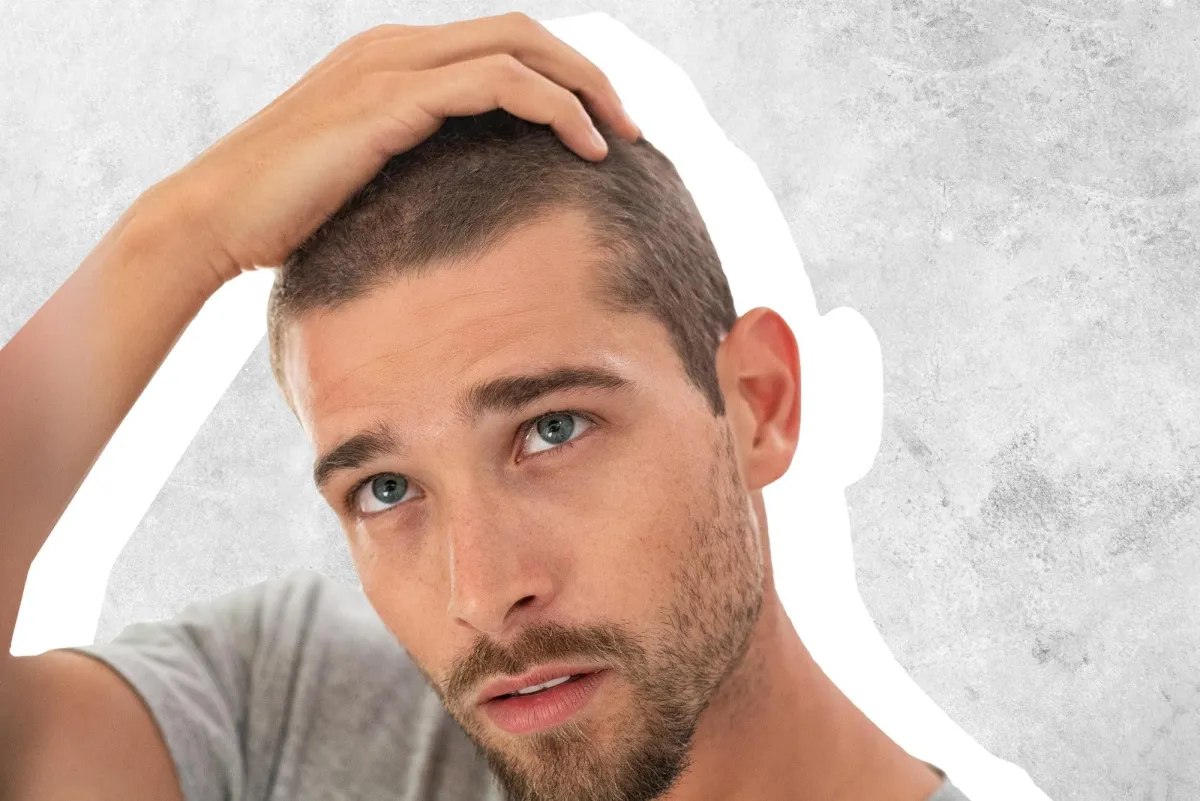
Losing your hair is never a good feeling, most men tend to feel self-conscious about it. Some men decide to completely shave off their heads or constantly wear a hat. One of the most common insecurities men face is hair thinning; for some men, it starts as early as in their 20s. The loss of confidence really starts to affect the way men do their hair and the types of hair cuts they get. Men start to worry about how they will be perceived by friends, family, and colleagues. Hair thinning should not be the cause of self distraughtness, and it should not limit men to have to continuously cover their heads. CADMEN Barbershop has compiled a list of the top 5 best haircuts for men experiencing early hair loss.
360 Waves: What They Are and How They're Done
360 Waves: What They Are and How They're Done
360 waves are a men's hairstyle where the natural hair is trained to lay in a consistent circular wave pattern radiating from a center point at the crown. The waves are not a cut in themselves, they are the result of a deliberate, consistent training process applied to short natural hair over weeks or months. Creating and maintaining waves requires commitment to a daily routine.
The Hair Type Requirement
360 waves are developed on hair with natural curl or coil. Type 3 and 4 hair (curly to coily) has the natural texture that allows waves to form. The natural curl, when consistently trained in a specific direction, creates the visual wave pattern. Straight hair does not have the natural pattern to form waves regardless of brushing technique.
The Training Process
The primary tool is a wave brush, a brush with specific bristle angles designed to lay the hair flat and in a consistent direction. The process: the hair is kept short (a low guard fade cut is the most common starting point). After washing, a wave cream or moisturizer is applied to damp hair. The hair is brushed with the wave brush, always in the same directional pattern from the crown outward. A durag is worn overnight to compress the hair and hold the trained direction. This process is repeated daily. The wave pattern typically starts to become visible after 2 to 4 weeks of consistent daily routine and becomes well-defined at 4 to 8 weeks.
The Role of the Barber
The barber's role in 360 waves is maintaining the fade while keeping the wave section at the right length for training. Cutting too short resets the wave development; cutting too long reduces the definition. An experienced barber who works with waves understands the balance.
CADMEN Training
Natural hair techniques and texture-specific approaches are covered in CADMEN's barbering program. academy.cadmen.ca/in-person-training.
Frequently Asked Questions
How long does it take to get 360 waves?
The time required to develop 360 waves depends on hair type, the consistency of the routine, and whether the person is starting from scratch or building on existing wave development. General timeline expectations: first signs of waves: most people with suitable hair type see initial wave definition after 2 to 4 weeks of consistent daily routine. The waves are present but shallow, they are not yet deep or fully defined. Decent wave definition (presentable waves): 4 to 8 weeks for most people. At this point the waves are visible enough to show the pattern but still continuing to develop depth. Well-defined, deep waves: 3 to 6 months of consistent daily maintenance. "360 wolfing", a technique where the hair is not cut for an extended period to develop depth before cutting, can accelerate the visual depth development, though the overall timeline is similar. Factors that affect the timeline: hair type, Type 4A/4B hair often develops waves faster because the natural coil pattern is already close to the wave pattern being trained. Type 3 hair (looser curl) also works well. Consistency, the routine must be daily. Skipping days significantly slows development. Missing a week essentially resets progress. Starting length and condition, starting with a fresh cut at the correct length (typically guard 1.5 to 2) is more efficient than starting with longer or inconsistently grown hair. Genetics, some people develop waves more easily than others regardless of routine consistency. There is a genetic component to how naturally suited the scalp's growth pattern is to forming waves. What to expect realistically: developing quality waves is a weeks-to-months process. Claims of getting waves in a week are not accurate for most people. The commitment is daily brushing (10 to 20 minutes of brushing per session is common), consistent moisturizing, and nightly durag wear.
What do I need to start getting 360 waves?
The core items needed to start developing 360 waves: a wave brush. This is the most important tool. Wave brushes are graded by bristle firmness: soft, medium, and hard. Soft brushes are used for laying hair down and are often recommended when starting out or for softer hair types. Medium and hard brushes are used as the waves develop and the hair needs more pressure to maintain the pattern. Most people who maintain waves use multiple brush types in combination. A durag. Worn overnight to compress the hair and hold the trained direction during sleep. A velvet or silky durag compresses more effectively than a standard fabric one. Wearing it consistently overnight is essential to maintain the wave direction between brushing sessions. Wave cream or pomade. Applied to damp hair before brushing to moisturize and help lay the hair flat in the brushing direction. Specific wave products (Wave Nouveau, Sportin' Waves, Murray's, and similar) are formulated for this purpose. Avoid products with heavy alcohols that dry out the hair. A moisturizing shampoo or co-wash. Waves require healthy, moisturized hair. Washing regularly (1 to 2 times per week) with a moisturizing shampoo keeps the scalp clean and the hair hydrated. Over-washing or using harsh shampoos strips moisture and makes the hair harder to train. The initial cut. Starting the process from a fresh cut at guard 1.5 to 2 gives the hair the right length for wave development. The wave section needs to be short enough that the natural pattern is visible but long enough that the wave can form and deepen. Total cost to start: a wave brush is $10 to $25, a durag is $5 to $15, and wave products are $5 to $20. The actual process costs less than $50 to start; the investment is primarily time and consistency, not products.
Can any hair type get 360 waves?
Not all hair types develop 360 waves equally, the suitability depends on the natural curl pattern. Hair types that develop waves: 360 waves develop most naturally on Type 3 (curly) and Type 4 (coily) hair, particularly 4A and 4B. This is because the natural curl pattern of these hair types already has the directional tendency that the wave training process reinforces and organizes. The coil or curl provides the structure that becomes the wave when laid flat and trained. Type 3A and 3B (looser curls) can develop waves but may require more effort because the curl pattern is looser and needs more training to hold a defined wave direction. Hair types with significant challenges: Type 1 (straight) hair does not have the natural curl texture to form waves. The wave pattern requires some natural curl or coil to work with. Straight hair brushed in a directional pattern simply lies flat rather than forming a wave. Type 2 (wavy) hair is an intermediate case. Some people with well-defined Type 2B or 2C hair can develop a basic wave pattern, but the result is typically less defined than what develops on Type 3 or 4 hair. The natural curl is less tight, so the wave does not develop the same depth. The honest answer: if you have naturally straight hair, 360 waves are not a realistic goal regardless of routine. If you have Type 3 or 4 hair, waves are achievable with consistent effort. If you have Type 2 hair, it is worth trying but the result will vary based on how well-defined your natural wave pattern is. A barber who works regularly with waves can assess your hair type and give you a realistic expectation in one consultation visit.
Related Reading From CADMEN Barber Academy
- 360 Waves: What Barbers Need to Know
- How to Do Finger Waves: Barber Technique Guide
- Choosing a Hairstyle for Your Face Shape: A Practical Guide
- The Men's Quiff: How to Cut and Style It
- The Quiff Haircut: How to Get It and Style It
- The Quiff Haircut: What It Is and How It Compares to the Pompadour
Want to learn to cut a haircut for waves yourself? CADMEN Barber Academy teaches cutting hands-on, with an educator beside you. See the barber academy in Mississauga or view in-person classes and send an enquiry.
Watch the free Barbering for Beginners playlist on YouTube.

5 Best Haircuts for Men with
Early Hair Thinning
Losing your hair is never a good feeling, most men tend to feel self-conscious about it. Some men decide to completely shave off their heads or constantly wear a hat. One of the most common insecurities men face is hair thinning; for some men, it starts as early as in their 20s. The loss of confidence really starts to affect the way men do their hair and the types of hair cuts they get. Men start to worry about how they will be perceived by friends, family, and colleagues. Hair thinning should not be the cause of self distraughtness, and it should not limit men to have to continuously cover their heads. CADMEN Barbershop has compiled a list of the top 5 best haircuts for men experiencing early hair loss.


For any request, please contact us at info@cadmen.ca