
Barber Tips & Tricks
Follow us for the latest barber techniques and tips
Barber Tips & Tricks
Follow us for the latest barber techniques and tips
Top 7 Reasons Why Your Clients
Aren't Returning
Stay Ahead in the Barbering Game: Nurturing
Lifelong Clientele
You might have come across the saying “give a client a good cut at a reasonable price, and they'll be yours for life.” Unfortunately in reality this is not always the case. That’s where we come in! Check out some of the reasons why your clients may not be returning, whether they were long-term customers or a first-time appointment, below.

Top 7 Reasons Why Your Clients
Aren't Returning
Stay Ahead in the Barbering Game: Nurturing
Lifelong Clientele
You might have come across the saying “give a client a good cut at a reasonable price, and they'll be yours for life.” Unfortunately in reality this is not always the case. That’s where we come in! Check out some of the reasons why your clients may not be returning, whether they were long-term customers or a first-time appointment, below.
Career in Mobile Barbering: Key
Things You Need to Know about
While most barbers work in physical barbershops or hair salons, there are a growing number of barbers who work on-call. What does it mean to be a mobile barber? What are their primary responsibilities? Where to find them? In this blog, we will explain some key terms you should know about mobile barbering and how you can start a new career in it.

Career in Mobile Barbering: Key
Things You Need to Know about
While most barbers work in physical barbershops or hair salons, there are a growing number of barbers who work on-call. What does it mean to be a mobile barber? What are their primary responsibilities? Where to find them? In this blog, we will explain some key terms you should know about mobile barbering and how you can start a new career in it.
Top 4 Ways for Barbers to
Promote Themselves
Marketing is key. Knowing how to market yourself as a barber can be the difference between having 5 to 20 clients a day. If you are interested in boosting the number of your customers and furthering your advertising skills, read the list below with four ways to promote yourself as a barber.

Top 4 Ways for Barbers to
Promote Themselves
Marketing is key. Knowing how to market yourself as a barber can be the difference between having 5 to 20 clients a day. If you are interested in boosting the number of your customers and furthering your advertising skills, read the list below with four ways to promote yourself as a barber.
5 Tips for Social Media Content
Creating as a Barber
It is next to impossible to find someone who is not on social media today. More than just a tool for connection, social media is key helping barbers market themselves and promote their names and skills. If you want to up your barber game quickly, here are five tips on how to promote content online that you don't want to miss out on.

5 Tips for Social Media Content
Creating as a Barber
It is next to impossible to find someone who is not on social media today. More than just a tool for connection, social media is key helping barbers market themselves and promote their names and skills. If you want to up your barber game quickly, here are five tips on how to promote content online that you don't want to miss out on.
5 Best Haircuts for Men with
Early Hair Thinning
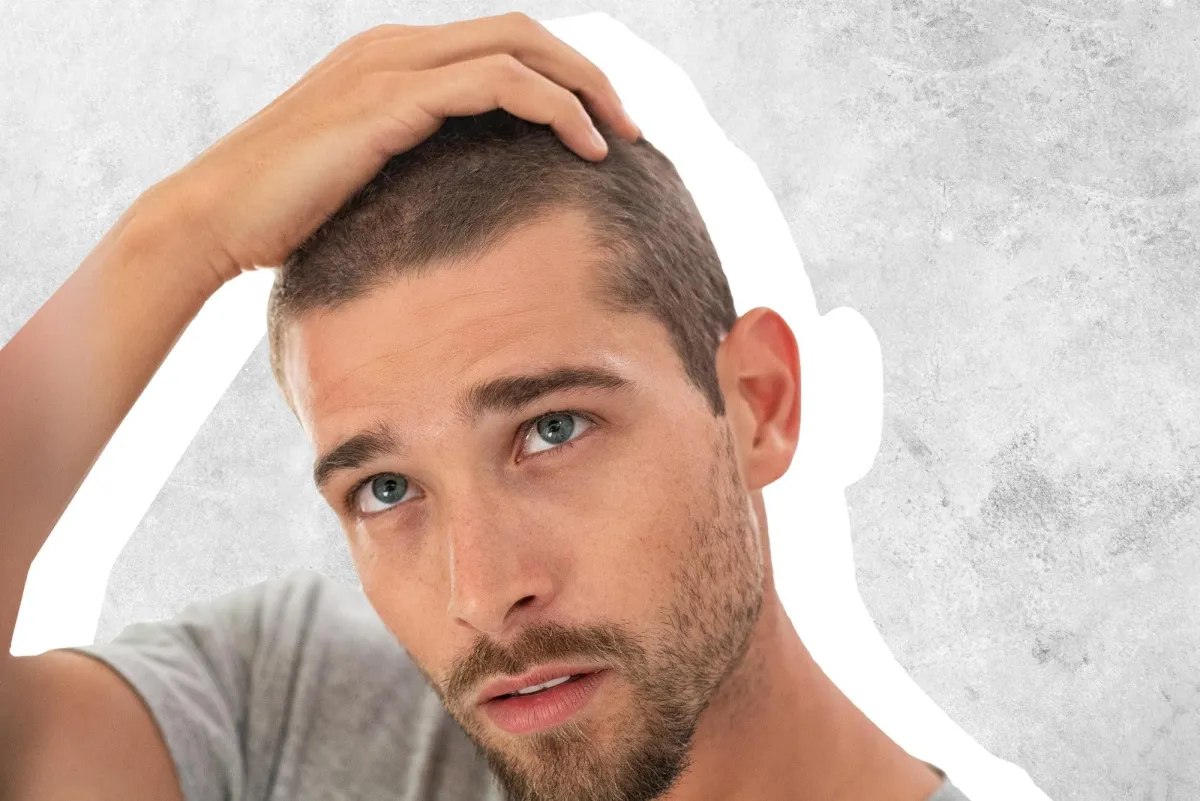
Losing your hair is never a good feeling, most men tend to feel self-conscious about it. Some men decide to completely shave off their heads or constantly wear a hat. One of the most common insecurities men face is hair thinning; for some men, it starts as early as in their 20s. The loss of confidence really starts to affect the way men do their hair and the types of hair cuts they get. Men start to worry about how they will be perceived by friends, family, and colleagues. Hair thinning should not be the cause of self distraughtness, and it should not limit men to have to continuously cover their heads. CADMEN Barbershop has compiled a list of the top 5 best haircuts for men experiencing early hair loss.
Barber vs. Hairstylist: Key Differences Explained
Barber vs. Hairstylist: Key Differences Explained
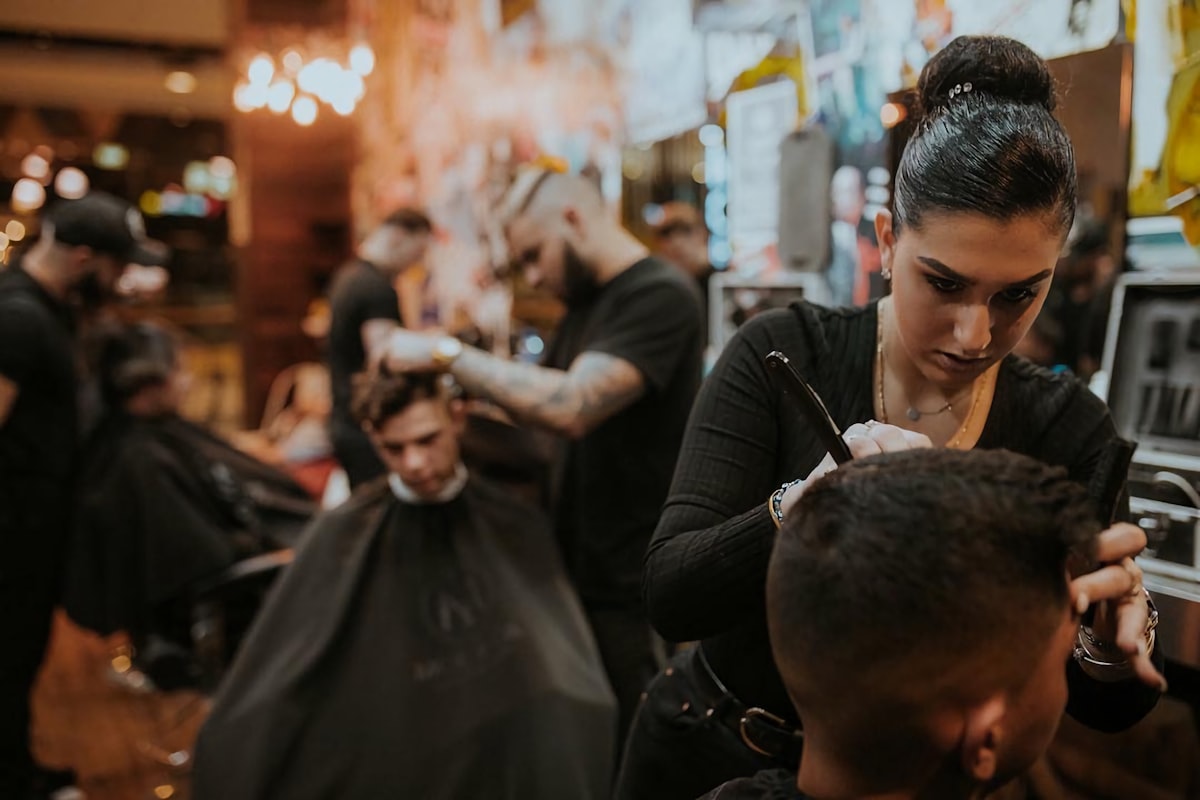
Barbers and hairstylists both cut hair, and in some markets they work side by side in the same space. The distinction matters when it comes to specific services, training focus, and the kind of result each practitioner is likely to deliver on a given style. Here is where the differences are real and where they are not.
Training Focus
Barbers train specifically in men's hair, fading, clipper technique, beard grooming, and straight-razor shaving. The program curriculum is built around the techniques and tools (clippers, straight razors, trimmers) that define men's barbershop services. The client base is primarily men, and the range of styles is built around short-to-medium cuts with clipper work as the core skill.
Hairstylists train across a broader range of services: cutting across all hair lengths, chemical services (color, perms, relaxers), and a wider range of tools including shears as the primary instrument. The client base historically spans all genders and hair lengths. In cosmetology school, clipper work and fading are covered but typically receive less dedicated focus than they do in barbering programs.
Where Barbers Typically Excel
Fades and tapers. Men's scissor-over-comb and clipper-over-comb technique. Beard shaping and straight-razor shaving. Short men's styles that require clean necklines and precise blending. These are the core skills that barbering programs build around and that working barbers perform dozens of times per day.
Where Hairstylists Typically Excel
Longer cuts, layering and texturizing, chemical services (color, highlights, balayage, perms), and women's styling. Hairstylists with cosmetology training are equipped for services that barbers typically do not perform in traditional barbershop settings.
The Overlap
Many hairstylists perform men's haircuts including fades with genuine skill. Many barbers perform women's cuts and style longer hair effectively. The categories describe typical training emphasis, not absolute boundaries. The cleaner guide is to look at the practitioner's portfolio and determine whether they perform the specific style you want at the frequency and quality level you need.
CADMEN Training
CADMEN's hands-on program focuses on barbering fundamentals: fading, clipper technique, and professional-standard men's haircut execution. academy.cadmen.ca/in-person-training.
Frequently Asked Questions
What is the difference between a barber and a hairstylist?
The primary differences between barbers and hairstylists are training background, specialized skills, and the services each typically performs. Barbers train with a focus on men's haircuts using clippers and razors, beard grooming, and straight-razor shaving. Cosmetology-trained hairstylists train across a broader range of services including chemical treatments, longer cuts, and a wider range of client types. The practical difference: if you want a skin fade, a precise taper, or a straight-razor shave, a barber is the specialist. If you want a women's haircut, color services, a perm, or a Brazilian blowout, a cosmetology-trained hairstylist is the specialist. These categories overlap: many hairstylists are skilled at men's haircuts and fades, and many barbers work with female clients and longer hair. The tools differ too: barbers rely heavily on clippers, trimmers, and straight razors. Hairstylists primarily use shears, although clipper skills are included in most cosmetology programs. Licensing also differs: most US states and Canadian provinces license barbers and cosmetologists separately under different regulatory boards with different hour requirements and exam structures.
Can a hairstylist do a fade?
Yes, a hairstylist can do a fade. Clipper work and fade technique are taught in most cosmetology programs. Many hairstylists who work with male clients regularly are highly skilled at fades and tapers. The question of whether a specific hairstylist can do a quality fade is the same question as whether a specific barber can, it depends on the individual practitioner's skill and experience with that technique, not their licensing category alone. What is true on average: barbers who perform 20 to 30 fades per day develop a different level of efficiency and consistency with the technique than hairstylists whose male clipper work is a minority of their weekly services. If fade quality is the primary concern, a barber whose portfolio shows consistent, high-quality fades across diverse hair types is typically the stronger choice. A hairstylist who specializes in men's cuts and has a strong fade portfolio is equally valid. The portfolio is a more reliable indicator than the license type.
Should men go to a barber or a hairstylist?
For most men's haircuts, especially those involving fades, tapers, or clipper work, a barber is typically the specialist. Barbering programs and working barbers' daily practice are built around exactly these techniques. A barber who does 20 men's cuts a day has more repetitions on the specific techniques most men want than most hairstylists, who split their time across a much broader service menu. Exceptions where a hairstylist may be the better choice: if you want a longer haircut (4+ inches) cut primarily with scissors, if you want color services alongside your cut, or if the best person you can find who produces the exact result you want happens to be a hairstylist. The goal is to find the person who consistently produces the haircut you want at the frequency and quality level you need. The best evidence for this is the practitioner's portfolio and reviews, not their license category. A hairstylist with 5 years of daily men's cuts and a strong fade portfolio will outperform a freshly licensed barber in most technical categories. Look at the work, not just the credential.
Related Reading From CADMEN Barber Academy
- Barbershop vs Hair Salon: What Is the Difference?
- Barber vs. Hairstylist: What Is the Actual Difference?
- How to Choose a Barber: What to Look For
- Signs It Is Time to Find a New Barber
- How to Find a Good Barber: What to Look For
- What to Say at the Barber: Exact Phrases That Work
- Barbering Topics Index: Every Guide by Subject

5 Best Haircuts for Men with
Early Hair Thinning
Losing your hair is never a good feeling, most men tend to feel self-conscious about it. Some men decide to completely shave off their heads or constantly wear a hat. One of the most common insecurities men face is hair thinning; for some men, it starts as early as in their 20s. The loss of confidence really starts to affect the way men do their hair and the types of hair cuts they get. Men start to worry about how they will be perceived by friends, family, and colleagues. Hair thinning should not be the cause of self distraughtness, and it should not limit men to have to continuously cover their heads. CADMEN Barbershop has compiled a list of the top 5 best haircuts for men experiencing early hair loss.


For any request, please contact us at info@cadmen.ca