
Barber Tips & Tricks
Follow us for the latest barber techniques and tips
Barber Tips & Tricks
Follow us for the latest barber techniques and tips
Top 7 Reasons Why Your Clients
Aren't Returning
Stay Ahead in the Barbering Game: Nurturing
Lifelong Clientele
You might have come across the saying “give a client a good cut at a reasonable price, and they'll be yours for life.” Unfortunately in reality this is not always the case. That’s where we come in! Check out some of the reasons why your clients may not be returning, whether they were long-term customers or a first-time appointment, below.

Top 7 Reasons Why Your Clients
Aren't Returning
Stay Ahead in the Barbering Game: Nurturing
Lifelong Clientele
You might have come across the saying “give a client a good cut at a reasonable price, and they'll be yours for life.” Unfortunately in reality this is not always the case. That’s where we come in! Check out some of the reasons why your clients may not be returning, whether they were long-term customers or a first-time appointment, below.
Career in Mobile Barbering: Key
Things You Need to Know about
While most barbers work in physical barbershops or hair salons, there are a growing number of barbers who work on-call. What does it mean to be a mobile barber? What are their primary responsibilities? Where to find them? In this blog, we will explain some key terms you should know about mobile barbering and how you can start a new career in it.

Career in Mobile Barbering: Key
Things You Need to Know about
While most barbers work in physical barbershops or hair salons, there are a growing number of barbers who work on-call. What does it mean to be a mobile barber? What are their primary responsibilities? Where to find them? In this blog, we will explain some key terms you should know about mobile barbering and how you can start a new career in it.
Top 4 Ways for Barbers to
Promote Themselves
Marketing is key. Knowing how to market yourself as a barber can be the difference between having 5 to 20 clients a day. If you are interested in boosting the number of your customers and furthering your advertising skills, read the list below with four ways to promote yourself as a barber.

Top 4 Ways for Barbers to
Promote Themselves
Marketing is key. Knowing how to market yourself as a barber can be the difference between having 5 to 20 clients a day. If you are interested in boosting the number of your customers and furthering your advertising skills, read the list below with four ways to promote yourself as a barber.
5 Tips for Social Media Content
Creating as a Barber
It is next to impossible to find someone who is not on social media today. More than just a tool for connection, social media is key helping barbers market themselves and promote their names and skills. If you want to up your barber game quickly, here are five tips on how to promote content online that you don't want to miss out on.

5 Tips for Social Media Content
Creating as a Barber
It is next to impossible to find someone who is not on social media today. More than just a tool for connection, social media is key helping barbers market themselves and promote their names and skills. If you want to up your barber game quickly, here are five tips on how to promote content online that you don't want to miss out on.
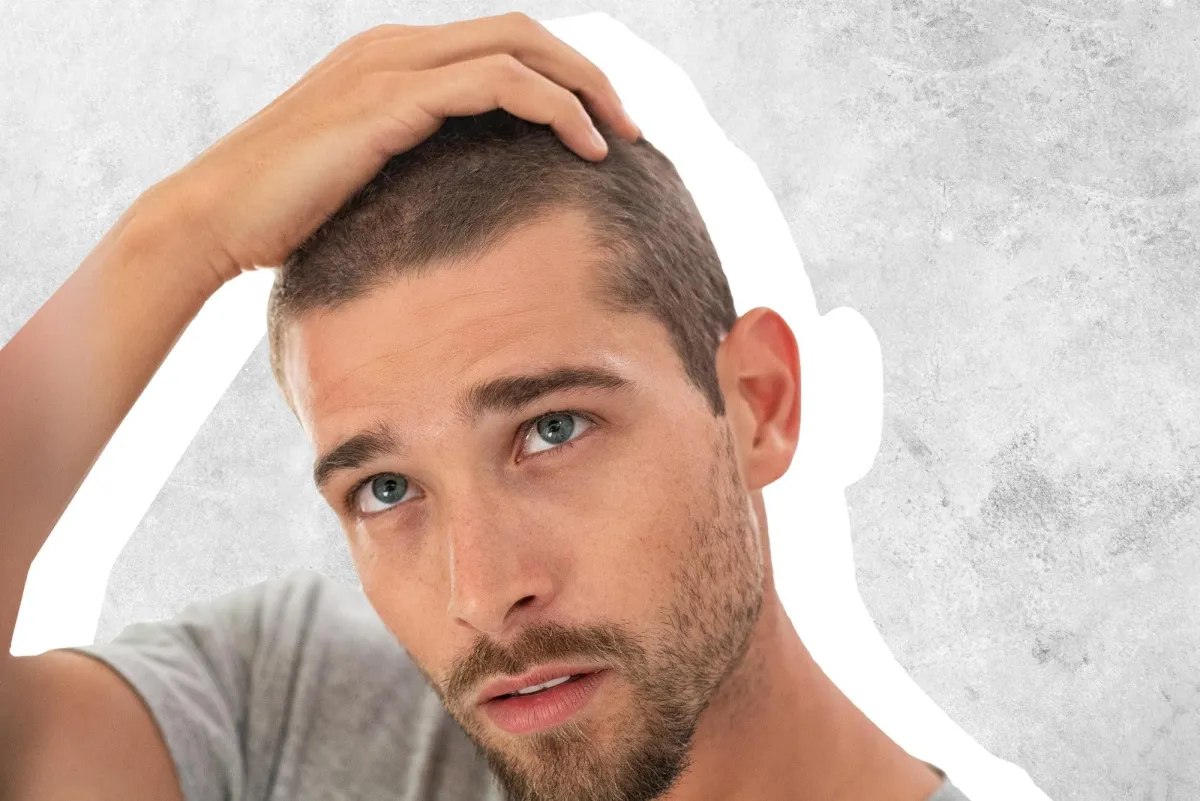
5 Best Haircuts for Men with
Early Hair Thinning
Losing your hair is never a good feeling, most men tend to feel self-conscious about it. Some men decide to completely shave off their heads or constantly wear a hat. One of the most common insecurities men face is hair thinning; for some men, it starts as early as in their 20s. The loss of confidence really starts to affect the way men do their hair and the types of hair cuts they get. Men start to worry about how they will be perceived by friends, family, and colleagues. Hair thinning should not be the cause of self distraughtness, and it should not limit men to have to continuously cover their heads. CADMEN Barbershop has compiled a list of the top 5 best haircuts for men experiencing early hair loss.

Cutting Techniques for Thick Hair
Cutting Techniques for Thick Hair
Thick hair is one of the most common variables that changes how a standard haircut technique needs to be adjusted. A cut that would work cleanly on medium-density hair can result in a heavy, rounded fade, a mushroomed top, or a style that does not hold its shape when done on thick hair with the same technique.
The adjustments are not complicated, but they need to happen at each stage of the cut: clipper work, blending, and scissor work on the top.
How Thick Hair Behaves Differently
Density: thick hair has more hairs per square centimeter than average. This means that the same guard length that reads as "short" on medium hair reads as noticeably thicker and fuller on dense hair. Guard 2 on thick hair looks similar to guard 3 on medium hair, visually.
Spring: thick hair, particularly coarser thick hair, has more spring. When cut, it contracts upward more than finer hair. A cut that looks proportionate on the chair may sit slightly higher or fuller than expected when dry, because the dense hair springs into its resting position. Account for this by cutting slightly shorter than the target on the initial pass and checking when the hair is dry or settled.
Weight distribution: thick hair accumulates visual weight quickly at the outer perimeter. Without weight removal, the top section of a thick-haired cut tends to look bulky and rounded (the "mushroom" effect), even when the guard lengths used were appropriate.
Clipper Work on Thick Hair
Use closer guards than you think you need
Because thick hair reads visually longer than the equivalent guard on average hair, drop one guard level below what you would use on a medium-density client to achieve a similar visual result. If the target is a mid-length fade on medium hair at guard 2, plan for guard 1.5 or 1 on the thick-haired client to achieve the same apparent length.
Make more passes
Thick hair loads the clipper faster. The blade can clog or drag if you try to cover too much in a single pass. Slower, more deliberate passes with more repetitions produce a cleaner result than rapid single passes. This is especially true at the blending transitions in a fade.
Clean the blades more frequently
Blade cleaning matters more with thick hair. Accumulated hair in the blade reduces cutting efficiency and can cause pulling. Clean and oil during the cut on thick-haired clients, not just between clients.
Blending and Fading on Thick Hair
The most common problem with fading thick hair is a visible line (a "shelf" or "ledge") at the transition between guard lengths. This happens because thick hair holds the shape of each guard line more than fine hair does.
To prevent this:
- Use a flicking motion (rather than a straight horizontal pass) to blend at each guard transition. The flick pulls the hair outward as the clipper lifts, creating a more gradual blend.
- Add an intermediate guard level between the standard increments. Instead of going directly from guard 0 to guard 1 to guard 2, add a 0.5 between 0 and 1 if needed to get a smoother blend on very thick hair.
- Finish blending transitions with an open-blade technique (clipper-over-comb or balding clipper used at an angle) for the final pass. This is more controllable than a fixed guard for the final blend.
Scissor Work on Thick Hair
The top section of a thick-haired cut needs weight removal as a standard step, not an optional one. Without it, the top sits heavy, rounds at the perimeter, and does not hold a styled direction.
Point cutting
Point cutting into the ends of the top section removes weight while preserving the outer length. Hold sections of the top hair and cut vertically into the ends at a 45-degree angle rather than horizontally across. This breaks up the blunt edge and removes interior weight.
Slide cutting
Slide cutting (closing the scissors while sliding them along the hair length) removes weight from the interior of the section. Effective on thick, coarser hair that point cutting alone does not fully lighten.
Thinning shears
Thinning shears are the most efficient tool for significant weight removal on thick hair. Use them through the mid-section of the top (not at the very ends, which creates a soft, frayed edge) to remove bulk. One to two passes through the thickest sections is typically enough, over-thinning produces a wispy, sparse look.
The Final Check
Always check the cut when the hair has been towel-dried or dried with a blow-dryer, not just when wet. Thick hair can look dramatically different when dry, what looked balanced and well-blended when wet may reveal a heavy spot or unblended transition when dried. Build the dry check into the service on thick-haired clients, particularly on new clients whose hair behavior you have not seen before.
CADMEN Training
Working with thick, dense, and coarse hair textures is part of the hands-on curriculum at CADMEN's training programs. Book at academy.cadmen.ca/in-person-training.
Frequently Asked Questions
How do you fade thick hair without leaving lines?
Use more guard increments at the transitions, use a flicking blend motion rather than horizontal passes, and finish with an open-blade technique at the blend points. Thick hair holds each guard's shape more distinctly than fine hair, so the standard transition (0 to 1 to 2) may produce visible bands. Adding intermediate levels (0.5, 1.5) and using clipper-over-comb for the final blend smooths the transition. Multiple passes at each level also help, do not expect thick hair to blend in one pass the way fine hair might.
Why does thick hair look mushroomed after a haircut?
The mushroom effect occurs when the top section has too much weight at the outer perimeter, causing it to bow outward and sit heavily. It usually means insufficient weight removal during the scissor work on the top. Point cutting, slide cutting, or thinning shears through the top section reduce the outer weight and allow the hair to sit flatter and hold the desired direction. The fix is weight removal, not cutting more length off the top.
What guard should I use for a fade on thick hair?
One guard level shorter than you would use on medium-density hair to achieve the same visual result. Thick hair reads as fuller and longer at any given guard length compared to finer hair. As a starting point: if the reference cut uses guard 2 on the sides, plan for 1 or 1.5 on thick hair to reach the same apparent length. Adjust based on what you observe on the first pass.
Does thick hair need more frequent haircuts?
Yes, typically. Thick hair grows at the same rate as other hair (roughly 0.5 inches per month), but because there is more of it, even 2 weeks of growth is more visually apparent than on fine or medium hair. Fades on thick hair show growth lines more quickly because the dense hair fills in the faded zone noticeably. Most thick-haired clients benefit from returning every 2 to 3 weeks rather than the 4-week cycle that works for finer hair.
Can you use thinning shears on all thick hair types?
Yes, but the technique varies by texture. On coarser, stiffer thick hair, thinning shears through the mid-section work well. On thick, fine hair (high density but individual strands are fine), over-thinning can create an uneven, spotty look. On curly thick hair, thinning shears can disrupt the curl pattern and create frizz. For curly thick hair, point cutting or dry cutting by curl section tends to produce better results than thinning shears.
Related Reading From CADMEN Barber Academy
- Getting a Fade with Thick Hair: What to Tell the Barber
- Cutting Thick Hair: The Adjustments Barbers Make on High-Density Hair to Get a Clean Result
- Thick Hair in Men: What to Expect at the Barbershop and How to Manage It
- Men's Haircuts for Thick Hair: What Works Best
- How Barbers Handle Thick vs. Thin Hair Differently
- Thick Hair in Men: The Best Cuts and Products for Managing High Density

5 Best Haircuts for Men with
Early Hair Thinning
Losing your hair is never a good feeling, most men tend to feel self-conscious about it. Some men decide to completely shave off their heads or constantly wear a hat. One of the most common insecurities men face is hair thinning; for some men, it starts as early as in their 20s. The loss of confidence really starts to affect the way men do their hair and the types of hair cuts they get. Men start to worry about how they will be perceived by friends, family, and colleagues. Hair thinning should not be the cause of self distraughtness, and it should not limit men to have to continuously cover their heads. CADMEN Barbershop has compiled a list of the top 5 best haircuts for men experiencing early hair loss.


For any request, please contact us at info@cadmen.ca