
Barber Tips & Tricks
Follow us for the latest barber techniques and tips
Barber Tips & Tricks
Follow us for the latest barber techniques and tips
Top 7 Reasons Why Your Clients
Aren't Returning
Stay Ahead in the Barbering Game: Nurturing
Lifelong Clientele
You might have come across the saying “give a client a good cut at a reasonable price, and they'll be yours for life.” Unfortunately in reality this is not always the case. That’s where we come in! Check out some of the reasons why your clients may not be returning, whether they were long-term customers or a first-time appointment, below.

Top 7 Reasons Why Your Clients
Aren't Returning
Stay Ahead in the Barbering Game: Nurturing
Lifelong Clientele
You might have come across the saying “give a client a good cut at a reasonable price, and they'll be yours for life.” Unfortunately in reality this is not always the case. That’s where we come in! Check out some of the reasons why your clients may not be returning, whether they were long-term customers or a first-time appointment, below.
Career in Mobile Barbering: Key
Things You Need to Know about
While most barbers work in physical barbershops or hair salons, there are a growing number of barbers who work on-call. What does it mean to be a mobile barber? What are their primary responsibilities? Where to find them? In this blog, we will explain some key terms you should know about mobile barbering and how you can start a new career in it.

Career in Mobile Barbering: Key
Things You Need to Know about
While most barbers work in physical barbershops or hair salons, there are a growing number of barbers who work on-call. What does it mean to be a mobile barber? What are their primary responsibilities? Where to find them? In this blog, we will explain some key terms you should know about mobile barbering and how you can start a new career in it.
Top 4 Ways for Barbers to
Promote Themselves
Marketing is key. Knowing how to market yourself as a barber can be the difference between having 5 to 20 clients a day. If you are interested in boosting the number of your customers and furthering your advertising skills, read the list below with four ways to promote yourself as a barber.

Top 4 Ways for Barbers to
Promote Themselves
Marketing is key. Knowing how to market yourself as a barber can be the difference between having 5 to 20 clients a day. If you are interested in boosting the number of your customers and furthering your advertising skills, read the list below with four ways to promote yourself as a barber.
5 Tips for Social Media Content
Creating as a Barber
It is next to impossible to find someone who is not on social media today. More than just a tool for connection, social media is key helping barbers market themselves and promote their names and skills. If you want to up your barber game quickly, here are five tips on how to promote content online that you don't want to miss out on.

5 Tips for Social Media Content
Creating as a Barber
It is next to impossible to find someone who is not on social media today. More than just a tool for connection, social media is key helping barbers market themselves and promote their names and skills. If you want to up your barber game quickly, here are five tips on how to promote content online that you don't want to miss out on.
5 Best Haircuts for Men with
Early Hair Thinning
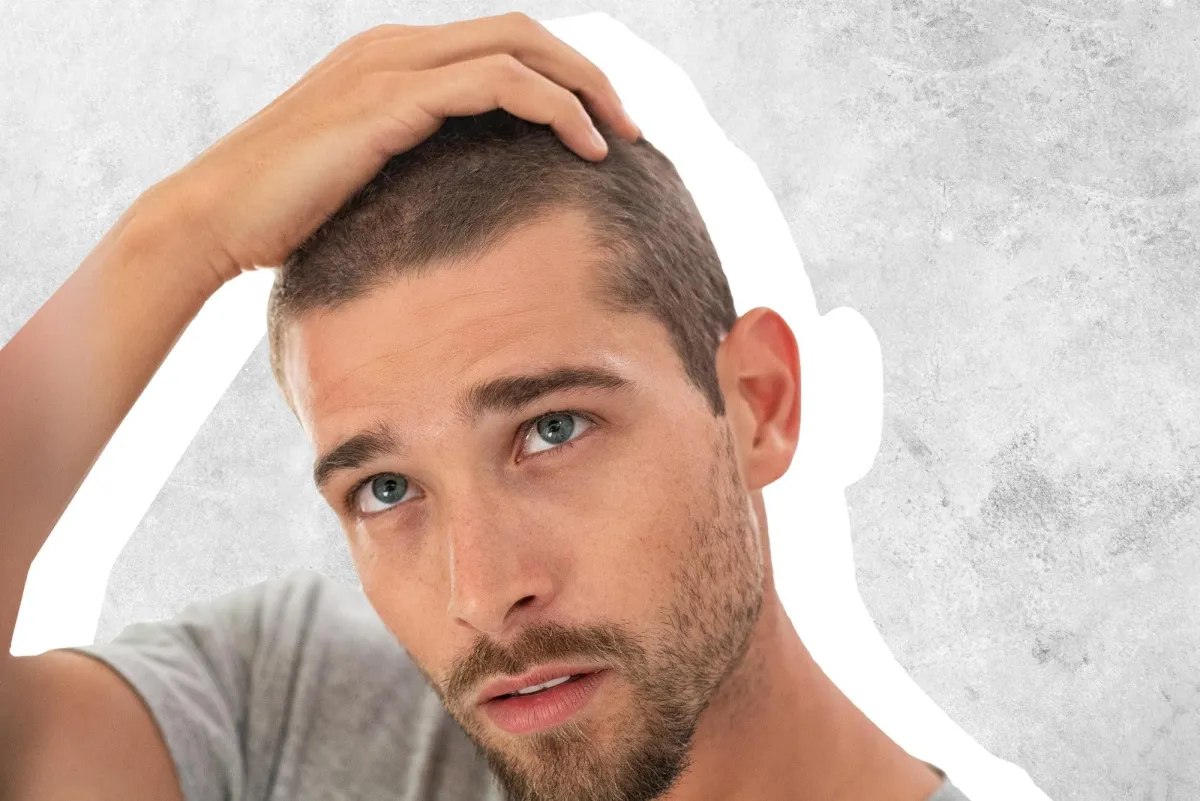
Losing your hair is never a good feeling, most men tend to feel self-conscious about it. Some men decide to completely shave off their heads or constantly wear a hat. One of the most common insecurities men face is hair thinning; for some men, it starts as early as in their 20s. The loss of confidence really starts to affect the way men do their hair and the types of hair cuts they get. Men start to worry about how they will be perceived by friends, family, and colleagues. Hair thinning should not be the cause of self distraughtness, and it should not limit men to have to continuously cover their heads. CADMEN Barbershop has compiled a list of the top 5 best haircuts for men experiencing early hair loss.

Shape Up and Lineup: What They Are and How Barbers Do Them
Shape Up and Lineup: What They Are and How Barbers Do Them
The shape up and the lineup are precision edge services that define the hairline rather than cut hair length. A client who has had a great haircut that has grown in slightly but does not need a full cut will often come in for a shape up alone, and leave looking like they just had a fresh cut. The precision of these services is what distinguishes a professional barbershop from a self-cut or a quick service cut.
What a Lineup Is
A lineup (also called an edge-up) is a precise edging of the hairline along three primary points: the forehead hairline (front), the temple corners, and the sideburn edges. The goal is a crisp, geometric edge that defines where the hair begins and the bare skin ends. The result should be a clean, intentional-looking border rather than the softer natural hairline.
The lineup uses a T-outliner or detail trimmer set to a tight or zero gap. The barber establishes the desired line with a single confident pass of the trimmer, then refines it. The natural hairline is used as the reference, the lineup generally follows the existing hairline shape, squared and sharpened, rather than dramatically redesigning it unless the client specifically wants a different shape.
What a Shape Up Is
A shape up is a broader term that includes the lineup plus additional edging and shaping work, typically the neckline, around the ears, and any beard or mustache edging included in the service. A shape up is the complete edge finish of the entire haircut perimeter, rather than just the front hairline.
In many barbershops, a shape up is offered as a standalone maintenance service between full haircuts. Clients who come in on a 2-week schedule for a full cut often come back at week 4 for a shape up to keep the edges clean before their next full service.
The Three Key Edges
The forehead hairline: This is the most visible and most high-stakes edge. The line runs across the front of the head, typically squared off with a slight natural curve. The height of the forehead hairline is the most important measurement, taking it too far back or lowering it too far creates a permanent change to the face's perceived proportions. Most barbers clean the existing hairline rather than redesign it unless specifically asked.
The temple corners: The corners where the forehead hairline meets the sideburn edges. Sharp temple corners are one of the clearest visual markers of a professional barbershop edge versus a home or quick-service cut. The corner must be both sharp and correctly placed, too far in crowds the eye area; too far out looks unfinished.
The neckline: The bottom edge of the haircut. Can be squared (a straight line across the back of the neck), rounded (curved to follow the natural neck shape), or tapered (gradually reducing to the natural hairline without a hard line). The neckline shape is client preference, but the execution must be symmetrical and clean.
The Finishing Pass
After the primary edges are set, a final pass with a small amount of talc powder and a finishing razor (or a close-trimmer pass at a zero gap) along the hairline produces the extremely clean, precise edge that clients recognize as a high-end finish. This is a technique detail that separates the appearance of a good shape up from an excellent one.
CADMEN Training
Lineup technique and precision edge work are fundamentals covered in CADMEN's hands-on program. academy.cadmen.ca/in-person-training.
Frequently Asked Questions
What is a shape up at the barbershop?
A shape up is a precision edging service that cleans and defines the perimeter of the haircut without changing the hair's length or style. It covers the forehead hairline, the temple corners, around the ears, the neckline, and any beard or mustache edging in the service. A shape up is typically offered as a standalone service for clients who do not need a full haircut but want to keep their edges clean and defined between full cuts. The result is a haircut that looks freshly maintained even when the actual hair length has grown significantly. The tools are a T-outliner or detail trimmer set to a zero or very tight gap, and sometimes a finishing razor for the final edge refinement.
What is a lineup haircut?
A lineup (also called an edge-up) is a specific edge service focused on the front hairline: squaring and defining the forehead hairline and temple corners. It is a component of a shape up, but it specifically refers to the front edge work rather than the full perimeter. Clients often ask for a lineup when their sides and back are still clean but the front hairline has softened with growth. A lineup takes 5 to 10 minutes in an experienced barber's hands and dramatically refreshes the overall appearance of a haircut by restoring the crisp front edge. The lineup is the most visible edge in the haircut and has the highest impact on the fresh-cut appearance relative to the time it takes to execute.
How often should you get a shape up?
Every 2 to 4 weeks, depending on how fast your hair grows and how precise you want to keep the edges. Clients who wear very sharp, geometric hairlines (particularly those with short fades where the hairline is prominent) typically want a shape up every 2 weeks. Clients with longer styles or more natural hairlines can extend to 4 weeks before the edges noticeably soften. Many clients book on a staggered schedule: a full haircut at weeks 0 and 4, and a shape-up-only service at week 2. This provides consistently sharp edges without the time or cost of a full cut every 2 weeks.
Can a lineup change your hairline?
Yes, but most barbers do not dramatically change the natural hairline unless specifically asked. The lineup follows the existing hairline shape, squaring and sharpening it rather than redesigning it. Changes that a barber might make: squaring corners that are naturally rounded, raising or lowering the hairline slightly to create a more balanced proportion with the face, or straightening a hairline that naturally grows in slightly curved or asymmetrical. These changes should be discussed before the service because they are not reversible in the short term, you cannot grow back a hairline that was taken too high in one session. The barber's default approach should be to work with the natural hairline unless the client specifically asks for a design modification.
What is the difference between a haircut and a shape up?
A haircut addresses the length and style of the hair (cutting, fading, texturing). A shape up addresses the edges and perimeter of the existing haircut (defining the hairline, cleaning the neckline, edging the sideburns). Both services can be performed in the same appointment (most full haircuts include a shape up as part of the finish), or a shape up can be done as a standalone maintenance service between full haircuts. The practical difference: a shape up on its own takes 10 to 20 minutes and keeps the haircut looking maintained; a full haircut takes 30 to 60 minutes and changes the length and style. Clients who are happy with their length but want to look freshly maintained between cuts book shape up services.
Related Reading From CADMEN Barber Academy
- Shape Up vs. Lineup: What Each One Is and When You Need It
- Beard Lineup Technique: How to Edge a Beard Cleanly on Every Face Shape
- Beard Shapes for Men: A Complete Guide to Every Style
- Beard Styles by Face Shape: What Actually Works and Why
- The Edge Up and Line Up: What the Service Actually Involves
- Choosing a Hairstyle for Your Face Shape: A Practical Guide

5 Best Haircuts for Men with
Early Hair Thinning
Losing your hair is never a good feeling, most men tend to feel self-conscious about it. Some men decide to completely shave off their heads or constantly wear a hat. One of the most common insecurities men face is hair thinning; for some men, it starts as early as in their 20s. The loss of confidence really starts to affect the way men do their hair and the types of hair cuts they get. Men start to worry about how they will be perceived by friends, family, and colleagues. Hair thinning should not be the cause of self distraughtness, and it should not limit men to have to continuously cover their heads. CADMEN Barbershop has compiled a list of the top 5 best haircuts for men experiencing early hair loss.


For any request, please contact us at info@cadmen.ca