
Barber Tips & Tricks
Follow us for the latest barber techniques and tips
Barber Tips & Tricks
Follow us for the latest barber techniques and tips
Top 7 Reasons Why Your Clients
Aren't Returning
Stay Ahead in the Barbering Game: Nurturing
Lifelong Clientele
You might have come across the saying “give a client a good cut at a reasonable price, and they'll be yours for life.” Unfortunately in reality this is not always the case. That’s where we come in! Check out some of the reasons why your clients may not be returning, whether they were long-term customers or a first-time appointment, below.

Top 7 Reasons Why Your Clients
Aren't Returning
Stay Ahead in the Barbering Game: Nurturing
Lifelong Clientele
You might have come across the saying “give a client a good cut at a reasonable price, and they'll be yours for life.” Unfortunately in reality this is not always the case. That’s where we come in! Check out some of the reasons why your clients may not be returning, whether they were long-term customers or a first-time appointment, below.
Career in Mobile Barbering: Key
Things You Need to Know about
While most barbers work in physical barbershops or hair salons, there are a growing number of barbers who work on-call. What does it mean to be a mobile barber? What are their primary responsibilities? Where to find them? In this blog, we will explain some key terms you should know about mobile barbering and how you can start a new career in it.

Career in Mobile Barbering: Key
Things You Need to Know about
While most barbers work in physical barbershops or hair salons, there are a growing number of barbers who work on-call. What does it mean to be a mobile barber? What are their primary responsibilities? Where to find them? In this blog, we will explain some key terms you should know about mobile barbering and how you can start a new career in it.
Top 4 Ways for Barbers to
Promote Themselves
Marketing is key. Knowing how to market yourself as a barber can be the difference between having 5 to 20 clients a day. If you are interested in boosting the number of your customers and furthering your advertising skills, read the list below with four ways to promote yourself as a barber.

Top 4 Ways for Barbers to
Promote Themselves
Marketing is key. Knowing how to market yourself as a barber can be the difference between having 5 to 20 clients a day. If you are interested in boosting the number of your customers and furthering your advertising skills, read the list below with four ways to promote yourself as a barber.
5 Tips for Social Media Content
Creating as a Barber
It is next to impossible to find someone who is not on social media today. More than just a tool for connection, social media is key helping barbers market themselves and promote their names and skills. If you want to up your barber game quickly, here are five tips on how to promote content online that you don't want to miss out on.

5 Tips for Social Media Content
Creating as a Barber
It is next to impossible to find someone who is not on social media today. More than just a tool for connection, social media is key helping barbers market themselves and promote their names and skills. If you want to up your barber game quickly, here are five tips on how to promote content online that you don't want to miss out on.
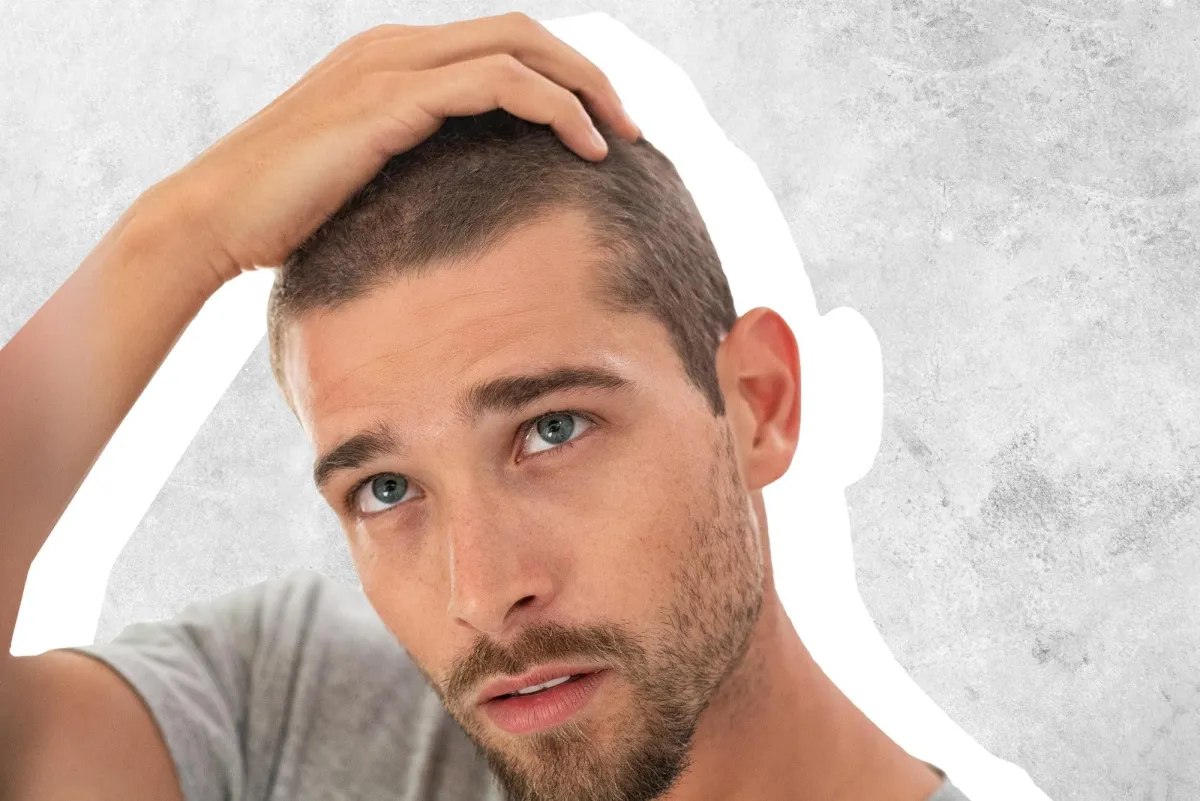
5 Best Haircuts for Men with
Early Hair Thinning
Losing your hair is never a good feeling, most men tend to feel self-conscious about it. Some men decide to completely shave off their heads or constantly wear a hat. One of the most common insecurities men face is hair thinning; for some men, it starts as early as in their 20s. The loss of confidence really starts to affect the way men do their hair and the types of hair cuts they get. Men start to worry about how they will be perceived by friends, family, and colleagues. Hair thinning should not be the cause of self distraughtness, and it should not limit men to have to continuously cover their heads. CADMEN Barbershop has compiled a list of the top 5 best haircuts for men experiencing early hair loss.

Scissor Over Comb: The Technique Every Barber Needs
Scissor Over Comb: The Technique Every Barber Needs
Scissor over comb is one of the fundamental techniques in barbering, a method of blending and tapering hair using a comb to hold the hair at a controlled angle and scissors to remove the hair extending above the comb's spine. It is used where clippers cannot produce sufficient precision or where the hair type, length, or location requires a more controlled approach.
When It Is Used
The primary applications for scissor over comb in modern barbershop work:
Blending the top section into a fade: Where the fade's highest guard level meets the full-length top section, scissor over comb creates a smooth transition. The clipper can establish the gradient in the fade zone, but the final blend from the top of the fade into the full-length top benefits from scissor over comb for a natural-looking connection.
General tapering without a clipper: Some clients prefer scissor-only cuts, either for preference, scalp sensitivity, or hair type. Scissor over comb produces a taper at the neckline and sides that mirrors what clipper-over-comb produces but with more tactile control.
Neckline tapering: The natural neckline taper, bringing the hair gradually shorter toward the natural hairline, is often finished with scissor over comb for a natural, soft result that does not require a hard line.
Short beard blending: Scissor over comb is used on short beard sections where clippers lack the precision to handle the specific density and growth pattern of individual beard areas.
The Technique
Hold the comb parallel to the head surface in the section being worked. The teeth angle determines the length left, the higher the teeth are lifted off the scalp, the more length the scissors leave. The closer the comb lies to the scalp, the shorter the remaining length.
Open the scissor blades wide enough to pass over the comb without contacting it. Glide the scissors along the spine of the comb in a single fluid pass, cutting the hair extending above the spine. The cut should be one continuous motion rather than a series of short cuts, which produce a stepladder pattern.
Move the comb to the next section immediately after each cut pass, maintaining consistent elevation and direction. Consistency in comb angle is the most practice-dependent element, the blend quality depends on each comb pass being at the same angle as the last.
Common Errors
Cutting into the comb: the scissors contact the comb spine during the cut, notching the comb and producing an uneven cut. Solution: use a narrower scissor opening and maintain wider clearance between the blade edge and the comb spine.
Inconsistent comb angle: the comb elevation changes between passes, producing visible graduation lines in the finished section. Solution: focus on maintaining the same physical wrist angle throughout the zone rather than re-setting on each pass.
Short chopping strokes: cutting with small, repetitive snips rather than a continuous gliding motion produces a rough, textured result rather than a smooth blend. Solution: train with longer, more deliberate strokes and a wider comb section per pass.
CADMEN Training
Scissor over comb and the full suite of barbering techniques are covered in CADMEN's hands-on program. academy.cadmen.ca/in-person-training.
Frequently Asked Questions
What is scissor over comb in barbering?
Scissor over comb is a cutting technique where a comb is used to hold and elevate a section of hair at a controlled angle, and scissors are used to cut the hair extending above the comb's spine. The comb acts as a guide that determines the cut length, the higher the comb is elevated from the scalp, the more length is left after the cut. The technique is used for blending transitions in fades, producing tapered effects where clippers lack precision, cutting around ears and at the neckline, and any area where the barber needs more control over the cut angle than clipper work allows. It is one of the foundational techniques in traditional barbering and remains essential in modern work despite the dominance of clipper fading in contemporary barbershop style.
What is the difference between clipper over comb and scissor over comb?
The two techniques use the same comb-as-guide principle but with different cutting tools. Clipper over comb uses a clipper (without a guard) glided over the comb spine to cut the hair above it. Scissor over comb uses shears in the same position. The practical difference: clippers produce a faster, more uniform cut and work more efficiently over large areas. Scissors provide more precision and tactile control, particularly at very short lengths, in textured areas, or when the cut requires a very specific angle that a clipper's blade width cannot achieve. Many barbers use both in the same haircut, clipper over comb for the bulk of the blending work, scissor over comb for the final refinement and transition zones.
How long does it take to learn scissor over comb?
Basic technique (producing a consistent, clean cut with the method) takes approximately 20 to 50 practice hours to develop. The specific skills that take longest: maintaining consistent comb elevation across a full section without variation (a pure muscle memory skill), the continuous glide motion without short choppy strokes, and comb clearance from the scissors (not cutting into the comb spine). Advanced proficiency, using the technique across all hair types, in difficult areas like around the ears and neckline, at very short lengths, and in blending it seamlessly into clipper work, takes several months of consistent practice on real clients. The technique is foundational to traditional barbering and is covered in barbering programs before clipper skills, though modern barbershop work often introduces clipper skills first due to market demand.
Why do some barbers prefer scissors over clippers?
Scissors provide more precise control over cut angle, length, and texture than clippers. The primary reasons a barber might use scissors as the dominant tool: client preference (some clients, particularly older clients or those with scalp sensitivities, strongly prefer scissor-only cuts); hair type (very fine or thin hair types can be damaged or pulled by clipper blades in ways that scissor work avoids); service style (traditional barbering and classic men's grooming services often emphasize scissor technique as a mark of craft); and specific cut types where scissor technique produces better results than clippers (layered medium-to-long cuts, textured top sections, certain beard work). In a modern fade-focused barbershop, scissors are essential but secondary to clippers in terms of overall service time. In traditional barbershops and in markets where classic cuts are the primary service, scissors may be the dominant tool.
What comb is used for scissor over comb?
A barber comb with fine teeth (close-set teeth) on one half and wider teeth on the other is the standard tool for scissor over comb. The fine-tooth section is used for short, precise work (neckline, around the ears, short blend zones). The wide-tooth section is used for longer sections and initial detangling work. The comb should be rigid enough to hold the hair at a consistent angle when lifted from the scalp, flexible combs collapse under the pressure of the scissors and produce inconsistent cut angles. Vulcanite (hard rubber) combs are the traditional choice for professional scissor over comb work; they hold their shape, are easy to sanitize, and do not create static that separates fine hair during the cut. Carbon fiber combs offer similar properties at a higher price point.
Related Reading From CADMEN Barber Academy
- Clipper Over Comb: The Foundational Technique Every Barber Needs to Master
- The Comb Over Haircut: What It Is and How It's Cut Today
- The Comb Over Fade: How to Cut and Style It
- Comb Over Haircut: How to Cut and Style It
- The Comb Over Haircut: How Barbers Cut and Style the Most Versatile Men's Haircut
- The Modern Comb Over: How It Works and Why Men Wear It

5 Best Haircuts for Men with
Early Hair Thinning
Losing your hair is never a good feeling, most men tend to feel self-conscious about it. Some men decide to completely shave off their heads or constantly wear a hat. One of the most common insecurities men face is hair thinning; for some men, it starts as early as in their 20s. The loss of confidence really starts to affect the way men do their hair and the types of hair cuts they get. Men start to worry about how they will be perceived by friends, family, and colleagues. Hair thinning should not be the cause of self distraughtness, and it should not limit men to have to continuously cover their heads. CADMEN Barbershop has compiled a list of the top 5 best haircuts for men experiencing early hair loss.


For any request, please contact us at info@cadmen.ca